2026-07-16
EN – Beyond the Review: Turning Commitments into Change: Tanzania’s Civil Society Vision for Sustainable Development
EN – Beyond the Review: Turning Commitments into Change: Tanzania’s Civil Society Vision for Sustainable Development
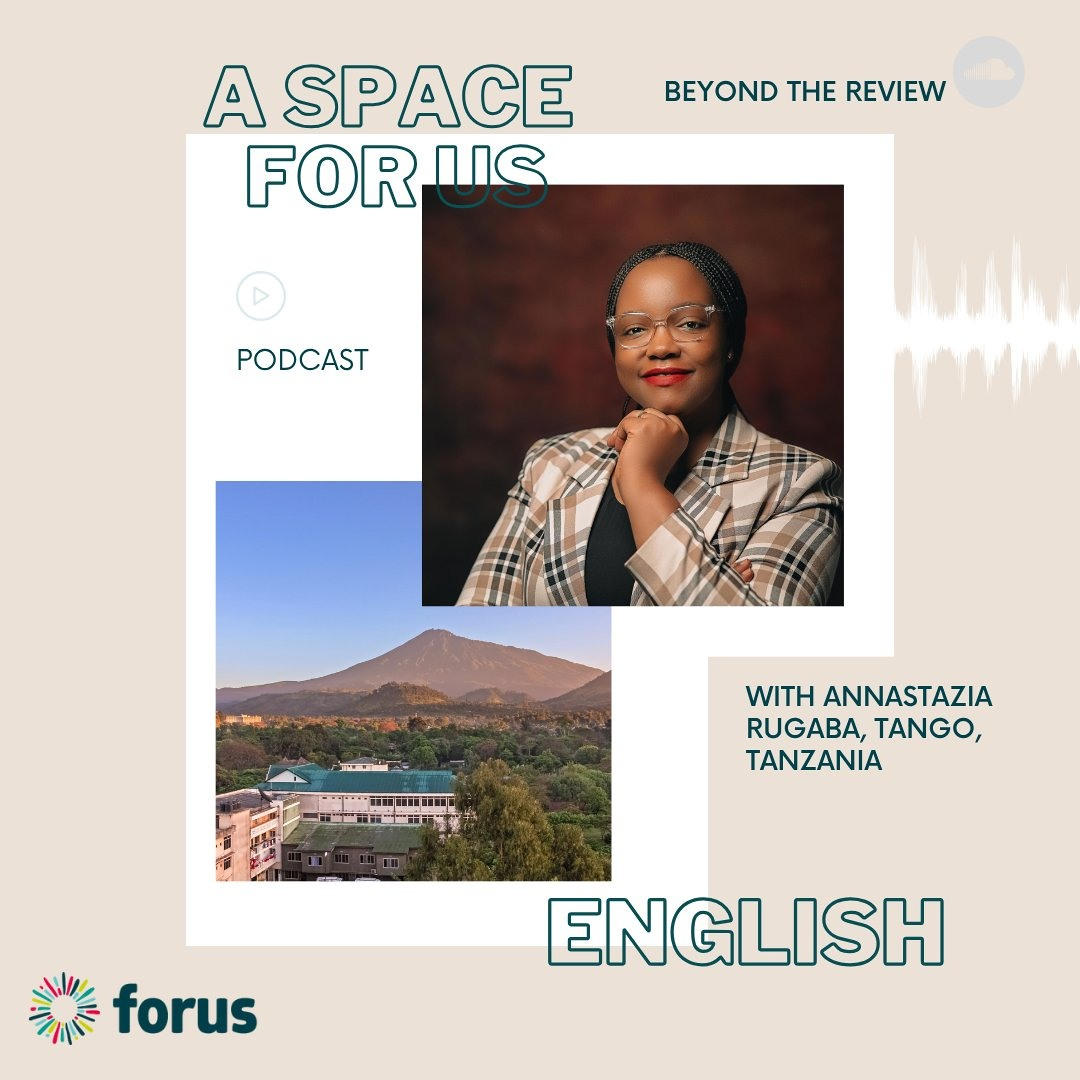
Welcome to A Space For Us, the Forus podcast bringing together national civil society platforms, activists, thinkers, and changemakers working for justice around the world. This episode is part of our Beyond the Review series, recorded on the sidelines of the United Nations High-Level Political Forum (HLPF) taking place in New York from 7 to 15 July 2026. As Tanzania presents its third Voluntary National Review (VNR), this episode looks beyond the official process to explore the role of civil society in shaping sustainable development, strengthening citizen participation, and ensuring that global commitments translate into meaningful change for communities. At a key moment as the country moves toward the implementation of its Tanzania Development Vision 2050, the conversation reflects on lessons learned from the Sustainable Development Goals journey, the importance of inclusive governance, and the need to ensure that no one is left behind. Our guest is Anastazia Rugaba, Chairperson of the Board of the Tanzanian Association of NGOs (TANGO), a long-standing national civil society umbrella platform bringing together organizations working across development, governance, human rights, environmental issues, social accountability, and community empowerment. With extensive experience at the intersection of citizen voice, public policy, communication, governance, and institutional reform, Anastazia shares her perspective on the role of civil society in Tanzania’s development journey, the lessons emerging from the VNR process, and the importance of connecting community realities with national, regional, and global development frameworks. In this episode, we discuss the need for VNRs to go beyond reporting and become tools for transformation — informing national planning, local priorities, budgets, service delivery, and citizen accountability. Anastazia also highlights the importance of addressing exclusion faced by women, people with disabilities, pastoralist communities, smallholder farmers, fishing communities, informal workers, and others who continue to face barriers linked to poverty, geography, access to information, and digital inequality. This episode was produced with the support of the European Union and the French Development Agency (AFD). Its content is the sole responsibility of Forus and the invited speakers and does not necessarily reflect the views of the European Union or the French Development Agency (AFD).