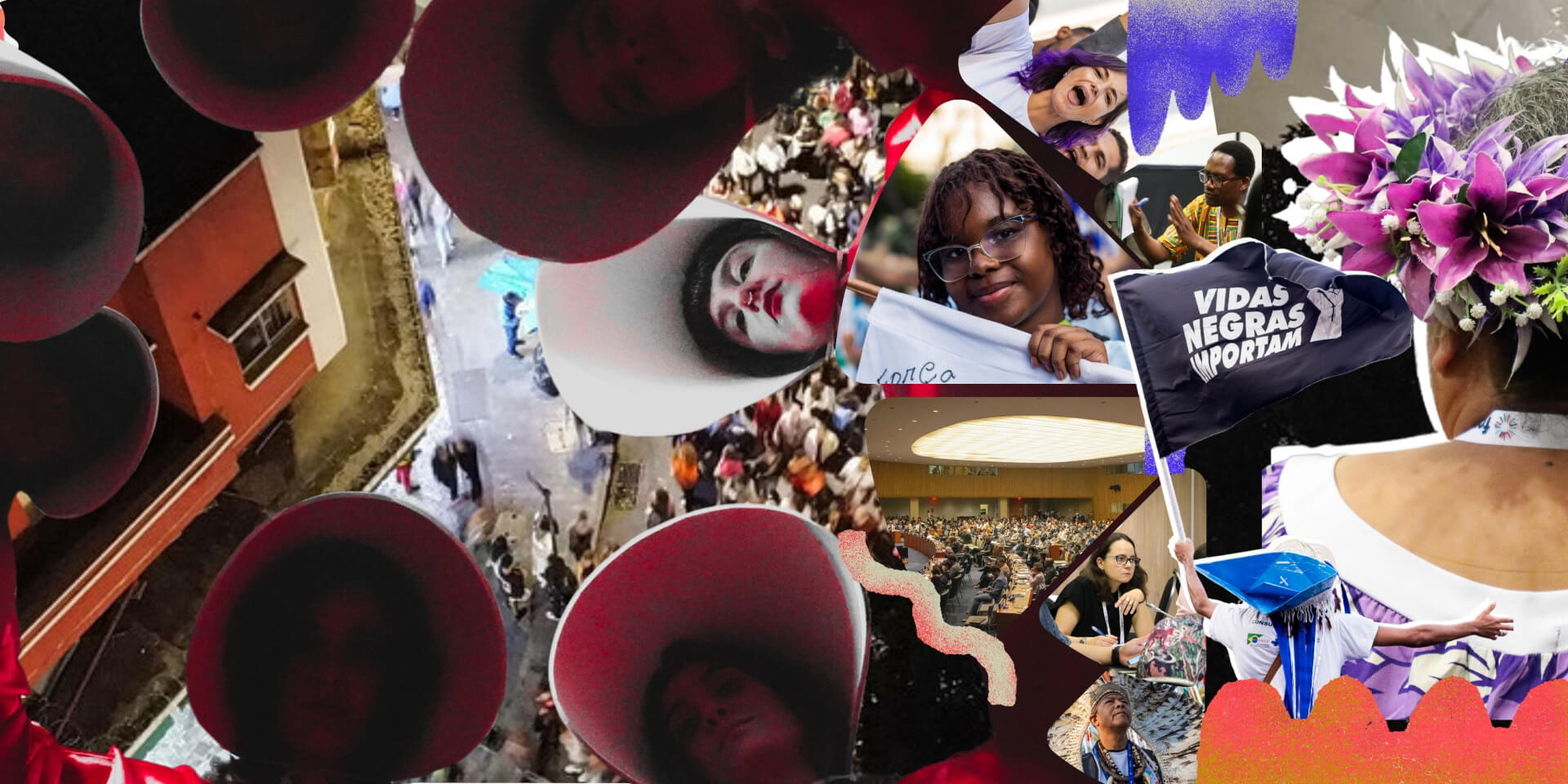
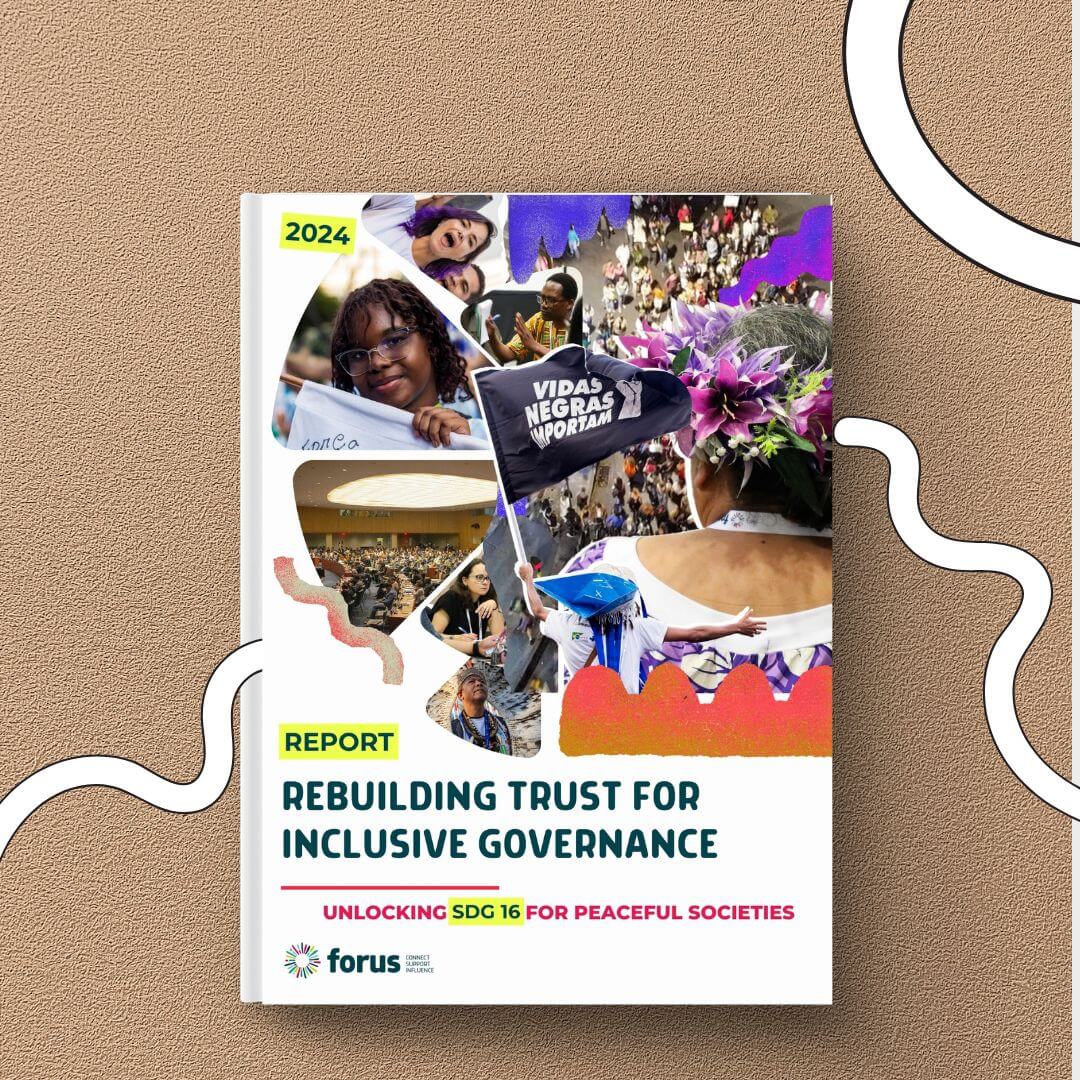
Report Cover - Forus
Agenda 2030
REPORT
Rebuilding Trust for Inclusive Governance
Unlocking SDG 16 for peaceful societies
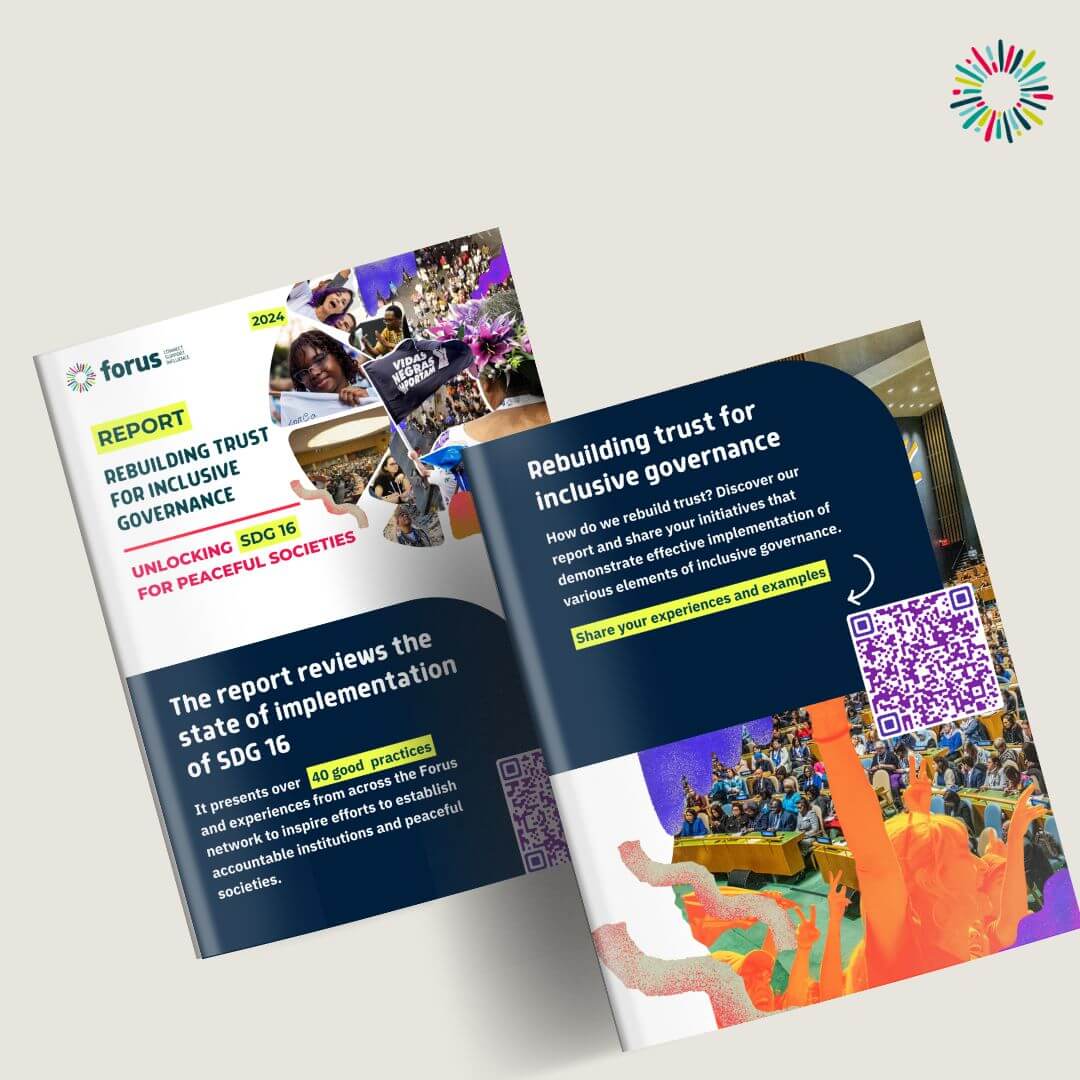
The report reviews the state of implementation of SDG 16 - where progress has been made, and where targets are still stagnating or regressing.
The report presents over 40 good practices and experiences from across the Forus network to inspire efforts to establish accountable institutions and peaceful societies. Forus sees the 2024 High-Level Political Forum and the upcoming Summit of the Future as strategic opportunities to reinforce commitments to SDG 16, highlighting the importance of inclusive decision-making and strong institutions for sustainable development.
01
At the halfway mark to 2030, progress on the 2030 Agenda for Sustainable Development is alarmingly off-track. In particular, the advancement towards SDG 16, which aims to establish more peaceful, just, and inclusive societies, is worryingly slow and, in some cases, regressing.
02
Adressing the deep-seated causes of inequality and exclusion within SDG16 is crucial for overall progress on sustainable development. Countries are backsliding on human rights obligations, violence and insecurity are pervasive, corruption and unresponsive governments corrode social contracts, and justice remains elusive for historically marginalised groups.
03
The recommendations outlined in this report by the Forus network provide a roadmap for policymakers and stakeholders to advance inclusive governance.
04
Developed by Forus members, the report shared over 40 concrete examples from civil society and governments for the implementation of SDG 16.
Discover over 40 examples of inclusive governance and its challenges
Download our Best Practices and Key Recommendations for inclusive governance and SDG 16 implementation. Discover examples from Forus members from across the globe. From Latvia, Uganda, the Pacific, Brazil, Spain, Zimbabwe, Nepal, Tunisia, Canada, Argentina, Pakistan and much more examples illustrate the benefits of inclusive dialogue, transparency, accountability, and innovative public service delivery.
Barriers to SDG 16 identified in the report
- Restrictions on Civil Society: Challenges to the creation of an enabling environment for civil society actions across the globe. Limitations on freedoms of expression and assembly creating issues of civic engagement.
-
Limited Participation: Barriers in decision-making processes - both at national and UN level - lead to inadequate policies, eroding trust between the public and decision-makers.
-
Silencing Voices: Threats and violence especially targeting human right defenders and historically marginalised groups suppress important perspectives, and data gaps hide the struggles of communities.
-
Digital Divide and Rights: Barriers in the “online world” are excluding many from participating in governance and introducing new forms of human rights violations.
-
Political Instability and Conflicts: Polarisation and conflicts are eroding peace and security across the globe. Inclusive governance is being disrupted and weaken institutional structures are emerging. We are witnessing widespread human rights abuses, hurting justice and accountability, while restricting various forms of civic participation.
- Weak Institutions and Corruption: Ineffective governance structures fail to support inclusive policies and equitable development, eroding trust.
- Data Gaps: Data gaps - especially disaggregated data - in SDG 16 still present significant challenges to monitoring progress and implementing effective policies. These gaps often obscure the true extent of issues such as violence, corruption, access to justice, and inclusive governance while at the same time making it difficult to assess the impact of policies and interventions.
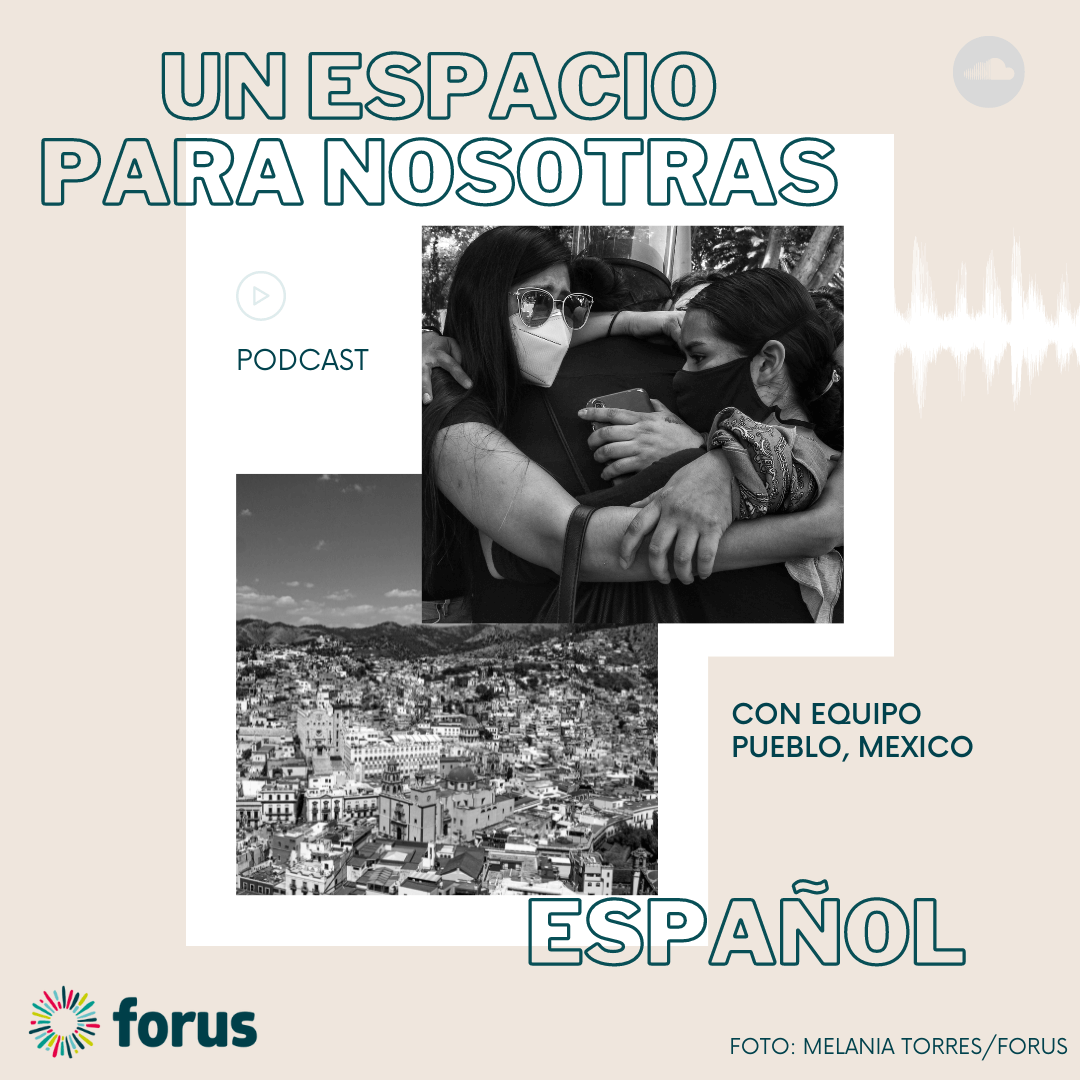
ES - Sobre la Agenda 2030 en México y en América Latina
Hoy nos acompaña Laura Becerra, Directora de Equipo Pueblo, México, en representación de UnidOSC, miembro de Forus, que nos hablará del contexto de la sociedad civil en México y en América Latina, especialmente en lo que se refiere a la Agenda 2030.
ES - Sobre la Agenda 2030 en México y en América Latina
EN - How to rebuild trust for inclusive governance
In this episode we discuss with Inese Vaivare, Director of LAPAS, Latvia the importance of promoting peaceful and inclusive societies. This conversation is part of Forus new report which focused on SDG16 and inclusive governance.
Rebuilding trust for inclusive governance
How do we rebuild trust? The report looks at successful practices from around the world that demonstrate effective implementation of various elements of inclusive governance.
Key areas and best practices for the implementation of SDG 16
The report explores a diverse range of global initiatives, such as participative governance in Latvia, the Voluntary National Review Process in Uganda, inclusive data practices in the Pacific, and civic space monitoring in Pakistan. With more than 20 examples worldwide, it highlights effective strategies for implementing SDG 16 and advancing progress across the broader 2030 Agenda.
Civic Space and Intersectoral Collaborations & Partnerships
Protecting fundamental freedoms, including freedom of expression, association, and peaceful assembly, is crucial for inclusive governance. Ensuring an enabling environment for civil society to advocate, engage in policy dialogue, and monitor government actions promotes transparency and accountability.
Intersectionality, Participation and Inclusivity
Inclusive governance is about bringing in everyone in the process. This is more important than ever in today's interconnected world, no one can and should be left behind. But how do you ensure it in practice? Encouraging citizen participation in governance, especially for historically marginalised groups, through initiatives like participatory budgeting, feminist cooperation frameworks, and citizen advisory councils, can support inclusive governance practices. Ensuring inclusion of persons with disabilities through initiatives like India's Accessible India Campaign prevents exclusion. Protecting indigenous peoples' rights and integrating their perspectives in sustainable development efforts promotes cultural diversity and enriches decision-making.
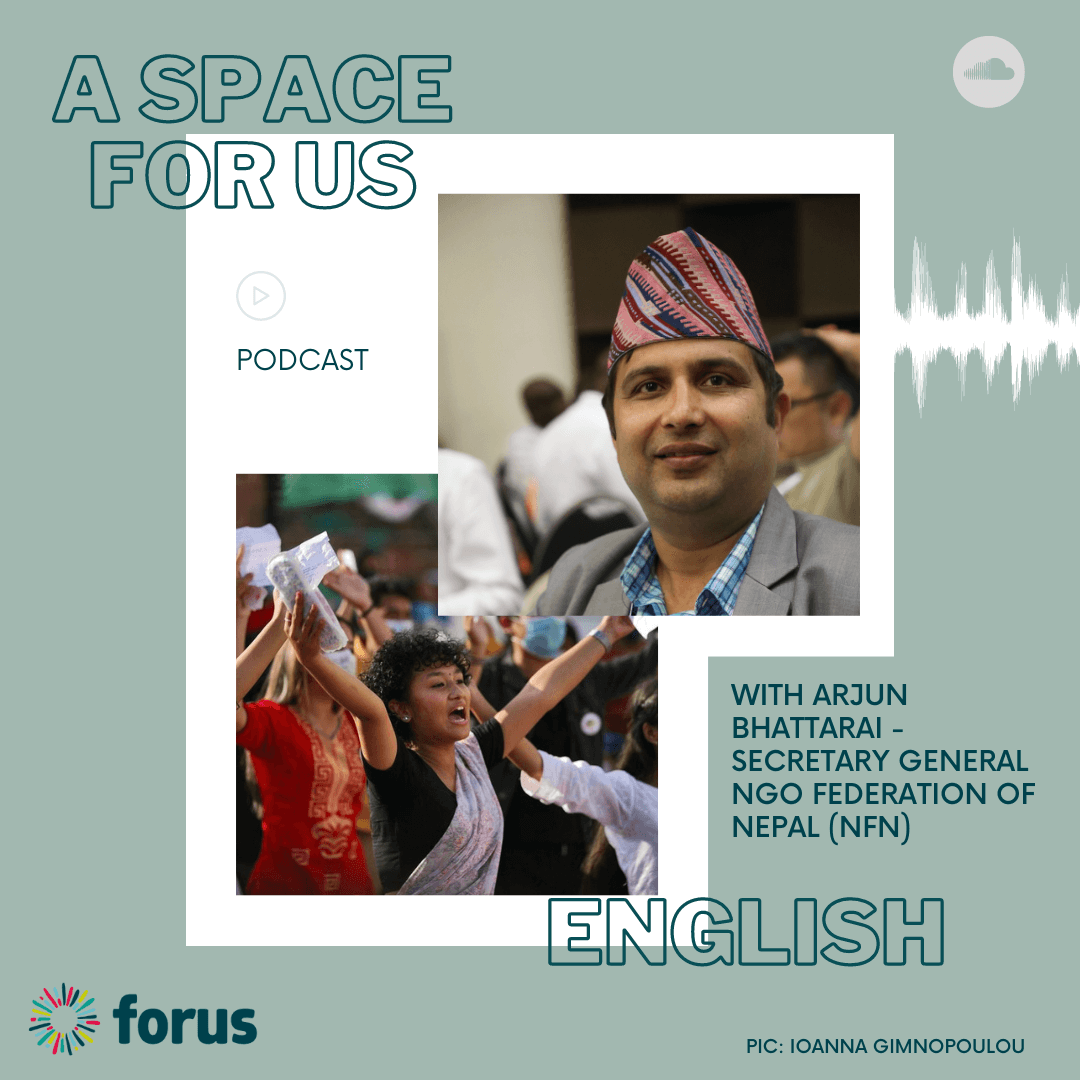
EN - NFN on the Voluntary National Review Process in Nepal
In the episode, our guest is Arjun Bhattarai from the NGO Federation of Nepal. He talks about the third voluntary National Review Process in the country, the difficulties being encountered as well as some recommendations for better results.
EN - NFN on the Voluntary National Review Process in Nepal
EN - NANGO in the Voluntary National Review Process in Zimbabwe
In this episode we talk with Ernest Nyimai from the Zimbabwe national NGO platform, NANGO, about the Voluntary National Review process in Zimbabwe on the sidelines of the High Level Political Forum!