©UN Women

© UN Women
Revising vision, strengthening governance, and developing advocacy for a more inclusive future

The Pakistan Development Alliance Cycle 6’s project was a time to clarify its organisational identity, revise its mission and vision, and develop a five-year strategic plan and a Communication and Advocacy Strategy. The process helped PDA move from project-driven advocacy towards a more coordinated, long-term network approach.
Forus

Project Description


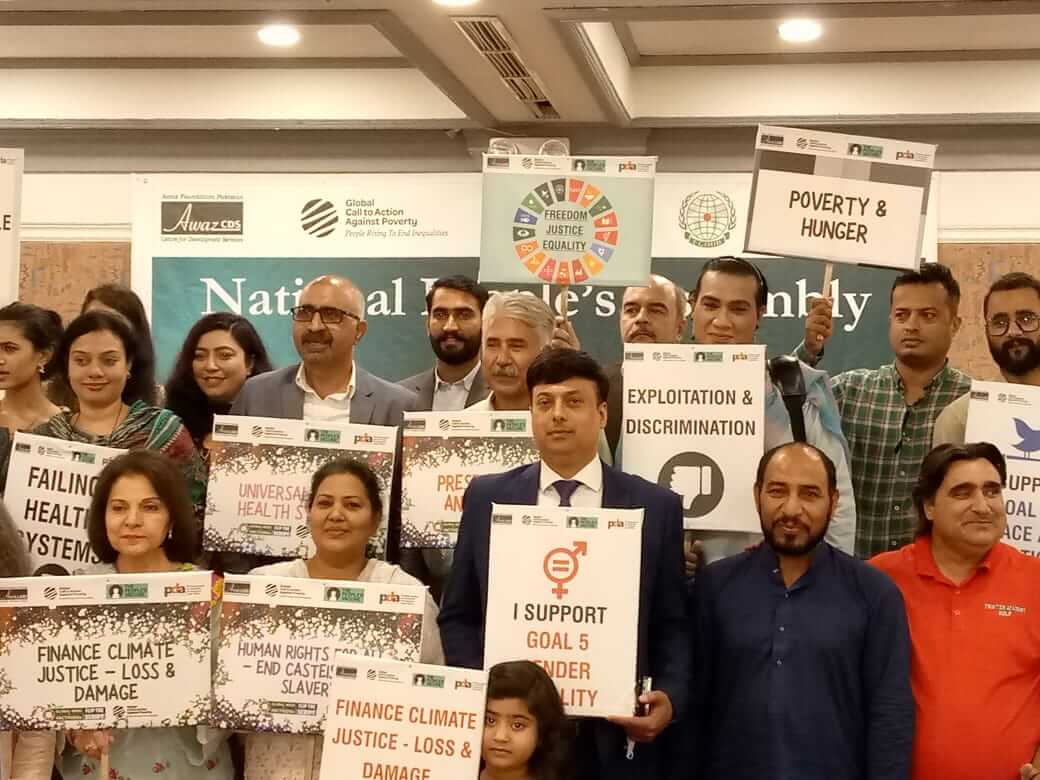
PDA roots begin in the Global Call to Action Against Poverty in Pakistan. Before joining Forus, PDA was already active in campaigns, citizen-led monitoring, surveys and advocacy. However, these efforts were largely project-driven and not yet anchored in a shared long-term strategy for the whole network. 


Through Cycle 6, PDA focused on revising its vision and mission, developing a five-year Strategic Plan, strengthening its governance structure through a DEIJ lens, and creating a Communication and Advocacy Strategy. Activities included staff training on a human rights-based approach, consultant support for the advocacy strategy, and member engagement around governance and strategic direction. 


The process helped PDA reflect on its identity as a national network and define a clearer pathway for institutional growth. The five-year Strategic Plan and Communication and Advocacy Strategy now provide a shared framework for organisational direction, advocacy positioning, partnerships and resource mobilisation. PDA also reported that the process strengthened coordination between the Secretariat and members, improved internal planning, and created a more structured approach to decision-making and communication. 


Importantly, the strategy development process involved more than 50 participants from across the network, including both active and less active members. This helped build ownership and reconnect parts of the membership around a common direction. 


For civil society networks, PDA’s experience shows the value of pausing to consolidate identity, strategy and advocacy positioning before expanding activities.

Key Results 

  • Developed a five-year Strategic Plan.  

  • Created a Communication and Advocacy Strategy.

  • Revised and articulated PDA's mission and vision.;  

  • Strengthened coordination between the Secretariat and members.

  • Engaged more than 50 participants in the strategy development process 

Forus

Learning


PDA’s experience shows that strategy development is not only about producing documents. When done participatorily, it can rebuild ownership, reconnect members and help a network move from reactive project delivery towards longer-term movement building and advocacy positioning. 
 
Forus