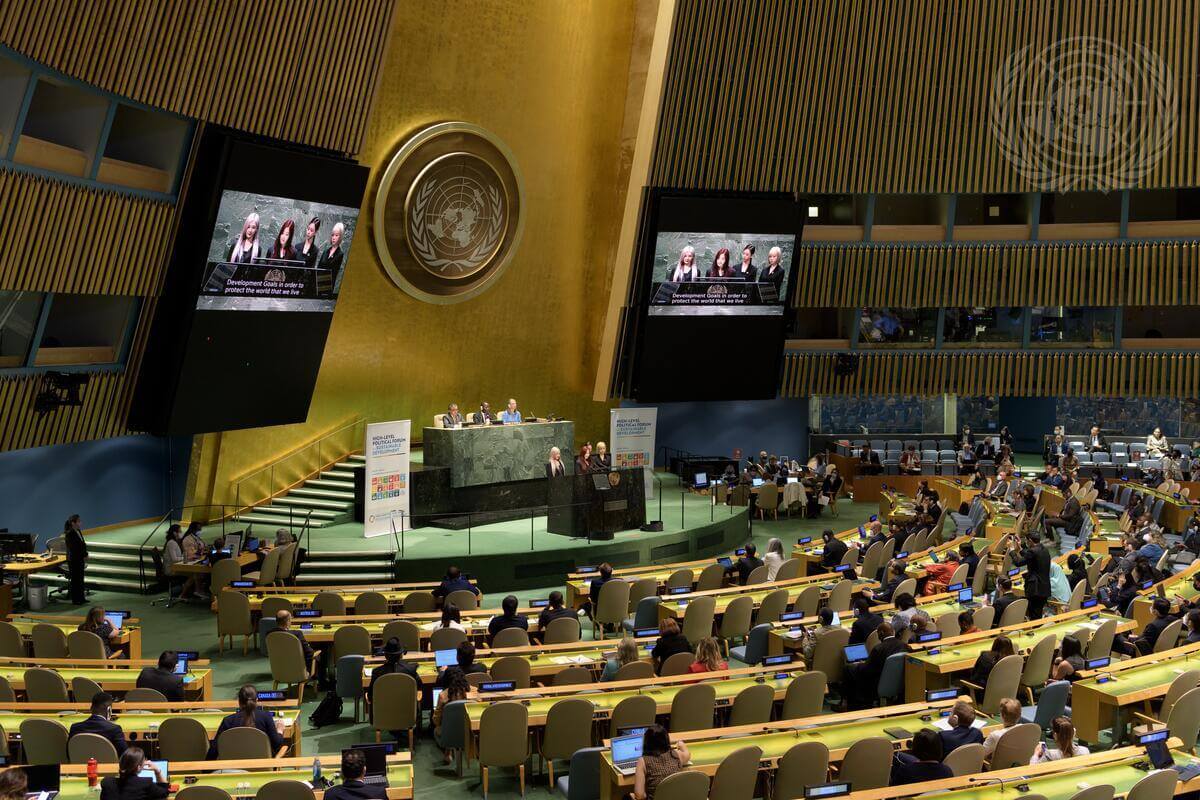
©HLPF - WHO
Mon 4 Dec 2023
Advocating for the Implementation of the 2030 Agenda at national, regional and global level
-
At the National Level: Governments conduct Voluntary National Reviews (VNRs) to track progress on Sustainable Development Goals (SDGs). These reviews, led by governments, offer civil society a chance to engage in SDG discussions and strengthen ties with policymakers. VNRs involve evaluating all 17 SDGs, discussing challenges and opportunities, and are presented at the UN's High-Level Political Forum on Sustainable Development (HLPF).
-
At the Regional Level The UN Regional Commissions bolster the review mechanism by organizing annual regional workshops for VNR participating countries. These workshops provide a platform for sharing practices and lessons learned specific to their region. The findings from these regional reports feed into the global discussions at the High-Level Political Forum (HLPF). Regional meetings, like the African Union Summit and Asia-Pacific Economic Cooperation, also offer platforms for leaders to exchange best practices and coordinate on SDG achievements at the regional level.
-
At the Global Level The High-level Political Forum on Sustainable Development (HLPF), held every year in New York, is the principal platform for reviewing the 2030 Agenda and SDGs, involving all stakeholders globally. The HLPF reviews all 17 SDGs over a four-year cycle, deeply analyzing a subset each year. Every year, a number of UN Member States volunteer to present their VNRs, which occurs following thematic discussions during the HLPF's three-day ministerial segment. To complement the HLPF, a high-level meeting – the SDG Summit – is organized every four years, for reviewing progress and reinforcing commitments to the SDGs. The United Nations General Assembly (UNGA) also monitors SDG implementation through its committees and resolutions, focusing on various aspects like poverty and sustainable development.
You will find below suggested steps on how to engage around these opportunities. But before that, here's a collection of tools and resources for CSOs on advocating for the implementation of the Sustainable Development Goals:
-
Action for Sustainable Development, Learning by doing: Civil Society Engagement in the High-Level Political Forum's National Review Process (2016). The report provides guidance to CSOs on how to participate in the national review process for the HLPF, highlighting the importance of CSO engagement in the SDG monitoring and implementation process.
-
CIVICUS / DataShift, A Guide to engaging with your government on the Sustainable Development Goals. This report helps CSOs identify the entities that officially mandate or are tasked with coordinating national efforts on the SDGs so to know who to engage as key advocacy targets. The report also provides overall guidance on processes for engaging, highlighting the importance of CSO engagement and providing recommendations for overcoming challenges.
-
CIVICUS, How to Engage with the High Level Political Forum (HLPF) User Guide. The Guide provides CSOs with a comprehensive overview of the HLPF and its role in monitoring and implementing the SDGs, showcasing the importance of civil society participation.
-
Forus / International Forum of National NGO Platforms, Everything you need to know about the VNR process. The report provides a comprehensive overview of the VNR process, highlighting the important role of CSO engagement and providing best practices for CSO participation.
-
Together 2030 / CAFOD / Uniting to Combat Neglected Tropical Diseases, Voluntary National Reviews – Engaging in national implementation and review of the 2030 Agenda and the Sustainable Development Goals – a civil society quick guide. The report provides a complete checklist and tools for CSOs to know how to engage and coordinate to participate in the VNR process, highlighting the importance of CSO engagement and providing practical tips.
-
Together 2030, Engagement at the United Nations High Level Political Forum (HLPF) on Sustainable Development 2019. The report highlights the uneven progress on the SDGs, the importance of inclusion and equality, the need for multi-stakeholder partnerships, and provides recommendations for governments, donors, CSOs, and other stakeholders to accelerate SDG implementation.
Engaging at national level
For civil society actors trying to influence the implementation of the 2030 Agenda in their countries, Voluntary National Reviews (VNRs) are an excellent place to start.
The VNR process is a country-led process for reviewing progress towards the Sustainable Development Goals (SDGs). It is a key element of the global follow-up and review of the commitments made in the 2030 Agenda. The process is voluntary , but all UN Member States are encouraged to participate.
VNRs typically include a review of progress on all 17 SDGs, as well as a discussion of the challenges and opportunities facing SDG implementation in the country. They are usually presented at the High-Level Political Forum on Sustainable Development (HLPF), which is the main UN forum for reviewing progress on the SDGs. Countries present their VNR reports in a short oral statement during the Ministerial Week at the HLPF. The presentation usually highlights key messages from the review and touches on critical issues in the implementation and is usually given by a minister or a senior official.
Why engaging around the Voluntary National Reviews?
-
Advocate for the implementation of the Sustainable Development Goals, and inclusion in national plans and strategies. VNRs provide a unique opportunity for CSOs to engage with governments. This process opens channels for regular exchange and dialogue about the implementation of the Sustainable Development Goals (SDGs). CSOs can also use the VNR process to influence national plans and strategies, making decision-makers more receptive to issues aligned with the 2030 Agenda. The VNR process involves continuous national dialogues, crucial for advancing the 2030 Agenda effectively.
-
Ensure no one is left behind. Advocate for an inclusive and participatory approach. Civil society organizations have a key role to play in ensuring the voices of the most vulnerable segments of the population and of all those who are often muted or left aside are heard and reflected in the design, planning and implementation of the 2030 Agenda. The 2030 Agenda advocates for a participatory and inclusive implementation and review process, making the involvement of various stakeholders, including CSOs, essential.
-
Advocacy for comprehensive implementation. Civil society has a key role to play in reaffirming that all 17 SDGs and their targets are integrated and indivisible and that governments are responsible to deliver on all their commitments by 2030.
-
Encouraging national participation. Although a great number of countries have already volunteered to present a VNR, some countries are still reluctant to commit. CSOs have a role to play in pushing for a national VNR process. If your country has not yet engaged, your first step will be to encourage your government to participate. CSOs can contribute to the formation of new institutional structures for SDG implementation, ensuring these are collaborative and inclusive.
-
Coordinated efforts and strengthening networks. Through VNRs, CSOs can enhance coordination at the national level, building or strengthening networks focused on tracking and advocating for SDG implementation. The VNR process allows CSOs to work beyond their specific areas of focus, promoting integrated approaches to sustainable development.
-
Global Visibility for Local Challenges. Participation in the VNR process enables CSOs to bring local and national challenges to the global stage, particularly during presentations at the High-Level Political Forum (HLPF).
-
Accountability and Constructive Solutions. CSOs can use the VNR process to hold governments accountable for their commitments under the 2030 Agenda and present constructive solutions for challenges in programmatic delivery.
How to engage around the Voluntary National Reviews?
1. Conduct an analysis of the current context, VNR process and existing CSO engagement in your country.
When thinking about engaging around the VNR process, civil society should look out for:
-
Contextual analysis. Assess the political and social landscape to tailor advocacy strategies. Develop contingency plans to mitigate potential risks in restricted environments.
-
Understand how your government is organizing itself for the VNR process and find out about engagement opportunities.
-
Has your government already begun the preparation of its VNRs?
-
Do you have the name and contact details of a person in the government who has responsibility for the preparation of the VNR process?
-
Is your platform aware of a timetable for public consultations on the preparation of VNRs?
-
What will be the process to engage with the government on the VNR? National consultations vary considerably. Will there be joint workshops where you can plan together and/or provide oral feedback? Will there be an option for online engagement and/or to provide written feedback to the commission working on the VNR in your country?
Note: If your government isn't participating in the Voluntary National Review (VNR) process, you can encourage it to do so. This process, which all countries are invited to join by the ECOSOC President each year, is open and voluntary. Additionally, if your country has completed a VNR but isn't planning to do another, you can advocate for repeat participation. There's no set frequency for conducting VNRs in the 2030 Agenda, allowing for the possibility of annual reports.
-
Identify existing coordination structure for CSO coordination and assess current capacity to engage. Before launching yourself with big advocacy plans to engage around the VNR in your country, understand the civil society landscape in your country to see if there is already a national structure coalescing civil society organizations around the VNR in your country. If there is no existing structure, assess whether your organization has the capacity to coalesce to coalesce civil society organizations and grassroots activists and communities around the VNR process, and to engage them with decision-makers. If you are not sure whether you have sufficient capacity, you could maybe look at sharing roles and responsibilities with other partner organizations and/or one of your member organizations.
-
Check the data already available in your country regarding the implementation of the Sustainable Development Golas. Think about any data sets you and your civil society partners may be able to contribute or highlight as relevant.
-
Resource allocation to cover the cost of writing the review, stakeholder meetings, travel for officials, etc.
2. Work with your national coalition/structure to identify the policy issues and advocacy messages that you hope to use to influence the government's VNR consultations.
Forming coalitions with other civil society organizations working on the SDGs will help to deliver unified messages and advocate for engagement. Ensure that all voices you would like to see engaged around the VNR process are part of the process, so as to leave no one behind.
The national coalition of CSOs working on the VNR/Agenda 2030 advocacy plan in your country should form a dedicated team, with the identification of individuals with relevant expertise, research skills, and a commitment to the project. Within your network, you should aim at defining clear roles and responsibilities, such as researcher, writer, editor, and coordinator, to ensure a well-organized effort.
Once you have connected with your partners, you can work together to identify your key objectives, gather data and evidence to formulate your advocacy messages and recommendations.
Gather, analyze and evaluate data and evidence:
-
Collect data and research to support your policy recommendations. Review official reports. Examine government reports, statements, and data related to the subject matter. Compare this information with the goals and objectives outlined in international agreements. For this, you could contact your national statistics office to find out what data sources are available, check past VNR reports, consult the Sustainable Development Report’s assessment or UNDP’s SDG Integration unit reports/assessments on 90+ countries or the UN Department of Economic and Social Affairs’ Statistics Divisions country profiles or regarding the data they have on your country’s progress towards achieving the SDGs, review think tanks and partner websites.
-
Collect best practices and data from your peers and member organizations. Learn from and share detailed narratives of successful advocacy initiatives on the implementation of the SDGs.
-
Conduct field research and engage with affected communities for case studies and stories that will strengthen your advocacy positions. Gather data through surveys, interviews, or case studies to provide real-world context and evidence, highlighting innovative approaches and tangible outcomes. Include the voices and experiences of the communities impacted by government policies. This adds depth and authenticity to your report.
Formulate key messages, political demands, and recommendations that align with your coalition's objectives, data analysis, and target audience. Ensure these messages represent the diverse voices, needs, and priorities of participating organizations, including marginalized groups.
Promote inclusivity and self-representation by organizing workshops and events within your coalition. Consider focusing on specific SDGs or targets related to government programs or policies and setting a clear purpose for your joint action.
Here are a couple of ideas that could inspire you in the lead-up to your conversations with the members of your coalition:
-
What SDGs or SDG targets do you want to focus on? Is it related to a particular government program or policy?
-
Set a clear purpose: What is the goal of your joint action? Are you aiming to highlight gaps in policy, assess the impact of government actions, or propose recommendations for improvement?
3. Develop a framework for your advocacy engagement strategy:
Once you have understood how your government is organizing itself for the VNR process and you have found out about engagement opportunities, you can make a plan for your advocacy engagement strategy.
-
Identify the name and contact details of a person in the government who has responsibility for the preparation of the VNR process. Also check if your parliament is involved in the preparation of the VNR. If your parliament does not want to be involved, you can consider advocating for its engagement in the process (See Together 2030’s handbook on engaging parliament on the SDGs).
-
Consult with your national CSO coalition to make a plan that details when you will approach your government and parliament, who you will target, what you will tell them and how. Insist on regular dialogue on the VNR process, that helps build the relationship and ensure they know you are monitoring their engagement on the 2030 Agenda.
-
CSOs should also make sure the VNR conversation is brought to the sub-national level.
Depending on the situation in your country and the appetite/capacity of your coalition members to engage, you could look at some of the following actions for your advocacy strategy:
-
Take part in national consultations related to the SDGs and VNR process. You can use VNRs to address the needs and challenges of your communities and showcase their contributions to SDG implementation. You can provide input to national VNR reports, participate in government-led VNR workshops to ensure community concerns are addressed.
Note: If access is limited, your coalition could look at advocating for an inclusive, accessible, and participatory VNR process. You can use your coalition's key messages and present your findings and report to engage in dialogue with policymakers, government officials, and the public, and advocate for change policy improvements. This can be done through written submissions highlighting the importance of these principles in government consultations, seeking inclusion in official government meetings on the SDGs and VNRs, engaging other stakeholders and partners to support CSO participation, advocating for government funding and support for civil society's participation.
-
Review the VNR report your government has developed. Countries are encouraged to submit a concise VNR report by mid-May before the High-Level Political Forum (HLPF) and a full report without a fixed deadline. These reports should cover all Sustainable Development Goals (SDGs) and be based on tangible government actions, focusing on progress and challenges at the national and sub-national levels, supported by evidence. The reports are publicly available on the HLPF website. The United Nations has voluntary common reporting guidelines and a handbook for VNRs, offering a framework with flexibility for countries to adapt to their specific circumstances. These guidelines aim to ensure consistency and comparability between reviews. The Progressing Implementation report Forus publishes each year, jointly with other partners, provide insights into VNR characteristics, good practices, and lessons learned for countries conducting VNRs.
-
Develop your own analysis on the implementation of the SDGs in your country, and publish shadow/parallel/spotlight reports alongside official VNRs to highlight marginalized voices, identify implementation gaps, and suggest improvements. While there is no official mechanism for parallel Civil Society Organization (CSO) reports at the HLPF, some countries choose to develop such reports alongside their government's VNR. Decide how, when, and where you'll release the shadow report. Consider press conferences, social media, or collaboration with other CSOs.
-
Plan your dissemination strategy. Design a media outreach plan that includes traditional media, online platforms, and social media to broaden message reach. Train advocates in effective communication techniques to ensure clear and persuasive messaging. Integrate storytelling to your communications to strengthen your advocacy positions. Feature stories and case studies to give a "face" to the importance of SDG implementation. (See our tipsheet on Media – How to engage with the media to amplify your policy messages).
-
Consider digital advocacy. Utilize social media analytics to target and engage stakeholders effectively. Develop digital campaigns that resonate with broader audiences for greater impact. (See our tipsheet on Social Media – How to amplify your policy messages through social media).
-
Hold your government accountable for their SDG commitments through participation in HLPF discussions on VNRs, leveraging your engagement with the media and your presence on social media and other platforms to raise awareness on your government's commitments, and advocate for action for a prompt implementation of the 2030 Agenda.
-
Seek inclusion in the official delegation at the HLPF and speaking opportunities during presentations. (see more details below in our section on regional and global engagement)
-
Monitor your advocacy efforts and re-evaluate tactics according to progress and challenges. Keep track of government actions in response to your report. Adapt your strategy if you meet any hurdles and/or if you identify better outcomes through other tactics.
-
Assess the impact of your advocacy actions and engagement. Determine how your messages / statements / shadow report influenced policy changes, public awareness, or government actions. Share success stories: Communicate the outcomes of your advocacy and the changes that resulted from your efforts.
-
Ensure follow-up discussions and progress on the implementation of the SDGs. Regular reviews of SDG implementation are vital, and it's important for civil society to engage in discussions about future steps. Countries should conduct debriefings at national and sub-national levels following global discussions, and VNRs should not only look back but also outline a clear follow-up process with a specified next VNR date. This dialogue between civil society and government provides an opportunity to assess and address gaps, challenges, and achievements.
Engaging at regional and global levels
At the High-Level Political Forum and Regional Forums on Sustainable Development
In the lead-up to the High-Level Political Forum, the UN Regional Commissions organize annual Regional Forums for VNR countries, facilitating discussions on regional specifics, sharing experiences, and exchanging lessons learned. These Regional Fora on Sustainable Development are organized by the Economic and Social Commission for Asia and the Pacific, the Economic and Social Commission for Western Asia, the Economic Commission for Europe, the Economic Commission for Latin America and the Caribbean, and the Economic Commission for Africa (UNECA).
The resulting regional outcome reports contribute to global-level discussions at the United Nations High-level Political Forum on Sustainable Development (HLPF).
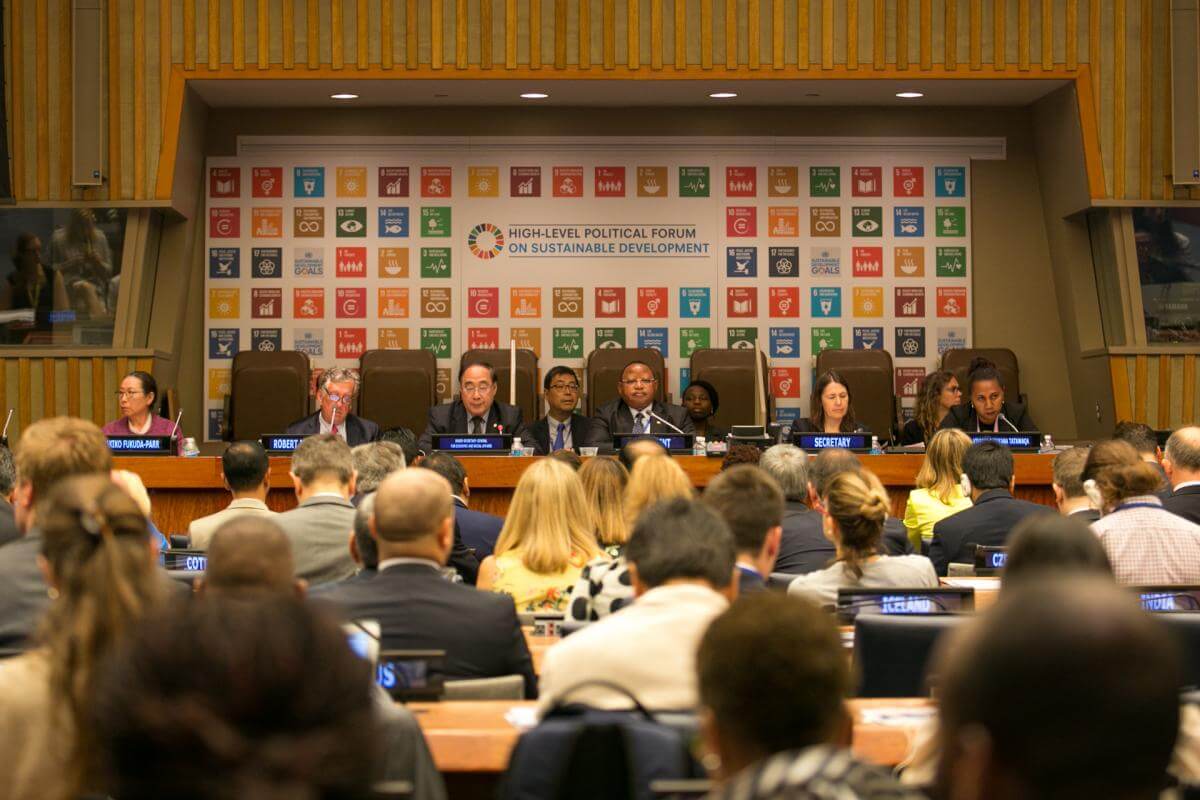
The UN High-level Political Forum (HLPF) is the central platform for the follow-up and review of the 2030 Agenda for Sustainable Development and the SDGs. The HLPF is responsible for assessing progress, achievements, and challenges related to the 2030 Agenda, with a key component being Member State presentations of VNRs during the three-day ministerial segment following thematic discussions. It is held annually in New York and provides a platform for all stakeholders to engage in dialogue and share best practices on SDG implementation. The HLPF also reviews the progress of all 17 SDGs on a four-year cycle, with four to six goals reviewed in depth each year.
The SDG Summit is a high-level meeting of world leaders held every four years to review progress on the SDGs and galvanize action to achieve them by 2030. It is an opportunity for world leaders to renew their commitment to the SDGs and to make concrete pledges to accelerate progress. The UN General Assembly plays a role in monitoring SDG implementation through its various committees and resolutions. For example, the Second Committee of the UNGA is responsible for economic and financial issues, and it plays a key role in reviewing the implementation of the SDGs related to poverty, hunger, and sustainable development.
As such, the HLPF provides a comprehensive and in-depth review of SDG implementation, the SDG Summit galvanizes political commitment, and the UNGA provides a universal forum for dialogue and negotiation.
How to engage at the regional and global levels?
To unify civil society's position at the regional and global level, CSOs are encouraged to engage with the High-level Political Forum (HLPF) through the Major Group and other Stakeholder (MGoS) coordination mechanism.
MGoS can make joint statements and pose limited questions during Member States' VNR presentations.
Membership in MGoS is open to representatives of nine Major Groups and other relevant stakeholders. Governments can allocate space in their official presentations for civil society, and collaborating with CSOs on joint messages can enhance relationships and contribute to thoughtful leadership and profile-building.
You can join the HLPF MGoS Coordination Mechanism mailing list by completing this registration form. Once registered, you have the opportunity to contribute to MGoS joint statements, you can volunteer to be part of the drafting team or support someone in delivering the statement, with the drafting group selecting the presenters.
If you are attending the HLPF in person, you have the following additional chances to connect with your government and amplify your coalition's messages on the VNRs/SDGs:
-
Ask for a bilateral meeting with your government, UN Officials or other stakkeholders during HLPF. CSOs can meet with government representatives, UN officials, and other stakeholders to discuss SDG implementation, to advocate for their priorities, to share their concerns and recommendations for SDG implementation. This can be done through formal meetings, informal conversations, or written submissions.
-
Organize or participate in side events and other activities. CSOs can organize or participate in side events and other activities on the margins of the HLPF to share their knowledge and best practices, to showcase the work/concerns/needs/priorities of grassroots organizations, to build networks, and to raise awareness of SDG-related issues.
-
Issue statements and press releases: CSOs can issue statements and press releases to share their perspectives on the HLPF and SDG implementation. This helps to raise awareness of CSOs' work and to influence the public discourse on the SDGs.
-
Amplify messages through media outreach and social media campaigning. CSOs can use media outreach and social media campaigning to amplify their messages and to reach a wider audience. They can share their stories and perspectives on SDG implementation, and they can mobilize others to take action.
Following up after the HLPF, CSOs can play a key role in monitoring progress towards the SDGs and holding their governments accountable for their commitments. CSOs can continue engaging with governments and other stakeholders on SDG implementation throughout the year at national level, or taking advantage of regional and global follow-up Summits like the UN General Assemblies, the SDG Summit, etc.
Other Global and Regional Summits and Opportunities to keep an eye on
Beyond the High-Level Political Forum and the Regional Fora on Sustainable Development, there are a number of regional and sub-regional summits that also discuss the SDGs. For example, the African Union Summit, the Asian Development Bank Annual Meeting, and the Pacific Islands Forum all regularly discuss the SDGs. These summits provide an important platform for regional leaders to share best practices and to coordinate their efforts to achieve the SDGs.
In addition to these regional summits, there are also a number of regional and sub-regional opportunities for monitoring SDG implementation. For example, the United Nations Economic Commission for Africa (UNECA) has established a Regional Coordination Mechanism for the SDGs in Africa. The UNECA Regional Coordination Mechanism provides a platform for African governments, civil society, and the private sector to collaborate on SDG implementation. The Asia-Pacific Economic Cooperation (APEC) has also established a number of initiatives to promote SDG implementation in the Asia-Pacific region. For example, the APEC Business Council has developed an APEC Business Blueprint for Sustainable Development.
At global level, UN Member States have also used other fora and Summits to discuss the implementation of the Sustainable Development Goals. As such, in recent years, the G7 and G20 have discussed the SDGs at their recent summits, and they have made a number of commitments to promote SDG implementation. For example, the G7 has committed to mobilizing $100 billion per year to support developing countries in achieving the SDGs. The World Economic Forum has also launched a number of initiatives to promote SDG implementation, such as the Global Goals Business Platform and the Sustainable Development Investment Partnership. The UNFCCC COPs discuss a wide range of issues related to climate change, including the SDGs. The SDGs and climate change are closely linked, and the UNFCCC COPs play an important role in monitoring progress on both. These global summits provide important platforms for world leaders to discuss the SDGs, to make commitments to promote SDG implementation, and to share best practices.