2023-11-01
ANC: Addressing Educational Resource Allocation Challenges in Peru
Read this article by ANC, Forus member in Peru, that draws attention to critical issues regarding the allocation of resources for national educational development in the country. The article sheds light on the complexities of educational resource management and underscores the need for collaborative efforts to ensure equal access to education for all Peruvian citizens.
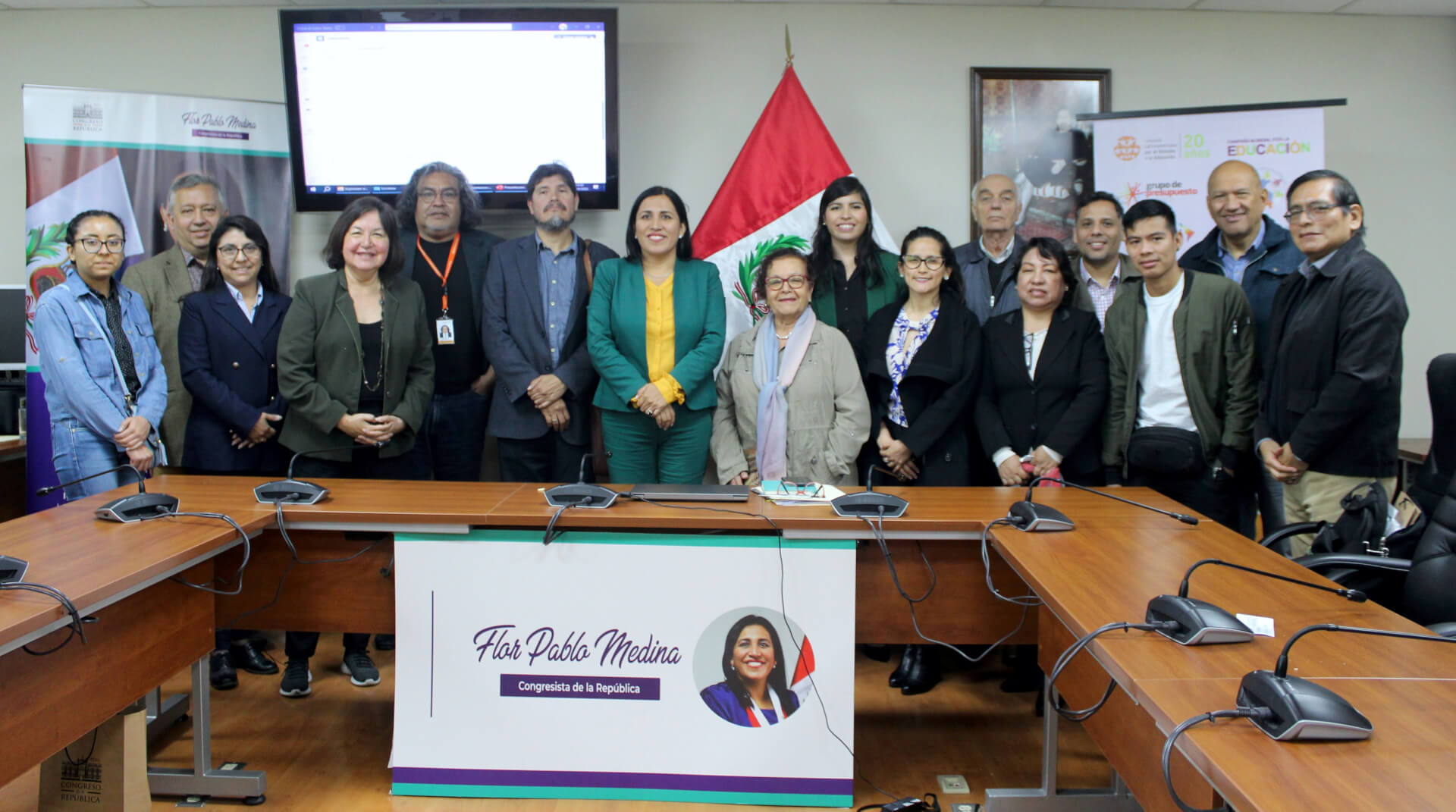
Last Wednesday, October 25, the Working Table "Fiscal Justice, Public Budget and Education in Peru" took place, organized by the Peruvian Campaign for the Right to Education (CPDE) and the National Public Budget Group (GNPP/ANC) with the purpose of identifying the barriers that prevent an adequate allocation of resources for national educational development and to elaborate proposals that would make it possible to overcome those barriers.
This Working Group was held at the Congress of the Republic of Peru by the office of Congresswoman Flor Pablo Medina (Partido Morado - Purple Party), who was in charge of giving the welcoming remarks.
In them, she pointed out the importance of generating changes regarding the budget for education: "And we have always been in the sector with this tension of seeing to whom we give, because it is not enough to give resources to everyone and I believe that we cannot continue to sustain this situation because all Peruvian citizens, regardless of their age, have the right to education".
The meeting began with the presentation of Economist Armando Mendoza (CPDE - GNPP) with the diagnosis on Education and fiscal justice in Peru: realities and priorities. In it he provided a rather dramatic fact about the reality of education financing in Peru: "Education is being prioritized in the budget allocation. But beyond these positive points in terms of the size of our GDP, progress in recent years has had ups and downs, but always below the 6 % that was the goal established in 2002 within the framework of the National Agreement. In other words, it has taken us 20 years to go from 3% to 4%. At that rate we would only be reaching the goal by 2060," he pointed out.
Then it was the turn of Rosa Stephany Calderón Campusano, head of the Planning and Budget Unit of the Ministry of Education, who made a presentation on the Approaches and Priorities of the Education Sector Budget 2024.
In her presentation she emphasized the differentiation between the Function and the Education Sector: "When we talk about budget, we must be precise about how we measure it. Is all the budget that exists for the education sector managed by the Ministry of Education (MINEDU)? No. It is administered by all the entities I am talking about. Within the Education Function is the Education Sector, the head of the education sector is the Minister of Education, and what makes up the sector? MINEDU, the decentralized public agencies and the public universities. That difference is important when we talk about budgets to see who is the holder, who executes it and what are their competencies."
These presentations were complemented by the panel formed by Mónica Muñoz Najar, Coordinator of Projects and Public Policies of REDES. Highlighting the report presented, she agreed with the problems exposed: "It is clear that we have a problem of insufficient allocation of resources caused in part by our low tax burden, one of the lowest in Latin America, (...). And once we have the resources they are not well used, either because of corruption or problems of budget distribution," she pointed out.
Finally, Lucas Sempe, international consultant and expert in budget and public policies, emphasized several absences in the budget, among them the issue of mental health: "I have focused on things that I consider important and that are not being seen. The first thing in the law there is about 1.4 million for emotional support and I don't know if you know, but 1 in 7 people (children and adolescents) have mental health problems that need to be treated and with that amount not much can be done. We need budgetary creativity, because we can say that there are 580 million dollars and there is nothing inside the school because everything is centered in 283 community health centers in the country, almost all urban and there is nothing inside the school, we have to break this division between education/health and do something better."
In the final part and by way of synthesis, Carlos Arana, Coordinator of the GNPP, pointed out the objectives of the Working Group and the need to continue the dialogue: "One of the intentions of this working group, from the GNPP and the CPDE, is to bring attention to this problem: any reform or educational project needs greater resource allocations (...) Because the answer is always that there is no money and in this framework we can raise whether or not a tax reform is opportune. It is a debate that does not end, it is raised permanently since it not only crosses education but also other sectors".
In the final part of the event, there was a round of questions from the different attendees to the panelists and finally concluded the importance of continuing to work from the different perspectives generated by the link between Tax Justice and Education.