
2023-05-24
Beyond the Buzz: Artificial Intelligence and emerging technologies, what impact on civic space and the work of civil society?
Find the highlights from the DRAPAC23 session organised by Forus, ADA - Asia Development Alliance, ECNL, the Asia Pacific Forum on Women, Law and Development (APWLD), the Asia Indigenous Peoples Pact (AIPP) and the Asia Center. Together - both online and in-person - we discussed the risks and opportunities when it comes to AI and its applications.
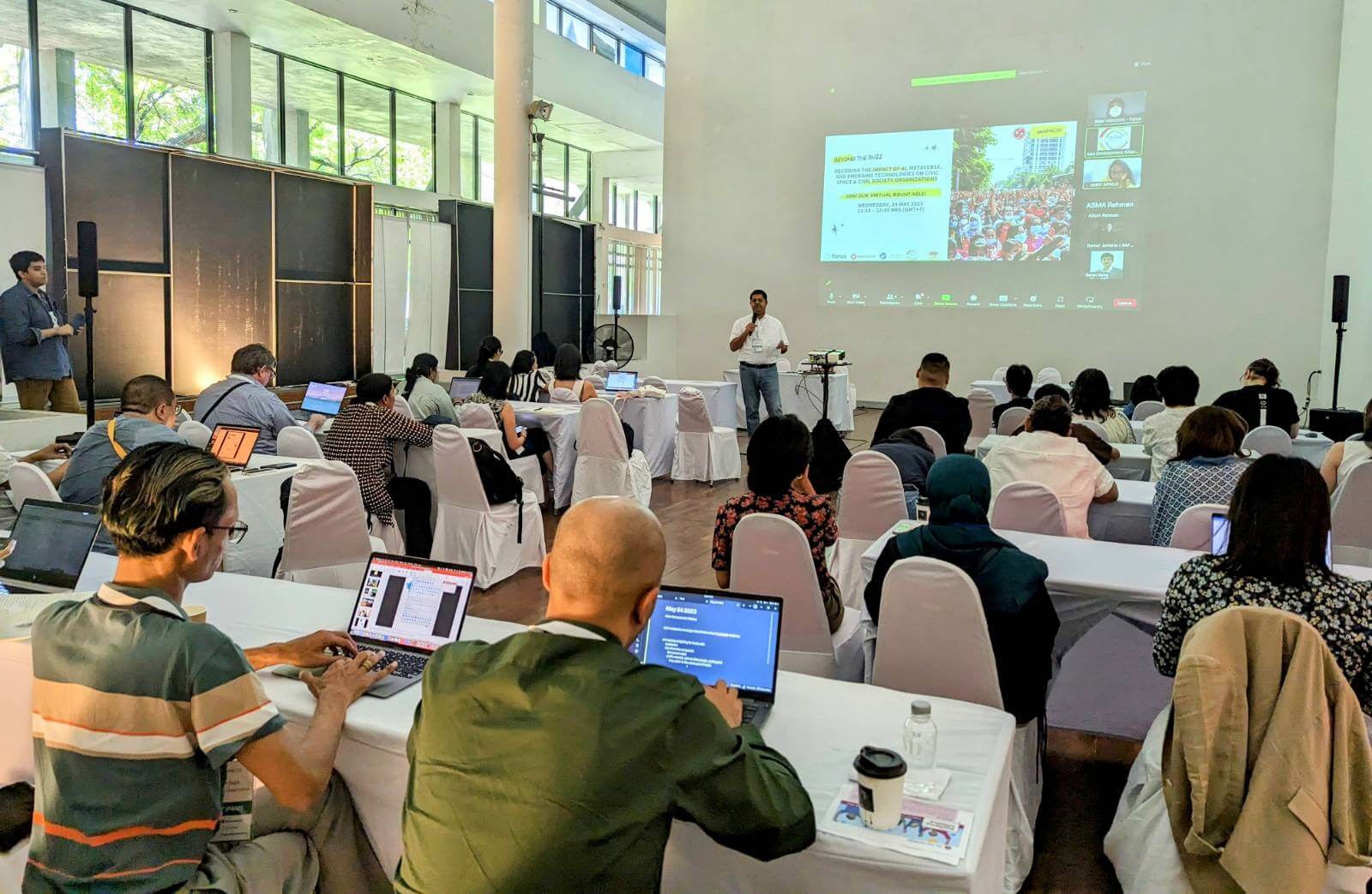
Digital Rights Asia-Pacific 2023
DRAPAC23 which stands for Digital Rights in the Asia-Pacific 2023 organised by EngageMedia aims to strengthen solidarity and networks among changemakers, champion diversity and inclusion within the movement, and bridge the media, technology, and human rights fields.
Civil society and activists worldwide are increasingly concerned about the impacts of AI on collective rights and civic space. AI technologies have the potential to impact fundamental rights and freedoms, such as freedom of expression, association, and assembly. The use of AI in surveillance and monitoring can infringe upon privacy rights and restrict the space for civil society to operate freely. AI-powered algorithms and systems can influence public discourse and shape the flow of information, thereby impacting collective rights. The potential for AI to manipulate or filter content raises questions about the fairness and openness of civic spaces. Misinformation and the spread of false narratives through AI-generated content further complicate the situation, undermining trust and impeding democratic processes.
So, what's next?
Collectively we would like to continue discussing, while sharing the asks and needs of civil society, when it comes to AI. We invite you to join our virtual global roundtable discussion for a thought-provoking exploration of cutting-edge strategies and tools to successfully navigate this ever-changing terrain.
The event will take place on Thursday June 8 (13-14:30 GMT, Check your time zone here) and will provide the opportunity to collect experiences and resources for a toolkit and participative Civil Society AI Manifesto.
As always, bring your ideas along, together we can create a resource to help each other in this journey.
- In the meantime, find here a participative list of Civil society resources on AI. Add your inputs before the session on June 8.
The content will be created jointly and the advocacy messages will be shared at the following events: the IGF, the High-Level Political Forum and RightsCon. A social media campaign on digital rights with a specific focus on the impact of AI will be developed in the weeks following the workshop as part of the #Let’s Talk Digital campaign.
- Simultaneous interpretation in English, French and Spanish will be available.
- Agenda with speakers will follow.
- Find more information on the workshop here.
- Register here. Thursday 8 June - 13 - 14:30 GMT - Check your time zone here.
- Feel free to contact us at [email protected] or [email protected]