Forus
Fri 15 May 2026
BIG Conferences: Should We Show Up or Walk Away?
After decades in this sector, I have come to believe there are three worlds we must hold in mind at once: the world we dream of, the world we have, and the world we can change. The tension between these three is where our most important decisions are made.
Recently, a post by Themrise Khan - a colleague I deeply respect - sparked in me a reflection I have been carrying for some time. Should those of us from the Global South continue to show up in the big rooms? The OECD conferences, the high-level meetings in New York, Ottawa, London and Paris? Or are we simply lending legitimacy to spaces that were never built for us?
It is no secret that many of the decisions shaping the lives of millions are made in air-conditioned boardrooms, around king-size, well-polished teakwood tables, in expansive complexes sitting on manicured compounds in leafy neighbourhoods far removed from the communities those decisions affect. The people making those decisions do so while sipping well-brewed espresso, nibbling on freshly baked croissants, and smoking well-rolled Habanos during their comfort breaks - never mind that millions are starving in Sudan, Gaza and other conflict-affected areas. They wear Louis Vuitton while the communities they claim to serve cannot afford second-hand clothing from the flea market. These are elite spaces. We should not pretend otherwise.
And yet - I keep coming back to this - these are still the spaces where decisions are being made. Rightly or wrongly, this is where the mic sits. And our work, as I see it, is not to boycott the mic but to demand it be democratised. To make clear, every time we enter those rooms, that no community is voiceless - only that some have been deliberately kept from the microphone.
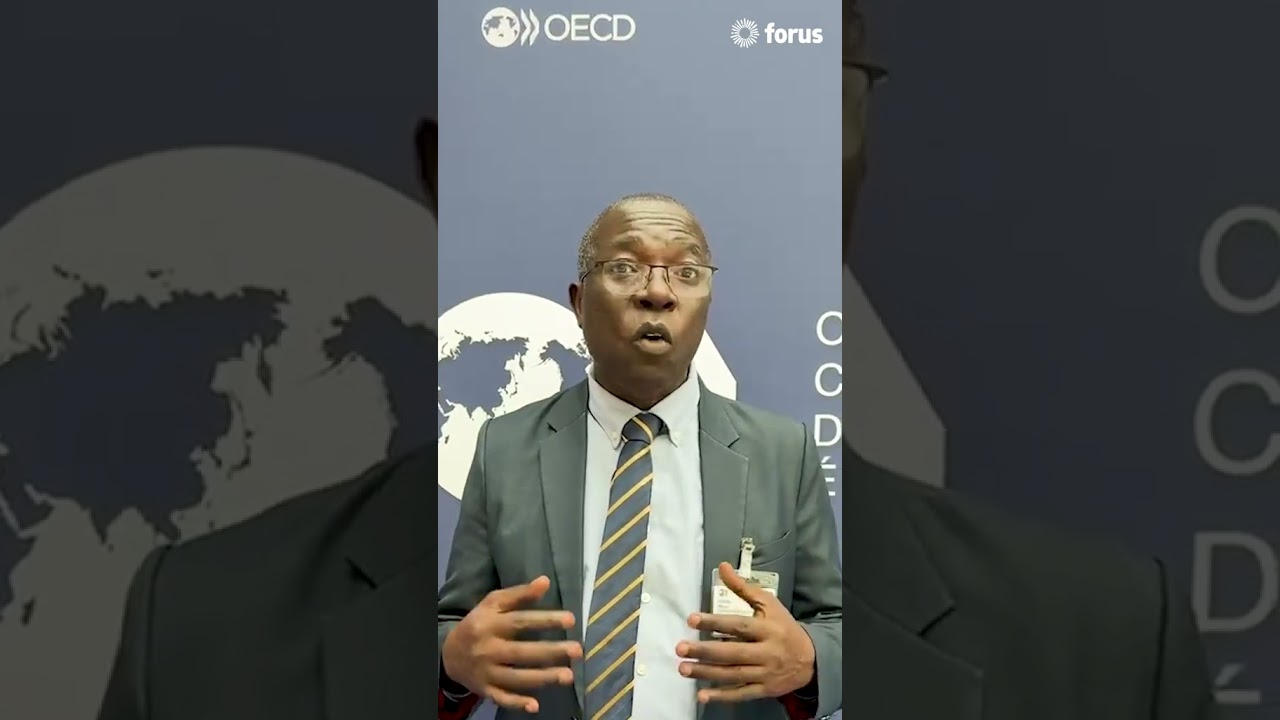
This week, at the OECD Future of Development Cooperation Conference in Paris, I witnessed something worth noting. Listening to government representatives from the Netherlands, Britain and Australia, I was reminded that even inside elite institutions, there are what I call "edge actors" — people who genuinely want to change things from within. Our work includes finding them, connecting with them, and helping to create more of them. That is not co-optation. That is strategy.
Will our attendance reverse the alarming decline in ODA? No. Let us be honest about that. But we are not there to perform miracles. We are there as hummingbirds - doing our small, precise, determined part to put out a forest fire, while the elephants stand akimbo and blame the pyromaniacs. Every effort counts. Every voice that enters those rooms and refuses to be absorbed into the wallpaper counts.
I am reminded of something Gunjan Veda from the Movement for Community-Led Development once said: we are like the human body, made of different organs. A kidney should never claim to be more vital than the liver, nor the pancreas dismiss the gall bladder. Each plays its role. And so must we - as a sector - choose solidarity as our currency. It may be the single most renewable resource we have.
Those of us in Caracas should feel the pain of those in Sudan. Those in Dublin should feel what is happening in Yemen or Iran. That is what a central nervous system does - pain in one part of the body is felt by the whole. That is the solidarity we must build.
The system, we can all agree, is broken - structurally flawed at best, pathologically ill at worst. It is like toothpaste squeezed out of the tube: we are all trying desperately to push it back in. It is going to be a messy process, and we need all hands on deck. But broken systems do not simply disappear. As Margaret Wheatley and Deborah Frieze describe in the Berkana Two-Loop Model, systems - like living things - mature, decline, and give way to what is emerging. The dominant model is dying. Something new is being born. And we are the midwives - sorting through the wreckage, preserving what is worth keeping, composting what is not, and refusing to let power, money and privilege be the only things that survive the transition.
By showing up in these spaces, we are not endorsing a dying system. We are sorting through it - preserving what is worth keeping, composting what is not, and refusing to let power, money and privilege be the only things that survive the transition.
When this system finally reaches its end - and it will - we will be at that funeral. It shall be a brief one. No eulogies. No flowers. Just the quiet knowledge that we did not stand aside.
Until then, the work of system transformation is not a cruise ship, where a few serve the many in comfort. It is a battleship - all hands on deck, coordinated, purposeful, and ready to execute with precision. That is only possible if we stay connected, build solidarity across our differences, and keep showing up - together.
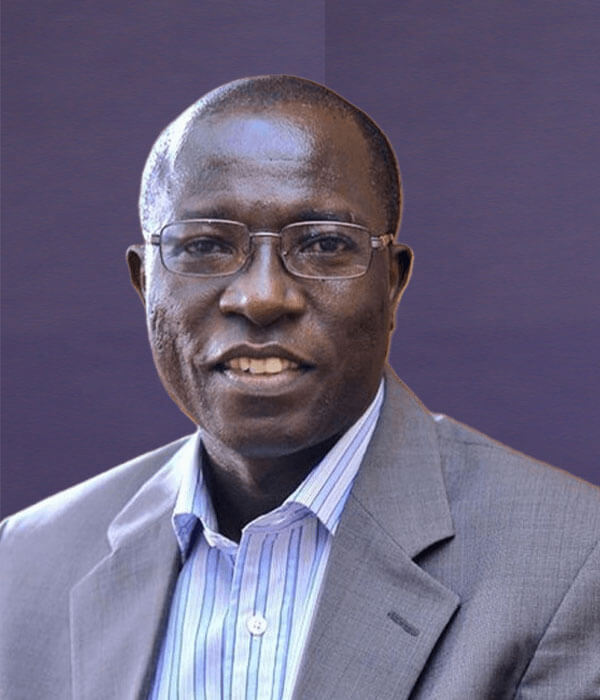
Moses Isooba is Executive Director of the Uganda National NGO Forum and a member of the Forus network.