Tue 21 Mar 2023
Botswana: Post COVID-19 Recovery Strategy and Sustainability Plans for NGOs
By BOCONGO Secretariat Programs & PR Departments
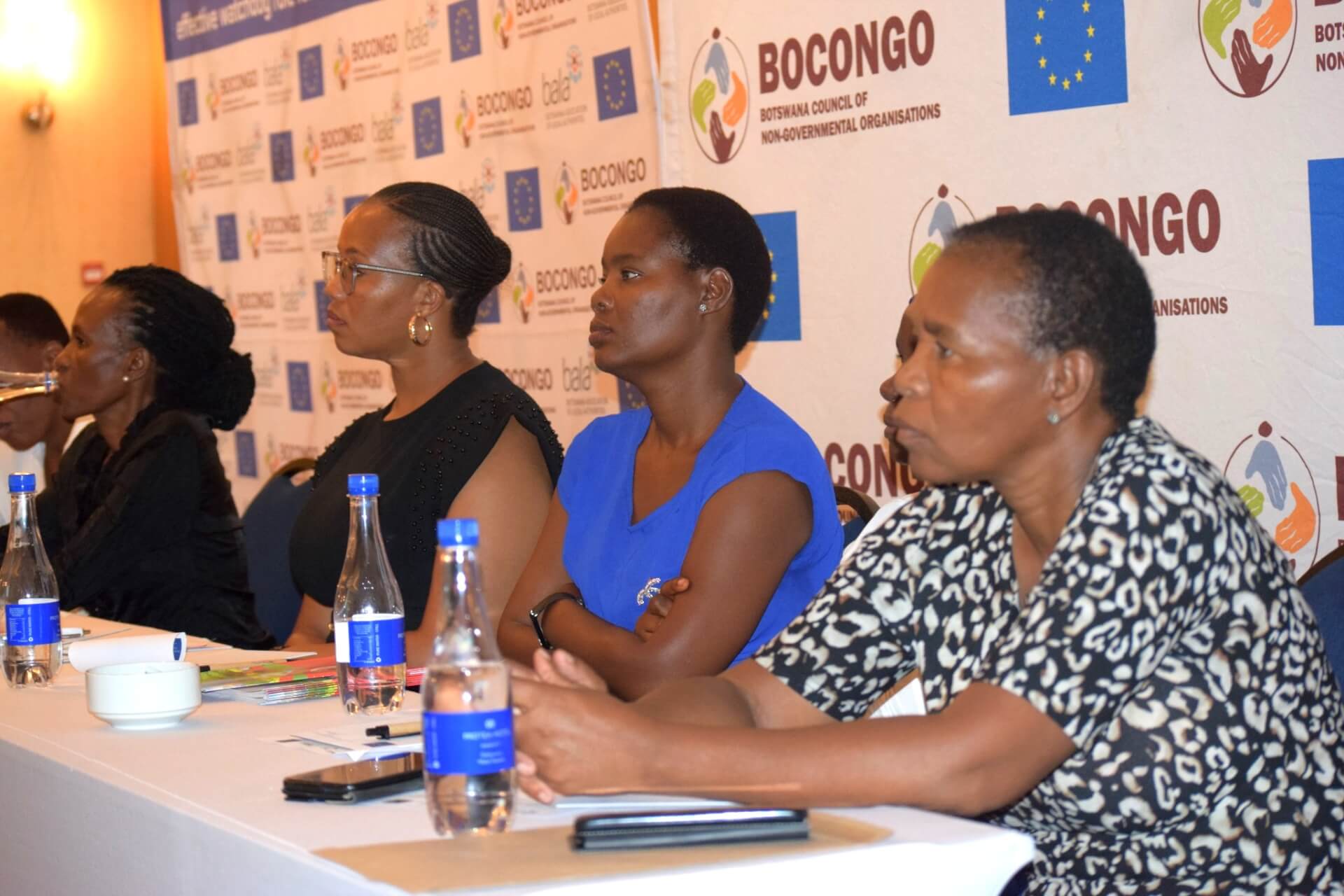
Botswana Council of Non-Governmental Organizations (BOCONGO), held a 2 day workshop on the 5th and 6th of October 2022, in Gaborone, Botswana, an activity supported by Forus in cooperation with AFD. It was held under a hybrid model thus having both physical presence of some members as well as virtual to cater for members outside Gaborone. The workshop was held with the objective of consulting civil society organizations to obtain their views and input into developing the monitoring of the implementation of SDGs/Agenda 2030 Plan and Post Covid- 19 recovery strategy and sustainability plan for repositioning Botswana NGOs for optimum contribution to the achievement of SDGs.
This is envisaged to assist BOCONGO in building strong and resilient institutions to complement Government and other Development Players for achievement of national development agendas and SDGs. BOCONGO Executive Director, Mr. Monametsi Sokwe said, "The sector has a responsibility to its members or constituents i.e. provision of services despite disruptions caused by the pandemic. He emphasized that both individually and collectively the efforts of the sector contribute towards implementation of SDGs. He further observed that it is high time CSOs occupy their rightful space of being a partner to complement the government.’’
The purpose of the mobilization activity was to create a platform for NGOs to provide input to the envisaged post Covid-19 Recovery Strategy and Sustainability Plan. The specific objectives of the two (2) days workshops were to strengthen the capacity of CSOs to: reposition BOCONGO and its members for enhanced monitoring and contribution towards implementation and achievement of the Agenda 2030/SDGs; and to develop and implement innovative pathways for CSOs post COVID-19 recovery and sustainability.
Member organizations representatives from different thematic focuses shared their experiences during covid-19 in order to find pathways to developing the recovery and sustainability plan: Mr. Bornwell Maphorisa, a member of BOCONGO who participated in the workshop said, “Experiences, challenges, situations during Covid-19 among NGOs seems to be the same. He added that NGOs work on limited budget for specific programs and activities within their capacity. When Covid-19 hit us there was no budget for it, either from the donor funds.
He applauded BOCONGO for organizing the workshop and highlighted this is the right forum to prepare ourselves for the future sustainability.” Ms. Eva Kebadile, SOS Children’s Villages Botswana said, “We experienced a major mental distress at the level of children and caregivers. Internal mitigation plan was put in place for children and for staff including caregivers. Extra financial support was needed for alternative working arrangements.’’ Ms. Dineo Molefhi of Botswana Envirobuddy added, “I figure NGOs partnership a viable option. The NGOs with weak capacity could partner with the strong ones as this will open great doors of recovery.”
The overall priorities and intended outcomes of the entire project are to contribute to an enabling environment for civil society to contribute effectively to the attainment of national and sustainable development goals; monitoring of and advocating for the National Implementation of the Agenda 2030 / SDGs and capacity building for advocacy. In its intent to develop the monitoring of the implementation of SDGs/Agenda 2030 Plan and a post COVID-19 recovery strategy and sustainability plan for its members that will enable them to be resilient and proactively respond to natural and man-made disasters as they occur, BOCONGO and its member organizations realized that the conception and understanding of SDGs by CSOs is limited. Furthermore, the implementation and monitoring of SDGs should be the responsibility of all sectors in the economy, including ordinary Batswana. In essence, SDGs should be community driven and leave no one behind.
One member said, “SDGs deserved to have been rolled out to community structures the time they were conceptualized.” They further continued to say, “As CSOs we do not know about the SDGs, the only time we heard about them was when there was a study done to assess the status of implementation and CSOs were asked to respond a questionnaire.” BOCONGO and its members expressed the need for creation of an enabling environment for CSOs to effectively participate in implementation of SDGs.
Ms. Mona-Lisa Danieli Mungure highlighted that we need to factor in virtual work into our ongoing work of creating enabling environment for CSOs to effectively participate in transformational agendas. “We have to go digital as soon as possible,” she said. Ms. Maipelo Phale, BOCONGO Programs Coordinator augmented, “the ‘new normal’ has necessitated the need to build capacity for utilization of digital platforms for engagement more than the traditional physical ones as one of the strategies to actively adopt new ways of doing business.” In that regard, she shared the plan to procure digital gadgets for regional coordinators so that they are not left behind along with member organizations in different districts for effective participation. In conclusion, BOCONGO has developed Civil Society Organization’s Sustainable Development Goals working group to ensure CSOs effective participation and complementing the government in achieving the transformational agendas.