2022-05-06
Civil society is key in the renewed African-European partnership

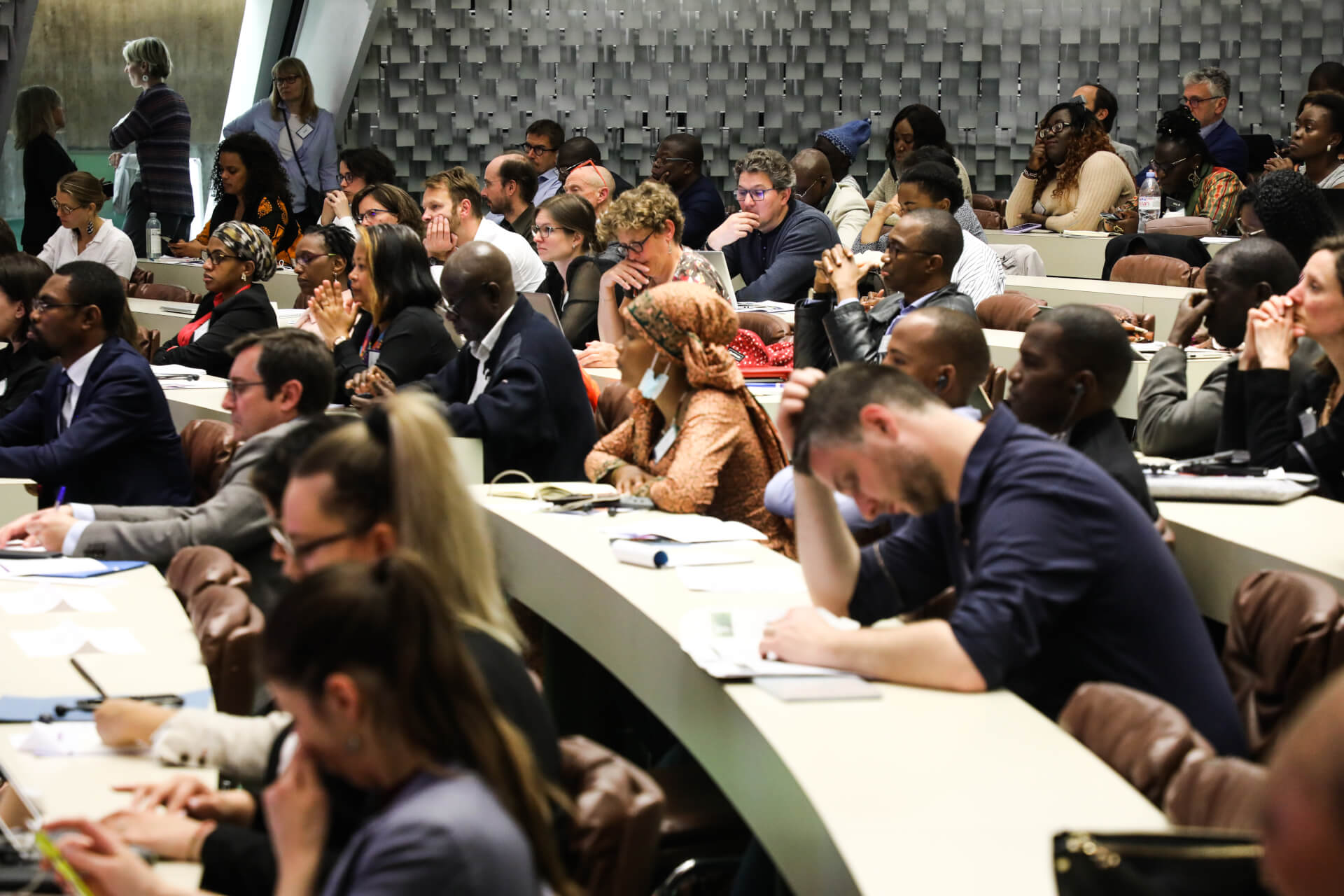
Paris, 6 May, 2022 - Over 150 civil society organisations from Africa and Europe call for better cooperation and a meaningful process to build increased capacity to influence decision making on the two continents.
“These two days are a unique opportunity to involve African and European CSOs in the building of a renewed AU-EU partnership. To build a common, fair and equitable future, the voices of civil society have to be fully included in the definition, implementation and monitoring of this partnership to make it truly inclusive at each level of its development,” said Olivier Bruyeron, President of Coordination SUD.
Together with officials of the African Union, the European Union, and France, a wide range of organisations met in Paris on the occasion of the African and European Civil Society Days organised by Coordination SUD, in partnership with CONCORD Europe and Forus International, on 6 and 7 May 2022.
Civil society organisations (CSOs) as actors close to the needs of communities, are critical players in the renewed partnership between Africa and the European Union, but their role can only be fulfilled with the guarantee of open civic space, access to sustainable and predictable financial resources, and opportunities for action-driven interactions with governments.
Based on their analysis of the AU-EU partnership, African and European CSOs are proposing concrete mechanisms for their involvement in the governance of the AU-EU partnership; a common action plan to promote these mechanisms and strengthen cooperation; and are sharing CSOs’ concerns regarding the needed environment for the adequate action capacity and expression of civil societies.
“African and European civil societies have shown that they have excellent coordination skills and that they are consensus builders, even under immense pressures. But African agency needs to be more recognised and supported. We need to acknowledge and learn from our diversity, united but with our differences. We must increase our efforts to decolonise development, humanitarian aid and peacebuilding and transform asymmetrical relations into synergies and international spaces of exchange,” said Mavalow Christelle Kalhoule, President of Forus International, a global network of civil society organisations representing 22,000 NGOs.
A lot of promises have been made around designing an equal partnership, now it’s the time to deliver so that jointly, we are able to respond to today’s global challenges, based on principles of equality, justice and peace. Civil society organisations expect that the new partnership will not be diplomatic rhetoric but rather a critical time for governments and partners alike to be held accountable.
This includes ensuring that those most affected by disabling conditions, such as conflicts, surveillance and repression can find support. As expressed by the Zambia Council for Social Development, "partnerships should be encouraged on a equal footing” and while joint action is important, the aim should be to make local leadership a reality.
“Let’s create the space for a meaningful contribution to address the systemic issues that African countries and the people are urgently demanding,” said Javier García de la Oliva, Secretary of the Board, CONCORD Europe.
For media enquiries or interview requests:
- Coordination SUD - Marie-Pierre Liénard, [email protected]
- Forus International – Bibbi Abruzzini, [email protected]
- CONCORD Europe, Katarzyna Krok, [email protected]