2021-07-26
Communication can make or break an Umbrella Organization
News
This article was written as part of a consortium project between UNNGOF, the Forus member in Uganda, and the Lithuanian NGDO Platform, the Forus member in Lithuania.
Communication is the act of transferring information from one place, person or group to another. Every communication involves (at least) one sender, a message and a recipient. These include our emotions, the cultural situation, the medium used to communicate, and even our location. It is the process of passing information and understandings from one person to another. In simple words it is a process of transmitting and sharing ideas, opinions, facts, values etc. from one person to another or one organization to another; communication brings people together, closer to each other. Communication is an important management function closely associated with all other managerial functions. It bridges the gap between individuals and groups through flows of information and understandings between them. Effective communication helps to ensure that all members of an entity are working collaboratively towards a common goal.
Umbrella Organizations are important institutional vehicles for the coordination of collective NGO actions in matters that transcend sector or thematic focus but also are major conveners for civil society. For an umbrella organization to be relevant, it is required that the secretariat and the platform members are in constant communication; that is how a collective, coherent and well-coordinated NGO sector can be built.
Based on this reality, the Uganda National NGO Forum together with the Lithuanian NGDO Platform sought the financial support of the European Commission through Forus and undertook a joint project between December 2019 and March 2021 with the aim of strengthening the internal governance and communication processes of the two platforms in order to improve the co-operation between the Platforms and their members. The project provided an opportunity to share experiences in communication and governance tools, to train the secretariat team and platform members in communication, and to provide coaching for writing internal policy documents in order to build a better governance.
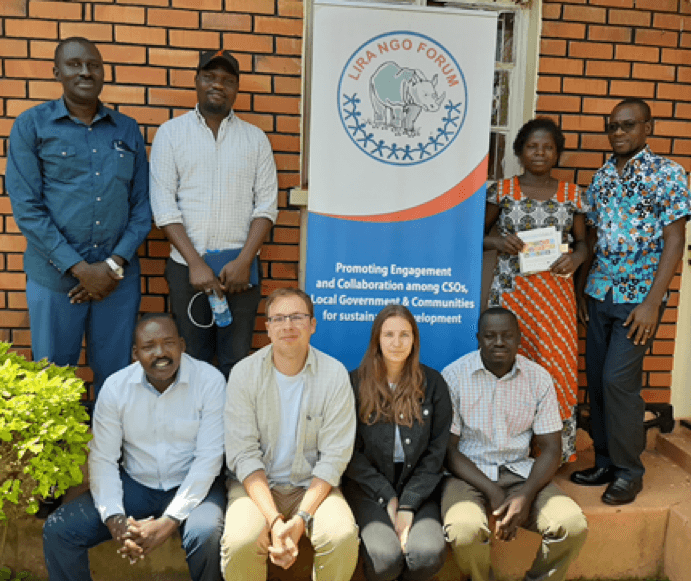
As part of boosting record keeping, documentation and communication amongst the UNNGOF sub national partners and their key stakeholders, 11 laptops were donated to 11 Regional Advocacy Networks (RANs) in Uganda. The justification of this IT support was based on the appreciation that capacity building is not an event but a process and therefore requires to support the RANs with modern laptops to help them cope with the new demands of virtual engagements in the face of the COVID19 pandemic. This direct IT support was followed by two trainings in external communication and results oriented reporting in March 2021, all of which aimed at preparing NGO actors to use communication and reporting as an accountability and branding tool, which is key in boosting the credibility of our organizations. There is no doubt that this project has changed our members’ views on communication; one participant noted “After this training, I now know how to communicate to the right audience”. At the end of this one year, we celebrate an improvement in the platform members’ skills in communicating their values, activities and projects to their local audience and beyond.
Additionally, as secretariats, we have now appreciated more than ever before the value of getting closer to our members as this is key to collaboration. We feel that governments often lack the understanding of CSOs’ work and of their value, and therefore are suspicious of them. As Umbrella Organizations we need to make the values of our members clear to governments so that they can gain a “seat at the table”. The legitimacy of NGO platforms and members depends largely on the knowledge they share; therefore, communication can make or break an umbrella Organization. However, following this project, we have made a choice of boosting our communication skills, so we can improve the credibility of the NGO sector in our countries.