© NGO Forum on ABD
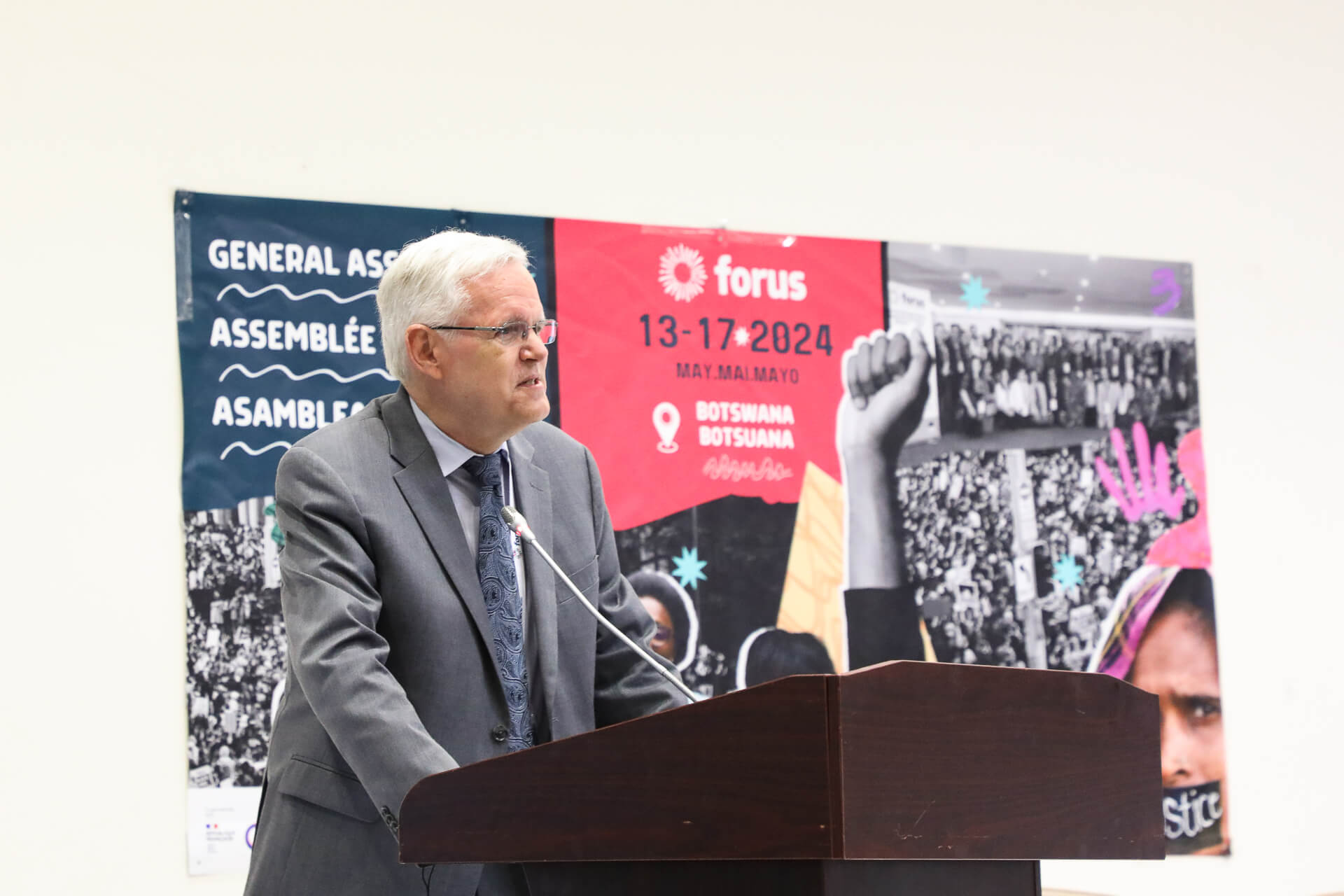
© Both Nomads/Forus
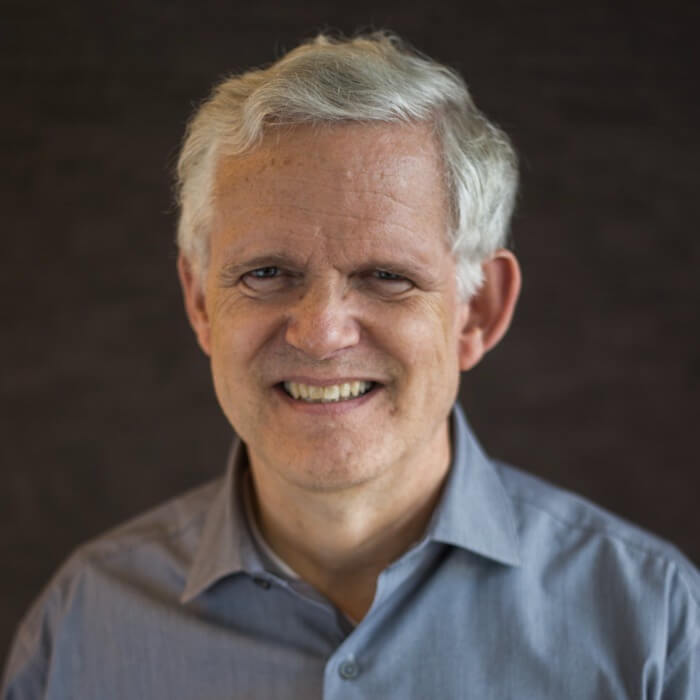
Wed 2 Jul 2025
Democracy at a Crossroads: Sam Worthington’s Candid Address from Taipei
At the 2025 Asia NGO Forum on International Development, held in Taipei, Taiwan, U.S. civil society leader Sam Worthington delivered a powerful keynote titled “Democracy at a Crossroads: Countering Authoritarianism and Advancing SDG 16.” Speaking from a uniquely candid U.S. and international civil society perspective, Worthington offered a sobering analysis of current threats to democracy worldwide, with a specific focus on authoritarian shifts under the second Trump administration. His remarks—grounded in decades of experience and delivered before an audience of Asian and global civil society leaders—situate SDG 16 not merely as a development target, but as a global moral imperative under siege. The following is the full text of his speech.
Democracy at a Crossroads: Countering Authoritarianism and Advancing SDG 16
Sam Worthington | Asia NGO Forum Keynote | June 27, 2025

Good morning.
It is an honor to join you here in Taipei. My thanks to our hosts, Taiwan AID, and for all of you for traveling to this important conference. This gathering could not be more timely. We live in a time when the ideals of civil society are being challenged across the globe, I celebrate your voice and resilience. The views I will share with you today are my own and I do not represent InterAction or any particular U.S. NGO but bring four decades of experience in our sector.
Sustainable Development Goal 16 was always an ambitious goal. It calls on all of us to build societies anchored in peace, justice, and strong, transparent institutions. At its heart, SDG 16 envisions a world where every individual—regardless of geography, status, or identity—can access justice without fear or favor. Where governments are accountable to their people. Where civic voices are not silenced but actively included in shaping policies and decisions. It affirms that sustainable development is not possible without inclusive governance, the rule of law, and respect for human rights.
Peaceful societies do not emerge by chance—they are built. Accountable institutions are democratic foundations that protect rights and check power. SDG 16 reminds us that development must not only improve livelihoods—it must also strengthen the legitimacy, fairness, and responsiveness of the institutions that govern our lives. Today, SDG 16 is under assault. Across the globe, civic space is shrinking. The rule of law is eroding. Authoritarian trends are rising. We stand at a crossroads. Not just as advocates or professionals, but as citizens — confronting a global democracy crisis.
In my recent book, Prisoners of Hope: Global Action and the Evolving Roles of U.S. NGOs, I write that we find ourselves at a unique historical juncture marked by disturbing trends: climate change, geopolitical conflicts, food insecurity, poverty, inequality… and a global shift toward populist and authoritarian ideologies. For many these are dark times. Yet, we cannot just curse the darkness. Now, more than ever, we must embrace and act upon civil society ideals and values to make a difference. As a part of the Istanbul Principles for CSO Effectiveness we have committed to respect and promote human rights and social justice; and to focus on people's empowerment and participation.
At the heart of effective NGO development work is a belief in human potential and the power of compassion to address the problems we are trying to solve. My understanding of civil society as prisoners of hope comes from Desmond Tutu. We are here at this conference because we believe in human potential. Hope for a better future is not passive. It shapes our future. Hope entails the will to imagine and act on a brighter future; outline possible first steps, and consistently forging ahead, refusing to let the status quo define our potential. I have seen this reality repeatedly, transcending cultural boundaries and uniting people. Hope for a future that advances human dignity, rights, and wellbeing serves as a driving force behind positive social change. Hope for a better future is not passive. It is an act of resistance against authoritarian drift. It embraces the possibilities of locally led development.
Community-led change
Even in these times of considerable headwinds, local civil society organizations and international NGOs are here to stay. Our role in addressing challenges through humanitarian and development action will remain a cornerstone of a globalized world. Together with other actors, promoting social change and justice, we must strengthen our partnership with local communities as they work to build a better future. We are gathered here today because of our shared commitments to humanity, to community-led development and change. This is not simply a development agenda—it is a democratic one. The aspirations of people must be shaped by their knowledge, strengthened by their leadership, and protected by democratic norms.
As NGOs, we have come to understand that lasting progress emerges when people have the power to shape their own futures. Community-led development is not just more effective—it is more just. It elevates participation and equity and puts decision-making where it belongs: in the hands of the people. Across the globe, countless grassroots organizations—often underfunded and under-recognized—work each day to build more inclusive, accountable, and sustainable societies. These groups are not just development actors; they are democratic actors. They foster civic engagement, advocate for rights, challenge exclusion, and strengthen our social fabric. To support them is to invest in democratic resilience from the ground up.
Even in the most difficult environments—where democracy may be under threat, where civic space is shrinking, where authoritarian states rule, or where corruption undermines trust—there are always people striving to build, work, and advocate for a more inclusive and dignified future. These efforts are acts of democratic defiance. They remind us that democracy is not defined by elections alone, but by everyday participation and inclusion.
To work with local change agents requires humility and a commitment to our shared humanity. When we look closely, we see people acting not for personal gain, but for collective potential. When their hope is grounded in human rights, and when people have the freedom to organize, speak, and act, it becomes a force that strengthens SDG16. This work sustains not only lives but democratic values. It empowers a new generation to organize and lead. In cities, villages, slums, and refugee camps, individuals are claiming space, asserting rights, and imagining new possibilities. Their efforts show us that the future of SDG16 depends not only on national institutions, but also on the voice of people.
International collaboration around SDG16 plays a vital role in nurturing this democratic energy. By combining global resources and expertise with local insight and legitimacy, we create a model of cooperation grounded in shared responsibility and mutual respect. International NGOs serve as bridges—linking community action to policy change, and local priorities to global agendas.
We understand that sustainable development cannot be achieved without democratic participation. It must be shaped by those who live with its consequences. That is why the movement for localization is not simply a development strategy—it is a democratic imperative. Grassroots effort to organize, to demand change, to include the excluded—these are the building blocks of democratic culture. In the end, community-led development and democracy are inseparable. Each reinforces the other. To support one is to strengthen both. And in today’s world, where authoritarianism is rising and civic space is under siege, this work is more urgent than ever.
InterAction and Bipartisanship
For over four decades, InterAction, the largest globally focused NGO platform in the United States, worked across party lines to advance principled U.S. development and democracy policy. From the Reagan administration through the first Trump and the Biden administrations, we engaged with leaders from both parties, including very constructive partnerships with Republican and Democratic members of Congress.
For seventy years, development assistance was broadly viewed as a nonpartisan pillar of U.S. foreign policy—a strategic investment grounded in American democratic and humanitarian values and an interest in global stability. Bipartisan cooperation shaped U.S. development and humanitarian policy. In Washington DC, many nonprofits learned that principled engagement, pragmatic proposals, and respect for institutions would help influence policy across political divides. That approach once worked. At InterAction I lived it.
Over the past decades, InterAction worked with different administrations, even as we did not hesitate to critique executive or legislative decisions. As a part of civil society, we upheld our role as both partner and watchdog. That included taking principled stands during Democratic and Republican administrations alike. We defended civic space, at home and abroad. A defining moment was the USAID v. AOSI legal action that went to the U.S. Supreme Court. Through InterAction, U.S. NGOs affirmed a foundational democratic principle: that nonprofits, even when partially funded by government, must retain their independent voice and the right to define their own policies.
The U.S. Supreme Court agreed. This victory for free speech reinforced that public funding should never require ideological conformity. The executive branch agreed, at least until today. InterAction continues to work across political divides, but today, the historical bipartisan development consensus has fractured. As USAID and other government agencies were dismantled through a hostile takeover, we have witnessed forces that are steering the United States toward a 21st-century version of a far-right authoritarian ideology we once called fascism. Radically disruptive actions are cloaked in the language of efficiency and normal governance.
The consequences are stark, and I will explore them in some detail but first let us step back to get a broader picture.
SDG 16 at Risk: Global and U.S. Trends
Across Asia and around the world: civic space is closing. In many countries, civil society organizations, independent media, and human rights defenders face growing restrictions, legal harassment, and intimidation. Laws on “foreign influence,” NGO registration, anti-terror legislation, and cybersecurity are used to stifle dissent and control public discourse. Thankfully, here in Taiwan, civic space remains vibrant and open—an outlier in this region—but as you know well it is under constant pressure from foreign disinformation campaigns and efforts to sow division.
In many regions judicial independence is under attack. In authoritarian and semi-authoritarian states across the world, courts are being politicized and weaponized against opposition figures and civil society actors. Efforts to erode judicial independence are central to the broader playbook of democratic backsliding. An independent judiciary remains a key pillar of democracy. Yet many democratic countries face hybrid threats, with cyber and legal attacks, and disinformation designed to undermine public trust in its democratic institutions, including its courts.
Surveillance and repression are rising. Governments across the world are rapidly expanding surveillance capacity, deploying advanced technologies to monitor citizens, silence critics, and preempt collective action. In new democracies like Taiwan, the government faces the dual challenge of countering malign foreign interference and protecting citizens’ rights. An open digital ecosystem must be safeguarded against the temptation to overreach in the name of national security. Striking this balance is essential but not easy.
Today the picture in the United States is stark, we are witnessing a rapid deterioration of our democracy—and the early consequences of this authoritarian slide are staggering.
Cruelty has become a governing strategy. Two famines are unfolding—in Gaza and Sudan—where mass starvation is a direct byproduct of deliberate Trump administration policies. Billions in U.S. humanitarian aid have been cut overnight, programs dismantled, food pipelines severed. These are not unfortunate side effects; they are calculated acts of indifference and ideological extremism.
Fear is wielded as a tool of control. Civil liberties are being systematically eroded. Purges of U.S. Justice Department officials continue. Scientists are discredited. There is a strategy to instill fear by targeting vulnerable communities, destroying careers, and punishing those who speak out or expose illegal actions. Leaders within the administration do not merely reject the rule of law—they seeks to dominate the narrative and criminalize truth itself.
Xenophobia is now an instrument of governance. Migrants and asylum seekers are dehumanized, the administration is bypassing due process—they are shackled, deported, confined to violent detention centers. Cruelty is not incidental; it is strategic. Masked immigration police, ICE, are now conducting violent home raids and tearing apart families in communities across the country. In cities these arrests are deeply unpopular. And for the first time since the civil rights crisis of the 1960s, the U.S. National Guard was deployed into an American city, into central Los Angeles—against the will of state and local officials, including the local police—to suppress immigrant communities. It provoked confrontation.
America has become an unwelcoming nation. Beyond the travel ban, entering the United States as a tourist, student, or business traveler now carries real risks—especially for those from Muslim-majority countries, marginalized communities, or anyone seen as “undesirable.”
Civil society is under siege. Hundreds of thousands of nonprofit organizations are being defunded across the country, particularly those engaged in human rights, racial justice, and democracy promotion. Universities are punished for defending academic freedom. Law firms and progressive voices are silenced through targeted intimidation and economic coercion. We are witnessing a deliberate effort to shrink the space for dissent and independent thought.
White Christian nationalism has been normalized. Racism, antisemitism, Islamophobia, and transphobia are no longer fringe ideas—they are openly embraced by allies of the White House and amplified across the MAGA media. This far-right ideological shift is reshaping U.S. political culture in dangerous ways, fueling political violence including assassinations. Dissent is criminalized, and corruption is now tolerated as legitimate. Peaceful protest and advocacy are labeled “radical” and “un-American.” Led by internal enemies who are seen as extreme, violent, or incompetent.
Meanwhile, corruption is no longer hidden, loyalists and unqualified political operatives openly occupy key posts, turning public service into an instrument of partisan control and personal gain.
The rule of law is being deliberately undermined. Time and again, courts have ruled Trump’s actions as unconstitutional or in violation of congressional authority. Yet this administration ignores judicial rulings, accelerating a dangerous erosion of the constitutional order and the checks and balances that define American governance. State censorship is expanding. Federal agencies are being hollowed out. Civil servants are silenced or purged. Government websites, data sets, and public records vanish. Independent American nonprofit media faces existential threats as the space for free expression contracts—and disinformation floods the vacuum. The Trump government is actively banning words and editing language to create a code for approved speech.
Gaining full control of government agencies is central to this authoritarian project. The strategy is sophisticated: selectively dismantle or hollow out key agencies, disregard established laws, eliminate dissenting voices, and shift operational control to entities outside the traditional government bureaucracy. A prime example is the so-called Department of Government Efficiency (DOGE), once led by Elon Musk; an Orwellian construct designed to hide a hostile takeover in the language of reform.
Under the banner of “efficiency,” and a fight against fraud, DOGE has aggressively helped Trump consolidated power, removing oversight and anti-corruption mechanisms and discrediting thousands of career civil servants. It maintains a constant narrative of blame, portraying government professionals as part of a corrupt, inefficient “deep state” that must be purged. Now, with DOGE having secured control of the U.S. government’s central payment system, it holds the power to selectively stop or manipulate disbursements, whether salaries, program funding, or contracted payments. This is not administrative streamlining; it has turned government finance into a weapon, a tool to enforce loyalty and punish dissent across the entire machinery of the federal government.
Accelerating this trend of executive overreach is the recent U.S. bombing of Iran. While executive U.S. military interventions abroad are not new, it is the aftermath—the war that follows—that often leads to further erosion of civic space. Trump would likely use any retaliatory attack on the American mainland as justification for sweeping anti-democratic actions.
Taken together, all the actions of the Trump administration are no longer a warning. The U.S. is mid-slide into a version of competitive authoritarianism. A nondemocratic United States is an existential threat to SDG 16 worldwide.
The USAID Surprise
One of the clearest examples of how this administration has weaponized government power, and exposed the fragility of our democratic institutions, is the dismantling of USAID. The attack came as a shock. We were not prepared, because few of us could have imagined that a U.S. president could, pull off a coup through the use of technology and the deliberate disregard of the law, systematically decimating a Congressionally mandated agency. And then move to harm other agencies across the country.
In the American system of government, the power of the purse lies with Congress. It is Congress that controls the federal budget and authorizes funding or cuts through legislation. A president can propose budget cuts or seek to redirect resources, but it is Congress alone that holds the constitutional authority to limit or terminate funding. Yet President Trump, acting through Elon Musk and DOGE, bypassed this fundamental check on executive power. While many of DOGE’s actions have since been ruled illegal by the courts, by the time those rulings came, the damage was already done.
USAID served as DOGE’s first test case—and the results were devastating. DOGE operatives physically entered USAID headquarters, fired anyone who objected, seized control of the agency’s computer systems, and began systematically dismantling its core functions. They shut down internal systems, cancelled grants and contracts, and blocked disbursements. Massive amounts of data were harvested in the process. When USAID officials later tried to restart emergency humanitarian operations, they discovered that critical support contracts had been terminated. The logistical backbone required to deliver food aid—procurement channels, warehousing, transportation, and payment systems—had been disabled beyond repair. Restarting these operations proved impossible.
DOGE then expanded its assault across the federal government, targeting other agencies—especially those that maintain critical data on U.S. citizens and those that manage essential public services, such as Social Security payments. Particular attention was given to the Justice Department and to any institution that could help monitor, intimidate, or control the American people. While we have secured a number of legal victories that have slowed this process, too often these wins have come too late to prevent irreparable harm.
The U.S. Institute of Peace (USIP) offers another stark example. USIP is an independent organization, chartered by Congress but governed by a nonprofit board—not a government agency under presidential control. Nevertheless, Trump summarily dismissed USIP’s board members and removed its executive leadership. The USIP president and several senior staff pushed back, arguing that the President had no legal authority to interfere with the governance of an independent nonprofit. In an act of civil resistance, they locked themselves in their building. DOGE responded with subterfuge. Using a ruse that misled local police and shifted building security under DOGE’s control, DOGE operatives gained entry. Once inside, they seized USIP’s computer systems and forced the remaining staff to vacate the premises.
Several weeks later, a federal court ruled the takeover unlawful and ordered USIP restored. The building is now reopened—but the damage was done. Of the 300 staff who once worked at USIP, only 25 remain and the institution’s capacity and programs have been gutted. Its computers are silent. USIP’s story is not unique. It is but one of many more illustrations of this administration’s authoritarian playbook: dismantle independent institutions, bypass the law, and normalize government by force and deception.
Impact of Ending US Foreign Assistance
In Cox’s Bazar or Darfur, a child who once survived on U.S. government aid will now die. Her life will be sacrificed in the name of eliminating government “waste”—after all, once she is gone, there is no need to feed her. With callous disregard for human life, the Trump administration has enacted foreign assistance policies that are killing hundreds of thousands of innocent people—primarily children. Its blind spot, its barbarism, lies in a profound indifference to human suffering. Empathy is discarded. Collateral damage is not a concern. Some may argue that this devastation is the unintended consequence of misguided reforms—a broken system being dismantled to make way for something new. But history may record it differently: not as reform, but as a barbarous crime.
A U.S. administration turned its back on millions who once received lifesaving aid, sacrificing the most vulnerable to pass a tax cut that disproportionately benefits billionaires. USAID’s humanitarian operations have been dismantled. Families arriving at feeding centers with acutely malnourished children now find locked doors. The centers are shuttered. The food is gone. Children die.
U.S. NGOs continue to operate—but with drastically reduced resources. Many are scaling back; some are shutting down their humanitarian programs entirely. For those living with HIV/AIDS on just a few dollars a day, vital aid is now replaced by a simple notice: “The medication you rely on is no longer available. All staff have been dismissed. There is nowhere left to go.” By late 2025 or early 2026, a widespread famine somewhere is likely. Yet its trajectory will go untracked—FEWS NET, the world’s premier early warning system for famine, once funded by USAID, has been shut down. The dying will no longer be counted.
This is not the first time ideology has fueled mass suffering. After World War II, Stalin restructured Ukraine’s agriculture to tighten control, triggering the Holodomor—a man-made famine that starved over three million people. Today, the Trump regime pursues its own cultural revolution, imposing a brutal reckoning on the world’s most vulnerable. Will historians one day call these entirely preventable deaths an American crime? There is no war—only the devaluation of human life, reduced to an accounting entry labeled “waste,” deemed unworthy of the nation’s interest.
This is the legacy of a government that embraces authoritarianism and betrays allies, as it ignores the norms of our democracy. At its core lies the barbarism the German historian Hannah Arendt so aptly named in her writings on totalitarianism: the inevitable result when leaders abandon empathy, shutting down lifesaving services in the name of efficiency—seeing only numbers on a screen where there were once people.
We are also witnessing a deliberate attempt to dismantle organized civil society—globally and at home. This is not just budgetary neglect; it is an ideological assault on empathy, justice, and collective action. Vital pillars of civil society—employing millions—are being targeted. One of the most powerful forces of the 20th century was the fusion of social justice and human empathy. It affirmed that we could and should act to improve human well-being everywhere. That vision gave rise to global civil society and informed the creation of the Sustainable Development Goals.
Most international NGOs operate with minimal reserves, judged by how much they direct to programs. Without fresh cash flow, many cannot survive. The result is mass furloughs, layoffs, and the collapse of local civil society organizations around the world. With European aid also in decline, many are scaling down or closing their programs. Some resilience will come from private philanthropy. Domestic U.S. nonprofits will fare better, supported by nearly half a trillion dollars in annual charitable giving. It will not be enough to offset the collapse in public funding, but it may keep portions of the sector alive. For U.S. NGOs working globally, the future will diverge—those with strong private funding may endure; the rest will disappear. Globally thousands of community-based organizations will shut their doors.
Today, empathy and social equity are treated as threats by leaders like Elon Musk and Donald Trump. They promote technocratic solutions devoid of compassion, laced with bigotry—the same combination that has fueled authoritarian atrocities throughout history.
Civil Society’s Response: A Fragile but Determined Resistance
Thankfully, U.S. democracy is not going quietly. Even in this dark hour, the story is not over. Across the country, Americans are refusing to yield. The fight for democracy is not lost—it is entering its most critical phase. From journalists and civil servants to activists, students, and public officials, people are standing up with clarity and courage. Hundreds of lawsuits have been filed to challenge unlawful executive actions. Thousands of peaceful protests routinely continue across all 50 states—rural and urban, red and blue. They may not always make national headlines, but their persistence is powerful. Civil society has not been silenced. Nonprofit leaders are defending vulnerable communities. Legal teams are documenting abuses and defending the rule of law. University students, from Harvard to historically Black colleges, are organizing to protect civil liberties and demand accountability. Community networks are sheltering people from state violence and immigration ICE raids. Religious groups, labor unions, and librarians are drawing lines.
States like California, Illinois, and Massachusetts are refusing to comply with federal overreach. They are filing lawsuits, rejecting unconstitutional mandates, and protecting civil rights within their own jurisdictions. State and local leaders are emerging as crucial guardians of democratic norms—often in defiance of Washington.
The courts have become one of the most reliable institutional checks on executive overreach. Though often slow and procedurally cautious, judges across the country have ruled against the administration’s efforts to rewrite the law by decree. They have blocked policies that violate civil rights, curtail labor protections, misuse federal funds, or infringe on state authority. These rulings slow down abuses of power and uphold constitutional principles, even when politicians fail. Yet the legal battle is far from over. The Supreme Court’s conservative realignment has enabled the administration to secure interim relief in some cases, but full reviews remain pending. Many executive orders are still tied up in litigation.
The courts are acting as a vital brake—but one operating under immense pressure, and without guaranteed outcomes. But this is not just a legal fight. Democracy is being defended every day—not just in courtrooms, but in classrooms, town halls, neighborhoods, and the streets. For millions of Americans, empathy, justice, and solidarity remain stronger than fear.
Some context. To much of the American public, the current political crisis remains confusing. Understanding is fragmented and often distorted, shaped by a steady stream of disinformation from the White House and its affiliated media networks. Narratives are manipulated to obscure the erosion of democratic norms and they reframe authoritarian tactics as necessary reforms. The United States has never been a perfect democracy. It has always held contradictions between its founding ideals and its lived realities. But for many Americans, the notion that we could slide into authoritarianism still feels exaggerated or abstract. Many remain focused on daily concerns: rising costs, job security, and access to health care. Some sympathize with certain administration narratives—supporting cuts to government spending or tougher immigration policies. The portrayal of migrants as dangerous criminals and of federal agencies as bloated and corrupt has taken root in conservative circles.
And yet, signs of public unease are growing, mirroring many of the pro-democracy movements in Asia. Two weeks ago, my 86-year-old aunt attended her first protest ever in New York City. She joined more than ten million people in over 2,100 peaceful demonstrations across the country. The “No King” day march became a nationwide act of resistance—joyful, determined, and deeply patriotic. It countered the White House’s attempt to provoke chaos by ordering the Marines into an American city for the first time in modern history. The administration sought conflict, hoping to justify further use of military force and create a spectacle of strength.
What they got instead were families with signs, people waving upside-down American flags, seniors with walkers, and children dancing in the streets. The optics they had hoped for—a triumphant show of force—were overwhelmed by a sea of peaceful defiance. People came out with church and community groups, as individuals turning out despite warnings of violence and chaos. Public alarm is setting in. Only 33% of Americans believed the President is using executive orders appropriately. A large majority disapprove of the sweeping cuts to federal departments and agencies and his handling of immigration policy. Unilateral tariffs, along with attacks on Social Security, public education, and healthcare, have also proven widely unpopular.
Yet the White House appears unmoved by broad public opinion. Its governing strategy focused on the mobilization of its MAGA base, not national consensus. It trades the substance of governance for the spectacle of domination—privileging loyalty over law, and power over principle. The goal is not to persuade but to polarize. Republican lawmakers, while not always endorsing the methods, continue to support much of Trump’s agenda. The party, for now, remains aligned behind a strategy that undermines democratic norms to achieve ideological goals and stay in power.
MAGA, Project 2025, and the Authoritarian Playbook
To understand what we are confronting, it is important to draw a clear line between MAGA ideology and the modern authoritarian playbook. They form a coherent strategy to concentrate power, dismantle democratic safeguards, and enforce a narrow ideological vision of America.
MAGA ideology is not just a conservative movement. It is rooted in white Christian nationalism, anti-immigrant sentiment, and a disdain for pluralism. It rejects democratic norms, casts opponents as enemies, and demands loyalty not to the Constitution, but to the leader. Project 2025 put this vision into action. It is a roadmap for the Trump administration to take control of the federal government. It calls for purging civil servants, politicizing independent agencies, and consolidating power in the hands of the executive. It aims to replace nonpartisan professionals with ideological loyalists and dismantle departments that support equity, rights, and international cooperation.
This ideology follows the familiar authoritarian playbook:
- Capture and weaponize institutions.
- Discredit dissenters as threats.
- Exploit fear and division, especially around race and migration.
- Strip away legal norms and checks on executive authority.
- Centralize power while eroding accountability.
The MAGA movement fuels the ideology. Project 2025 provided tools for far-right ideologues in the White House. President Trump brings the charisma, political will and the ability to convincingly tell big lies. While many U.S. NGOs promoted democratic governance abroad, they failed to confront the democratic unraveling happening at home.
The Power and Fragility of SDG 16
Why does SDG 16 matter? Because it underpins all other Sustainable Development Goals. Without justice, accountable governance, and strong institutions, no society can be truly sustainable. Economic growth may occur, but if people—especially those who are marginalized—lack a voice, if justice systems are inaccessible or corrupted, and if individuals are denied a say over their own futures, the foundation for lasting progress collapses.
It is imperative that governments, civil society, and international organizations rally together to protect and strengthen democratic institutions, foster inclusive governance, and help people adapt to rapidly changing political and social environments. As civil society actors, we must reject the false dichotomy between advocacy and service delivery. These are not separate arenas—they are interwoven strategies in the defense of justice, dignity, and democratic values. SDG 16 is not a technical goal. It is a moral imperative.
Advancing SDG 16 also requires a shift in mindset—from charity to solidarity. Cross-border collaboration must be seen as reciprocal. A truly global civil society acknowledges that knowledge, strategies, and innovations flow in both directions, challenging traditional hierarchies of aid and development.
To move this agenda forward, we must:
· Strengthen civic infrastructure and invest in youth-led and digital rights movements.
· Promote participatory decision-making, ensure access to information, monitor rights violations, and engage in accountability mechanisms.
· Involve the private sector in anti-corruption initiatives, responsible governance, and ESG standards.
· Invest in conflict prevention and coordinate across humanitarian, development, and peace building organizations to address fragility at its roots.
· And throughout, we must push for genuine localization—transferring power and resources to those closest to the communities we serve.
At the global level, we need to forge resilient civic networks—solidarity networks strong enough to withstand disruption, challenge impunity, and hold both governments and corporations accountable for their actions. The United States is only beginning to confront the threat of internal authoritarianism. In contrast, many in Asia have decades of experience resisting autocracy and defending democratic space. Now is the time to learn from one another, to build solidarity across borders, and to forge the mutual resilience that our shared future demands.
Closing: Hope is an Act of Resistance
I close with this reflection: Hope is not blind optimism. It is clarity in the face of danger. It is the act of standing up when democracy falters. We are at a crossroads, yes. But it is also a rallying point. Together — as civil society actors in Asia, the U.S., and globally — we must recommit to the ideals embedded in SDG 16: justice, accountability, and peace. We are indeed prisoners of hope — because we choose to shape a future that advances SDG 16. Let us walk forward, not alone, but together.
Thank you.
Sam Worthington’s address underscores a critical truth: democracy is not self-sustaining. Whether in Washington, Manila, Taipei, or Nairobi, the principles embedded in SDG 16—justice, accountable governance, peace—require constant defense and reinvention. His call to action is both urgent and hopeful: civil society must serve as the connective tissue of democratic resilience, pushing back against authoritarian drift while building new forms of solidarity across borders. In a moment of democratic crisis, the role of NGOs is not only to deliver services—but to embody and advance the values that make sustainable development possible.