Thu 13 Jun 2024
Forus and Eight civil society partners sign landmark EU partnership to promote an enabling environment for civil society across the globe
Brussels, 13 June 2024
The EU System for an Enabling Environment for Civil Society program seeks to support civil society to thrive by preventing efforts to restrict civic space and shut down civil society organisations.
-
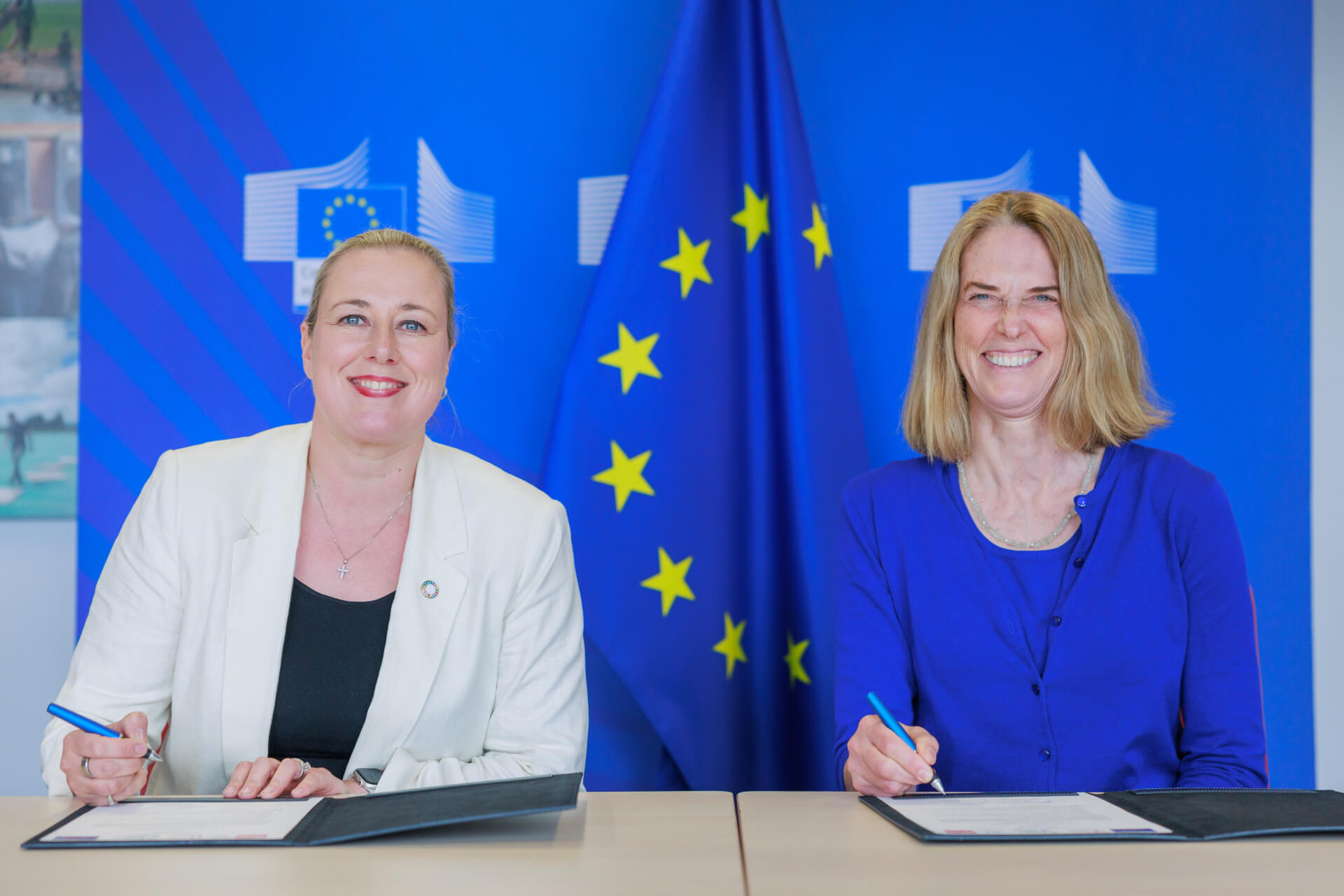
Agreement signed by Jutta Urpilainen, European Commissioner for International Partnerships in the European Commission together with civil society leaders
-
The program named the EU System for an Enabling Environment will be implemented by 9 civil society organisations with a global outreach across 4 continents
-
The program seeks to anticipate and address threats to civil society in 86 countries across the globe, providing timely information to networks and the EU to facilitate advocacy actions
-
It provides financial support mechanisms to civil society organisations including those most marginalised in decision making processes
A new partnership between the European Union and a consortium of 9 civil society organisations, of which Forus is part, has been signed today by EU Commissioner for International Partnerships in the European Commission, Jutta Urpilainen, alongside several leaders of civil society organisations, in the margins of the annual meeting of the “Team Europe Democracy” initiative in Brussels.
Commissioner for International Partnerships Jutta Urpilainen said: “Civil society is a key partner for the European Union in delivering sustainable impact for communities through EU external action. With civil society partners, we promote democratic civic space, which is essential for the successful roll-out of our Global Gateway investment strategy. I am proud that we can launch together the new EU System for an Enabling Environment for Civil Society programme. It will help civil society to monitor potential restrictions on civic space, raise the alarm and respond proactively to threats to democracy."
The EU System for an Enabling Environment aims to promote an enabling environment for civil society in 86 countries across the globe. Led by civil society, this innovative mechanism brings together national, regional and global networks to monitor the laws and administrative practices as well as the digital and media environments which provide the context for civil society operations.
In countries where participating monitors issue alerts on restrictive actions, the EU System for an Enabling Environment will aim to provide funds and solidarity networks to local organisations to mount campaigns, or strengthen their internal systems to withstand threats to their operations.
The EU System for an Enabling Environment begins its work in 2024 as an innovative response to the ever increasing restrictions on civic space. Across the world, in both authoritarian states and established democracies, citizens engaged collectively in policy, advocacy and community work frequently face diverse restrictions on their rights to form associations and organise, or are prevented from expressing their views freely. From repressive NGO laws aimed at cutting off civil society funding, to administrative red tape, civil society organisations find their knowledge and expertise is disregarded and doors closed to them as they are excluded from decision-making processes.
Through a chain of actions encompassing monitoring at the national level, leading to the issue of early warnings, which in turn aims to provide timely support to groups in need, EU SEE aims to support civil society’s response in preventing and proactively responding to legal and policy developments and other events that may impact their ability to operate.
The project has been designed with the broad participation of partner NGOs, and it aims to reach a diverse set of groups such as those outside of main capitals and those representing marginalised communities including civil society organisations headed by women, youth and other vulnerable groups.
At a time when restrictions seem to be on the increase even in established democracies, the legacy of the EU SEE Program will help prevent repressive tactics and strengthen solidarity, advocacy and dialogue with state authorities.
"By bringing together organizations from 86 countries, we are creating a powerful network capable of monitoring, responding to, and ultimately transforming the enabling environment for civil society. This initiative not only equips local actors with the tools and resources they need to defend civic space but also fosters a resilient and united front against the increasing restrictions on fundamental freedoms. Together, we are committed to ensuring that the voices of civil society are not just heard but amplified and respected at every level," says Christelle Kalhoule, Chair of Forus and President of SPONG in Burkina Faso.
The partner CSOs have a wealth of experience monitoring, protecting and strengthening civic space with members or chapters in over 190 countries. The organisations implementing the program are CIVICUS, Democracy Reporting International, European Partnership for Democracy, Forus, Hivos, Oxfam Novib (Oxfam), Protection International, Transparency International and Urgent Action Fund - Latin America and the Caribbean (UAF-LAC).
For media enquiries contact
[email protected] and [email protected]
More information about the EU System for an Enabling Environment
The EU System for an Enabling Environment program comprises two main components designed to address these challenges. The first one seeks to set up and implement a civil society monitoring index and Early Warning Mechanism that would detect situations where the enabling environment is deteriorating or improving; it is led by Hivos. The second complementary component of the system responds with flexible and timely financial support for civil society organisations through its Flexible Support Mechanism; it is led by Oxfam. This mechanism supports civil society to advocate for a sustained enabling environment, develop systems of resilience, and protect organisations and individuals. By detecting restrictions on time and responding preemptively, the system will contribute to the creation of a supportive environment for civil society to operate.
The EU System for an Enabling Environment for Civil Society is funded by the European Commission.