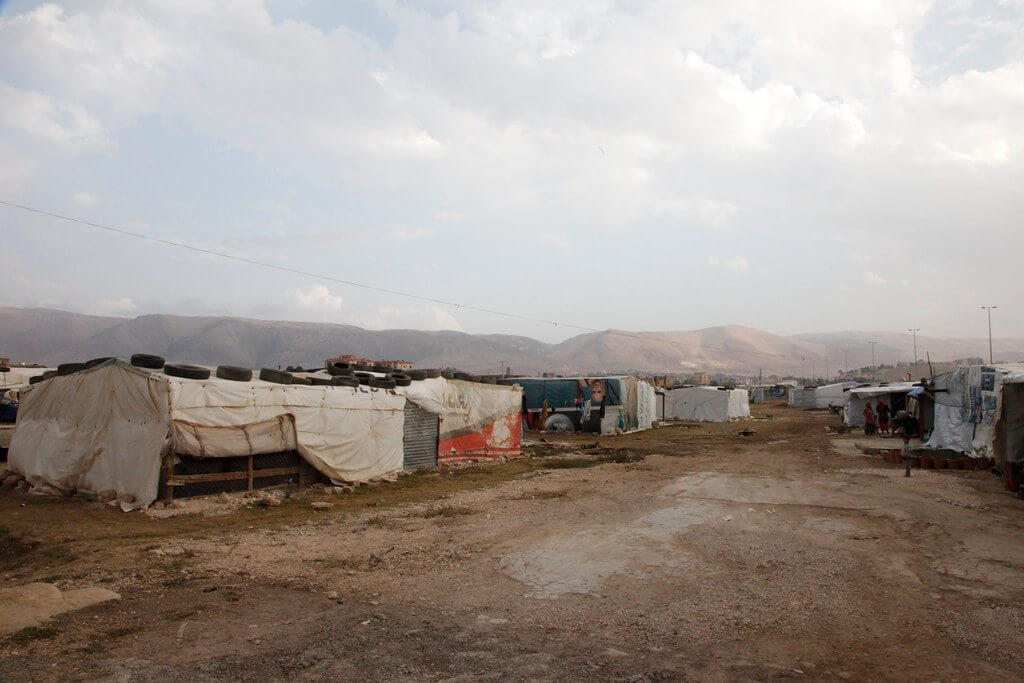
©'Informal tented settlement' in Lebanon's Bekaa valley | Flickr
2024-10-17
Forus resources: As major conflicts increase, what can we do?
We hear it, we watch it, we feel it. There are over 110 ongoing conflicts, 108 countries are becoming more militarised while we are witnessing an alarming drop in global funding to people in war and crisis. At least 110 million people are either refugees or internally displaced due to violent conflict, with 16 countries now hosting more than half a million refugees.
In our hyperconnected world, the engagement for peace and “la vida digna”, of civil society, of activists and of citizens on a global scale, is an everyday responsibility and effort.
People are experiencing very different types of conflict across the world and their visibility and invisibility is a matter of international solidarity, geopolitics, “proximity” and finally algorithms. Some of these conflicts make the headlines, others do not. Some of them started recently, while others have lasted for over 50 years.
We are increasingly confronted with conflicts, but also with our feelings of hopelessness, a lack of accountability and trust in our governments and their capacity to call for peace, and to end senseless violence. Deaths from violence targeting civilians – have also become common. Images of the innocent losing their right of existence on this planet scroll on our screens, in our conversations and some of these visions are forged in our minds and will never leave us.
Behind the numbers of people killed and displaced every day, there are webs of trauma: psychological, social and economic. A post-conflict collective path that needs generations of careful rebuilding, “knitting” and nurturing. But then again, often, victims and communities are not invited to rebuild that path, their own path. Power stays immobile, frozen at the top, in the hands of a few. Peace is about change. And change is also about power. If you are a victim of conflict and a survivor of trauma, it’s about turning power around, rising above haunting memories, loss, pain, injustice, hunger and anger. There can be nothing harder.
As a global civil society network, to demonstrate solidarity with people experiencing or recovering from conflict, we aim to contribute to strengthening the global response by creating spaces of dialogue and action. Below, we share a non-exhaustive list of resources and practices from across the Forus network to support communities affected by conflicts and to engage in peace and care
We can all act, share initiatives, campaigns, humanitarian efforts, working groups; we invite you to add your resources to our collective list.