Thu 20 Oct 2022
How can development projects integrate human rights?
By Clarisse Sih and Bibbi Abruzzini, Forus
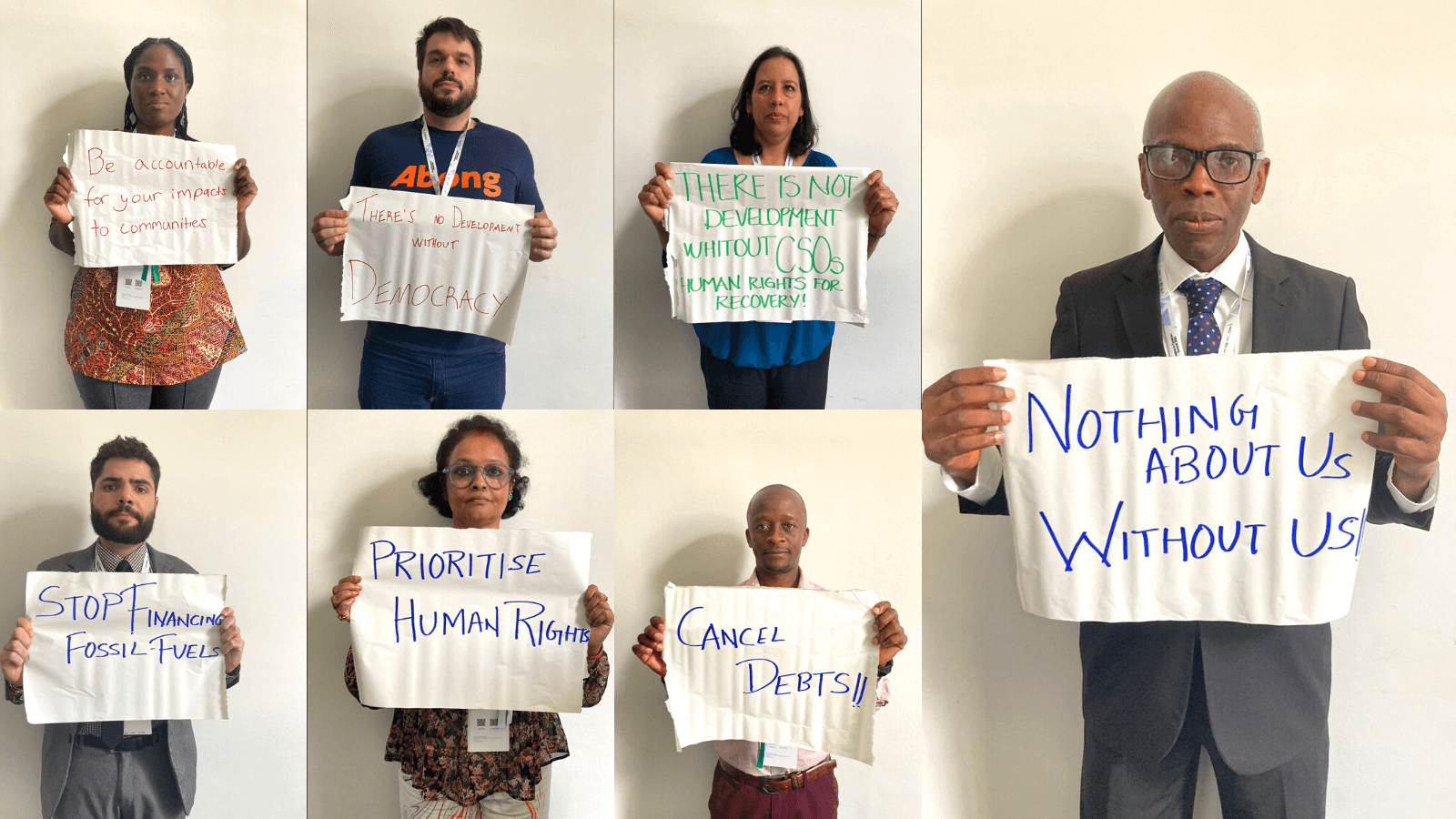
“Nothing about us without us!”, “Prioritise Human Rights”, “Cancel Debts”, “Stop Funding Fossil Fuels”. These were some of the posters held by a group of civil society organizations at the Finance in Common Summit, gathering hundreds of public development banks from across the globe, in Abidjan, Ivory Coast, on October 19-20.
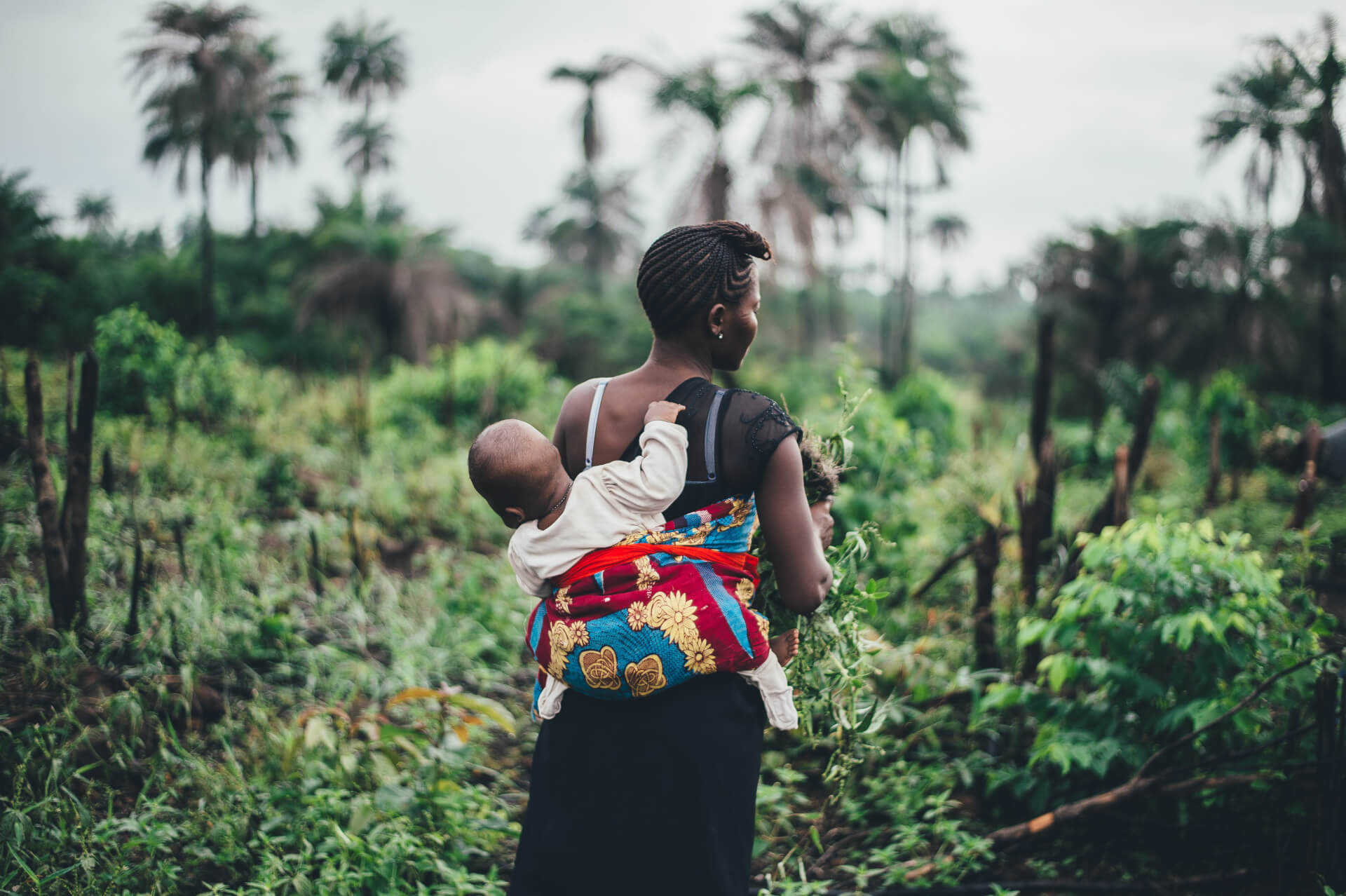
Development projects shape our world. They are the streets we use everyday to go buy groceries, they are the electricity line that is allowing us to share this article, they are the water than runs in our wells. Ultimately, they impact the ways we interact with one another, with the other-than-human world and with the food we chew every day.
The decisions taken by public development banks are therefore existential.
Such responsibility comes with an even greater one to include communities directly concerned by development projects, those whose air, water and everyday lives are affected for generations to come.
This year marks the first time that the Finance in Common Summit introduced a human rights pillar and has boosted it’s efforts to include civil society organizations, but is this enough?
“The reality? Go to the outskirts of Abidjan and somehow, I have failed to see the large bridges and other infrastructure projects that public development banks have been claiming to have created for the benefit of communities,” says civil society leader from the Asia Development Alliance, Jyotsna Singh.
Many in civil society have expressed concerns about Finance in Common as a space that fails to be truly inclusive and that misses the point when it comes to the real needs of communities.
“They will speak about “sustainability”, while ignoring the protests against austerity policies and rising debt. They will speak about “human rights”, while ignoring those denouncing human rights violations in the context of their projects. They will speak about “green and just transition”, while continuing to support projects that contribute to climate change," says Tity Agbahey, Africa Regional Coordinator, of the Coalition for human rights in development.
Communities cannot be left out of the door.
“The Sahara and Sahel countries especially have been facing the most serious security crisis in their history linked with climate change, social justice and inequalities in the region,” says Oluseyi Oyebisi, Executive Director of the Nigeria Network of NGOs representing over 3,700 NGOs.
Marked by a lack of opportunities especially for young people, limited and unequal access to basic social services, and climatic vulnerabilities, the region has some of the lowest human development indicators in the world – even before the COVID-19 pandemic.
“Access to affected populations is limited in some localities due to three factors: the security situation, the poor state of infrastructures and difficult geographic conditions,” Oyebisi explains.
“Public development banks must prioritise civil society organisations and community-initiatives supporting state programs of decentralization, security sector reforms and reconciliation. This will help reduce the vulnerability of populations and prevent violent extremism.”
The double-edged sword of development projects is felt all across the globe.
Deep in the heart of the "world's lungs”, with headquarters in São Gabriel da Cachoeira, considered Brazil’s “most indigenous municipality”, the organisation Foirn articulates actions in defence of the rights and sustainable development of 750 indigenous communities in the most preserved region of the Amazon, on the triple border with Venezuela and Colombia.
International cooperation has played an important role, says Marivelton Rodriguês Barroso, indigenous leader and President of Foirn, by “strengthening the indigenous movement and giving relevance to environmental issues, to traditional knowledge, to the preservation and protection of our territories focused on the well-being of our communities”.
The organization will soon start a project with the French Development Agency (AFD) which will focus on the commercialization of indigenous crafts and sustainable tourism with minimal impact on the environment.
Brazil has lost a Belgium-sized swath of the Amazon Rainforest since the start of 2019. It is home to over 30 million people and 900 communities. For those who want to protect their land, the task is increasingly risky. Global Witness recorded that 200 land and environmental defenders were killed in 2021 – nearly four people a week. Over three-quarters of the attacks recorded took place in Latin America. In Brazil, Peru and Venezuela, 78% of attacks took place in the Amazon.
"We have no other recourse but to resist,” says Brazilian defender Eliete Paraguassu. “This resistance comes with a price – a high one. For protesting against these environmental crimes and harms to our health, we have been subjected to death threats, legal harassment and smear campaigns. The threats to my life have gotten so bad recently that I had to adopt a security scheme that obliges me to constantly leave the Ilha da Maré and that does not allow me to do what I most enjoy doing in life: gathering shellfish.”
So what is the way forward?
For Maria Isabel Valderrama Gonzalez, of the Gaia Amazonas Foundation, the solution is to transform the relationship between public development banks, civil society and communities into “an alliance”.
“It is an invitation to go beyond the vision of the beneficiary and considering local populations as full partners. It is an invitation to stop seeing civil society as just an intermidiary.” The collaboration must be a “true” one allowing public development banks, communities and civil society to work together for a common – and foremost consensual - interest.
“Our expectations are high and fairly ambitious. This [Finance in Common] gathering should adopt a vision which is in line with previous commitments which enshrine the importance of adopting a rights-based approach and engagement with civil society,”says Alice Mogwe a human rights activist since the 1990s and currently the President of the International Federation for Human Rights.
“There should be more civil society participation including local civil society organizations in order to enforce fact-based information and for experience to be shared about ongoing finance projects and those to be financed,” she adds.
No project funded by public development banks should come at the expenses of vulnerable groups, the environment and collective liberties, but should instead embody the voices of communities, democratic values and environmental justice. This is the message embodied in a collective statement endorsed by more than 50 civil society organisations, for public development banks.
In the words of Mavalow Christelle Kalhoule, Forus Chair and President of Spong, the NGO network of Burkina Faso, for public development banks to be inclusive, transparency and rights-based, "they must reinforce their long-term efforts to create dialogue with civil society organisations, social movements and indigenous communities in order to fortify the democratic principles of their work. We encourage them to listen, to ask and to cooperate in innovative ways so that development stays true to its original definition of progress and positive change; a collective, participative and fair process and a word which has a meaning not for a few, but for all”.