2022-12-29
India: Changing the Narrative, One Step at a Time
by Pallavi Rekhi, Programme Officer at Voluntary Action Network India (VANI)
Indian civil society, since its beginning, has never experienced such extent of ambiguity and anxiety, as it has been experiencing lately. This context for national civil society is a consequence of the recent development in the regulatory framework in India, governing civil society organisations. More restrictions, increased compliances and new directions are being introduced to watch over and control the sector. Those who have been a part of the seventy-five years of the civil society sector in India are evidence to the mistrust between the state and civil society, which has led to an inevitable gradual shrinking of civic space in the country.
Civil society institutions are known for their path-breaking work in serving the underprivileged, and facilitating policy changes that are in favour of the most marginalized. The sector is recognized for its support to the remotest parts of the country, where the government has failed to reach and serve vulnerable communities and being responsive to their needs. However, the changes with respect to civil society, brought about in recent times, these have severely impacted their work, making it nearly impossible for most organizations to sustain and continue serving society. In addition, there is a significant dearth of funds and other resources; this trend is likely to drop down further.
In this context, as a national platform of voluntary organizations, VANI aimed at changing the narrative of the sector and creating an enabling environment for it to function. With support from Forus in collaboration with the French Development Agency, we collected case studies and data from voluntary organizations, all over India, focusing on their journey in mitigating the effects of the COVID-19 pandemic. As a result of this research, we developed a compendium report of successful stories of the role of CSOs during the COVID-19 pandemic in India.
Story of Impact
Before talking about the impact of the project, let us first highlight the challenges that VANI faced in developing this compendium and how we converted them into opportunities. The project questionnaire was developed and circulated amongst member organizations and others, in April, 2022. The goal was to collect at least 30 success stories from across India. The project aimed at documenting good practices and solutions to common problems that organizations were facing during the pandemic. However, the first and foremost challenge was the lack of motivation to share one’s own success story! Even after sending constant reminders through email and calls to potential participants, by September we had received only twenty responses.
Another significant challenge that emerged was technological inefficiency. Many of our members, belonging to grassroots communities, were not equipped to respond to an online questionnaire. Nevertheless, we developed strategies to overcome these obstacles and emerged stronger. To receive more responses, we made it mandatory for participants to fill in the questionnaires, if they wished to attend our subsequent webinars on “Social Media-A Double Edged Sword”, “The Art of Effective Storytelling for NGOs” and “Gender Mainstreaming within your organization”.
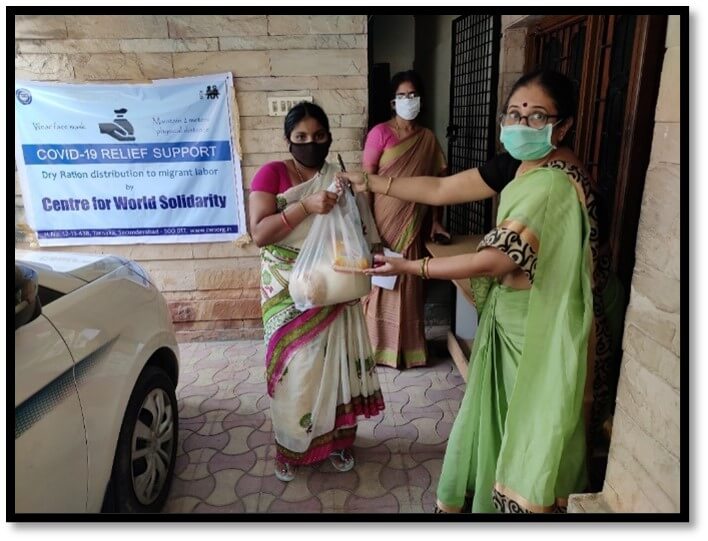
With reference to the second challenge, we made phone calls to participants, to record their responses and in a few cases sent a printed questionnaire through post. These strategies helped us reach our desired number of responses. Participants were able to document and record their impact, which they were unable to do before. They got a platform to narrate their story and reach out to a wider audience, apart from their donor agencies and beneficiaries. It gave them a sense of validation and motivated them to continue their struggle and services. The compendium will also archive the success stories of the voluntary organizations in India in supporting migrants, providing medical equipment and hygiene material, raising awareness, arranging medicines and safety gear, providing shelter to the needy, counselling women and children, livelihood development, and much more. They faced multiple challenges and were themselves burdened with depleting resources, restrictions in movement, delayed project deliverables, loss of human resources, risk to their own lives, among others. Despite these overwhelming obstacles, civil society came forward as a saviour.
Learning is a never-ending journey
Even though there were hindrances, civil society organisations in India did not let their focus dwindle and made efforts to serve communities and reduce their suffering. Similarly, despite the speed breakers VANI experienced while carrying out this initiative, it never gave up and looked out for opportunities even in difficult times. This compendium provides a ready reckoner of the good practices, innovations and successes of civil society in trying times. Other partners can learn from their experiences, become more resilient and ensure a sustainable future!
The Way Forward
In the coming months, the compendium will be disseminated to more than 6000 beneficiaries including members, non-members, academicians, community members, media, with an aim to change the narrative of the sector in the eyes of the other stakeholders.