Mon 13 Apr 2026
Introducing the Forus Post-2030 Vision
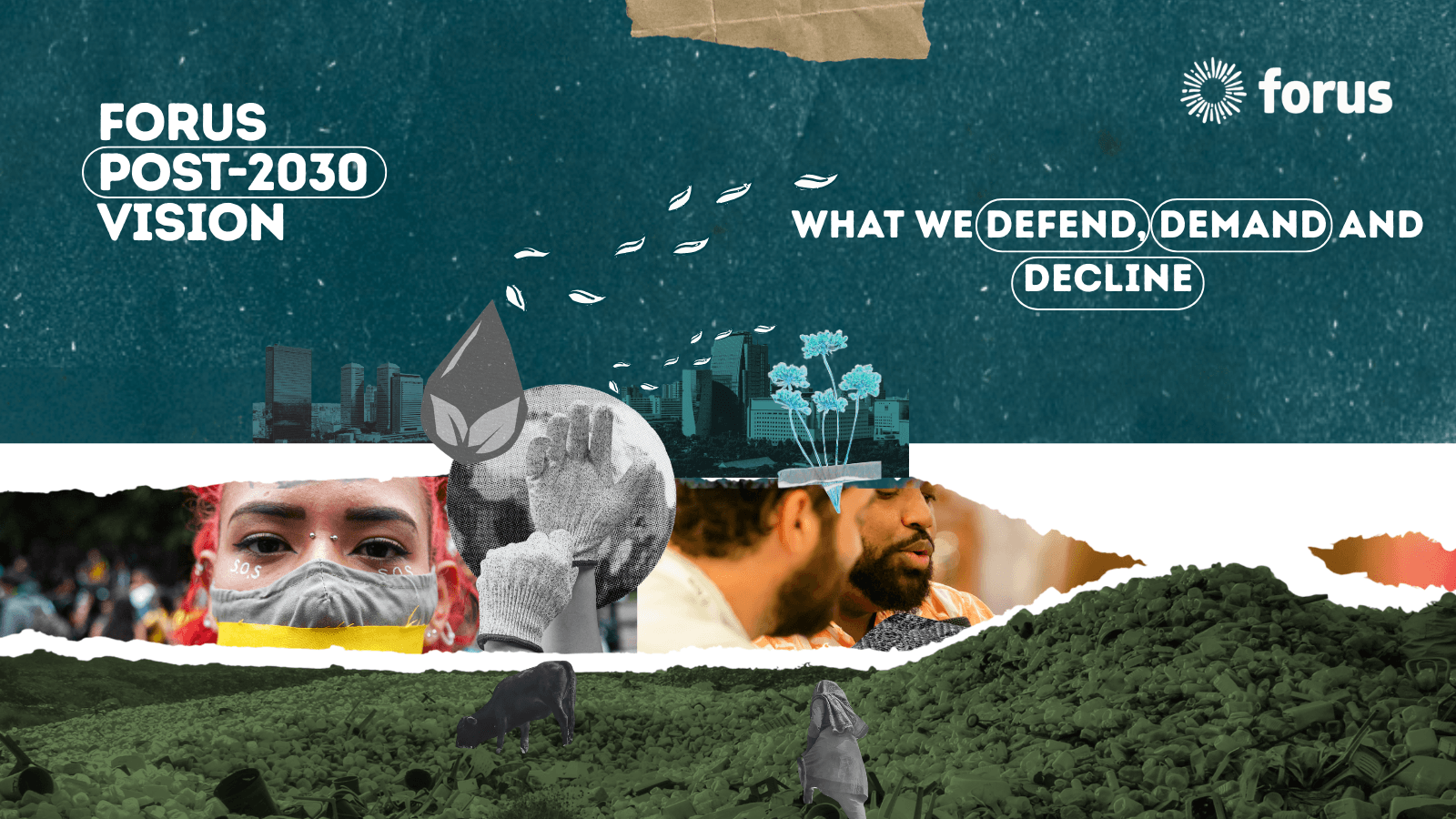
The future after 2030 is being shaped now. Forus is launching a collective civil society vision for what must be defended, demanded and declined.
What comes after 2030 will not be decided only when formal negotiations begin.
It is being shaped now — through early agenda-setting, coalition-building, political positioning, and struggles over who gets to participate and on what terms. And it is taking shape in a much harsher environment than the one that gave rise to the Sustainable Development Goals in 2015.
Geopolitical fragmentation is deepening. Civic space is shrinking. Development finance is under growing strain. Support for multilateralism and universal norms is increasingly contested. The danger is not only that the next framework may fall short. It is that it may quietly become thinner, weaker, less accountable, and less just.
That is why the Forus network is launching a collective Post-2030 Vision: an early contribution from global civil society to the debate on what should come after the SDGs — and, just as importantly, what must be defended, what must be corrected, and what must not be lost.
Developed with Forus members from across a global network bringing together 74 National NGO Platforms and 8 Regional Coalitions representing over 24,000 NGOs worldwide, and informed by consultations with development experts from the UN, civil society, academia, think tanks and philanthropy, the Vision is grounded in collective reflection, lived realities, and the voices of those too often pushed to the margins of global agenda-setting.
As the international community begins to reflect on what should come after the Sustainable Development Goals, several critical questions are already shaping the debate. What must the next framework absolutely preserve? What needs to change if it is to become more credible and more just? And what must be firmly refused if the future agenda is to remain rooted in rights, accountability, and real implementation? Those questions sit at the heart of the Forus vision.
At its centre are Forus’ 3Ds for a credible post-2030 agenda:
What we defend
-
A universal and rights-based development agenda that leaves no one behind.
-
Civic space as a public good.
-
Local leadership with real power and resources.
-
A strong and effective multilateral system.
-
And the normative gains of the SDG era, including the recognition that sustainable development must integrate social justice, equality, environmental sustainability, peace and human rights.
What we demand
-
A post-2030 framework that corrects the SDGs’ major weaknesses — especially on financing, accountability, localisation and implementation.
-
Stronger financing reform at the centre.
-
Real accountability mechanisms through mandatory, transparent and regular review.
-
Meaningful and safe civil society participation
-
Greater power for local actors.
-
And a framework capable of responding to today’s realities: climate breakdown, democratic erosion, inequality, conflict, and the risks and opportunities created by emerging technologies.
What we decline
-
Any watered-down framework that sacrifices universality, rights, gender equality, civic freedoms or climate ambition for political convenience.
-
A financial status quo that deepens inequality.
-
Accountability mechanisms that remain voluntary and performative. Tokenistic inclusion.
-
And development governance that expands private or philanthropic influence without public-interest safeguards, democratic oversight and accountability.
-
The next global agenda must not become smaller, weaker, or more selective.
Forus’ position is clear: the post-2030 process must not become a vehicle for lowering ambition, weakening rights or shrinking accountability. It must be an opportunity to correct the gaps that limited the SDGs while defending their universal and transformative promise.
The vision is grounded not in a single prediction, but in political preparedness around possible futures for global development — from continuity to reset or fragmentation. For civil society, engaging early is essential. Even under constrained political conditions, forward-looking proposals still matter: they can shape narrative, widen political space, build alliances, and prepare the ground for deeper reform — especially on financing, structural inequalities and accountability.
This is why the launch of the Forus Post-2030 Vision is not the end of a process. It is the beginning of a wider influence push.
In the coming period, Forus and its members will work to shape the terms of the debate early, connect local realities to global processes, build politically smart coalitions, and advance a post-2030 agenda that is more just, more credible, and more grounded in people’s lives.
📅 Join the launch of the Forus Post-2030 Vision Paper
🗓 21 May 2026 | 13:00 UTC |
🌍 Online - Interpretation in EN / FR / ES
Register here
Learn more in our online hub
Download the Executive Summary
Why this vision matters
As the international community begins to reflect on what comes after 2030, several critical questions are shaping the debate on the future of global development. What must the next global development agenda absolutely preserve? Which gaps in the current framework must be addressed? And how can stronger financing, real accountability, deeper localisation, and meaningful civic participation ensure that the next framework delivers tangible results? Ultimately, these questions point to a deeper challenge: what makes a development agenda truly credible — one that is rooted not only in ambition, but also in firm accountability and real implementation.
The debate around the future of global development – post-2030 - is already taking shape. Narratives, alliances, political choices, and decisions about who gets to participate will define the next global framework.
For civil society, engaging early in this conversation is essential.
Be part of the conversation
You can engage through our multilingual social media campaign, featuring posts, podcasts, and articles unpacking the vision and opening the discussion to a broader global audience.
👉 Join the launch event
👉 Explore the 3Ds of the Post-2030 Vision in our Executive Summary
👉 Use and share our social media kit
For partnership opportunities or to engage in the conversation, contact [email protected].