
Tue 7 Mar 2023
Kirthi Jayakumar: “All violence against women is political”
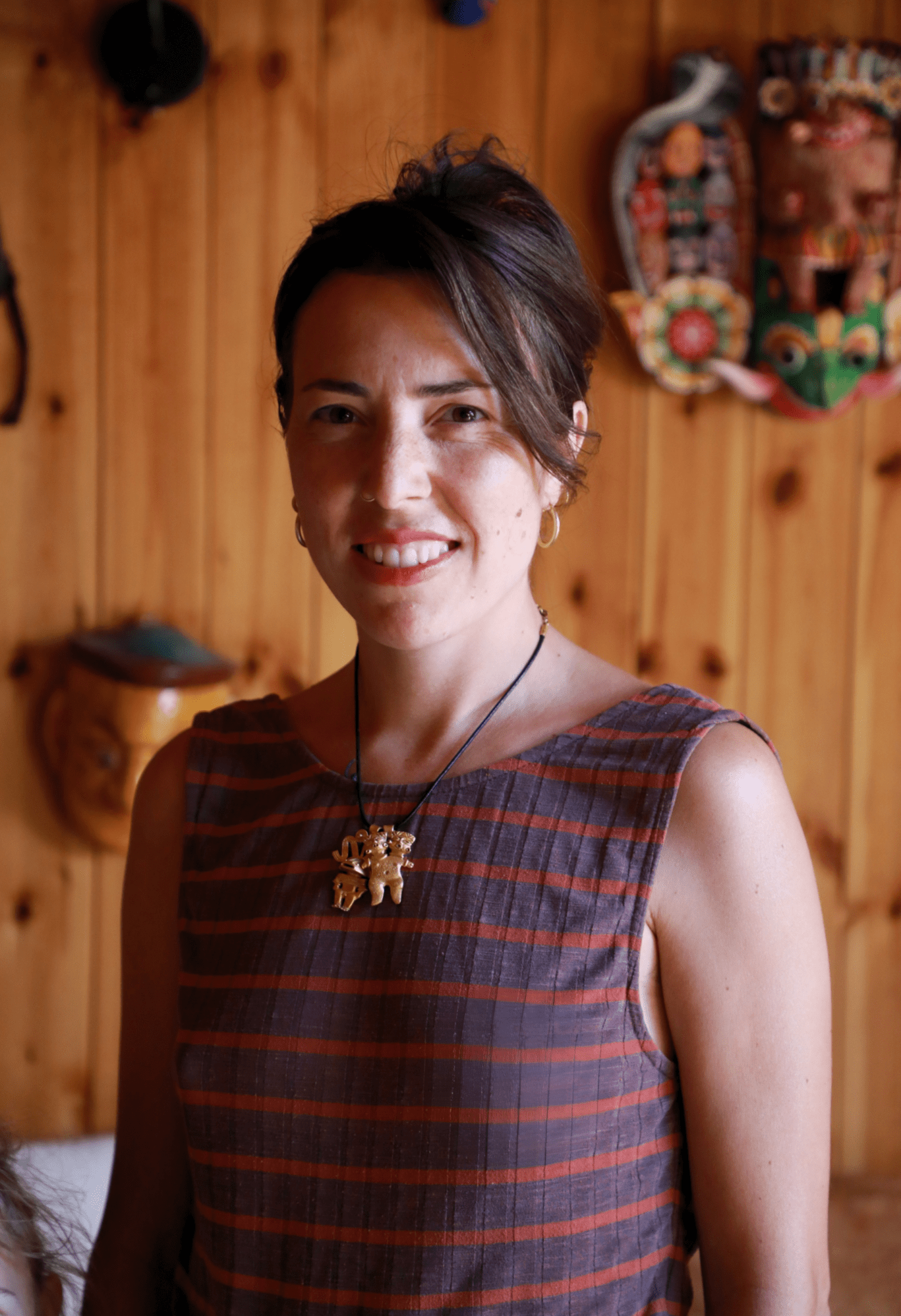
On the occasion of the March With Us campaign, Kirthi Jayakumar shares her activism for gender equality. She is the founder of the The Gender Security Project, an initiative working at the cross section of gender, peace, security, feminist foreign policy, and transitional justice through research, reportage, and documentation.
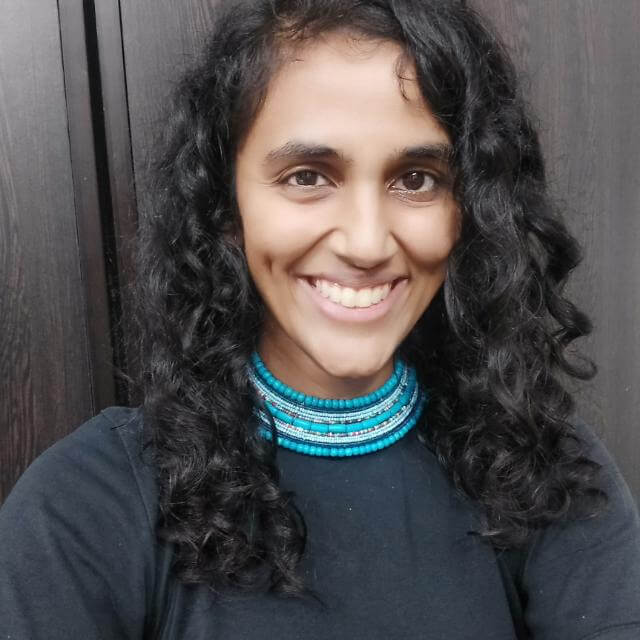
Kirthi Jayakumar
Kirthi Jayakumar is a lawyer and feminist researcher with a specialization in the areas of Women, Peace, and Security, Transitional Justice, Feminist Foreign Policy, and Gender-Based Violence. She founded The Gender Security Project, a digital repository on the WPS Agenda and Conflict-related Sexual Violence.
Can you tell us about your background and how you got involved in gender justice, storytelling and activism?
I suppose you can say that it really began by starting where the shoe pinched. Having faced violence and discrimination of different kinds, I found that the common denominator was the patriarchy. I also realized that I was privileged in some ways because of some aspects of my identities. Navigating these journeys put me on the path to activism because I couldn't think of any other way of living my life. I started at the grassroots as a peace educator and liaison for survivors of gender-based violence who sought support in seeking redress. I switched gears and moved deeper into the policy space, working specifically on the themes of women peace and security, and feminist foreign policy. This part of the journey began when I realized that there were very few women of colour among the scholars I read and quoted during my master's degree. I dug a bit deeper and realized that the Global South deserves to be the seen as the center of knowledge production that it is - and then set up this platform to enable that vision.
You are the founder of The Gender Security Project, a digital platform with a focus on gender, security, justice, and peace through research, reportage, and documentation. Can you share an important experience and lesson that emerged from this project?
The biggest learning I had was the fact that Feminist Foreign Policy has been practiced for generations in the Global South. Women in this part of the world have resisted colonialism, practiced food sovereignty, built and nurtured peace, used outer space without encroachment, and educated whole communities even when powerful colonizers and upper caste communities penalized them for it. The UN Charter respects self determination because a woman from the Global South, Vijayalakahmi Pandit, made a compelling case for it. The Universal Declaration of Human Rights acknowledges that all human beings are free and equal because of a woman from the Global South, Hansa Mehta, who pushed against the use of the term "all men" are free and equal. Feminist Foreign Policies are not the unique domain of western nations.
The Global South deserves to be the seen as the center of knowledge production that it is.
On The Gender Security Project website you quote Dale Spender, Australian feminist scholar, and co-founder of Pandora Press, the first of the feminist imprints devoted solely to non-fiction: “Feminism has fought no wars. It has killed no opponents. It has set up no concentration camps, starved no enemies, practiced no cruelties. Its battles have been for education, for the vote, for better working conditions, for safety in the streets, for child care, for social welfare, for rape crisis centres, women’s refuges, reforms in the law. If someone says, ‘Oh, I’m not a feminist’, I ask, ‘Why? What’s your problem?”. Why do you think people stigmatise feminism as a movement and what are your ideas to change this narrative?
One part misconception, one part fear, one part powermongering and gatekeeping, and one part systemic, structural, and cultural violence, and as a garnish, an unwillingness to engage with nuance. That's the recipe for stigmatizing feminism. There is a general misconception that feminism is about hating cis het men. It's simply not! The idea is to call for equality and equity. Second, there is fear around the potential loss of power and accordingly, power mongering and gatekeeping. Given that the patriarchy has put cis het men in a position of power (while also dehumanizing men in the process), any attempt at feminising and queering the space will need them to share power. There is an immediate assumption that they have to give up some of their power. This is entrenched in the system, as structural and systemic violence have continuously normalized this way of life and society. All of this go to establish a "norm" that cis het men in positions of power are not willing to engage with and address with nuance. Cis het men MUST see that they have a greater benefit in a world that is equal - that the patriarchy dehumanizing them, reduces them to being violent and aggressive without giving room for their emotional wellbeing and evolution. It is the patriarchy that drives the high rates of suicide among men, that harms women and nonbinary people, and that destroys the fabric of society. Intersectional feminism can help us heal from this. All it takes is a willingness to engage.
An additional point I'd like to make here: Even as we question the system, as feminists, it is important that we examine our own mindsets and behaviors. How can we dismantle our own biases and conditioning? Can we acknowledge our privileges and cede space to those among us that do not have these privileges? Can we decanter ourselves by prioritizing intersectionality, empathy, and respect for lived experiences that are distinct from our own? Feminism is a verb, and those of us that call ourselves feminists must put in the effort we must to remain feminists.
Gender-based violence and sexual abuse are still “devastatingly pervasive”: 1 in 3 women globally experience violence. You have coded Saahas, a mobile app and chatbot to help survivors of gender-based violence find help across 196 countries, and to enable bystander intervention. You have also trained trained thousands in bystander intervention, safe and unsafe touch awareness, and child sexual abuse prevention and timely response. How can we increase the political and social will to tackle violence against women in all its forms?
All violence against women is political. The very fact that it is so systemically embedded, so culturally and structurally normalized implies that we must strive to shift our mindsets, which are a product of this systemic, cultural, and structural violence. It is vital for the world to see that violence against women is everyone's problem, and everyone needs to be actively involved in addressing it by starting with their own mindsets and striving to shift their own beliefs. From the personal, we move to the political, which means we must strive to question the system for normalizing such violence and factors that enable it. The key, though, is not to attempt to change another's belief, but just to sow a seed of doubt in their minds so they use that as a springboard to work to shift their mindsets, and use that informed mindset to inform their actions and choices.