© NGO Forum on ABD
© Forus
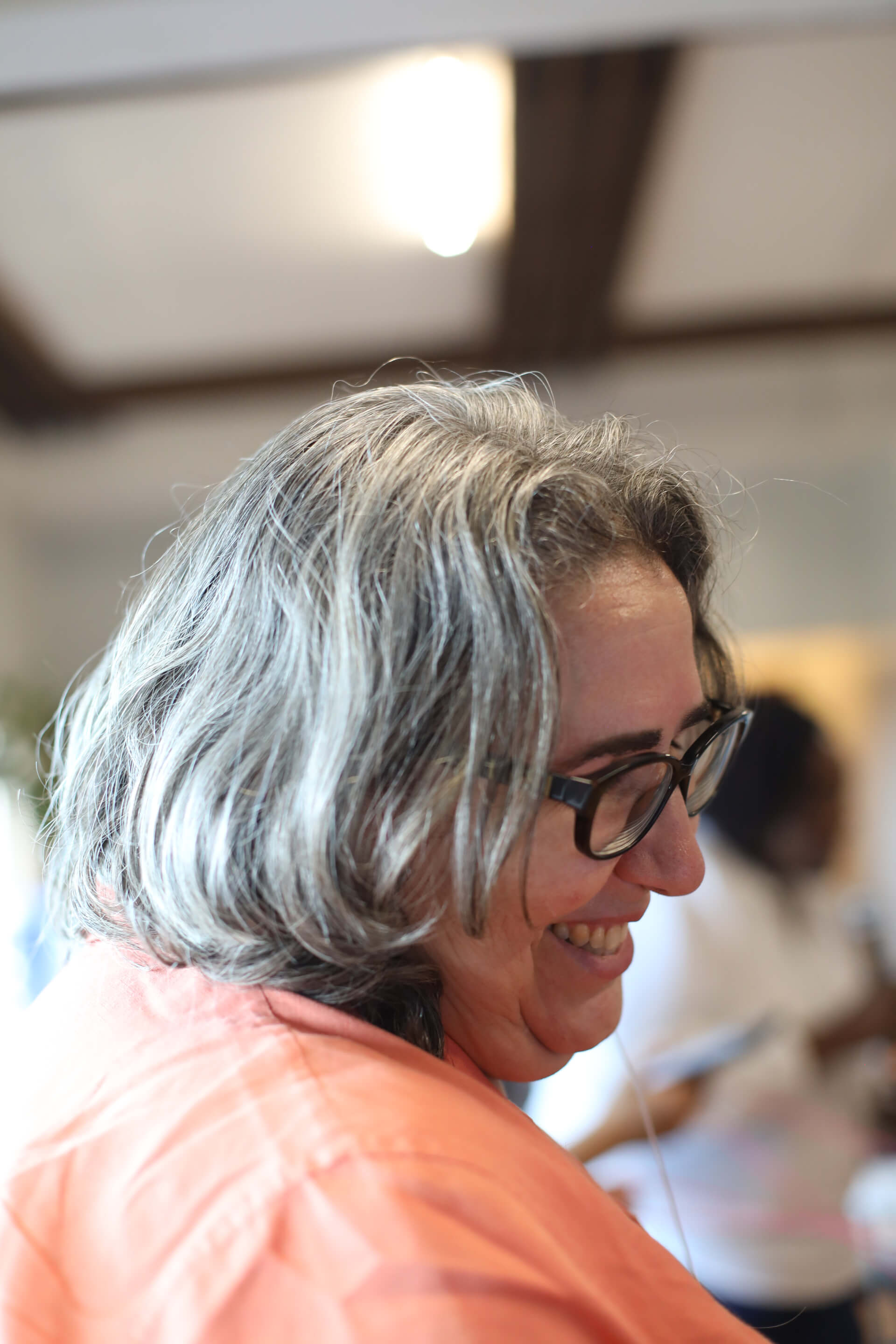
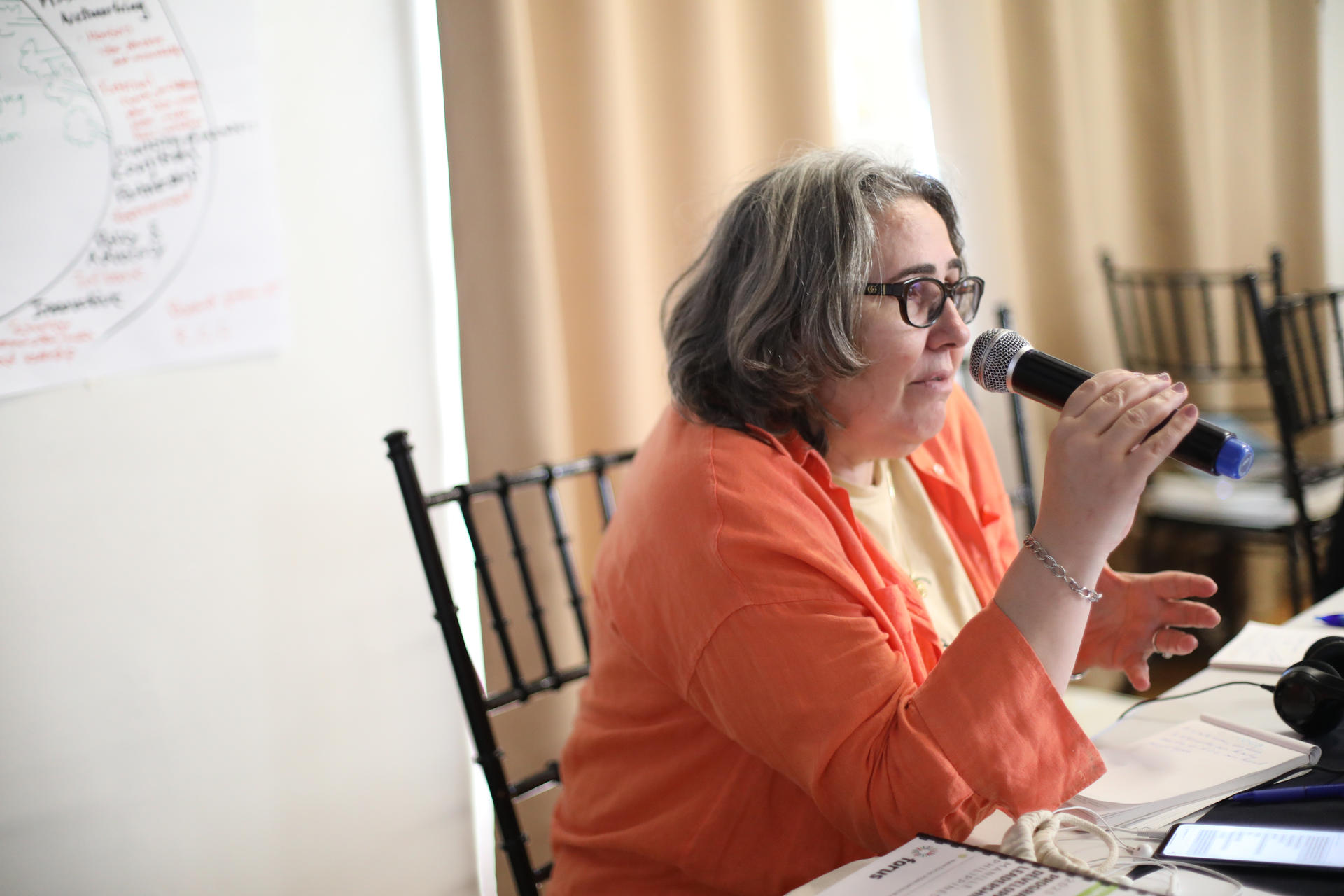
A civil society perspective on why meaningful participation, accountability and inclusive governance are essential to turning commitments on women's rights and sustainable development into real change for communities.This interview was carried our as part of the Forus Journalism Programme.
Fri 17 Jul 2026
Latifa Souflani: "Influence isn't just about holding a seat at the decision-making table — it's built through citizen mobilization"
— Can you share examples where your action, advocacy or leadership have helped influence a public policy or government decision?
Over the course of my work in civil society, I've learned that influencing public policy isn't only about occupying decision-making positions. It's also built through citizen mobilization, through knowledge produced on the ground, through building alliances, and through the ability to make heard the voices of groups whose realities are too often absent from decision-making spaces. That's the spirit that has guided my engagement within Morocco's women's rights movement and within African civil society more broadly. I began as an activist within a feminist organization before serving as its president for several years, an experience that allowed me to take part in several advocacy efforts that helped shift public debate and certain policies in favor of women's rights.
One of the most significant experiences was my involvement with the Spring of Dignity Coalition. Together, we drafted policy memorandums, formulated proposals for legislative reform, organized meetings with public decision-makers, and led nationwide citizen mobilization campaigns, including symbolic actions such as the human chain of solidarity with survivors of violence, the White March and the Orange March — initiatives that helped strengthen the visibility of women's demands and durably place the fight against gender-based violence on the public agenda. I also contributed to advocacy efforts around the reform of the Family Code: through work within IPDF (Initiatives for the Protection of Women's Rights) and national coalitions, we advanced proposals on child marriage, legal guardianship, division of property between spouses, single mothers' rights, and women's access to justice. And as part of UN Women's "Safe Cities and Safe Public Spaces" program, we ran participatory processes with women residents of Fez Medina to identify the obstacles to their mobility and safety in public space, recommendations that helped bring a stronger gender lens into certain territorial policies.
Since 2009, through my engagement with the Movement for Gender-Parity Democracy (MPDP), I've contributed to designing and implementing advocacy strategies for gender equality and for strengthening women's political participation in Morocco — helping draft memorandums, position papers and reform proposals that fed into dialogue with public decision-makers and contributed to the evolution of the legislative framework on parity and political representation. My work has focused on building multi-stakeholder approaches, bringing together public institutions, political parties, civil society organizations and the media, to promote an environment more favorable to women's leadership and inclusive governance — efforts that have helped improve women's access to elected mandates and to positions of responsibility within representative institutions. Among the flagship initiatives I contributed to is a national awareness caravan, deployed across the Kingdom to strengthen citizen mobilization around the principles of gender-parity democracy, an engagement that, alongside that of other women leaders, helped create fertile ground for the founding of the Academy for Women Leaders in Morocco.
Finally, I want to highlight my experience at Espace Associatif, where I am currently serving my second term as president. Through a project supported by Forus, I led an advocacy process for the right to education in Al Haouz province, hit hard by the 2023 earthquake, mobilizing civil society organizations, communal and provincial elected officials, and territorial administrations around equitable access to education. The advocacy was grounded in the needs voiced by residents of the most isolated villages, many still difficult to reach due to a lack of adequate road infrastructure, and through dialogue, consultation and recommendations grounded in realities on the ground, it helped raise awareness among territorial authorities and shape their intervention priorities in favor of better access to education in the most marginalized areas. These experiences have convinced me that effective advocacy rests on combining a strong grounding in local realities, the building of strong coalitions, and sustained dialogue with public institutions.
— In your view, what are the main challenges to strengthening African women's influence and participation in public policymaking today?
The main challenge today is no longer simply increasing the number of women present within institutions, but strengthening their capacity to genuinely influence decisions and public policy. The persistence of social and cultural norms that still associate political power with men remains a major obstacle — women often have fewer financial resources, more limited networks of influence, and more difficult access to the spaces where decisions are actually shaped. Another challenge lies in the gap between representation and real power: even where women's presence in institutions is growing, they remain underrepresented in executive positions and in strategic decision-making spaces. Political and digital violence are also a growing concern, and rural women, young women, and women from marginalized groups continue to face specific obstacles that limit their effective participation.
— What strategies or approaches have proven effective in overcoming these challenges? Do you have concrete examples?
Experience shows that the most significant advances in women's influence on public policy rarely result from a single measure — the most effective strategies generally combine institutional reform, the strengthening of women's leadership, citizen mobilization, collective action, and dialogue with decision-makers. One of the most effective approaches has been putting in place mechanisms that facilitate women's access to decision-making institutions. Rwanda stands out as a major reference here: through mechanisms guaranteeing strong representation of women in political institutions, the country today has one of the highest rates of women parliamentarians in the world, a presence that has helped advance policies on gender-based violence, maternal health, and women's economic rights. South Africa offers another example, where internal reforms by several political parties in favor of gender parity in candidacies have durably increased women's presence in decision-making processes, while in Nigeria, mentoring and training programs have allowed women to develop skills in negotiation, local governance and political leadership, facilitating their access to responsibilities at the community level.
Another particularly effective strategy rests on coalition-building and alliance-forming. In Uganda, partnerships between civil society organizations and women parliamentarians have successfully driven several reforms in favor of gender equality — an experience that shows women's influence is often stronger when exercised collectively and in an organized way. In Morocco, several experiences also demonstrate the effectiveness of this approach: the reform of the Family Code would probably not have been possible without years of mobilization by women's associations, citizen consultations, and reform proposals grounded in field experience, showing that a structured civil society, capable of producing solid analysis and engaging institutions in dialogue, can directly contribute to the evolution of public policy.
My own journey has convinced me of the strength of collective action. Within the Spring of Dignity Coalition, we combined several forms of advocacy — drafting reform memorandums, dialogue with public authorities, national awareness campaigns and citizen mobilization, including the human chain of solidarity with survivors of violence, the White March and the Orange March — which made women's demands visible, raised broad public awareness, and helped durably embed the fight against violence against women in the national political agenda. I've also seen firsthand the importance of producing field-based knowledge: through the Batha Center and our participation in the national Anaruz network, data collected from women survivors of violence has fed directly into advocacy work and strengthened dialogue with public institutions around improving protection mechanisms and access to justice. And through UN Women's "Safe Cities and Safe Public Spaces" program, the joint mobilization of women residents, local authorities and civil society organizations helped identify obstacles to women's mobility and safety in public space, with recommendations that fed directly into Fez's Communal Action Plan — illustrating concretely how women's participation can shape territorial policy. Taken together, these experiences show that the most effective strategies are those that combine political representation, women's leadership, collective action, solid evidence, citizen mobilization, and constructive dialogue with institutions — it's this combination that allows women not only to access decision-making spaces, but above all to exercise real and lasting influence within them.
— What are the main opportunities or enabling factors that could further support women's leadership and influence in political spaces today?
Several factors are creating a favorable context for strengthening women's leadership today. Legal and institutional reforms are progressively opening up more space for women, while the advancement of girls' and women's education is enabling the emergence of a new generation of highly qualified leaders. The growth of digital technology offers new means of expression, mobilization and influence, and the vitality of African civil society is also a major asset. The emergence of inspiring female role models is helping to transform social representations, and finally, the growing recognition that inclusive governance produces better public policy is reinforcing the legitimacy of women's participation in decision-making spaces.
Latifa Soufiani is president of Espace Associatif in Morocco, currently serving her second term and who serves on the Coordination Committee of the Arab NGO Network for Development (ANND). An activist and later president of a feminist organisation, she has been active within the Spring of Dignity Coalition, IPDF (Initiatives for the Protection of Women's Rights) and, since 2009, the Movement for Gender-Parity Democracy (MPDP), contributing to reforms on parity and women's political representation in Morocco.