2019-03-12
Launch of the CCOD project
News
By Clotaire LOUBELO N'SILOULOU, Executive Secretary of the CCOD
Project Background
The International Forum of National NGO Platforms (IFP) is an international network of 64 national NGO platforms and 7 regional coalitions from all continents, led by its members. One of the main objectives of the IFP Strategy 2016-2020 is to become an influential international actor and a reference in capacity development at national, regional and international level.
The Consultative Council of Development NGOs (CCOD), is one of the members of the IFP. As part of its capacity development activities over the next three years, the IFP had planned to accompany and support capacity development initiatives/projects established and implemented by its national members (national NGO platforms). It is within this framework that CCOD has received financial support from the IFP to implement the project on institutional and operational capacity building of CCOD and its NGO members.
Presentation of the project and announcement on the start of the project
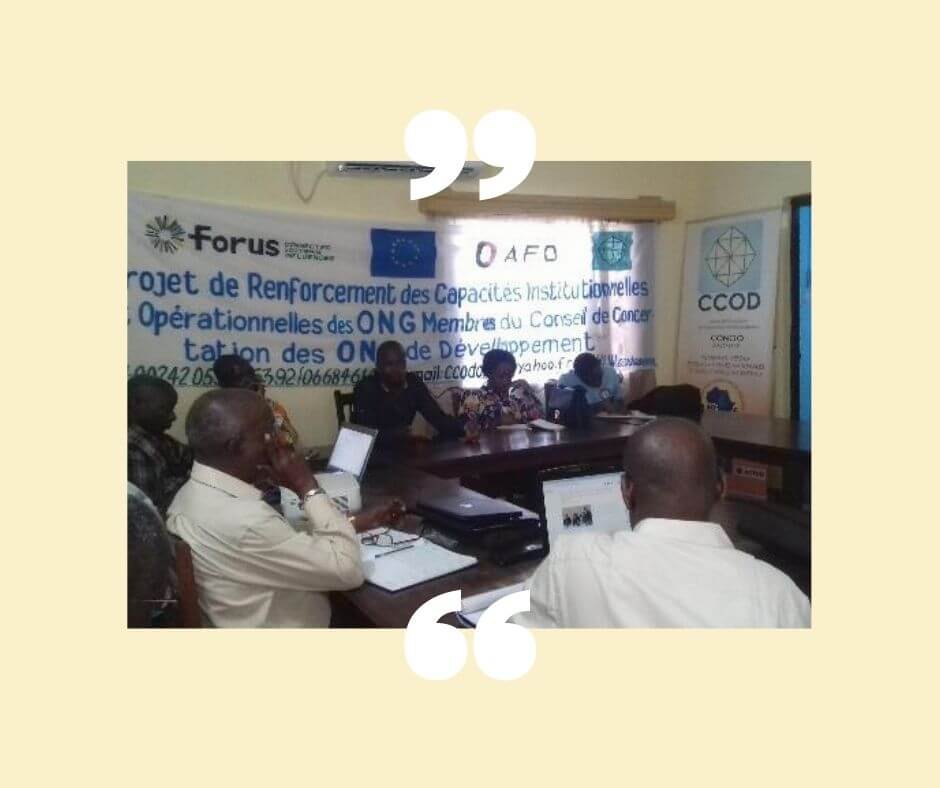
On Tuesday 12 March 2019, the CCOD held a kick-off meeting for this project with its NGO members at its headquarters. All fifteen NGO members were represented. The main objective of this meeting was to inform the NGOs of the start of the project activities.
The Executive Secretary of the CCOD, the main facilitator of the meeting, briefly presented the objectives of the project as well as its activities. On the objectives, he specified that the overall objective of the project is to provide operational and organizational support to the members of the collective. Specifically, it is to improve the operational and organizational capacities of member NGOs and to support synergies between member NGOs in the implementation of activities, he concluded. The Executive Secretary stressed the importance of this project for the CCOD, because it integrates the missions of the collective through the services to be rendered to members.
He thanked the European Union and the French Development Agency, via Forus, for this financial support which will enable the CCOD to render important services to its members. He then sensitized the participants on the activities of the project. These include: carrying out an institutional and organizational diagnosis of all CCOD member NGOs, organizing a workshop to validate the training themes selected during the diagnosis phase, setting up a capacity building plan for all member NGOs, organizing five capacity building sessions for all member NGOs according to the training needs expressed by each NGO, providing monthly support to each NGO in its operations, and finally supporting the functioning of three thematic groups within the CCOD. The Executive Secretary urged the NGOs to become more involved in the implementation of the activities of this project which has just started. He also informed the participants of the publication of the Terms of Reference of two consultants in charge of carrying out the diagnosis of the NGO members of the CCOD.