Tue 7 Mar 2023
Line Niedeggen: On complex solutions for a complex crisis
As part of the March With Us campaign, a full month of stories from women at the forefront of social change, we sat down with activist Line Niedeggen, to discuss climate justice and women's rights.
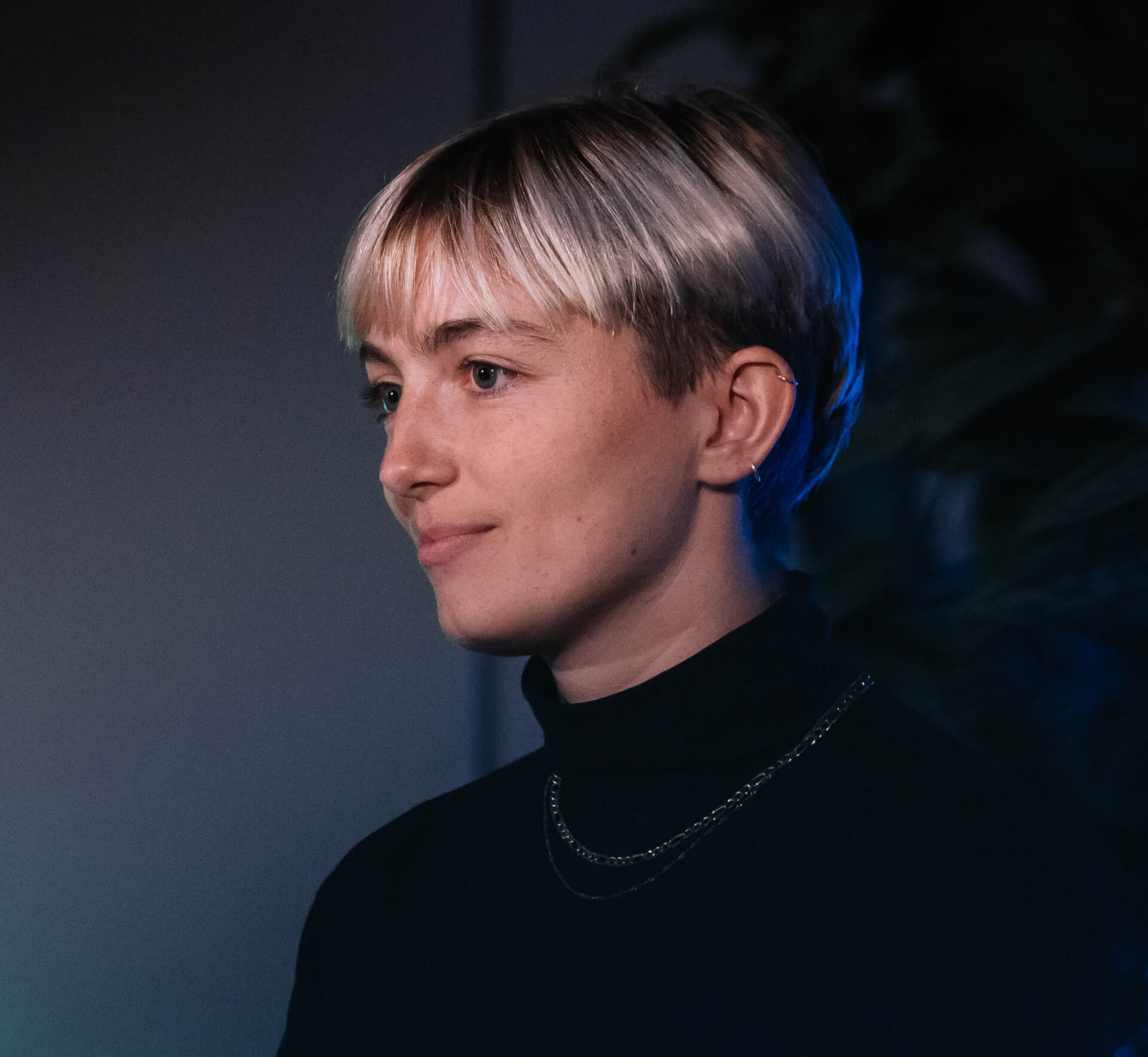
Line Niedeggen
Line Niedeggen, born in 1996, has been an activist for global climate justice with Fridays for Future since 2019 and led the big climate strikes in Heidelberg with many others. She studied physics with a focus on environmental and climate physics after completing a bachelor's degree with a focus on astrophysics. At Fridays for Future she works on nationwide strategies and designs public relations with a special focus on intersectionality.
Throughout the month of March, we point the microphone towards women activists. Line first of all, what motivated you to get involved in the Fridays for Future movement and what is the gender twist to your activism ?
I grew up close to a region that is heavily affected by coal mining in Germany. In 2018, there was a huge protest there. That's the first time where I got involved and I saw that there are people in the forest defending nature and defending life in general. It was so clear that the government, the police and the companies were just working against the people. So that's where I think the fire started that couldn't be stopped and that was the same time where Friday's For Future started to grow heavily and popped up in so many cities in Germany. And then I went to a protest a few months later and I saw the people organizing, and I just thought, that's what I want to do.
I think if you work a little bit with gender justice, or even if you read the IPCC report, or the Climate report, released by the UN, you see that there's a heavy influence of discrimination in the effects of the climate crisis. So whenever people are structurally discriminated in several forms, the crisis evolves. If you dig a little bit deeper, and think further than the natural aspect, and interpret the climate crisis as a social and economical crisis, you see that we need to fight the structural oppression of so many people to actually achieve anything that is close to climate justice.
How would you say the journey has been so far for you?
I never thought I would have less opportunities than men. But there's just a pattern that you cannot unsee once you've seen it. That you know you're being interrupted in discussions or that people don't take you seriously or that you're being looked down upon [because of your gender]. I was in these spaces with a lot of people who think they just own the power without ever being questioned, while realizing that I am questioned every day. I started to look deeper into why this manifests and also what we can do against it and begun organizing with other experienced activists to fight against the patriarchy.
The global majority of people are experiencing several different issues at the same time.
You expressed the importance of having an intersectional approach when it comes to climate justice. Can you please tell us more about this?
Very often, structural discrimination or structural oppression enhances the chances of being heavily affected by climate disasters. The global majority of people are experiencing several different issues at the same time. We have to learn how to collectively care about complex solutions for complex crisis. So intersectionality means to analyze these different layers of structural problems, and to see that they are intertwined. For example, you cannot solve the climate crisis without doing something for gender equality, you cannot do something for gender equality if you don't look at racism and white supremacy. And this whole context is so intertwined with our whole economic system that you have to look at capitalism as well. Actually, we do have the capability for complex solutions for complex problems. It all breaks down to easier questions like, Who do we care about? Do we care about us as individuals? Do we care about only humans? Or only my family? Or do I care about my community? Do I care about the ground that we live on? Do we care together in a symbiotic relationship with each other? Or do we keep thinking in a pyramid scheme, where the white man is on top, and then everything else is oppressed? It all comes back to basic respect for each other and our environment.
Based on what you said, how can we collaborate more effectively with other movements around the globe to tackle the current crisis? Can we learn something from the Fridays For Future movement?
I think something very powerful that we can see in the Fridays For Future movement is the international kinship that we build. People have come together to create their own space for organizing and to create actual bonds. We need to learn what solidarity means. And that it doesn't mean to just symbolically raise a flag or to post something on social media or to go to a panel and say, yes, I stand for human rights. It means to actually look at the people and what people need, and then work to build structures to support these needs. We need to shift resources from basically here in Germany, or in general, industrialized, rich countries, towards whoever is on the frontline of the climate crisis, which can be in a flooded area in Pakistan, but it can also be poor people in the Global North who are fighting against forest degradation. I think it’s key to act locally, but at the same time, to learn from a very personal perspective what it means to fight internationally.

EN - Line Niedeggen on climate & gender justice