(c)Ruedas de la felicidad
Wed 3 Jun 2026
Minds over asphalt: The challenge of empathy and inclusion in Venezuela
The global debate on accessibility tends to focus on physical infrastructure: the construction of ramps, the design of lifts, or the adaptation of transport services. However, for human rights defenders and civil society organisations in Venezuela, the most urgent transformation does not require building materials, but rather a change in perspective. On the path towards fulfilling the 2030 Agenda, one premise takes on great significance: prejudice and social stigma are the true disability of a society.
For its part, the National Council for Persons with Disabilities (CONAPDIS) —the Venezuelan government’s governing body on this matter— has stated on its official platforms that “prejudice is society’s true disability”. When institutions and activists agree on this diagnosis, the picture becomes clear: the first step towards building an inclusive country is to break down attitudinal barriers.
SDG 10: Reducing inequalities through empathy
The UN’s Sustainable Development Goal 10 seeks to empower and promote the social inclusion of all people, regardless of their condition. In Venezuela, where it is estimated that between 8% and 13% of the population lives with a disability, the legal framework already provides a solid foundation for this progress. The Law for Persons with Disabilities (Official Gazette No. 38,598) clearly establishes in Articles 5 and 6 that disability is a complex condition that interacts with environmental barriers, recognising the diversity of abilities as part of social wealth.
César Heredia, operational coordinator of the Ruedas de la Felicidad Foundation, notes with optimism that environmental barriers are being overcome when civil society organises itself and uses modern tools, such as social media, to raise awareness and educate.
“Disability is not the end of the world; it is a condition of life that tests us, but also teaches us to value things in a different way,” he says.
SDG 11: Transforming cities and the challenge of universal design
SDG 11 invites us to think about inclusive, safe and sustainable cities. Although traditional urban design in the country was conceived based on “average sizes” that sometimes overlook bodily diversity — as Isandra Villegas, an engineer and specialist in public management and urban mobility studies, points out when discussing the need to adapt street furniture and transport for people with conditions such as obesity — today the country has valuable starting points that demonstrate that change is possible.
Far from being paralysed, Venezuela is showing signs of inclusive architecture and accessible tourism through flagship local projects:
• Caracas: Hugo Chávez Park (La Rinconada) is home to the first Park for Neurodiversity and Functional Diversity, designed with safe and welcoming spaces for those on the autism spectrum and with other disabilities.
• Maracaibo: Projects focused on inclusive architecture have been promoted, taking the form of specialised recreational spaces for children and teenagers with motor and cognitive conditions.
Added to these efforts is an inspiring story of youth leadership that is redefining public spaces in the country. Sebastián Filoramo, a 15-year-old blind teenager, has become the creator and driving force behind a historic initiative: a fully inclusive recreational park designed in Barquisimeto. This innovative space breaks down barriers by incorporating tactile paving to guide blind people, strategic ramps, sign language, and areas for animal interaction and sports, whilst offering free wristbands for children with disabilities.
Sport and Civil Society
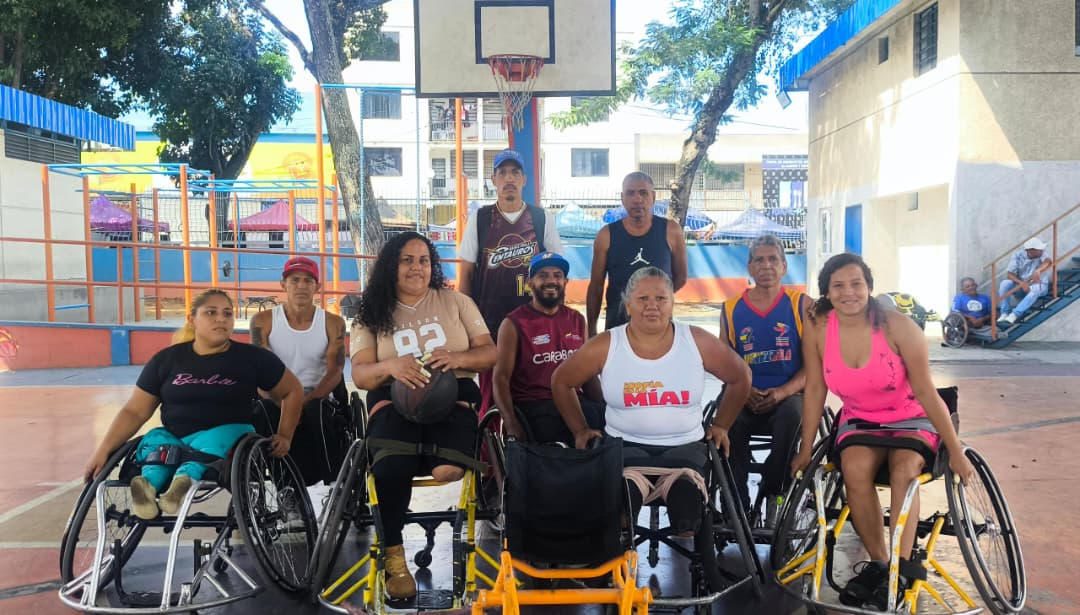
Inclusion goes far beyond infrastructure; it is about regaining confidence and reclaiming spaces. The best example of this is Raicelis Rojas, a 23-year-old woman from Valencia who is one of the athletes supported by the Ruedas de la Felicidad Foundation. Following an incident that affected her mobility at the age of 13, she found in high-performance sport the perfect tool to demonstrate her potential. Today she excels in disciplines such as shot put, javelin, discus, wheelchair basketball and marathons.
“Sport was a wonderful experience because it made me trust myself more. It motivated me not to stay cooped up at home,” says Raicelis. For her, the sports field is a space for emotional liberation and fulfilment. She reminds us that people with disabilities simply have “a different way of seeing the world”, inviting society to focus on talents rather than limitations.
Since 2017, the Ruedas de la Felicidad Foundation has transformed more than 4,000 lives in Venezuela. Its approach is not one of charity, but a holistic one: they provide technical aids (such as everyday wheelchairs or prosthetics) and offer psychological support to promote full reintegration into educational, work and sporting activities.
A collective commitment
The path towards 2030 in Venezuela is built day by day through the determination of its citizens. As César Heredia rightly points out, family support and faith are the fundamental pillars that sustain morale, but the ultimate goal is the full realisation of the rights enshrined in national laws and international conventions.
When we focus on talent rather than limitations, the future changes. The commitment is collective: to break down everyday prejudices so that inclusion ceases to be a project on paper and becomes a reality on our streets.
Disclaimer: This article is written as part of the Forus journalism fellowship programme. Learn more here