©United Nations
Mon 4 Dec 2023
Monitoring the implementation of the Sustainable Development Goals
CSOs play a pivotal role as watchdogs in monitoring the implementation of the Sustainable Development Goals (SDGs). Their role encompasses monitoring progress, identifying gaps, holding stakeholders accountable, and promoting transparency and accountability.
Here's how CSOs can effectively fulfill this crucial role:
-
Identify priority SDGs and indicators: CSOs should start by identifying the SDGs and indicators that are most relevant to their communities and to their work. This will help them to focus their monitoring efforts and to ensure that they are tracking progress towards the SDGs that matter most to the people they serve.
-
Develop a monitoring framework: A monitoring framework is a plan for how CSOs will collect and analyze data on SDG implementation. The monitoring framework should include the following elements:
-
A list of the SDGs and indicators that will be monitored
-
A description of the data sources that will be used
-
A description of how the data will be collected and analyzed
-
A timeline for data collection and analysis
-
Data Collection and Analysis: CSOs can collect data on SDG implementation through a variety of methods, such as surveys, interviews, focus groups, and government reports. Once the data has been collected, they can then analyze this data to track progress over time, to identify trend, gaps and challenges, and to hold governments accountable for their commitments.
-
Reporting on Findings: CSOs can produce Shadow Reports, publications or People's Scorecards to share their findings on SDG implementation. These reports serve to raise awareness of SDG issues, hold governments and stakeholders accountable, and promote evidence-based decision-making.
-
Advocating for Change: CSOs can share their findings with governments and other stakehodlers to raise awareness of SDG-related issues and to advocate for policy changes and programs that support SDG implementation. They can advocate for prioritizing marginalized populations and aligning government actions with SDGs. They can also use the findings to hold governments accountable for their commitments to the SDGs.
-
Collaboration and Capacity Strenghtening: In addition to their monitoring role, CSOs collaborate with governments and stakeholders to develop and implement monitoring frameworks. They provide capacity-strenghtening and support to other organizations and individuals involved in SDG monitoring.
-
Knowledge Sharing and Networking: CSOs share knowledge and best practices related to SDG monitoring and build networks and coalitions to collaborate on SDG monitoring initiatives. This collaborative approach enhances the effectiveness of their watchdog role.
Tools and Resources for CSOs on building strong monitoring plans and reports on the implementation of the SDGs:
-
Action for Sustainable Development, Toolkit for a People's Scorecard: Independent Civil Society Assessment of National Delivery of the 2030 Agenda. CSOs can utilize this toolkit to obtain more details on how to identify priority SDGs and indicators relevant to their communities; collect data through surveys, interviews, and focus groups; analyze data and identify trends in SDG implementation; and develop and share scorecards to track progress and advocate for change.
-
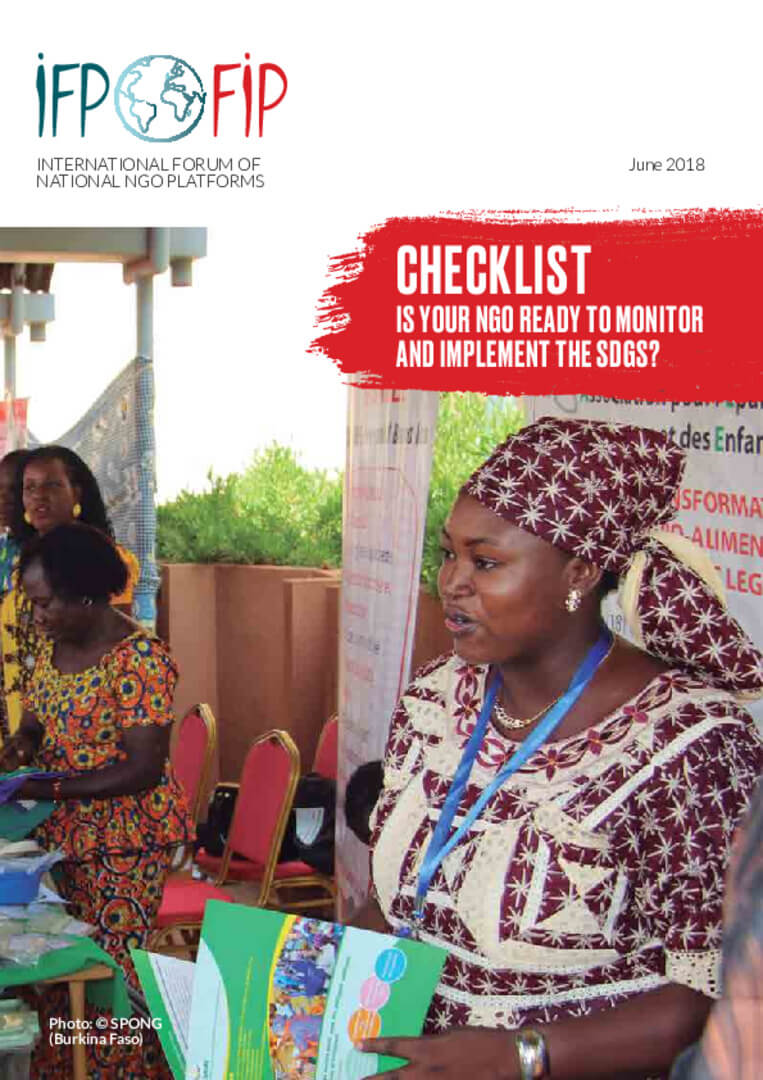
Forus/International Forum of National NGO Platforms, Checklist – Is your NGO ready to monitor and implement the SDGs? This checklist helps NGOs assess their readiness to monitor and implement the SDGs, identifying gaps and developing a plan for improvement.
-
Forus/International Forum of National NGO Platforms, Guidelines for CSO Shadow Reports: Monitoring the Implementation of Agenda 2030 at National Level. The report provides CSOs with guidance on how to develop and use shadow reports to monitor SDG implementation at the national level, ensuring accountability and promoting evidence-based decision-making.
-
Sustainable Development Network, Indicators and a Monitoring Framework for the Sustainable Development Goals – Launching a Data Revolution. The SDSN Toolkit provides CSOs with a comprehensive overview of the SDG indicators, guidance on how to develop and implement a monitoring framework, and resources and tools to support their monitoring efforts.