© NGO Forum on ABD
2025-11-06
More than 80 civil society entities from LAC and the EU present their proposals for a fairer and more sustainable bi-regional agenda at the IV CELAC-EU Summit
-
The CELAC-EU Civil Society Working Group, made up of more than 80 networks, platforms and organizations from Latin America and the Caribbean and the European Union, calls for human rights, care, ecological justice and a new international financial architecture to be at the center of the relations between these two regions.
-
This space for bi-regional civil society consultation will follow up on the commitments made in the Santa Marta Declaration and the CELAC-EU roadmap.
Santa Marta, Colombia, November 4, 2025. From November 7 to 10, the LAC-EU Civil Society Forum and the IV CELAC-EU Summit will be held in Santa Marta, Colombia. Both spaces will be a meeting point of high political and diplomatic level, in which the Member States of the European Union and the Community of Latin American and Caribbean States (CELAC) will give continuity to the bi-regional dialogue, reactivated after the III EU-CELAC Summit of 2023. This continued engagement aims to strengthen cooperation between both regions on key issues such as: trade and investment, mainly, the Global Gateway Investment Agenda; security and the fight against transnational organized crime; climate action, energy transition and digitalization; gender equality, social justice and inclusion; and education, science and technology.
In this context, the CELAC-EU Civil Society Working Group, a confluence of more than 80 networks and platforms from Latin America and the Caribbean (LAC) and the European Union (EU), representing more than 2,000 organizations, has, since the 2023 Summit, worked in a coordinated manner to ensure that civil society participation, transparency, and respect for human rights form the foundations of a fair, equitable, and horizontal bi-regional relationship. Building on this work, the Group presents its proposals organized around four fundamental axes:
-
A bi-regional pact for care that recognises care as a human right and addresses the current model of care organisation, which is unsustainable, unfair and marked by profound inequalities of gender, class, age, disability, sexual diversity, territory and country of origin.
-
Put human rights and democratic strengthening at the center of bi-regional relations to avoid institutional weakening, the closure of civic space, human rights violations, and the erosion of the rule of law.
-
Move towards a just ecological transition, based on rights and territorial sovereignty, which prioritises sustainability policies over economic, energy and geopolitical interests.
-
Transform the international financial architecture to move towards new scenarios of bi-regional cooperation and financing and investment models that strengthen fiscal space and reduce the debt burden, as well as regulate private investment (especially the Global Gateway Investment Agenda) so that it is oriented towards reducing inequalities, rather than serving commercial, energy or geopolitical interests.
"The meaningful participation of civil society in the bi-regional dialogue is essential so that the bi-regional commitments adopted at the Summit do not remain at the institutional level, but reflect the realities of local territories and the needs of the populations most affected by inequalities. What we seek is to engage in a coordinated manner as civil society so that our proposals are effectively incorporated into government agendas," stated the CELAC–EU Civil Society Working Group.
Since its formation, the CELAC-EU Civil Society Working Group has worked to develop proposals and advocate with governments to ensure that the voices of civil society are heard in the decisions that will define the future of cooperation between Latin America, the Caribbean and Europe.
"Including the perspective of civil society in this scenario is key because it not only expands the legitimacy of the Summit, but also allows for the construction of more sustainable policies consistent with the principles of equality and justice shared by both regions," added the CELAC-EU Civil Society Working Group.
Following the Summit, the CELAC-EU Civil Society Working Group will continue to follow up on the Santa Marta Declaration 2025 and the Roadmap 2025–2027, documents that will set the course for bi-regional cooperation over the next two years.
About the CELAC-EU Civil Society Working Group
The CELAC-EU Civil Society Working Group (CELAC-EU CSWG) is a confluence of more than 80 civil society networks and platforms from Latin America, the Caribbean and the European Union, representing more than 2,000 organisations. Its purpose is to ensure the participation of civil society in bi-regional relations and in the follow-up of the commitments adopted between the two regions.
This space, formed in 2023, promotes the strengthening and articulation of joint work between EU and LAC organizations; the creation of enabling environments for the meaningful participation of civil society; the defense of civic space and human rights; and the incorporation of feminist, intersectional and intercultural approaches into bi-regional policies. It also promotes the establishment of bi-regional financing mechanisms that strengthen social organisations, especially those working for the defence of local territories, democracy, equality and human rights.
For more information:
Silvia Andrea Pineda For Forus interviews: Bibbi Abruzzini
Trineo Comunicaciones Forus
Tel: +57 321 2948074

2025-10-17
News
Civil Society at the Heart of the EU–LAC Partnership: Forus at the 2025 LAC-EU Civil Society Forum in Colombia Immediately afterwards, on 9–10 November, Heads of State and Government will meet at the EU–CELAC Summit , the highest-level political forum between the European Union (EU) and the Community of Latin American and Caribbean States (CELAC).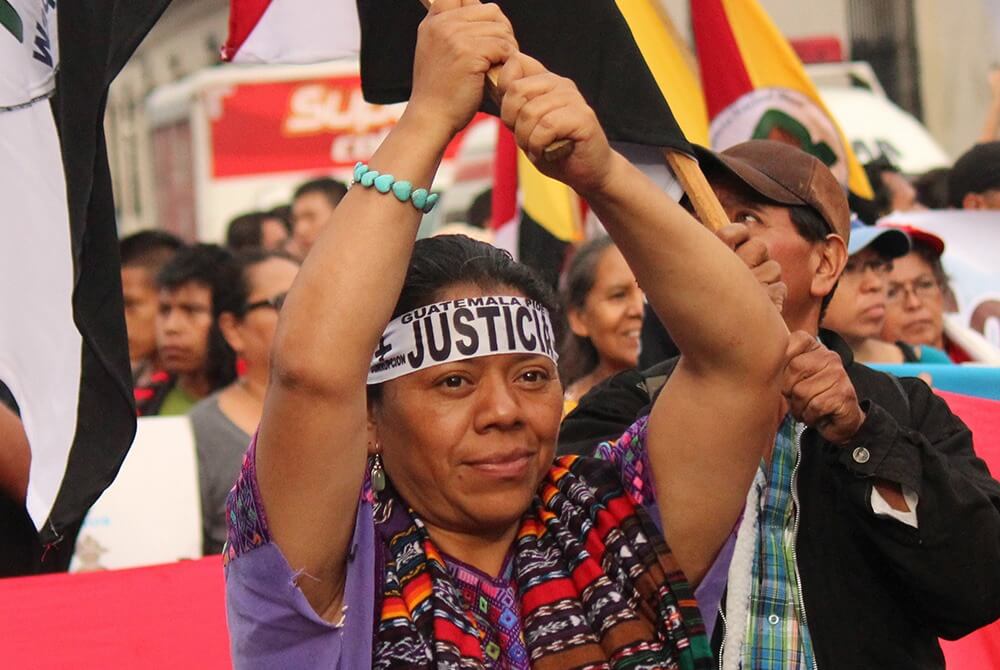
2025-11-04
News
IV Cumbre CELAC-UE: Colombia, epicentro del diálogo birregional entre la UE y América Latina y el Caribe - La Coordinadora de Organizaciones para el Desarrollo Colombia será estos días un lugar clave en la agenda birregional entre la Unión Europea (UE) y América Latina y el Caribe (ALC) con la celebración del Foro de la Sociedad Civil ALC-UE.