Tue 24 Nov 2020
Morocco’s response to COVID: Efforts made and lack of a participatory approach
News
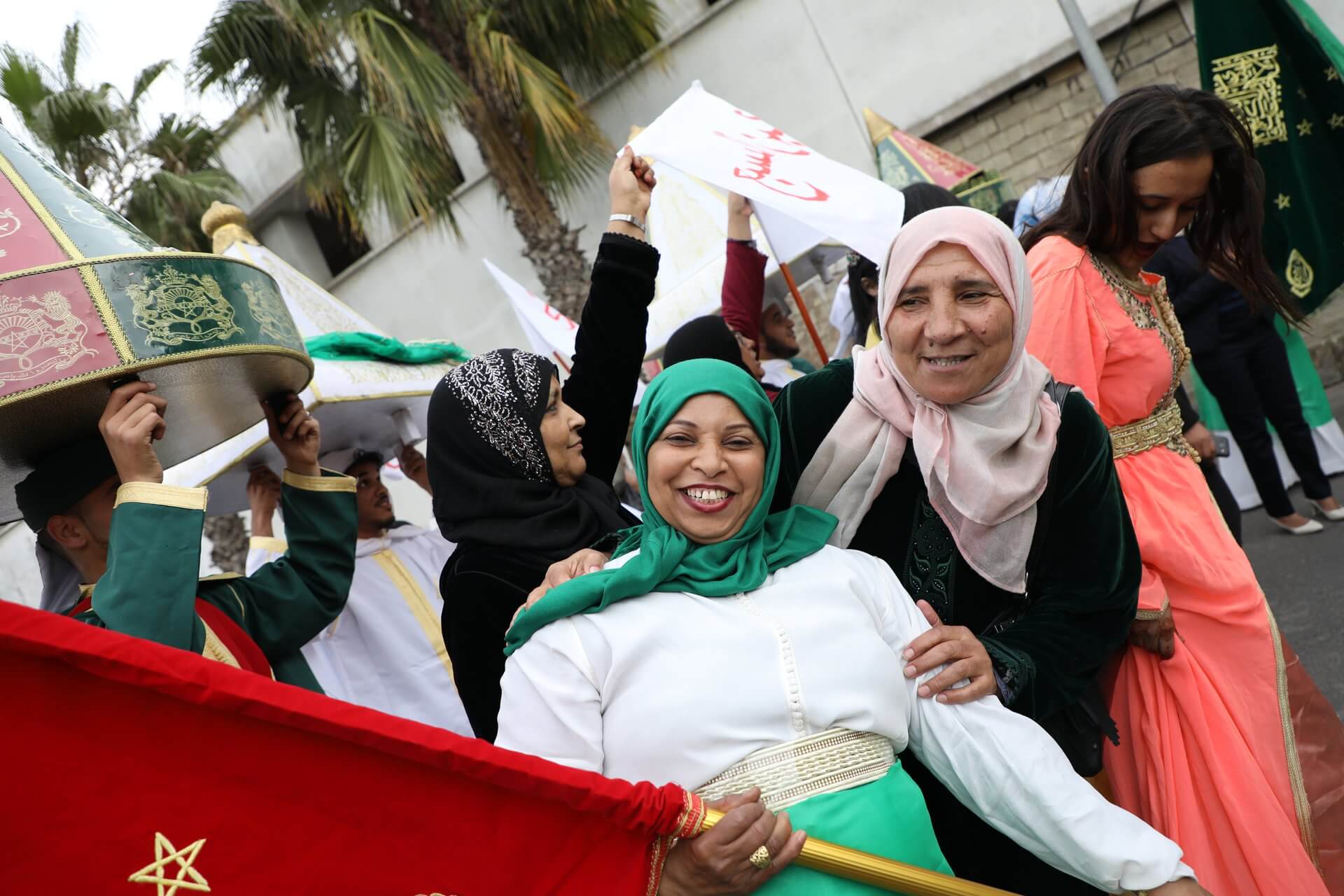
Pic: Both Nomads
By Abdelhakim Chafiai, vice-president of Espace Associatif, member of Forus in Morocco.
Like other countries around the world, Morocco is experiencing a fragile health situation created by the magnitude of the rapid proliferation of COVID in the different regions of the country, which is particularly severe in the metropolitan areas.
Indeed, although significant efforts have been made by the public authorities to stem this scourge, notably through the adoption of early containment measures, more or less strict control of mobility and awareness-raising among citizens, particularly via the media, it must be noted that the approach adopted has mainly been confined to the mobilization of a few state institutions without broadening participation and consultation with the other stakeholders on the strategy and measures adopted to contain the scourge and protect the most vulnerable sections of the population against its risks.
The actors of the associative movement have witnessed the predominance of the security-based approach adopted to tackle the situation by concentrating management and decision-making at the level of a restricted governmental committee without the involvement of the other legitimate actors affected by the situation, who are elected representatives, political parties, and social, economic and associative stakeholders.
However, as an important vehicle for communication and mobilization of the population, the associations have not been involved in this effort in a structured and voluntary manner, despite their capacity to benefit from a greater willingness to listen on the part of the population in comparison with the authorities and the Ministry of the Interior, which are more an object of fear than they are a vector for raising awareness and accountability.
The illustration of these limits is embodied in the lack of communication and consultation on the management of the solidarity fund created and dedicated to the fight against Covid-19, which has favoured an authoritarian approach to the mobilization of financial resources without accompanying socio-economic and awareness-raising measures targeted more towards the most vulnerable sectors of the population, particularly those who are confronted by the need to seek resources on a daily basis, while being required to some extent to respect the measures dictated by the government.
The initial effects of this situation have strongly impacted several sectors of national life, primarily:
· The informal sector, which is mainly composed of small traders, temporary workers and day labourers who find themselves subject to direct loss of earnings, generating a high degree of precarity and impoverishment, leading them to focus more on the search for income than on compliance with government health measures, hence the persistence, or even development, of contamination among the populations of high-density neighbourhoods housing this section of the population, particularly in urban areas.
· The education sector, which has found itself confronted by the existence of inadequate infrastructure and means to meet the requirements to reconcile schooling needs and protection against the risks of spreading the virus within the school, vocational and university training facilities. This sector is experiencing a particularly serious situation, notably generating massive school dropout among children and adolescents from poor backgrounds, particularly in rural areas, in the absence of exceptional measures promoting access to distance education at low cost, bearing in mind that telecommunication providers have experienced an exceptional increase in their turnover in this context of strong mobilisation of communications media and remote working.
· Goal 5 of the SDGs, relating to the promotion of gender equality in public policies and programmes, is also compromised in respect to its chances of being achieved. Indeed, the spread of the virus has generated additional mental stress and suffering in families where women were the first victims, as illustrated by the survey conducted by the High Commission for Planning (HCP), which revealed a sharp increase in violence against women from the very first days of lockdown. Not surprisingly, women are also most affected by the job losses that followed the emergence of the pandemic in Morocco.
· Finally, the context of Covid has "allowed" the country's deficits to be exposed in terms of the infrastructure, equipment and human resources required to meet the needs of the population. Although this deficit has been denounced for several years by civil-society actors, the government has limited itself to managing the fight against the virus without deriving concrete results by integrating into the government's emergency programmes a significant increase in the health and education budget, as if the two challenges were not linked. This attitude, strictly focused on the management of the emergency, points to the maintenance of a purely non-productive monetary approach to these vital sectors of society, to which Morocco has made formal commitments at the national and international level.
However, the associative advocacy movement is a constituent of society that continues to play a crucial role in warning of risks and questioning the public authorities about the consequences of their policies and decisions on development objectives, and the promotion of genuine participatory democracy in accordance with the spirit and letter of the constitutional provisions.