© Forus

Fri 9 Jan 2026
Mustapha Lawal - Digital Democracy: Empowerment or Erosion?
This article was written by activist Mustapha Lawal as part of CADE’s Forus-led Youth Voices for Digital Rights programme
In retrospect, Nigeria’s 2023 general elections can be traced to a series of moments before the polls opened, on election day, and long after voting ended, where information and technology shaped how citizens experienced democracy.
For Adewale, those moments unfolded both on his phone and at his polling unit. “I followed everything online before I got there,” he said. “People were already talking, who had accredited, where BVAS was working, and where it wasn’t.”

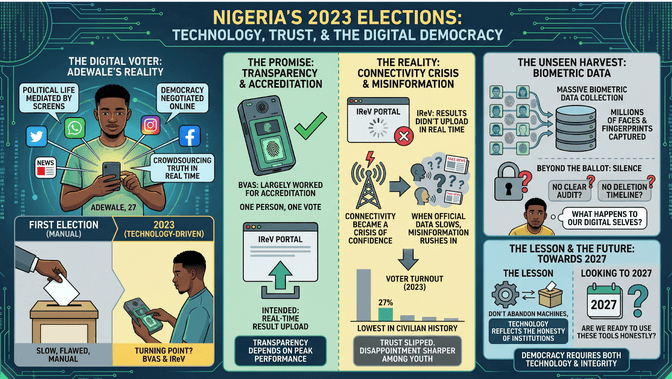
Adewale, 27, lives in Ibadan. Like many young Nigerians, his political life is mediated by screens. WhatsApp groups, X (formerly Twitter) timelines, and Telegram channels are where he receives updates, debates claims, and tries to measure whether the system is working as promised.
By noon on election day at St. Anne’s School, Molete, where he voted in the 2023 general elections in southwest Nigeria, the promise of technology transparency had begun to fray. “Every few minutes someone would say, ‘It’s moving faster somewhere else,’” Adewale recalled.
That afternoon has since come to symbolise Nigeria’s incorporation of technology into its election experiment: a process designed to inspire confidence, unfolding instead as uncertainty migrated from polling units onto social media feeds.
A Generation Watching Closely
Adewale has voted twice. His first election came before Nigeria’s embrace of biometric accreditation and digital result portals. The process was slow and flawed, but familiar. The second was 2023, when technology was meant to change everything.
“It felt like this time, there would be proof,” he said. “Something you could check for yourself.”
His experience mirrors that of millions. According to the Independent National Electoral Commission (INEC), more than half of registered voters are under the age of 35, making young people the largest voting bloc in the country. Nigeria’s median age is just over 18.
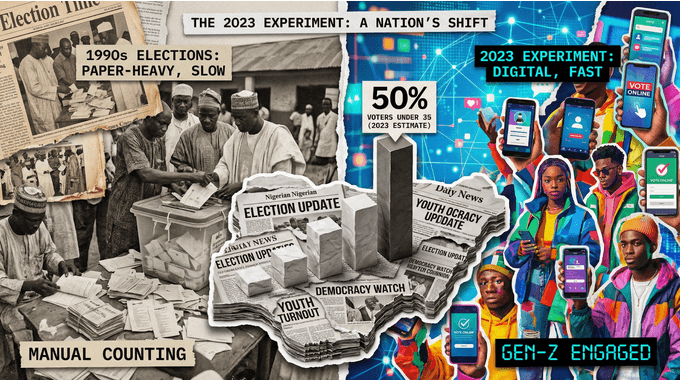
This is a generation that does not wait for official announcements. They refresh pages, forward messages, and crowdsource information in real time. Democracy, for many young Nigerians, is no longer confined to polling units; it is continuously negotiated online.
The Technology That Promised Change
INEC promoted the 2023 elections as a turning point. The Bimodal Voter Accreditation System (BVAS) would curb impersonation through fingerprint and facial recognition. The INEC Result Viewing Portal (IReV) would allow citizens to track results almost as they were declared.
BVAS largely worked for accreditation. Election observers noted fewer cases of multiple voting and manual manipulation. For voters like Adewale, that mattered. “At least you knew one person couldn’t vote twice,” he said.
But IReV told a different story. Results were not uploaded in real time. Some polling units took hours; others took days. Some presidential results never appeared at all. Others surfaced later with visible alterations on scanned forms.
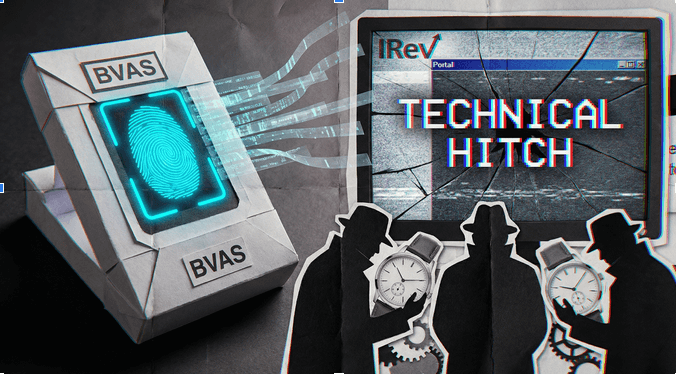
INEC acknowledged the delays. In a post-election briefing, the commission said the challenges were caused by “technical hitches related to network connectivity and server capacity”, insisting that the integrity of the results themselves was not compromised.
But civil society observers were less reassured. “We warned before election day that transparency depends not just on having a portal, but on making sure it works under peak conditions,” said Samson Itodo, Executive Director of Yiaga Africa.
For voters, the distinction between a glitch and a failure mattered less than the outcome. The transparency they had been promised did not materialise when it mattered most.
2023 as a Biometric Data Moment
Less visible to voters, but just as consequential, was the scale of data collection that accompanied the rollout of election technology. With the deployment of BVAS to polling units nationwide, the 2023 elections became one of the largest single-day biometric data collection exercises in Nigeria’s history. Fingerprints and facial images were captured from tens of millions of citizens as part of the accreditation process, according to INEC’s post-election report.
Yet beyond explaining how BVAS would prevent multiple voting, little was publicly communicated about what would happen to this sensitive biometric data after election day. INEC’s technical documentation detailed procurement, logistics, and device deployment but offered limited public-facing information on data retention timelines, post-election access controls, or independent audits of the system. For voters, trust was required without clarity.
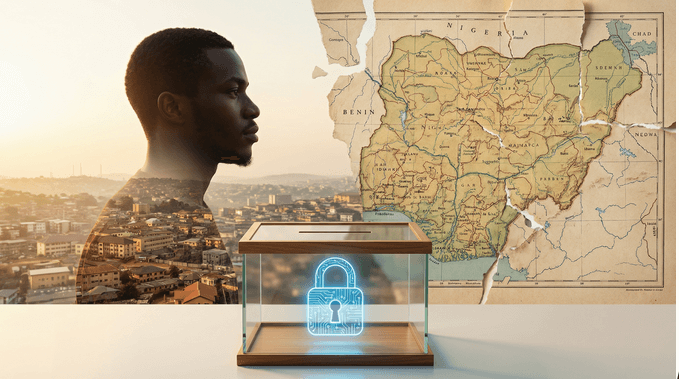
For young voters like Adewale, already navigating a digital environment shaped by SIM registration mandates and recurring data breaches, the expansion of biometric systems without visible safeguards raised quiet concerns. The issue was not whether technology should be used, but whether citizens were being asked to surrender personal data into systems they could not see, question, or independently verify.
Strengthening Digital Rights and Information Integrity
Beyond the performance of election technologies themselves, civil society organisations have played a critical role in shaping how young Nigerians engage with digital information and exercise their rights online. Among them is the Brain Builders Youth Development Initiative (BBYDI) and its media and technology arm, FactCheckAfrica, which focus on promoting civic engagement, media literacy, digital safety, and accountability in Nigeria’s information ecosystem.
Through fact-checking, digital rights advocacy, and the deployment of AI-powered verification tools such as MyAIFactChecker, FactCheckAfrica has worked to counter misinformation and help citizens navigate political content more responsibly, particularly during election cycles. These efforts respond directly to the information gaps that emerged during the 2023 elections, when delayed official data created fertile ground for rumours and fabricated claims to spread across social media platforms.
Abideen Olasupo, Global Director of BBYDI and convener of FactCheckAfrica, has repeatedly emphasised that safeguarding democracy requires more than technical fixes. “Misinformation undermines trust and democracy,” he has said, “and addressing it demands collaborative, community-driven approaches that combine ethical technology use with strong media and digital literacy so citizens can engage the digital public sphere with confidence and discernment.”
Technical Failure to Data Integrity
INEC’s report confirms that the challenge with IReV went beyond delays. In several cases, polling unit results were uploaded hours or days after collation had concluded, while others were missing entirely at the time results were declared. Some forms appeared later with discrepancies that could no longer be reconciled publicly, weakening the portal’s role as a real-time verification tool.
Election observers noted that the absence of prompt, complete uploads transformed a transparency mechanism into a data integrity problem. When official records appear late or selectively, citizens are unable to confirm provenance or authenticity. In such conditions, screenshots, rumours, and fabricated documents gain credibility simply because authoritative data is absent.
This gap, civil society groups argue, is not merely technical. It reflects a governance failure: a system designed to demand public trust without providing sufficient visibility into how data is processed, verified, or corrected when errors occur.
When Trust Slipped Away
The consequences were immediate. A post-election survey by CDD found that over 60 percent of respondents believed the failure of real-time uploads undermined trust in the electoral process. Turnout told its own story. INEC data shows voter participation fell to about 27 percent in 2023, the lowest since Nigeria’s return to civilian rule.
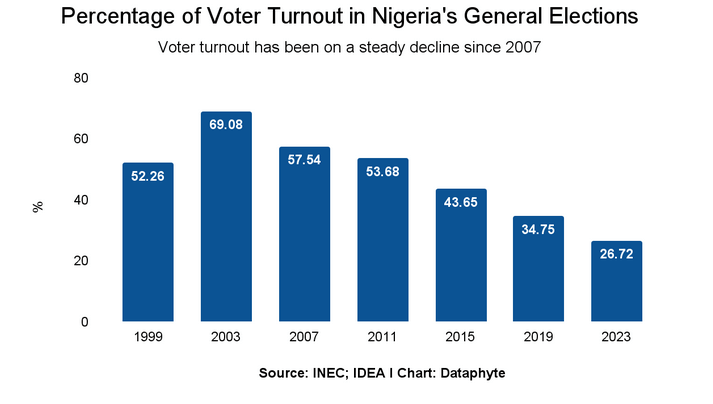
While economic hardship, insecurity, and political disillusionment all played roles, analysts increasingly point to digital disappointment as part of the story, particularly among young voters who had invested hope in technology as a corrective tool.
“Young people believed technology would force accountability,” said YIAGA Africa’s Executive Director, Samson Itodo, whose organisation observed the elections. When that expectation collapsed, the disappointment was sharper.
The Space Disinformation Filled
As official information slowed, unofficial narratives surged. Across WhatsApp, Telegram, Facebook, and X, unverified result sheets circulated freely. Some were misleading. Others were outright fabrications. Claims of system shutdowns and algorithmic manipulation spread.
Research shows why this matters. A MIT Media Lab study found that false news spreads faster and farther than verified information online, largely because it triggers emotional reactions. During Nigeria’s elections, studies by CDD and partner institutions documented how misinformation flourished on encrypted platforms where fact-checking is limited.
“The absence of timely official data created a vacuum,” Itodo said. “And misinformation always rushes in to fill that space.” For Adewale, the experience was disorienting. “We didn’t know what to believe,” he said. “Everyone had ‘evidence’.”
Why Machines Cannot Fix Democracy Alone
The lesson of 2023 is not that technology failed, but that technology alone is not enough. Digital systems reflect the values of the institutions that deploy them. Without transparency, they amplify confusion. Without accountability, they deepen mistrust.
INEC officials have defended the continued use of technology, arguing that abandoning it would reverse progress. “The solution is not less technology, but better systems and stronger processes,” an INEC official said during a post-election stakeholder meeting.
Civil society groups agree, conditionally. Idayat Hassan, former Director of the Centre for Democracy and Development (CDD) and current Senior Associate at the Centre for Strategic and International Studies (CSIS), emphasised that transparency is the foundation of electoral trust. “Technology must come with openness,” Hassan said. “You cannot ask citizens to trust a system they cannot see or understand.”
Beyond election-day performance lies a deeper concern about oversight. While Nigeria passed the Nigeria Data Protection Act in 2023, INEC’s election report offers little clarity on how biometric election data is governed within this framework. There is no publicly disclosed independent audit of BVAS data handling, nor clear timelines for deletion or anonymisation after elections conclude.
This absence of transparency matters. Analysts note that democratic legitimacy depends not only on accurate outcomes but also on citizens’ confidence that their personal data will not be repurposed beyond its original intent. Without enforceable safeguards, election technology risks reinforcing perceptions of surveillance rather than participation.
For Adewale, the concern lingers beyond the ballot. “You give them your fingerprint, your face,” he said. “But after voting, nobody tells you what happens next.”
Eyes on 2027
As preparations for the 2027 general elections quietly begin, attention has turned to INEC’s new leadership. Off-cycle elections have offered early tests, but 2027 will be decisive. Technology will return. The question is whether the lessons of 2023 will inform how it is deployed. For young Nigerians like Adewale, hope now comes with caution. “Maybe it’s not the machines,” he said. “Maybe it’s whether we’re ready to use them honestly.”

Disclaimer: This publication was co-funded by the European Union. Its contents are the sole responsibility of Mustapha Lawal and Forus, and do not necessarily reflect the views of the European Union


Fri 9 Jan 2026
News
Ganga Bahadur Gautam - Connected but Excluded: How Nepal’s Gen Z Turned Digital Shutdown into a Fight for Democratic Governance On September 4, the government abruptly blocked access to 26 major digital platforms—including Facebook, YouTube, and WhatsApp—officially citing registration and tax disputes. For young Nepalis, however, the intent was unmistakable. The shutdown came just as the viral “Nepo Kid” trend was exposing the stark contrast between the extravagant lifestyles of political elites and the reality of a population surviving on an average annual income of just $1,400.
Wed 24 Dec 2025
Video
Nancy Borissova - Online child exploitation and violations are real—and they demand urgent action. Children are increasingly exposed to harm in digital spaces—from online exploitation and abuse to violations of their privacy and rights. This video sheds light on how these abuses happen, why they are often invisible, and what must change to make the internet safer for children. This video was produced by the Civil Society Alliances for Digital Empowerment #CADE as part of the Youth Voices for Digital Rights Initiative. 👉 Join the Let’s Talk Digital campaign to learn more and add your voice to the conversation: https://www.forus-international.org/en/campaign/let-s-talk-digital 👉 Follow the CADE Youth Voices for Digital Rights journey: https://www.forus-international.org/en/campaigns?modal_page=campaign&modal_detail_id=cade-youth-voices-for-digital-rights-200092 Stay tuned for more! #DigitalRights #datasecurity #LetsTalkDigital #dataprivacy