Mon 26 Dec 2022
SDGs in Rwanda: here's how civil society is stepping in
By Benoit NDIRIKIYE, Information and Documentation Officer of CCOAIB, member of Forus in Rwanda
After working for the good of the Rwandan people for over three decades, the Conseil de Concertation des Organisations d'Appui aux Initiatives de Base (CCOAIB) remains true to its vision: "supporting capable civil society organisations working for an inclusive participation of citizens in socio-economic development".
Considering the flow of the budget injected into activities to meet the various needs of the population, it is obvious that the member organisations of this collective have every reason to be pleased, although there is still a long way to go. Joining their efforts to those of other partners operating in the four corners of the world has been a duty and a responsibility for many years. An option that has enabled CCOAIB members to achieve tangible results tailored to the needs of their beneficiaries. Their actions have often required the involvement of other partners, without whom their success would be, if not unlikely, very difficult.
At the Rio conference in 2012, states agreed that the Sustainable Development Goals (SDGs) would be developed for all countries. Negotiations continued for three years and will result in these SDGs being based on the Millennium Development Goals (MDGs), after a process that must include all member states of the United Nations. This includes local and regional authorities, the private sector and civil society. As of September 25th 2015, seventeen sustainable development goals cover all issues of society and the future of humanity. As a result, the 2030 Agenda enshrined the convergence of development and sustainable development.
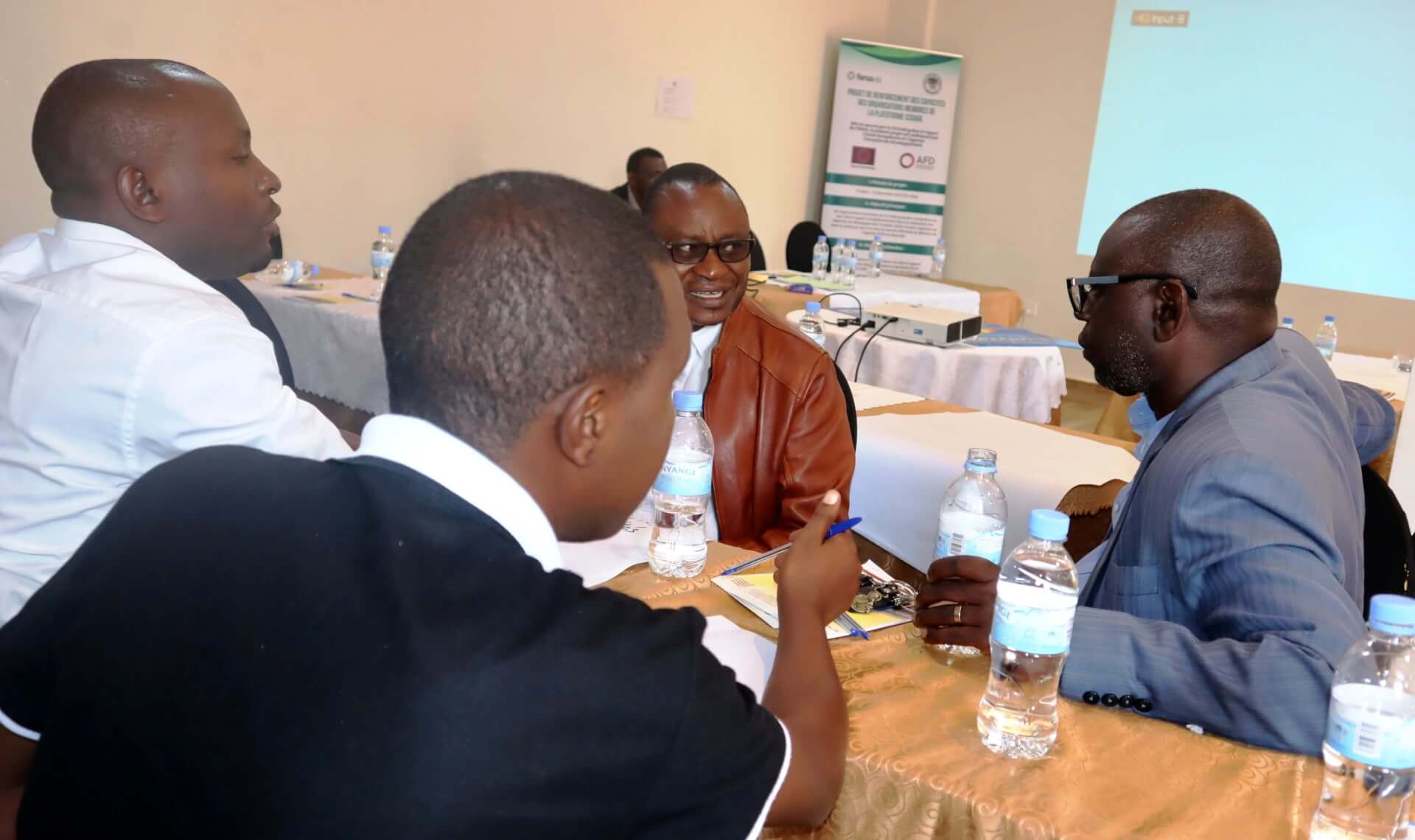
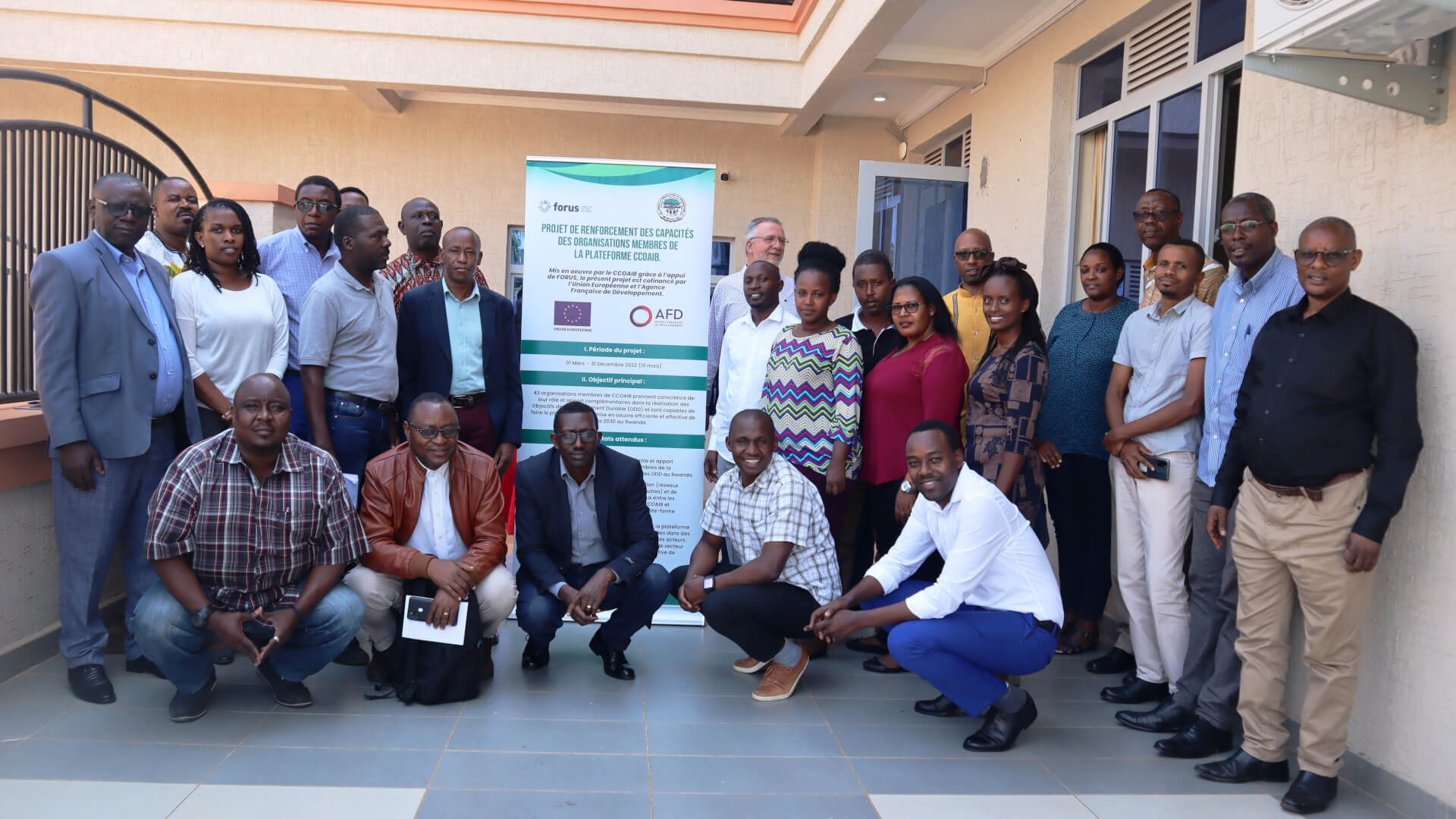
With the support of Forus in collaboration with the French Development Agency, CCOAIB organised a workshop in 2022 to discuss what role its member organisations can play in contributing to the success of the SDGs through their areas of intervention.
As it was well defined and explained, sustainable development is a set of decisions that improve the living conditions of the present without putting at risk the resources for future generations.
"Development cannot be called sustainable as long as we use up all our resources today and leave nothing for future generations. Sustainable development is about growing together, promoting solidarity and respect for the environment. To ensure sustainable development, we must all work together!”
At the end of meetings held in Kigali, capital of Rwanda, member organisations of the CCOAIB platform that work at the local level better understood the content of the SDGs, agreed on how to introduce them into their respective action plans, they agreed on how to improve the quality of their interventions in the implementation, monitoring and evaluation of the SDGs and finally they discussed how to organise advocacy actions for an effective and efficient implementation of the SDGs.
CCOAIB members agreed to join forces and to set up strategies likely to facilitate their tasks. Among other strategies, they opted to strengthen the working groups or networks in which they had already begun to collaborate and to channel their efforts towards achieving the SDGs. Three networks reviewed their advocacy plans on the implementation of the SDGs. These are: The economic network (32 organisations), the social network (21 organisations) as well as the governance network consisting of 14 organisations.
Achieving the Sustainable Development Goals is indeed a goal set by all 193 member states of the United Nations, whose mission is to maintain peace and protect peoples' rights. A good dream, admittedly difficult to achieve, but in any case, for success to be achieved, there must be a firm determination on the part of each and every one of us and above all, a change of mentality. The nations of the world, the private sector and civil society organisations must put in more effort and join forces.