

Wed 22 Mar 2023
“The online space is not gender neutral”
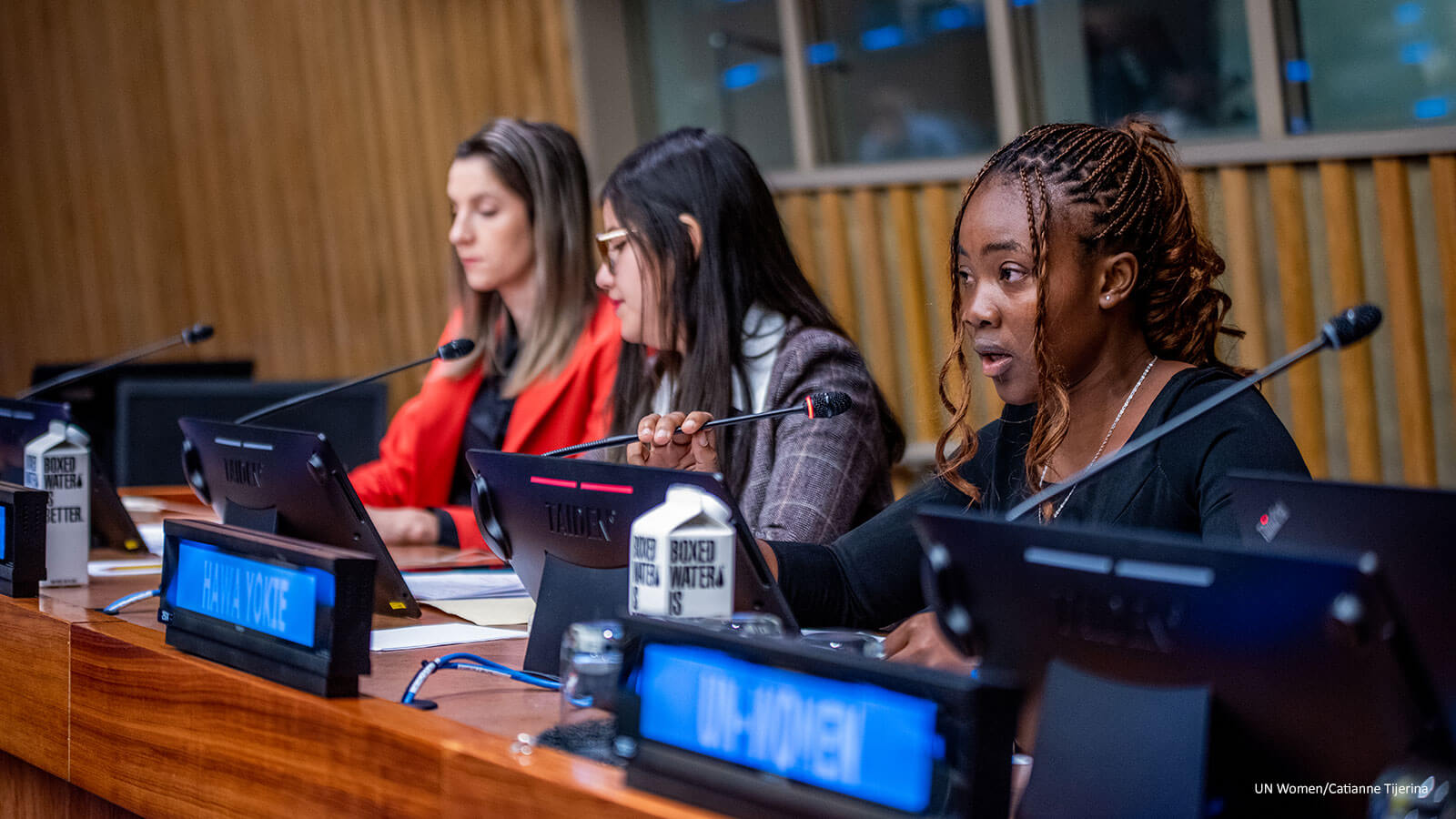
As part of the #MarchWithUs campaign, Global Focus, Forus member in Denmark, shares the highlights of their event organised in parallel to the Commission on the Status of Women (CSW) which this year had as priority theme: Innovation and technological change, and education in the digital age for achieving gender equality and the empowerment of all women and girls.
CSW67
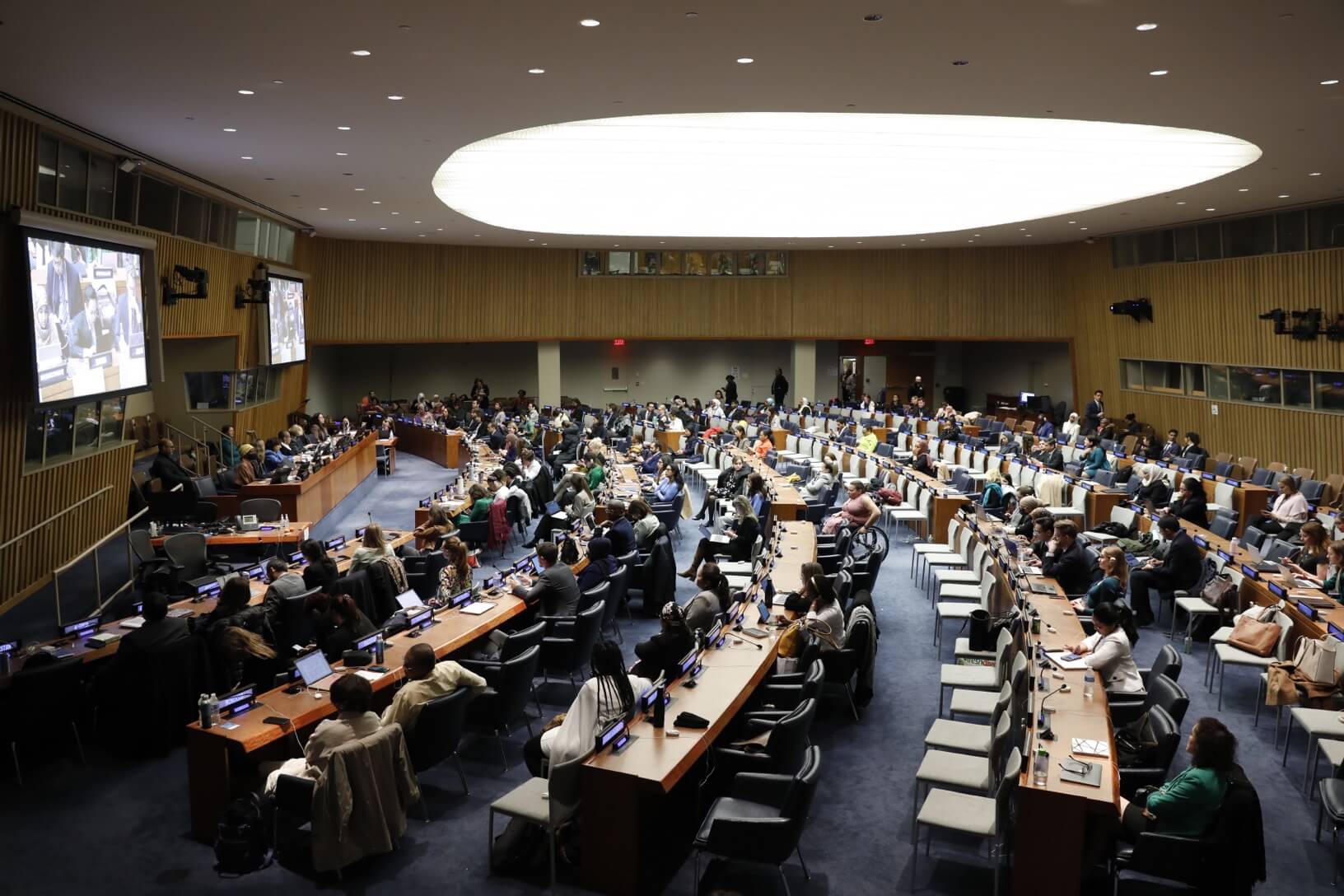
The 67th session of the Commission on the Status of Women (CSW67)— the UN’s largest annual gathering on gender equality —successfully closed its two-week long session (6 to 17 March) with the acknowledgment of the critical role of technology and innovation in achieving gender equality.
From the local to the global level, ensuring that everyone benefits from expansion of connectivity is key to unlock the power of women and girls. This is also the case for women and girls’ access to historically male-dominated forums.
Building upon the #UNmute initiative, Global Focus organised a side event to the CSW67, exploring how to ensure inclusive access to decision-making forums for civil society, focusing on women and girls, through safe, universal, and meaningful connectivity.
“Digital equity must be a mission for civil society, digital needs must be seen as cross-cutting and transversal. Internet access is a basic right,” says Erica Mesker, Director of Partnerships, Connect Humanity, highlighting the urgent need for gender justice to be integrated into the digital rights sphere.
For “meaningful connectivy” to be real, women and girls need to have high-speed and permanent access, the right device and affordable internet or alternatively, public spaces where they can access it for free. They also need digital skills, the right content and tools aligned to their experiences, explains Catalina Escobar, Co-founder and Chief Strategy Officer at MAKAIA. MAKAIA means “to build” or “to do”, in Miskito an indigenous language from Honduras. Its name represents its objective: to build partnerships and relations oriented to social and economic development. And technology is a crucial dimension of this.
"Techonlogy is the new face of gender inequality. It’s actually increasing gaps rather than bridging gaps,” Catalina explains. As a mechanical engineer, she faced first hand the stereotypes and barriers women are confronted to in tech. On top of the little number of women in decision-making spaces even in emerging fields such as AI, another worrying trend is emerging: online spaces are increasingly unsafe.
“Technology is facilitating gender-based violence; it is magnifying it. Women that are mostly attacked online are those who are leaders, politicians, those who are trying to make a change in society. It’s a threat to democracy.”
“Digital harrassment against indigenous people has intensified, online attacks are widespread and unprecedented, we are labelled as terrorists by the government, the police and the military. Online platforms are being used by state agents to further repress indigenous people as part of the government’s counter-insurgency and anti-terrorism efforts. The government is not making a distinction between armed groups and citizens. Basically, everyone who is criticising the government is targetted,” explains Sarah Bestand K. Dekdeken, Secretary General at Cordillera Peoples Alliance. The Cordillera Peoples Alliance is an independent federation of progressive peoples organizations, most of them grassroots-based organizations among indigenous communities in the Cordillera Region, Philippines .
Terrorist or red tagging of indigenous leaders in the Phillippines is leading to serious human rights violations. Sarah herself was convited for speaking out for the rights of indigenous people at a press conference on Facebook. “People are afraid of posting comments online for fear that the military or the police will go after them”.
“Attacks against indigenous women leaders is leading to mental and emotional stress,” Sarah explains. “Even our children are targetted”.
Shahla Naimi, Human Rights Lead at Google, explains how Machine Learning and emerging technologies can help moderate online violence and abuses.
Harassement management apps for instance, are an open-source tool especially designed for public figures.
“It documents and manages abuse targetted at them,” Shahla explains. “It’s one thing to take down the abuse, but public figures also need to document them for proof that they actually happened.”
To ensure globally access and safety online, we need to consider issues such as language barriers, time zones, and safety, including ICT-facilitated violence, which often holds a gendered component.
As Sigrid Kromann Schiøler, policy advisor and project lead of the #UNmute initiative at Global Focus and organizer of the side-event puts it: “No single actor can ensure digital connectivity alone. To close the digital divide and growing online inequality it is imperative to establish a strong multistakeholder approach, which can ensure women and girls more and equal digital access at all levels. To name a few, we need political will, regulations, gender-centered technology, and increased awareness about digital rights. This can only be achieved through strong and committed multistakeholder collaboration.". As the side-event put forward, neglecting the challenges of unequal virtual access to tables of power results in both lost opportunities to harness the unique knowledge of women and girls, as well as other targeted groups in global policy making, as well as their possibility to unlock their full potential.
Photos: UN Women, Unsplash
Techonlogy is the new face of gender inequality. It’s actually increasing gaps rather than bridging gaps.