© NGO Forum on ABD
Fri 31 Oct 2025
The Pacific’s localisation movement
Across the Pacific, Localisation is no longer viewed as a side agenda but as a core pathway for achieving resilient, equitable and self-sustaining development across island nations. In Vanuatu, this shift is reflected in ongoing national dialogues and policy frameworks that emphasise resilience, traditional knowledge and community driven leadership as central to development and humanitarian action.
In Vanuatu, this shift is taking tangible shape. The country’s localisation movement continues to grow through national dialogues, policy innovation and more and The Pacific Islands Association of NGOs (PIANGO) continues to play a key role in driving this transformation.
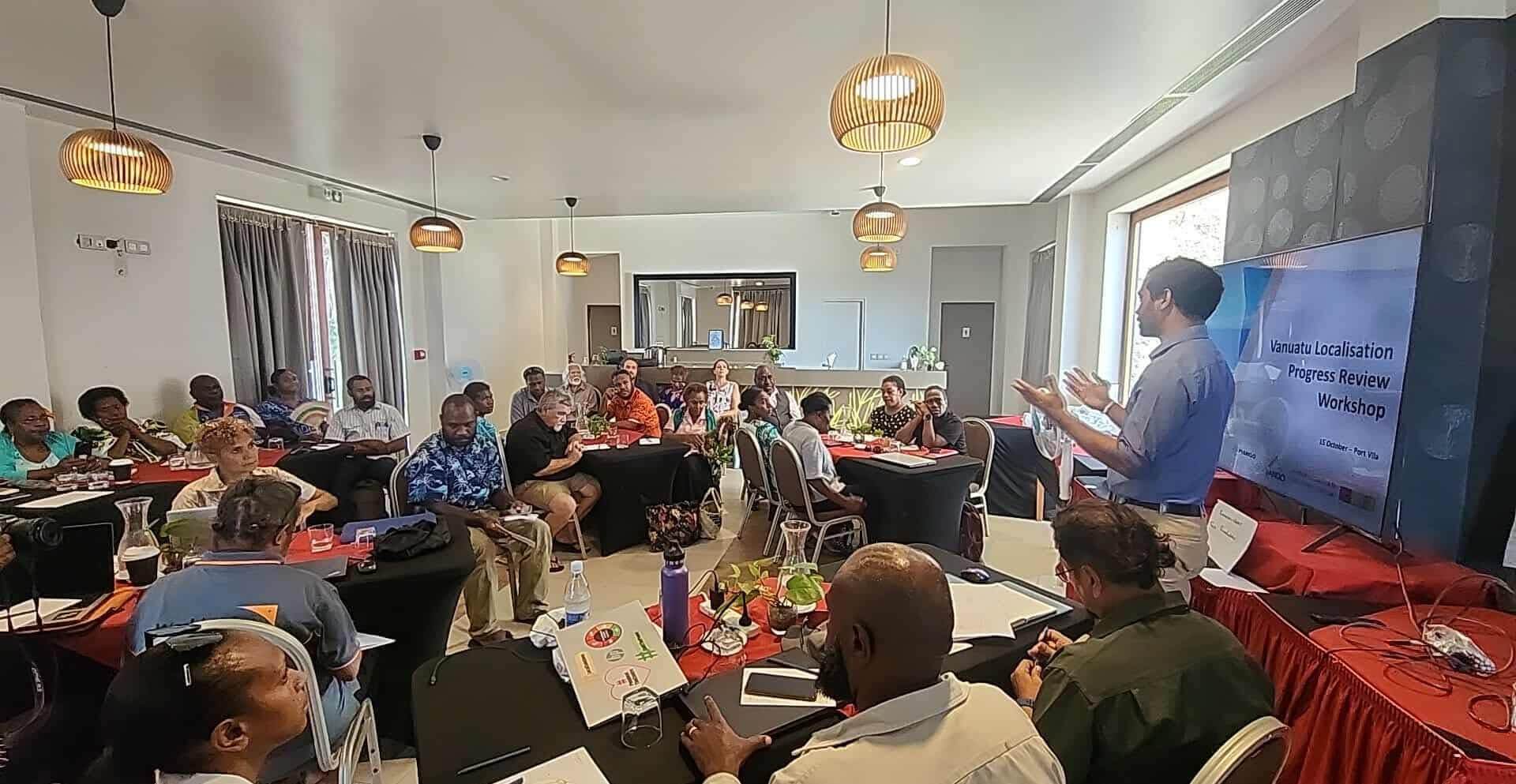
Over 2 meaningful days in Port Vila, the country’s localisation movement came alive through reflection, learning and renewed commitment to locally-led action.
FALE Vanuatu in collaboration with PIANGO, and supported by Global Support for Development (GSD), recently hosted its localisation lab workshop. "Humanitarian FALE" (Facility Aiding Locally-led Engagement) is deeply rooted in the Pacific. The word "fale" refers to a house that is meaningful and has a purpose when people occupy it. The Pacific Humanitarian FALE is working to engage locally led humanitarian actors so that they can provide services that ensure the lives of people are safeguarded in any crisis.
The workshop brought together national actors, civil society organisations and provincial representatives to strengthen a collective vision and align it with NEAR’s global pillars of localisation: movement building, building bridges, co-creating solutions and learning.
During the sessions, collaborative exercises and deep reflection were encouraged as participants mapped civil society organisations’ next three years of actions under these pillars and reaffirmed what they proudly call “the Vanuatu way of working” - a philosophy which is rooted in identity and culture.
“Localisation is about putting Ni-Vanuatu in the driver’s seat. It’s about trusting that our people know how to lead. FALE Vanuatu isn’t here to replace systems. It’s here to ensure decisions, coordination, and resources stay close to communities,” said Akmal Ali, FALE Pacific Coordinator.
The workshop was followed by the Vanuatu localisation progress review workshop with more than 40 participants coming from government institutions, NGOs and more, to revisit the 2019 localisation baseline. They validated national progress and reflected on how global funding shifts and emerging crisis continue to impact local action and leadership.
The sessions also drew on lessons from the recent earthquake response, where FALE Vanuatu and partners led local coordination efforts. These discussions are feeding directly into the development of the FALE Vanuatu strategic plan (2025-2028) - a roadmap to ensure that Vanuatu continues leading by example in locally-led action.
Together, participants co-developed recommendations and commitments just strengthen Vanuatu's humanitarian leadership and ensure that lessons from past responses inform future ones.
“Vanuatu’s localisation research gives ni-Vanuatu actors the necessary evidence to advocate for systems that reflect their leadership,” said Eranda Wijewickrama, HAG Deputy Director, who co-facilitated the workshop with VANGO. “It also helps international actors rethink their role — not as decision-makers, but as collaborators in a model that centres national leadership and community priorities.”
HAG emphasised that robust data and shared learning are essential to building a complementary model of collaboration, where international support strengthens — rather than substitutes — local systems.
This localisation work aligns strongly with broader Pacific development priorities and PIANGO’s organisational objectives to promote and apply localisation approaches in both humanitarian and development sectors, ensuring that national governments and local CSOs co-lead decision-making and implementation.
As PIANGO and its partners look to the future, they reaffirm that localisation is not just about systems, structures or funding flows but about people, culture and the strength of communities who stand ready and equipped to lead their own development.
Mon 3 Nov 2025
Press release - PIANGO Demands Radical Localization of SDGs and Direct Financing to Community 'Roots' Representing 24 National Liaison Units across the region, PIANGO’s message was unified, development must be locally-led, culturally grounded, and treat communities as equal partners, not as passive recipients.