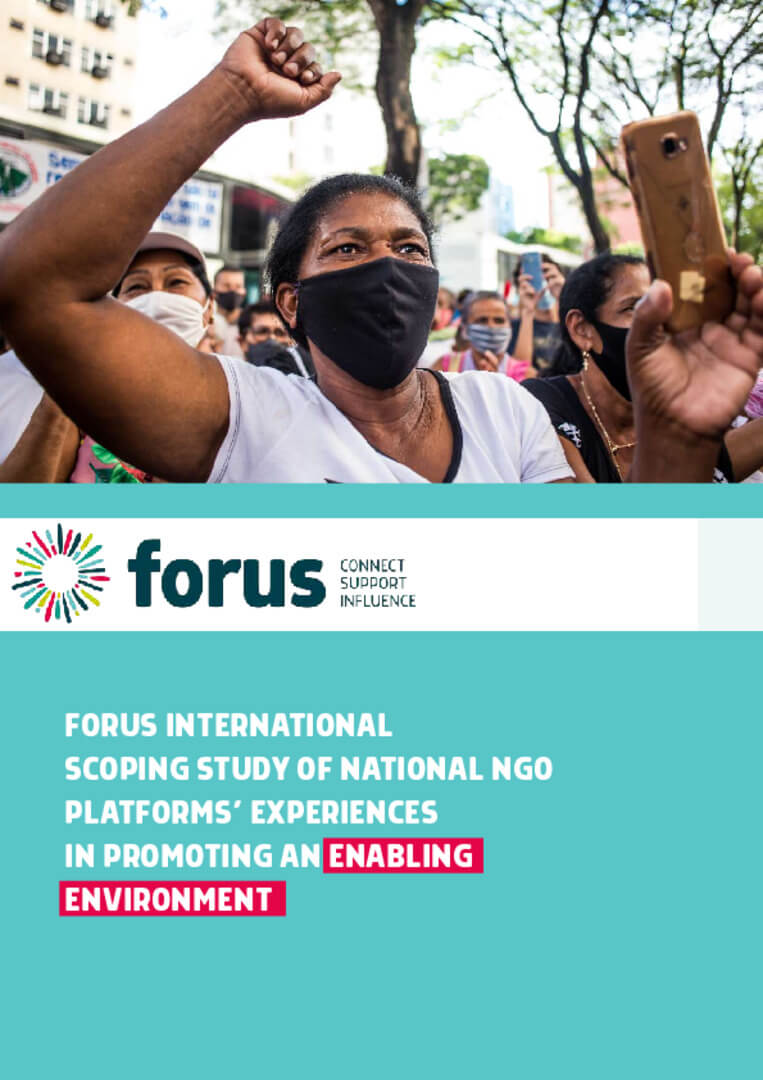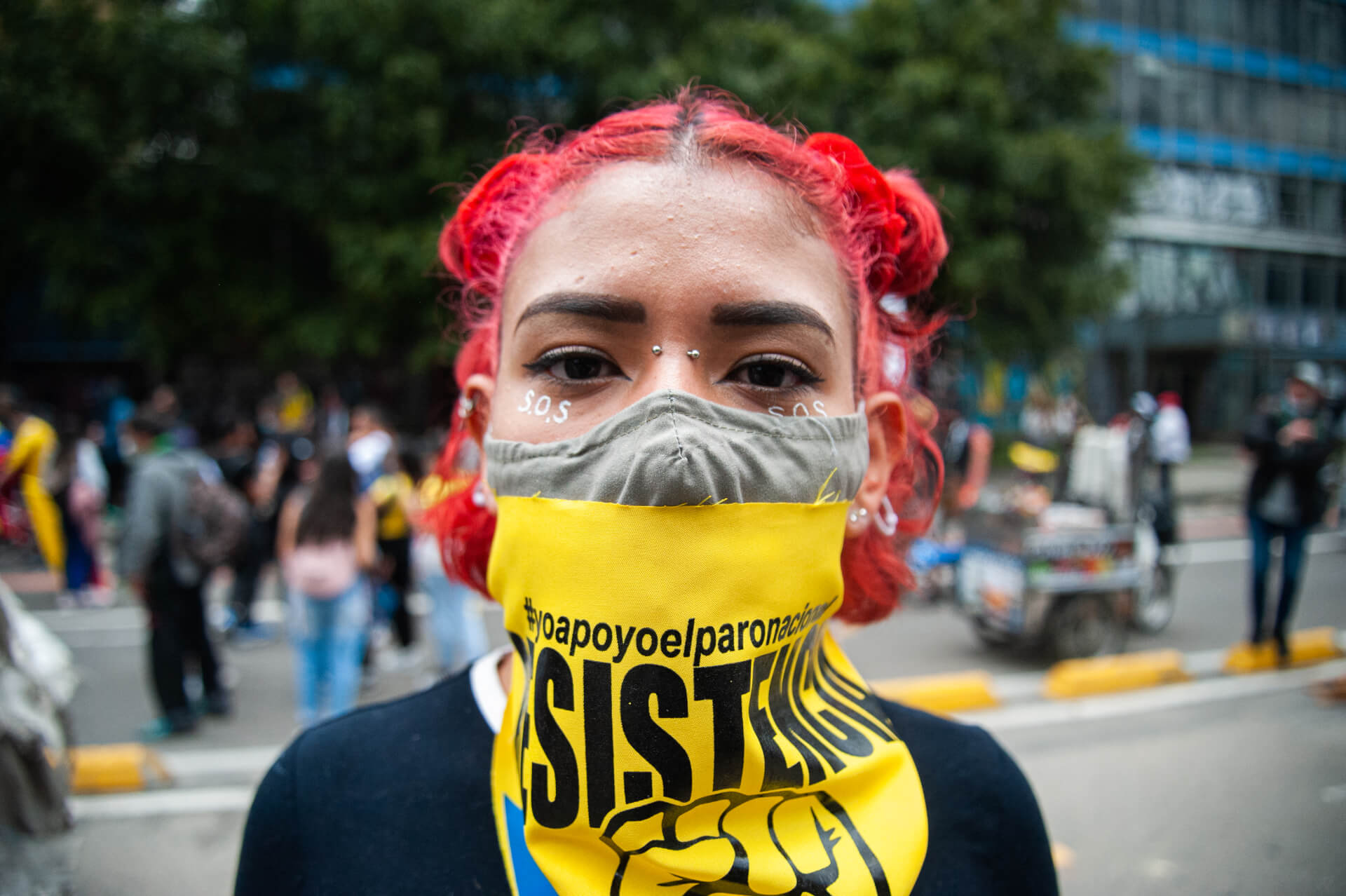
©Sebastian Barros/Forus
Mon 4 Dec 2023
UNmute - Promoting Civil Society Organization participation and engagement
At the heart of global policy-making, CSOs have long been seen as champions of grassroots advocacy. From helping to eradicate smallpox and polio on the ground to forging landmark agreements on sustainable development and climate change, the impact of CSOs is undeniable. The central role they played in shaping the 2030 Agenda is testament to their influence. They have championed the interconnectedness of global goals and argued for tangible indicators to monitor progress.
In his recent remarks at the General Assembly, including the Summit on Sustainable Development Goals and the Summit on Climate Ambition, the UN Secretary-General António Guterres re-affirmed the need for an integrated effort.
Civil society does more than represent organisational agendas; it is the amplified voice of communities; it echoes their hopes, needs and aspirations. To silence or exclude this voice is to silence the collective aspirations of millions of people around the world. Civil society organization also play a key role in strategically raising awareness about the SDGs, an they provide platforms for civic participation which enable citizens to engage in decision-making and hold governments accountable.
Yet as we approach the mid-point of the 2030 Agenda, there is a worrying drift from collaboration to restriction in the relationship between the UN, Member States in their national and local contexts, and civil society. For several years, civil society voices have found themselves on the periphery, with challenges ranging from limited access at key UN sessions such as the General Assembly's High Level Week to restrictive participation in other key UN forums such as the High Level Political Forum, the Commission on the Status of Women (CSW) and the Internet Governance Forum.
At the national level, attacks on civic space and democratic freedoms have escalated. New legislation limits their ability to engage in online and offline advocacy. International collaboration between civil society networks, social movements and activists is increasingly criticized, penalized, and criminalized.
More and more, we are seeing that CSOs around the world face challenges in participating meaningfully decision-making processes – from a lack of access to information and resources to limited opportunities to participate in decision-making processes, as well as exclusion from key meetings and events, and increasing repraisals, discrimination and harassment.
To promote an enabling environment for civil society organizations, Forus participates in international initiatives such as Tech for Democracy, the Lisbon Forum, and the Internet Governance Forum. Forus is also an active member of the OECD DAC's Civil Society Organizations (CSOs) working group, which played a key role in the work on the DAC recommendation on civil society empowerment which was adopted in July 2021.
Over the past three years, Forus has also been active in the workshops organized by the TAP network and CIVICUS on the revision of the Rome Declaration on SDG 16 to call for the development of new indicators of civic space linked to the target 16.10 of Agenda 2030. Forus is a signatory to the Revised Declaration of 2021 and also fed into its advocacy proposal on the need to establish a global observatory of civic space in this Rome process.
To facilitate information exchange and coordination among its members on issues related to the enabling environment, Forus has established a dedicated working group with over 50 participating members.
Furthermore, Forus publishes valuable toolkits and reports in partnership with members and allies, emphasizing the importance of an enabling digital space and highlighting the impacts of digitalization on its members. The organization's proactive engagement with governments and international institutions has helped elevate the issue of the enabling environment for civil society to a higher priority on the global agenda.
This is why, in 2020, Forus, along with a coalition of civil society organizations, decided to launch the UNmute campaign that aims to amplify the voices of civil society organizations (CSOs) in decision-making processes – in regional and global mechanisms set by the United Nations (UN) and multilateral institutions, and at national and local levels.
The UNmute campaign is working to address these challenges by raising awareness of the importance of CSO participation at the UN, advocating for reforms to make the UN more inclusive and accessible to CSOs, and providing support to CSOs to participate meaningfully in decision-making processes.
The recommendations prepared by Forus, the task force member organizations, the Permanent Missions of Denmark and Costa Rica were endorsed by 52 Member States and 334 members of civil society. The Forus member from Denmark managed to get the Danish government to hand over one of its seats to them in the negotiations for the Commission on the Status of Women in March 2021.
Following the 2023 SDG Summit, a civil society coalition revamped the #UNmute campaign to voice its concerns about the persistent problems in accessing meangingfully the UN. A joint letter, signed by Access Now, Action for Sustainable Development, Amnesty International, CIVICUS, Civil Society in Development (CISU), Democracy without Borders, Forus, Global Focus, Greenpeace International, Human Rights Watch, Oxfam International, TAP Network and UNA-UK, highlights the glaring disparities in access and space between NGOs and UN staff or government delegates. It highlights the need to move from token recognition to active and equitable participation.
Read our latest article on the UNmute initiative and keep your ears out for our upcoming podcast series on the future we envision where the role of CSOs is not only recognised, but actively strengthened in UN spaces and beyond.
Tools and Resources for CSOs on promoting an enabling environment:
-
CIVICUS State of Civil Society Report 2023. https://www.civicus.org/index.php/state-of-civil-society-report-2023
-
Forus Advocacy Paper. 2021. Towards an enabling digital environment for civil society. https://www.forus-international.org/en/pdf-detail/77151-towards-an-enabling-digital-environment-for-civil-society-full-report
-
Forus. 2022. Enabling Stories – How civil society can build new narratives in a world transformed by digitalization and the COVID-19 pandemic. https://www.forus-international.org/en/pdf-detail/88273-enabling-stories-how-civil-society-can-build-new-narratives-in-a-world-transformed-by-digitalization-and-the-COVID-19-pandemic
-
Forus. 2020. Literature Review prepared 2020 Brian Tomlinson, AidWatch Canada. A scoping study of national platforms’ experiences in promoting an enabling environment. https://www.forus-international.org/en/pdf-detail/75936-literature-review-a-scoping-study-of-national-platforms-experiences-in-promoting-an-enabling-environment
-
OECD DAC recommendation on the empowerment of civil society (adopted in July 2021)
-
Forus, "Realizing the potential of Goal 16 to promote and protect civic space" (2020)
-
Forus, “Mapping innovative thinking, culture and practices among Forus members” (2020)