© Forus

(c) Igor Omilaev

Mon 2 Mar 2026
Who Gets to Shape the Future? AI, Africa, and the Fight for a Fair Digital World
There is a version of the future in which artificial intelligence lifts billions out of poverty, closes literacy gaps, translates across linguistic divides, and brings the best of human knowledge to the places that have been denied it for centuries. And then there is the version we are currently building.
Right now, only about 5% of Africa's AI talent — the researchers, developers, and innovators with the skills to shape this technology — have access to the computational resources needed for advanced work. Five percent. On a continent of 1.4 billion people, where some of the world's fastest-growing economies and most vibrant tech ecosystems are emerging, the infrastructure for participation in the AI age is being withheld by geography, language, and capital.
This is not an accident. It is the predictable outcome of a global AI development model that defaults to the priorities of Silicon Valley, the regulatory instincts of Brussels, and the consumer markets of the Global North. The result is a technology that was never designed with the majority of the world in mind — and that is now being deployed at scale in ways that will entrench those omissions for generations.
"AI is not equally distributed. Without deliberate action, it will magnify global divides — but leaders still have the chance to set a new trajectory."
— World Economic Forum, Global AI Governance Report 2025
Leaders and policymakers from around the world must grapple with an uncomfortable truth: the window to course-correct is narrowing. The governance frameworks being written today, the datasets being assembled, the language models being trained — these choices are not neutral. They embed values, priorities, and power. The question is whose.
The Infrastructure Gap: Who Controls the Compute?
Access to computational power has become the defining chokepoint of the AI economy. Training frontier AI models requires massive clusters of specialised processors housed in energy-intensive data centres that cost billions to build and maintain.
Europe, acutely aware of what it means to depend on others for critical infrastructure, has pooled over US$8 billion into the European High-Performance Computing Joint Undertaking, ensuring the continent can develop and run its own AI systems.
Africa has no equivalent. The continent's AI researchers are largely dependent on cloud infrastructure controlled by American and Chinese corporations, subject to pricing structures, access restrictions, and terms of service they had no hand in negotiating. When a Kenyan agricultural AI researcher needs to train a model on crop yield data from the Rift Valley, she competes for compute time with the same pricing model as a Fortune 500 company in San Francisco — and she loses, every time.
This is not a technical problem. It is a political and economic one. African governments and regional bodies must press for the funding and multilateral partnerships needed to build local data centre capacity, establish GPU clusters, and create secure cloud infrastructure that serves African priorities. They must insist on transparency from global providers about who controls access to these systems. And they must pursue regional cooperation — pooling sovereignty rather than fragmenting it — to make that infrastructure viable at scale.
Data: The Raw Material of Power
AI systems are only as good as the data they are trained on. And right now, the continent's data is fragmented, poorly governed, or extracted without fairly compensating the communities it was drawn from.
Fingo, the Finnish NGO Platform and Forus International member representing around 280 Finnish civil society organisations, offers a model worth examining. Fingo operates a centralised membership data governance system across its 280 members — tracking budget size, thematic focus, geographic reach, and SDG contributions. Data is made publicly available to benefit member visibility and enable third-party partnership searches, while members retain the right to object to any use of their information. As Fingo's team describes it: the platform acts as data controller, but governance remains a shared responsibility — a practical example of what community-centred data stewardship looks like at the civil society level. Fingo is also running its Equalizers of Digital Power (Digivallan tasaajat) project, explicitly designed to address how power is distributed in the digital sphere — a question that sits at the heart of AI equity debates globally.
Large, diverse, machine-readable datasets — high-accuracy crop yield models that reflect actual soil conditions in West Africa; voice and text resources for languages that Silicon Valley has deemed too unprofitable to serve — work because they were built from and for African realities. Not adapted, not translated, but originated.
The lesson is clear: where ethical stewardship frameworks exist and communities retain ownership of their data, innovation follows. What is needed now is the policy architecture to make this the rule rather than the exception. Robust national data protection laws, regional data commons with shared governance standards, and multilateral frameworks that centre African priorities — not as an afterthought, but by design.
Language as Exclusion
Here is a question worth sitting with: if AI cannot speak your language, can it serve you? For the majority of Africans, the answer is no. Current large language models overwhelmingly privilege English and a handful of other dominant languages. Africa's 2,000-plus languages are all but invisible in the digital sphere — which means they are invisible in the AI systems being built to power healthcare diagnostics, legal aid, financial services, and education.
This is not merely a technical limitation. It is a form of epistemic exclusion. It says, implicitly but unmistakably, that the knowledge systems embedded in Yoruba or Amharic or Wolof — the oral histories, the Indigenous agricultural wisdom, the philosophical frameworks like Ubuntu that centre community and interdependence over the individualism baked into most Western AI — do not count. That they are not worth learning from.
"The automation of work and the preference for data-driven expertise may further displace community-based, experiential, and oral forms of African knowledge."
— UNESCO, Artificial Intelligence and Education: Guidance for Policy-Makers
The consequences of this exclusion compound. When AI systems cannot serve marginalised language communities, those communities fall further behind in access to AI-enabled services. When AI systems are not trained on diverse epistemologies, they produce outputs that reflect only the worldviews of those who built them. The technology becomes not a bridge but a mirror — reflecting and amplifying existing power structures rather than challenging them. Masakhane, an African-led NLP research community, has demonstrated that community-led language AI development is not only possible but produces better results than centralised adaptation — a model that deserves far greater institutional support.
CANGO (China Association for NGO Cooperation), a key Forus International partner, is advancing a 'Technology for Good' agenda that speaks directly to this challenge. In 2025, CANGO participated in global events focused on AI, digital governance, and inclusive development — including the UN Social Development Summit — highlighting civil society's role in ensuring AI serves the communities most at risk of being left behind. CANGO's model of South-South civil society cooperation, connecting Chinese and African NGOs around shared development priorities, is an example of the kind of cross-regional, non-Western AI governance voice the field urgently needs.
The Gender Dimension: Who Is Really Left Behind?
No discussion of AI access in Africa is complete without confronting the digital gender gap — because the inequalities being hardened into AI systems do not exist in the abstract. They exist in the lives of women who are already on the wrong side of multiple divides.
In Ghana — which ranks eighth among Africa's digital leaders and is currently executing a $200 million World Bank-backed Digital Acceleration Project — women make up 50% of the population but earn, on average, less than a third of what men earn. That wage gap cascades into everything: property ownership, smartphone access, data affordability. Only around 60% of Ghanaian women own smartphones, compared to 72% of men. At an average cost representing roughly a quarter of the average monthly income, a smartphone is not a luxury item but an economic decision with direct trade-offs.
"I cannot go and buy an expensive phone and also be paying for data when I need to provide food for my hungry children."
— Research participant, GSMA Connected Women programme
Ghana's Digital Acceleration Project has ambitious goals — six million people with new internet access, 1.5 million digital service transactions annually, an 85% user satisfaction rate on its e-government portal. But ambition without gender equity is just a more efficient way to leave women behind. Any AI governance framework worthy of the name must make the digital gender gap a first-order concern, not a footnote.
Civil Society as Infrastructure: A New Model
While governments negotiate and corporations build, something quietly radical is happening at the community level across Africa. Civil society organisations — underfunded, understaffed, and largely invisible to the international tech press — are building the inclusive AI ecosystem that the market will not.
Community tech hubs run by CSOs are training women, rural youth, and people with disabilities in digital skills. CSO-funded projects are building AI models for languages that tech companies have decided are not commercially viable. Farmer cooperatives are co-designing the agricultural AI tools they will actually use — not the tools that Silicon Valley imagines they need. Communities are developing and owning AI tools rather than having them extracted for corporate profit.
The Forus International network — 73 National NGO Platforms and 7 Regional Coalitions representing over 24,000 civil society organisations across five continents — is already operationalising this model. From NNNGO in Nigeria (4,073 member organisations with digital content reaching 2.5 million people annually) to Fingo in Finland (pioneering data governance and digital power equity across 280 CSOs) to CANGO in China (advancing Technology for Good through South-South civil society cooperation), Forus members are proving that inclusive, community-owned AI development is not a future aspiration — it is already happening, at scale, across the Global South.
These are not charity projects. They are proof-of-concept for a different model of technology development: one grounded in community ownership, participatory design, and sustainable lean operations. And they point toward something that tech companies, if they are paying attention, should recognise as enlightened self-interest: CSO-led localisation creates better product-market fit than centralised adaptation. Partnering with civil society to reach marginalised communities is more effective than direct B2C approaches. Inclusive AI ecosystems expand total addressable markets — they do not shrink them.
The same logic applies beyond Africa. Rural communities in the United States face similar AI access gaps. Indigenous populations worldwide are excluded from AI development. Disability communities globally are marginalised by systems not designed with them in mind. The models being built by African CSOs are not regional solutions — they are global ones, available to anyone willing to look.
What Needs to Happen Now
Governments can stop treating AI governance as a technical question and start treating it as a justice one. Regional bodies — the African Union, ECOWAS, the East African Community — can make continental AI infrastructure a priority, pooling resources for shared compute and data commons rather than competing for foreign investment on terms they do not set. International donors can fund civil society AI initiatives with the same seriousness they apply to climate resilience. And the world's major AI developers — the companies whose models will shape this century — can start by asking whose voices are missing from their training data, and doing something about it.
What is at stake is not just efficiency or innovation. It is whether the defining technology of our time will be built on the same colonial logic that structured the last five centuries of global power — or whether we will, finally, choose differently.
"Africa and the global majority can shape the rules of the game. But only if the world decides, now, that is what it wants."
— Tina, AI Governance Advisor, UNESCO/UN
The tools exist. The knowledge exists. The communities — creative, resilient, and historically denied the resources to match their ingenuity — exist. What has been missing is the political will to treat their inclusion not as a nice-to-have, but as the condition on which a genuinely beneficial AI future depends.
We are at the beginning of this story. The ending has not been written. But the next chapter is being written right now — in policy rooms, in data centres, in the code of language models, and in the community tech hubs where a woman in rural Ghana is learning, for the first time, that this technology might have something to offer her after all.
Let's make sure it does.
This article is written as part of the Forus journalism fellowship programme. Learn more here

Fri 27 Feb 2026
Feminismos hackers constroem tecnologia pública - AzMina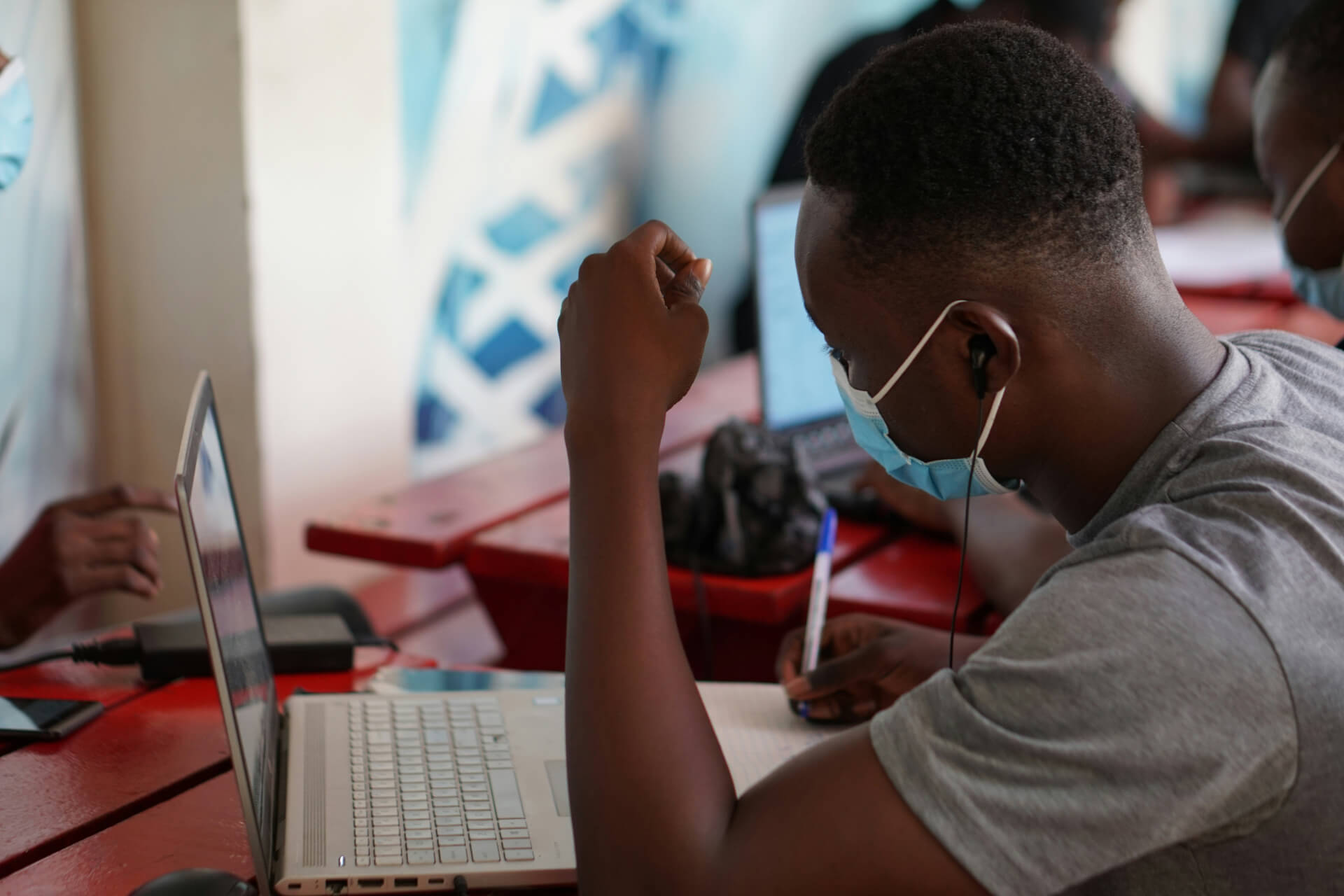
Mon 2 Mar 2026
The Illusion of Governance: How Civil Society Is Filling the Gap Between AI Law and AI RealityInfluence