(c) Alain Nkingi


Fri 15 May 2026
Women of the Great Lakes: Essential Peacebuilders Still Excluded from Power
In Africa’s Great Lakes region - where armed conflict continues in the eastern Democratic Republic of Congo (DRC) and political fragility persists in Burundi - peace processes remain overwhelmingly dominated by men. Yet beyond formal negotiation rooms, women are often the ones sustaining communities, mediating tensions, and rebuilding social trust long after political agreements falter.
On the ground, their role is not peripheral - it is foundational.
From Burundi to the DRC, women are actively involved in community mediation, early warning systems, psychosocial support and local economic initiatives. Their work reflects the spirit of UN Security Council Resolution 1325, adopted in 2000, which formally recognized the critical role of women in conflict prevention and peacebuilding.
More than two decades later, the evidence is clear: women’s participation is not symbolic — it directly strengthens peace outcomes. According to UN Women’s Women, Peace and Security data portal, peace agreements are 20% more likely to last at least two years and 35% more likely to last 15 years when women are meaningfully involved.
Yet despite this, women remain systematically excluded. According to UN Women’s global facts and figures on Women, Peace and Security, women made up only 7% of negotiators, 14% of mediators, and 19% of signatories in major peace processes globally in 2024.
“The resolution promotes equality as a condition for sustainable peace. In short, durable and inclusive peace is impossible without women,” says Jeanne Irakoze, a member of Women United for Peace in the Great Lakes Region (FUP-GL).
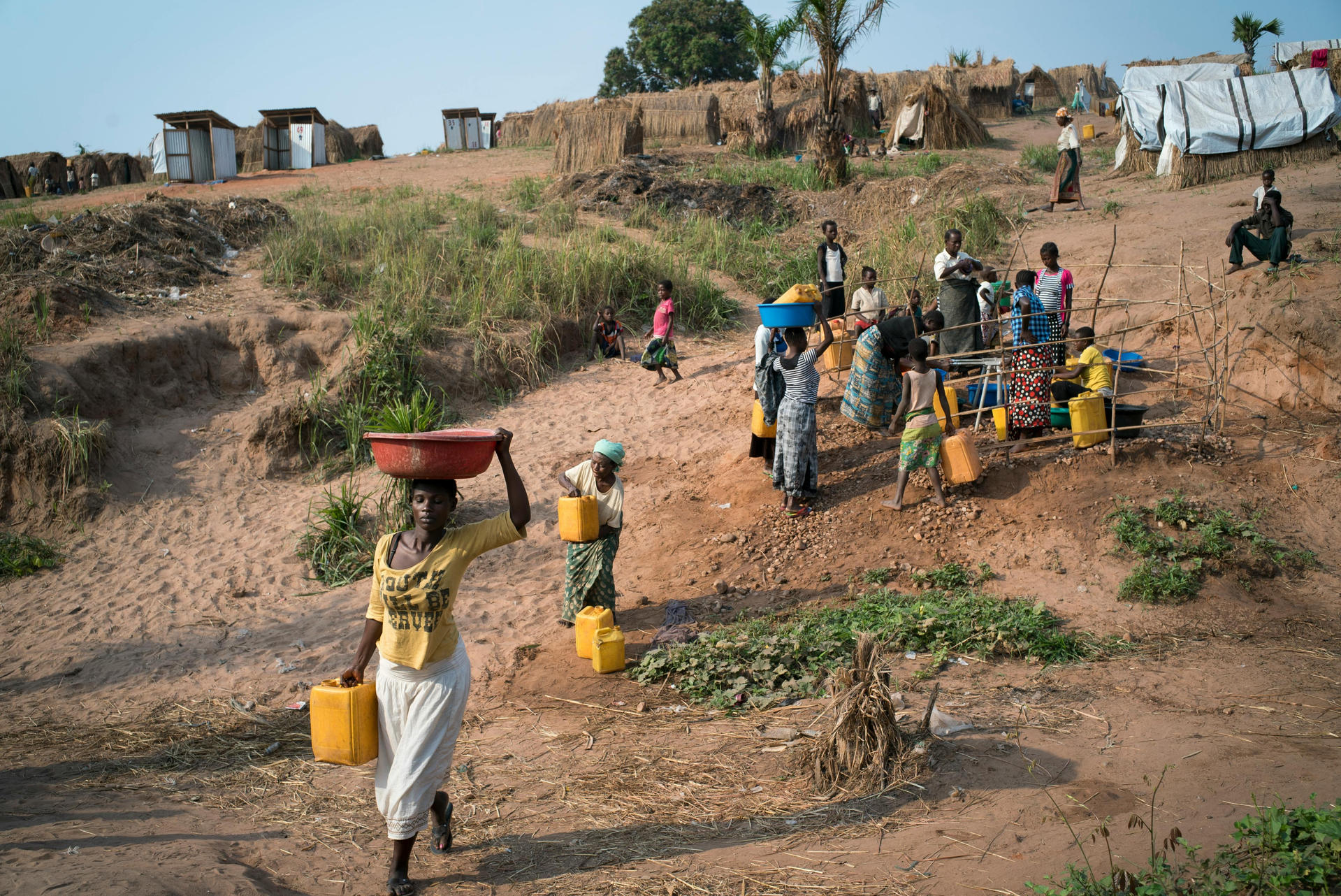
This reality is echoed in eastern DRC, where conflict continues to displace millions. For Mululu Kisonia Rachel, focal point of the Women for Peace and Security Synergy (Synergie-FPS) in North Kivu, women’s engagement persists despite insecurity.
“My joy is seeing women continue to engage in peacebuilding and conflict prevention without violence,” she says.
Peace Built at Community Level
In fragile and conflict-affected contexts, women often operate far from political visibility but at the core of local stability mechanisms.
In Burundi, their presence in markets, associations, and informal networks allows them to detect early signs of tension — often before authorities intervene.
“They manage to extinguish conflicts before they degenerate,” explains Jeanne Irakoze.
In the DRC, women-led initiatives have expanded across conflict-affected areas such as Goma, where cycles of violence have repeatedly fractured communities. Women’s groups, faith-based actors, and civil society networks organize dialogue sessions, awareness campaigns, and reconciliation initiatives aimed at restoring trust.
These localized efforts are essential in a region where formal peace agreements often fail to translate into lived stability.
As Congolese activist and 2023 UN Human Rights Prize laureate Julienne Lusenge has stated: “Congolese women are no longer victims; they are agents of change.”
Economic Empowerment as a Stability Tool
Beyond mediation, women are addressing deeper structural drivers of conflict — including poverty, inequality, and exclusion.
Across Burundi and the DRC, women are leading agricultural cooperatives, savings groups, vocational training initiatives, and small-scale enterprises that strengthen household resilience and reduce economic tensions.
In some communities, women from historically divided groups collaborate on shared agricultural projects, pooling resources and distributing profits collectively - a practical form of reconciliation that extends beyond dialogue.
These efforts are particularly critical in a region where economic marginalization often fuels instability. According to the World Bank overview of fragility, conflict and violence, economic exclusion and inequality are among the key drivers of recurring conflict cycles globally.
Women also play a central role in social recovery. In North Kivu, women-led organizations provide psychosocial support to survivors of violence, including trauma counseling and community healing initiatives.
“These are women involved in mental healing,” says Rachel Mululu.
Persistent Exclusion from Decision-Making
Despite their contributions, women remain largely excluded from formal peace negotiations and political decision-making spaces.
“In many negotiation spaces, more than 90 percent of participants are still men,” Rachel Mululu notes.
The barriers are structural: entrenched patriarchal norms, limited access to formal mediation training, financial constraints, and the disproportionate burden of unpaid care work. Even where legal frameworks exist, implementation often falls short.
In Burundi, for example, the Constitution mandates a minimum 30% representation of women in elected and appointed positions. Yet women remain underrepresented in key executive and decision-making roles.
“Leadership functions are still associated with men,” says Jeanne Irakoze.
Security risks further compound these challenges. Across conflict-affected areas, women engaged in public life face threats, intimidation, and gender-based violence.
The global trend is worsening. According to recent UN Women reporting on conflict impacts, conflict-related sexual violence increased by 50% globally in 2023, highlighting the heightened risks faced by women in crisis settings.
Civil Society as a Critical Force
In this context, civil society organizations play a decisive role in advancing women’s participation in peacebuilding.
Action for Development and Regional Integration (ADIR), a member of the Central African NGO Platforms Network (REPONGAC), focuses on girls’ education and women’s economic empowerment as key drivers of long-term stability.
For Emile Nduwimana, the platform’s executive secretary, these investments are essential:
“Education enables women to participate actively in public life and promote values of tolerance and peaceful coexistence.”
However, gaps remain significant. Women-led organizations often operate with limited funding, restricted access to decision-making spaces, and growing pressures on civic space in fragile contexts.
According to CIVICUS Monitor global civic space data, many countries in the Great Lakes region face serious restrictions on civic freedoms, further constraining the ability of civil society — including women-led groups — to operate effectively.
Strengthening women’s participation therefore requires not only capacity-building, but also sustained investment, political will, and protection of civic space.
Sustainable Peace Remains Impossible Without Women
Despite these constraints, women across the Great Lakes region continue to sustain peace efforts at the community level every day.
“A woman cannot give up. Women give life. Women educate. Women love peace and development,” insists Rachel Mululu.
Their work reveals a reality often overlooked in high-level diplomacy: peace is not built solely through international agreements or elite negotiations. It is built through everyday acts of mediation, solidarity, and resilience within communities.
In a region still marked by displacement, insecurity, and political uncertainty, recognizing and supporting women’s leadership is not simply a matter of equality — it is a strategic necessity.
Without women, peace efforts risk remaining incomplete. With them, the foundations of lasting and inclusive peace become possible.
This article is written as part of the Forus journalism fellowship programme. Learn more here