2026-09-03
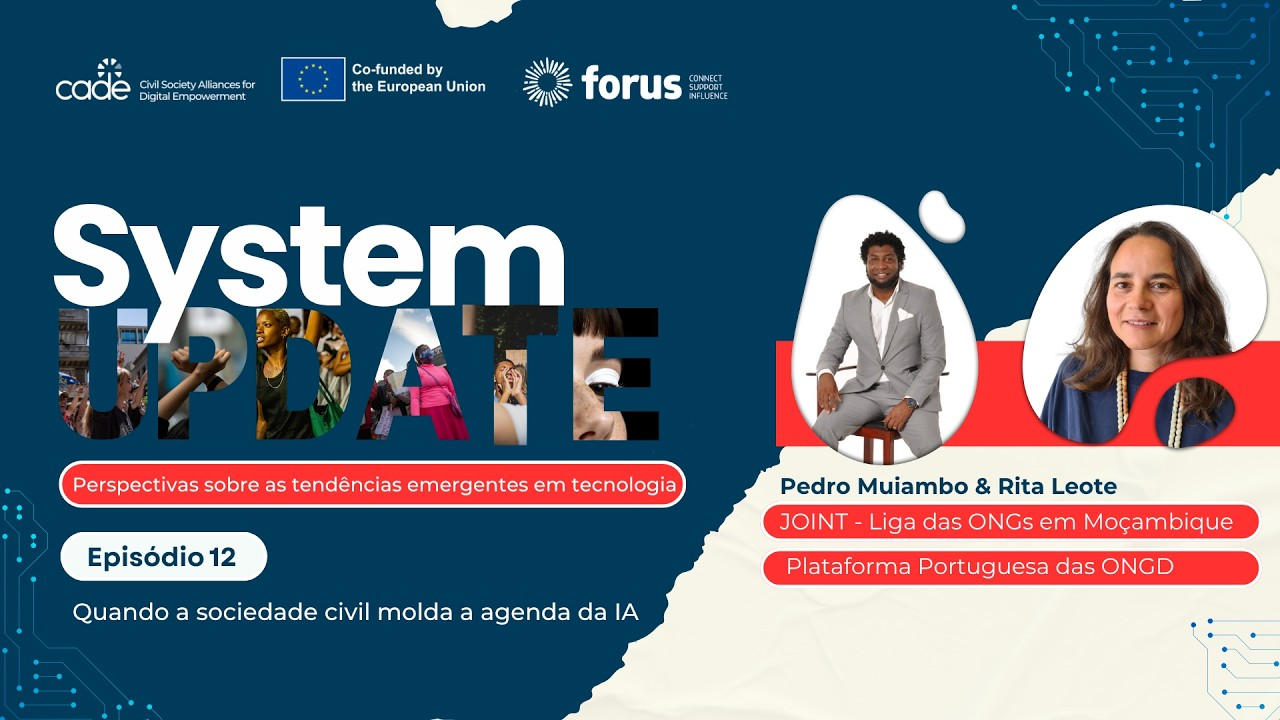
System Update - Episódio 12: Quando a Sociedade Civil Molda a Agenda da IA Em grande parte do Sul Global, as políticas de inteligência artificial estão a ser elaboradas a um ritmo acelerado — muitas vezes sem uma participação significativa da sociedade civil. A experiência de Moçambique mostra como pode ser uma advocacia informada e baseada em coligações: assente em evidências, articulada entre diferentes setores e atenta à forma como a IA pode reforçar ou desafiar desequilíbrios de poder já existentes. As organizações da sociedade civil em Moçambique estão a mobilizar-se para garantir que a governação da IA reflita o interesse público. Então, como se constrói uma boa governação da IA desde o início? Neste episódio, Rita Leote, da Plataforma Portuguesa das ONGD, conversa com Pedro Muiambo, Diretor de Programas da JOINT – Liga das ONGs em Moçambique, a plataforma nacional que representa e coordena as organizações da sociedade civil moçambicanas. A JOINT submeteu recentemente contributos técnicos para a Estratégia Nacional de Inteligência Artificial de Moçambique, defendendo uma participação significativa da sociedade civil na formulação de políticas digitais e promovendo a responsabilização, a transparência e os direitos humanos como pilares fundamentais de uma IA responsável. “System Update” - “Atualização do Sistema” é produzido pela Forus no âmbito do CADE – as Alianças da Sociedade Civil para a Capacitação Digital – um projeto cofinanciado pela União Europeia. O objetivo do CADE é apoiar a capacidade das organizações da sociedade civil para uma advocacia eficaz nos processos de governação da internet multilaterais e multissetoriais. Este podcast foi cofinanciado pela União Europeia. O seu conteúdo é da exclusiva responsabilidade da Forus e não reflete necessariamente as opiniões da União Europeia. EN Across the Global Majority, AI policies are being drafted at speed — often without meaningful civil society input. Mozambique's experience shows what informed, coalition-based advocacy can look like: grounded in evidence, connected across sectors, and alert to how AI can either reinforce or disrupt existing power imbalances. Civil society organisations in Mozambique are stepping up to ensure that AI governance reflects public interest. So, how do you get AI governance right from the start? In this episode Rita Leote from the Portuguese Platform of Development NGOs (Plataforma Portuguesa das ONGD) speaks with Pedro Muiambo, Programme Director at JOINT Liga das ONGs em Moçambique — the national platform representing and coordinating Mozambican civil society organisations. JOINT recently submitted technical contributions to Mozambique's National AI Strategy, advocating for meaningful civil society participation in digital policymaking and pushing for accountability, transparency, and human rights as the foundations of responsible AI. "System Update", is produced by Forus as part of CADE - the Civil Society Alliances for Digital Empowerment - a project co-funded by the European Union. CADE’s objective is to support the capacity of civil society organisations for effective advocacy in multilateral and multistakeholder internet governance processes.
2026-08-31
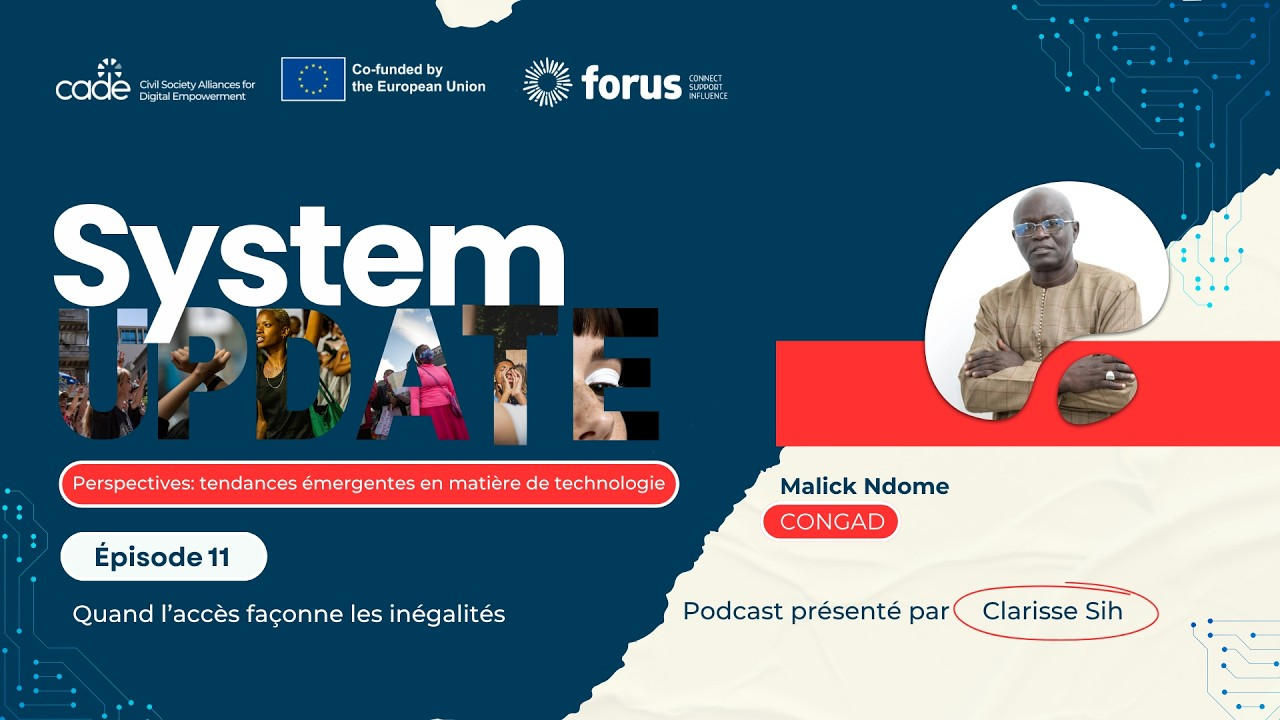
System Update - Épisode 11: Quand l’accès façonne les inégalités Dans de nombreux contextes, les fractures numériques constituent un phénomène mondial récurrent : elles reflètent et renforcent des inégalités sociales, économiques et géographiques déjà existantes. Au Sénégal, l’accès inégal à Internet continue de déterminer qui peut participer, qui peut se faire entendre et qui est laissé de côté, en particulier entre les zones urbaines et rurales. Garantir un accès significatif exige des services abordables, des politiques inclusives et un engagement actif de la société civile pour assurer la redevabilité des systèmes. Dans cet épisode, nous nous entretenons avec Malick Ndome, conseiller principal en politiques publiques et membre du conseil d’administration de CONGAD, la plateforme nationale des ONG au Sénégal. Ensemble, nous explorons le rôle de la société civile dans la promotion des droits numériques, la réduction des inégalités et la construction d’un paysage de gouvernance de l’Internet plus inclusif. System Update ou « Mise à jour du système » est produit par Forus dans le cadre de CADE – les Alliances de la société civile pour le renforcement des capacités numériques – un projet cofinancé par l’Union européenne. L’objectif de CADE est de soutenir le renforcement des capacités numériques des organisations de la société civile afin de favoriser un plaidoyer efficace dans les processus de gouvernance de l’internet multilatéraux et multipartites. Ce podcast a été cofinancé par l’Union européenne. Son contenu relève de la seule responsabilité de Forus et ne reflète pas nécessairement les opinions de l’Union européenne. EN In many contexts, digital divides are a recurring global pattern: they reflect and reinforce existing social, economic and geographic inequalities. In Senegal, unequal access to the internet continues to shape who can participate, who can be heard and who is left behind, particularly between urban and rural communities. Ensuring meaningful access demands affordable services, inclusive policies and active civil society engagement to hold systems accountable. In this episode, we speak with Malick Ndome, Senior Public Policy Advisor and Board Member at CONGAD, Senegal’s national NGO platform. Together, we explore the role of civil society in advancing digital rights, addressing inequalities, and shaping a more inclusive internet governance landscape. "System Update", is produced by Forus as part of CADE - the Civil Society Alliances for Digital Empowerment - a project co-funded by the European Union. CADE’s objective is to support the capacity of civil society organisations for effective advocacy in multilateral and multistakeholder internet governance processes. This podcast was co-funded by the European Union. Its contents are the sole responsibility of Forus and do not necessarily reflect the views of the European Union.
2026-08-28
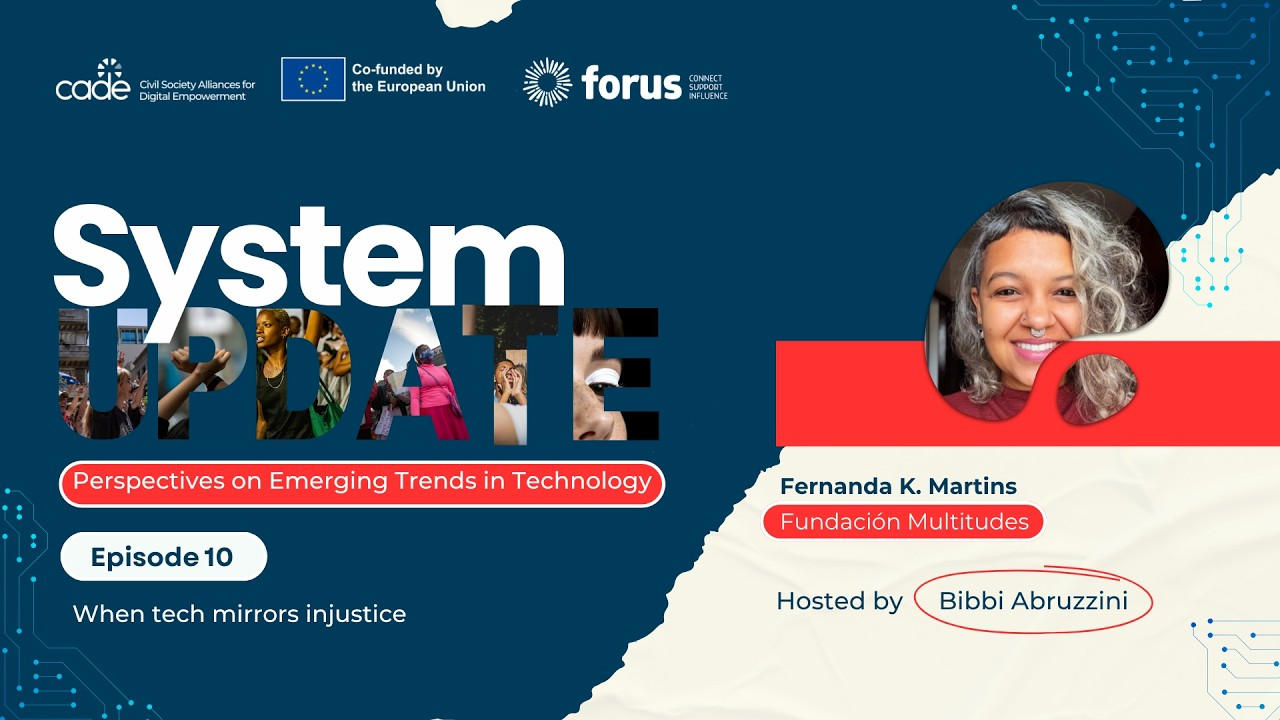
System Update - Episode 10: When tech mirrors injustice More often than not, offline inequalities are reproduced online, forming a broader system of violence, intimidation, and exclusion that undermines democratic participation. Risks like these prove that technology should not be seen merely as innovation but as tied to social development and the health of democratic life, especially in the Global South. Understanding this trend is essential to design digital inclusion beyond connectivity: meaningful online participation requires safety, accountability, and fair representation to protect vulnerable groups and strengthen democracy. In this episode we speak with Fernanda K. Martins, Strategy and Advocacy Director at Fundación Multitudes: a Chile-based organization with regional and international reach that works to improve governance and reduce inequality through advocacy and open government. Digital rights are a core focus of their work. "System Update", is produced by Forus as part of CADE - the Civil Society Alliances for Digital Empowerment - a project co-funded by the European Union. CADE’s objective is to support the capacity of civil society organisations for effective advocacy in multilateral and multistakeholder internet governance processes. https://cadeproject.org/ https://www.forus-international.org/en/campaign/let-s-talk-digital https://fundacionmultitudes.org/ This podcast was co-funded by the European Union. Its contents are the sole responsibility of Forus and do not necessarily reflect the views of the European Union.
2026-08-26
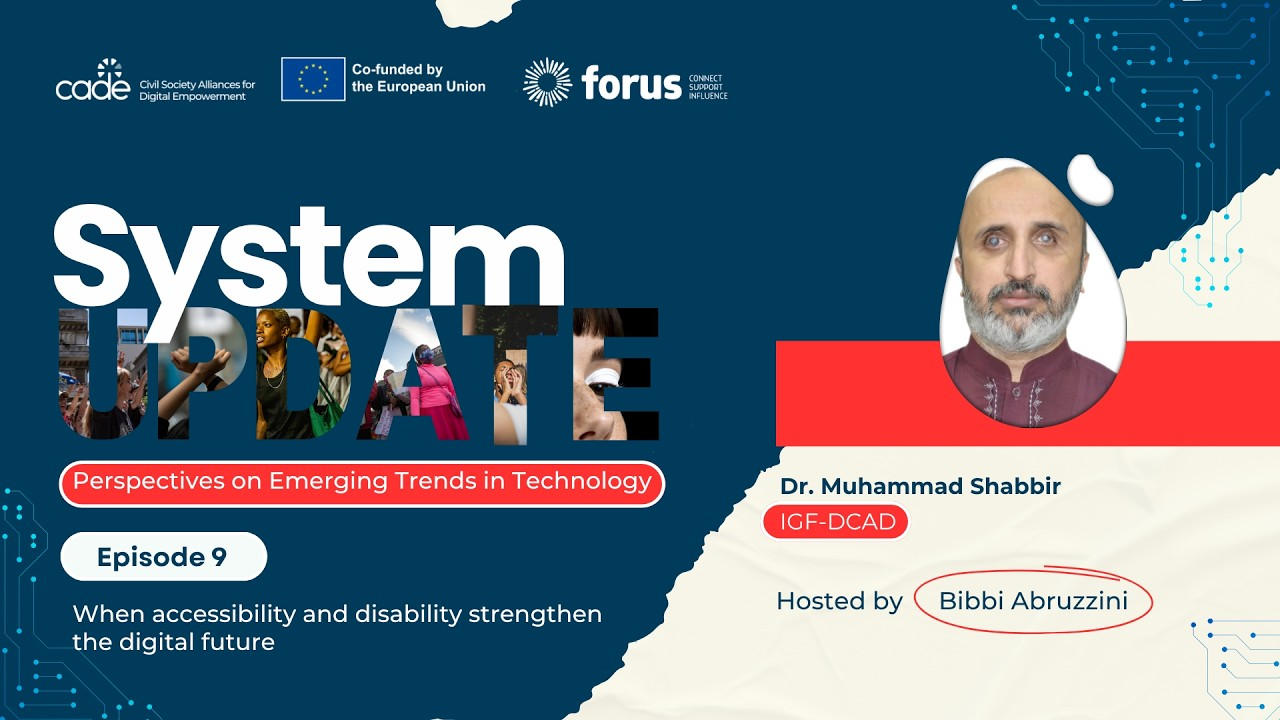
System Update - Episode 9: When accessibility and disability strengthen the digital future When internet policies and platforms are designed without considering the needs of persons with disabilities and diverse global users they create systems that are uneven, difficult to use, or even exclusionary. Ensuring accessibility affects whether people can meaningfully participate in education, work, civic life, and public debate. Without inclusive design and policy, the digital promise as a universal resource is weakened, reinforcing existing inequalities rather than reducing them. Today we are joined by Dr. Muhammad Shabbir an Internet governance and public-policy professional with extensive experience in board governance, multistakeholder processes, and global digital policy, particularly from a Global South perspective. Dr. Shabbir is also engaged in ICANN community processes, including the At-Large and non-commercial stakeholder spaces. He currently coordinates the Internet Governance Forum Dynamic Coalition on Accessibility and Disability (DCAD), contributing to global policy dialogue on inclusive and trustworthy Internet governance. Drawing on his lived experience of disability as being blind, today with him we are going to look at accessibility and inclusion as a governance consideration and at how we can reinforce attention to usability, robustness, and real-world impact of Internet policies and systems for the full diversity of all users. "System Update", is produced by Forus as part of CADE - the Civil Society Alliances for Digital Empowerment - a project co-funded by the European Union. CADE’s objective is to support the capacity of civil society organisations for effective advocacy in multilateral and multistakeholder internet governance processes. https://cadeproject.org/ https://www.forus-international.org/en/campaign/let-s-talk-digital This podcast was co-funded by the European Union. Its contents are the sole responsibility of Forus and do not necessarily reflect the views of the European Union.
2026-08-24
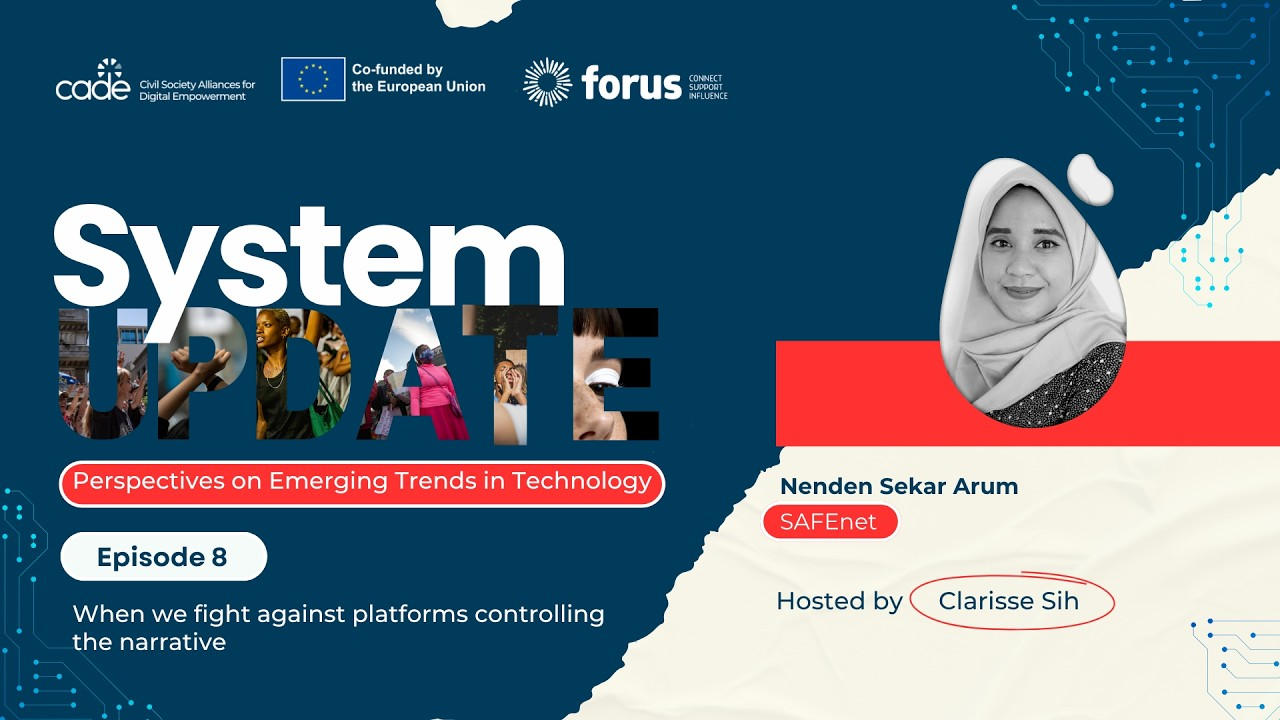
System Update - Episode 8: When we fight against platforms controlling the narrative Social media platforms have become central to public discourse: shaping what we see, what we say and ultimately, what we believe. Yet behind this influence lies a system that is often opaque, where content can be restricted, amplified or removed without clear accountability. These dynamics raise urgent questions about who controls online narratives and how. Platform governance, the rules and systems that shape visibility and operations online - from algorithmic amplification to content moderation - can deepen inequalities, restrict freedom of expression, and weaken democratic participation, particularly in contexts where oversight is limited or inconsistent. In this episode, we speak with Nenden Sekar Arum, Executive Director of the Southeast Asia Freedom of Expression Network (SAFEnet). Together, we explore how platforms shape socio-political discourse, the risks of arbitrary content moderation and what it will take to ensure transparency, accountability, and the protection of free speech in the digital age. "System Update", is produced by Forus as part of CADE - the Civil Society Alliances for Digital Empowerment - a project co-funded by the European Union. CADE’s objective is to support the capacity of civil society organisations for effective advocacy in multilateral and multistakeholder internet governance processes. https://cadeproject.org/ https://www.forus-international.org/en/campaign/let-s-talk-digital https://safenet.or.id/ This podcast was co-funded by the European Union. Its contents are the sole responsibility of Forus and do not necessarily reflect the views of the European Union.
2026-08-17
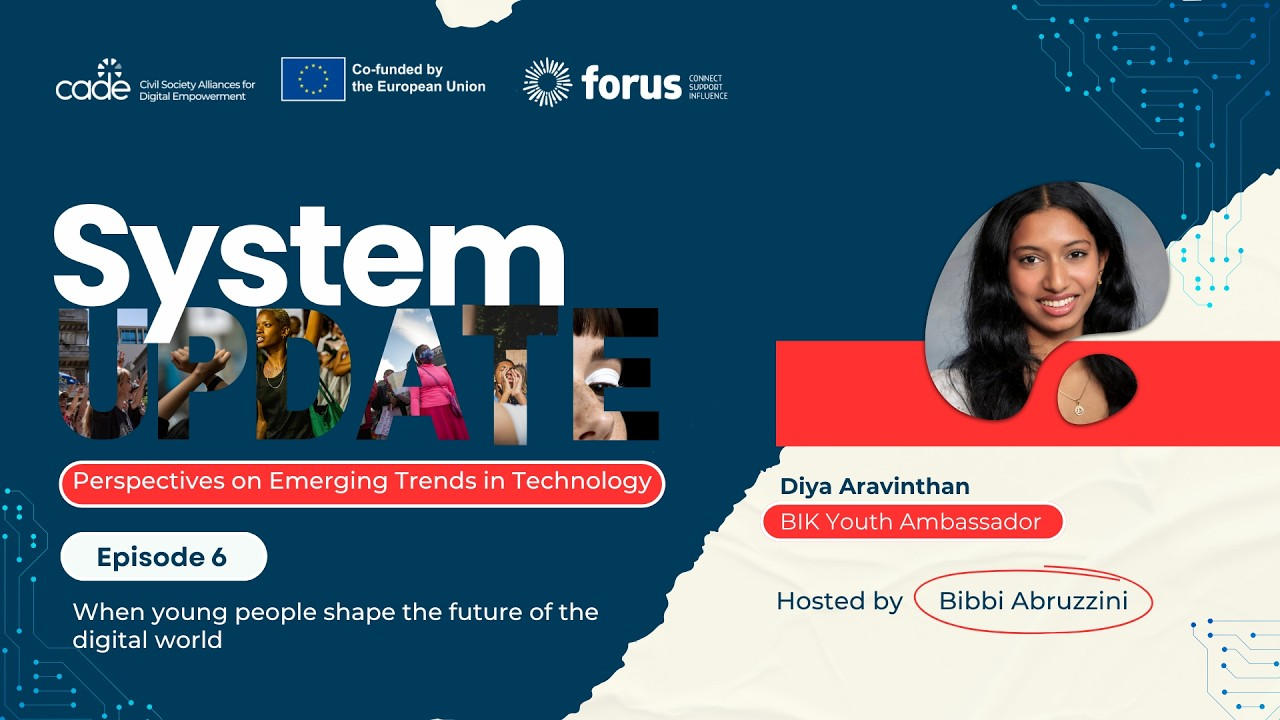
System Update - Episode 6: When young people shape the future of the digital world As younger generations spend increasing amounts of time online, issues such as youth participation in digital policy, online safety, misinformation, and digital literacy have become central to building a safer and more inclusive internet. These topics are important because they address the need to ensure that young people are not only protected from digital risks but are also recognised as active participants in shaping the future of the online environment. Involving youth in decision-making processes allows governments, regulators, and technology companies to better understand the challenges they face and develop solutions that reflect the needs of different communities. Online safety remains a critical concern as young people encounter risks such as harmful content, cyberbullying, privacy threats, and online exploitation. The growing spread of misinformation and disinformation also presents significant challenges, particularly as digital platforms become major sources of news and information. Strengthening media literacy is therefore essential to help young people critically evaluate online content, identify unreliable sources, and engage responsibly in digital and democratic spaces. Today we are joined by Diya Aravinthan an active BIK Youth Ambassador and panelist for the Better Internet for Kids (BIK) initiative, where she advocates for youth participation, digital citizenship, and online child safety. "System Update", is produced by Forus as part of CADE - the Civil Society Alliances for Digital Empowerment - a project co-funded by the European Union. CADE’s objective is to support the capacity of civil society organisations for effective advocacy in multilateral and multistakeholder internet governance processes. https://cadeproject.org/ https://www.forus-international.org/en/campaign/let-s-talk-digital This podcast was co-funded by the European Union. Its contents are the sole responsibility of Forus and do not necessarily reflect the views of the European Union.
2026-08-15
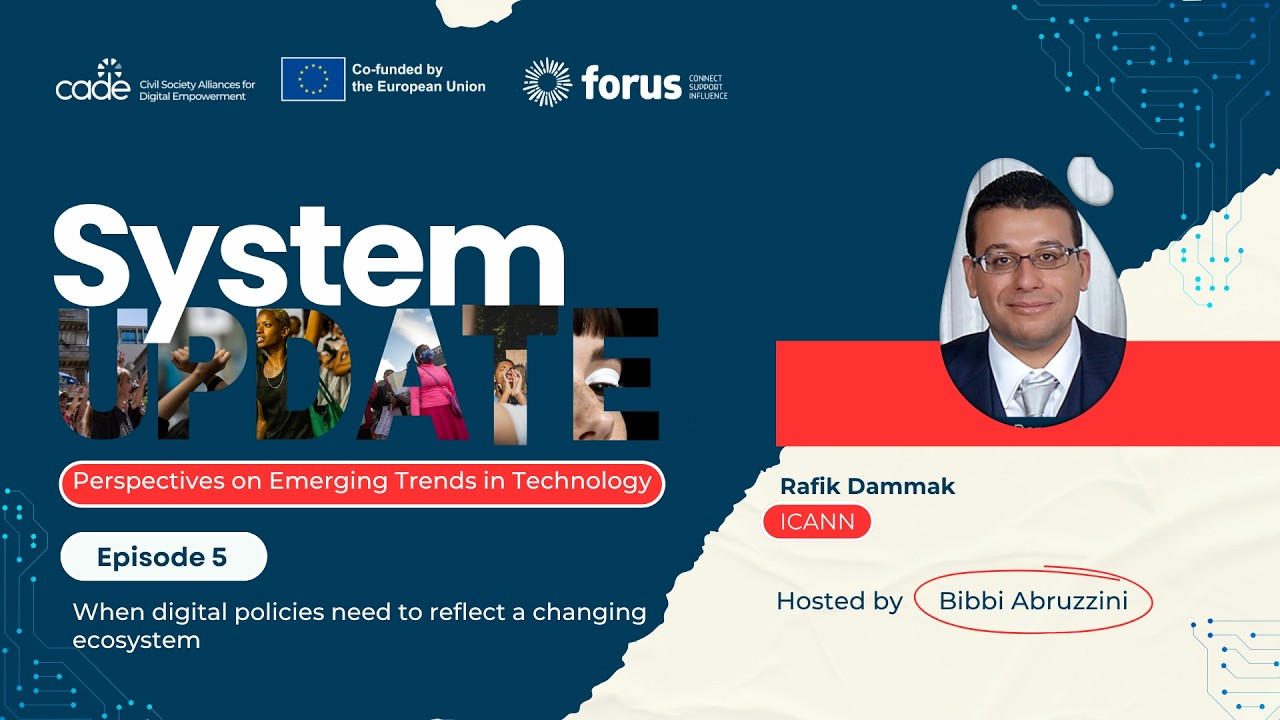
System Update - Episode 5: When digital policies need to reflect a changing ecosystem How is the Internet Corporation for Assigned Names and Numbers ICANN responding to the current challenges and future direction of internet governance, responding to major shifts in the digital ecosystem? Emerging technologies such as artificial intelligence are influencing online behaviour, cybersecurity threats, domain name management, and policy-making processes. There is a need to look at how internet governance organisations balance the need for security, accessibility, innovation, and stability while coordinating decisions among diverse stakeholders. Policies are now being developed, when new rules are required while existing commitments need to be upheld, so which issues are likely to shape the evolution of the internet ecosystem in the years ahead? Today we are joined by Rafik Dammak engineer currently the chair of the Non-Commercial Stakeholder Group in ICANN, the Internet Corporation for Assigned Names and Numbers. He has been involved in ICANN community for many years, works in Japan and improves awareness and capacity building about Internet Governance in Tunisia and the MENA region in general. "System Update", is produced by Forus as part of CADE - the Civil Society Alliances for Digital Empowerment - a project co-funded by the European Union. CADE’s objective is to support the capacity of civil society organisations for effective advocacy in multilateral and multistakeholder internet governance processes. https://cadeproject.org/ https://www.forus-international.org/en/campaign/let-s-talk-digital This podcast was co-funded by the European Union. Its contents are the sole responsibility of Forus and do not necessarily reflect the views of the European Union.
2026-08-14
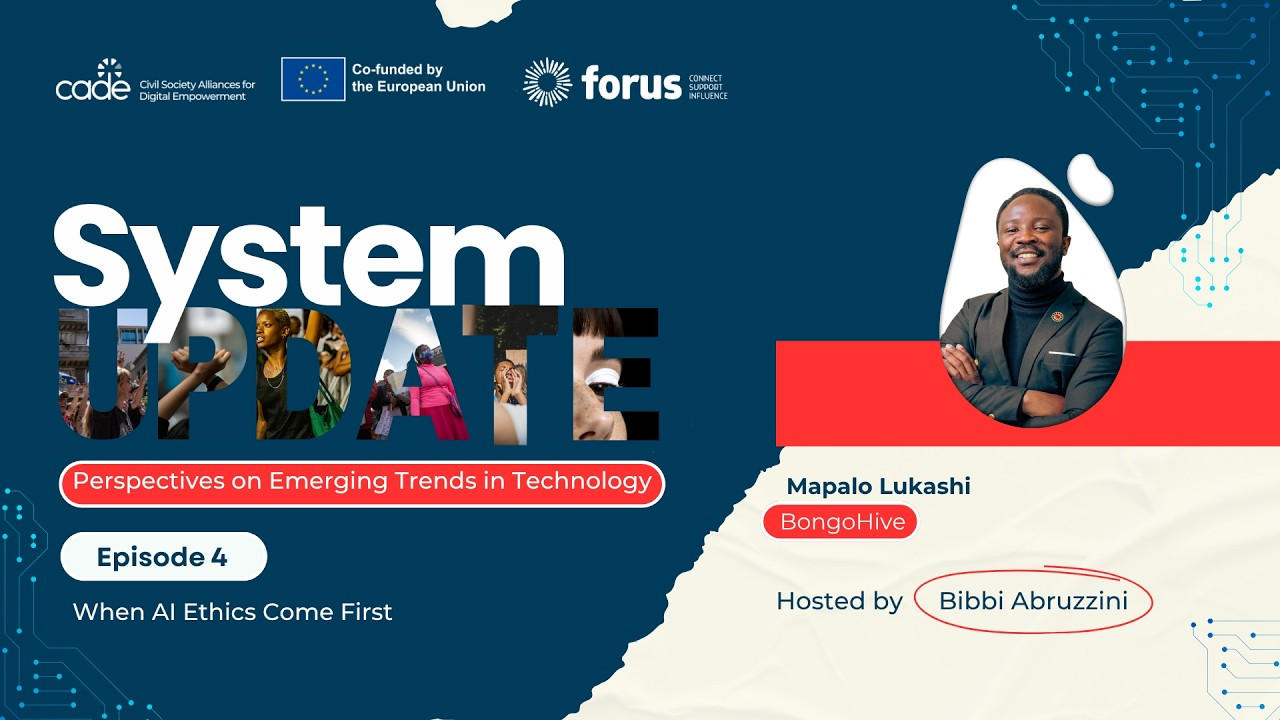
System Update - Episode 4: When AI Ethics Come First What is the role of civil society, governments, startups, and technology developers in shaping responsible AI governance, particularly within the African context? A central theme of this debate is the gap between policy and implementation. While many countries are beginning to introduce legal frameworks and strategies for AI governance, enforcement remains a significant challenge: stronger institutions and greater public engagement are necessary to translate ethical principles into real-world protections. This also comes with a practical definition of AI ethics: the safeguards, accountability mechanisms, and values that guide how AI systems are designed, deployed, and governed. In this episode we are joined by Mapalo Lukashi is Head of AI Lab and Data and Artificial Intelligence Lead at BongoHive - Zambia's first and leading technology and innovation hub. Mapalo works at the cutting edge of AI development and application on the continent, bringing a grounded, Africa-first perspective. "System Update", is produced by Forus as part of CADE - the Civil Society Alliances for Digital Empowerment - a project co-funded by the European Union. CADE’s objective is to support the capacity of civil society organisations for effective advocacy in multilateral and multistakeholder internet governance processes. https://cadeproject.org/ https://www.forus-international.org/en/pdf/civil-society-manifesto-for-ethical-ai-106205 https://bongohive.co.zm/ This podcast was co-funded by the European Union. Its contents are the sole responsibility of Forus and do not necessarily reflect the views of the European Union.
2026-08-12
System Update - Episode 3: When AI Meets Planetary Justice The infrastructure behind AI—from data centers to resource extraction—has tangible consequences for communities, ecosystems, and livelihoods. While many users experience AI as an "invisible digital tool", there are physical realities that make these technologies possible, including land use, energy consumption, displacement of communities, and pressure on local resources. As governments and corporations increasingly promote "green" technology initiatives, environmental and social justice cannot be separated from conversations about technology, particularly when local communities are asked to absorb the impacts of projects that primarily serve global markets and powerful actors. In this episode we are joined by Sara Marcucci who works with AI + Planetary Justice Alliance, an organisation that centres ecological and social justice in conversations about artificial intelligence - pushing back against narratives that treat AI as a neutral or inevitable force, and insisting that the choices we make about this technology are deeply political ones. "System Update", is produced by Forus as part of CADE - the Civil Society Alliances for Digital Empowerment - a project co-funded by the European Union. CADE’s objective is to support the capacity of civil society organisations for effective advocacy in multilateral and multistakeholder internet governance processes. This podcast was co-funded by the European Union. Its contents are the sole responsibility of Forus and do not necessarily reflect the views of the European Union.
2026-08-10
System Update - Episode 2: When we look at patterns of AI harm: turning data into action Communities with less power bear the costs of AI systems without adequate safeguards, consent, or accountability. How can we effectively address this issue and not just by pointing out the problem? Identifying and making visible the patterns behind AI harms is important not only for reporting, but also as a practical tool for civil society, journalists, researchers, and legal teams. In this episode we talk with Asma Derja, founder and director of the Ethical AI Alliance, an organization working to ensure that artificial intelligence is developed and governed in ways that are fair, transparent, and accountable. "System Update", is produced by Forus as part of CADE - the Civil Society Alliances for Digital Empowerment - a project co-funded by the European Union. CADE’s objective is to support the capacity of civil society organisations for effective advocacy in multilateral and multistakeholder internet governance processes. https://cadeproject.org/ https://www.forus-international.org/en/pdf/civil-society-manifesto-for-ethical-ai-106205 https://ethicalaialliance.org/ This podcast was co-funded by the European Union. Its contents are the sole responsibility of Forus and do not necessarily reflect the views of the European Union.
2026-08-08
System Update - Episode 1: When AI Shapes How Democracy Functions Artificial intelligence is already reshaping how information flows, how decisions are made and how democracy functions. From disinformation to biased algorithms, the risks are social and political, often reinforcing existing inequalities and silencing voices that have already been marginalised. Governing AI is thus also about power, accountability and rights. Ensuring democratic oversight requires transparency, access to data and strong collaboration between governments, private actors and civil society - across regions and beyond existing legal frameworks. In this episode, we speak with Camila Weinmann and Daniela Rincón from Democracy Reporting International. Together, we explore how AI is impacting democratic processes, the challenges of regulating platforms and accessing data and what it will take to build accountable, rights-based AI systems at a global scale.
2026-08-03
System Update - Episode 7: When stronger collaboration ensures platform accountability As digital platforms increasingly influence how information is created, shared, and accessed, issues such as freedom of expression, algorithmic transparency, content moderation, and platform accountability have become central to ensuring a fair and open digital environment. Decisions made by online platforms about what content is promoted, removed, or restricted can have significant impacts on public debate, access to information, and individual rights. As a result, the importance of independent oversight, effective regulatory frameworks, and stronger engagement between platforms, civil society organisations, and affected communities ensures that digital governance protects freedom of expression while addressing online harms. Today we are joined by Agneris Sampieri Policy Analyst at Access Now where she focuses on freedom of expression and related issues. Together we are going to explore how algorithms, platform governance, and emerging technologies shape public discourse, and what role civil society, regulators, and digital platforms should play in ensuring transparency, accountability, and the protection of fundamental rights online. "System Update", is produced by Forus as part of CADE - the Civil Society Alliances for Digital Empowerment - a project co-funded by the European Union. CADE’s objective is to support the capacity of civil society organisations for effective advocacy in multilateral and multistakeholder internet governance processes. https://cadeproject.org/ https://www.forus-international.org/en/campaign/let-s-talk-digital https://www.accessnow.org/ This podcast was co-funded by the European Union. Its contents are the sole responsibility of Forus and do not necessarily reflect the views of the European Union.
2026-07-27
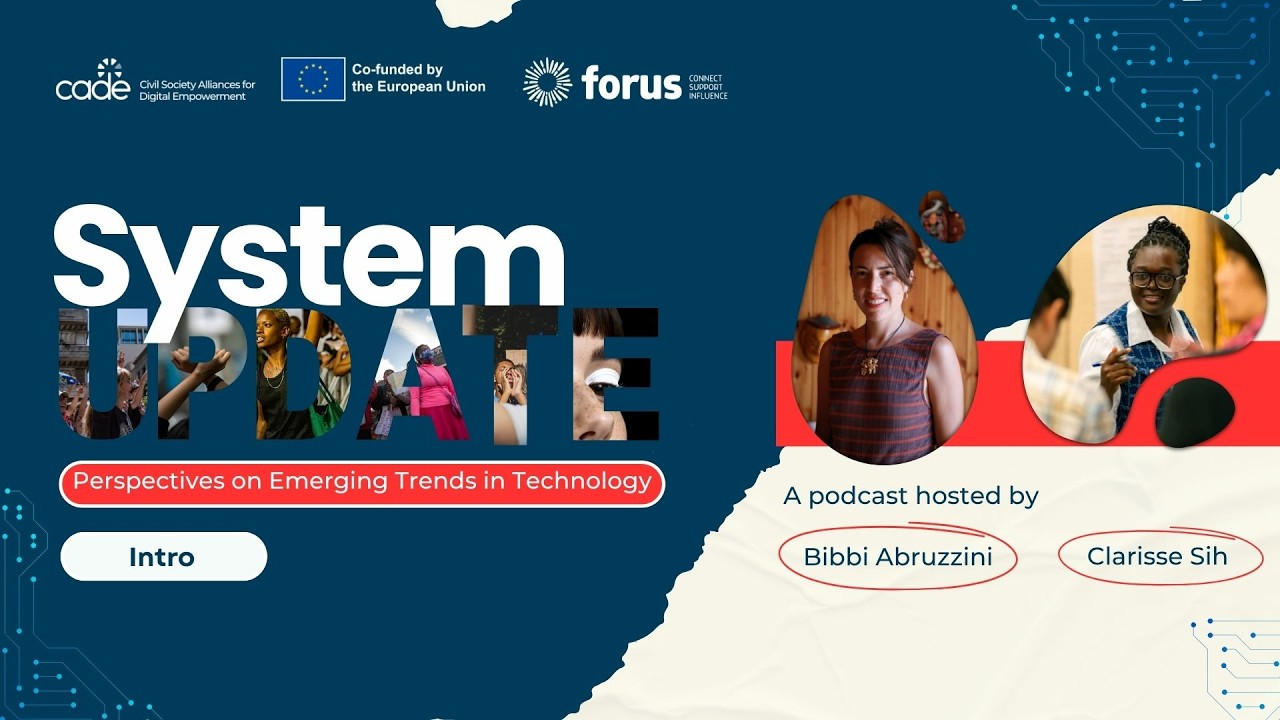
System Update - Introduction Are emerging trends in technology fast, inevitable, and neutral? No, there are complex political, social, environmental and intersectional dynamics behind them. They are constantly being shaped by decisions about power, governance, infrastructure, and access and these decisions in turn are already reshaping democracy, levels of inequality, and the ways we participate in public action and live our private lives. System Update is a podcast series brough to you by Forus as part of the Civil Society Alliances for Digital empowerment a programme co-funded by the European Union. Bibbi Abruzzini and Clarisse Sih from Forus are hosting this podcast, that follows the digital transformation across three interconnected levels: the global governance of emerging technologies in particular AI, its regional translation into policy and infrastructure, and its national and local impact on communities. The series moves from questions of regulation and rights to the realities of digital systems slowly tracing how digital governance is built, contested, and reimagined across the globe and in different regions. “System update” is usually a quiet background process a patch, a fix, an invisible improvement running in the background of devices we rely on. Yet through this series we see how there is no single update, no final version, no universally accepted patch. Instead, there are competing visions of what the system should be — and competing actors deciding what gets fixed, what gets ignored, and what gets permanently embedded. This podcast series, episode after episode shows how digital governance is shaped by infrastructure and ideology, by regulation and resistance, by global frameworks and local realities. And at every level, civil society emerges. Join us and be a part of the System Update! "System Update", is produced by Forus as part of CADE - the Civil Society Alliances for Digital Empowerment - a project co-funded by the European Union. CADE’s objective is to support the capacity of civil society organisations for effective advocacy in multilateral and multistakeholder internet governance processes. This podcast was co-funded by the European Union. Its contents are the sole responsibility of Forus and do not necessarily reflect the views of the European Union. Learn more about CADE: https://cadeproject.org/ Discover the Let's Talk Digital campaign: https://www.forus-international.org/en/campaign/let-s-talk-digital #CADE #D4D #Forus #digitalrights #ai #digitalgovernance #letstalkdigital
2026-07-16
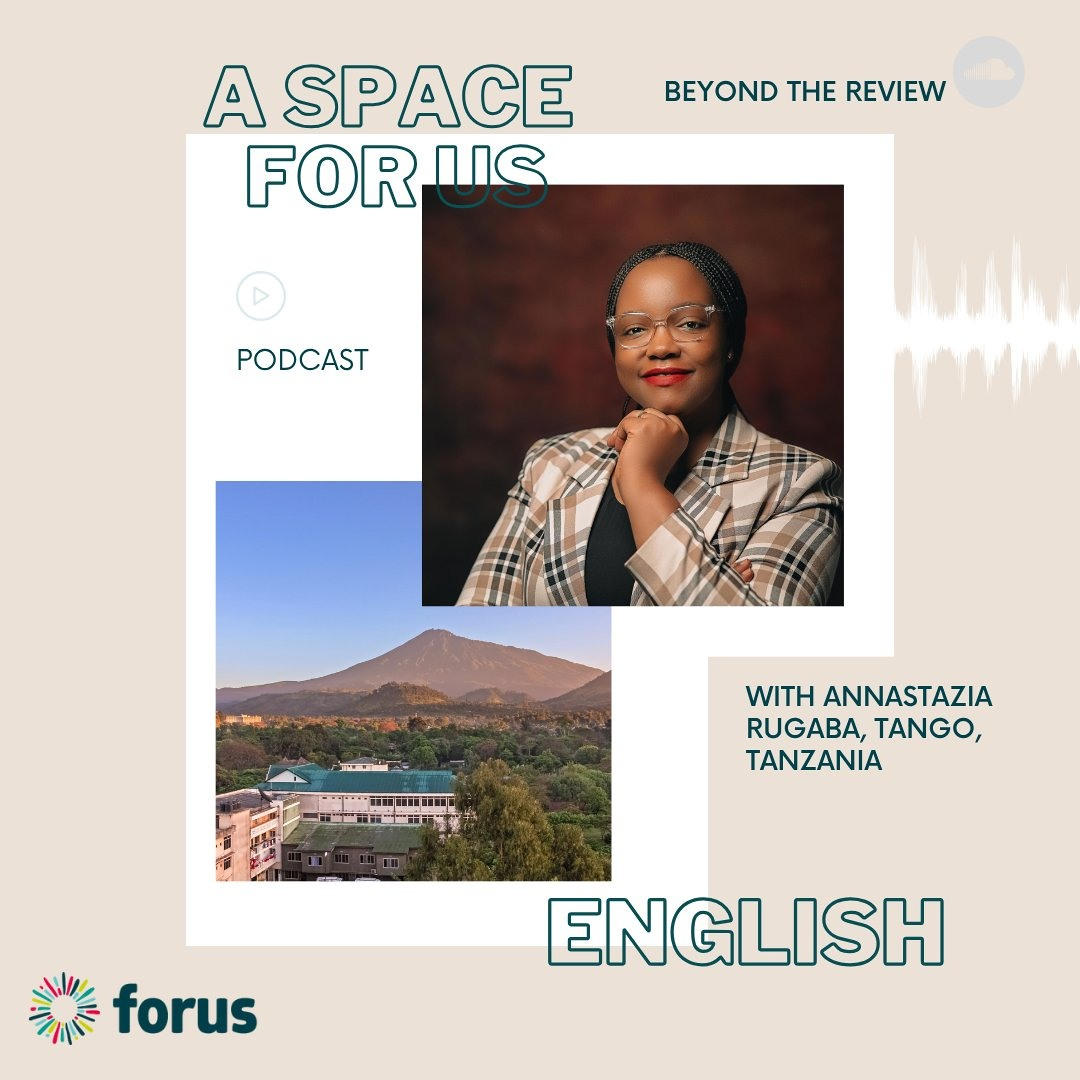
EN – Beyond the Review: Turning Commitments into Change: Tanzania’s Civil Society Vision for Sustainable Development Welcome to A Space For Us, the Forus podcast bringing together national civil society platforms, activists, thinkers, and changemakers working for justice around the world. This episode is part of our Beyond the Review series, recorded on the sidelines of the United Nations High-Level Political Forum (HLPF) taking place in New York from 7 to 15 July 2026. As Tanzania presents its third Voluntary National Review (VNR), this episode looks beyond the official process to explore the role of civil society in shaping sustainable development, strengthening citizen participation, and ensuring that global commitments translate into meaningful change for communities. At a key moment as the country moves toward the implementation of its Tanzania Development Vision 2050, the conversation reflects on lessons learned from the Sustainable Development Goals journey, the importance of inclusive governance, and the need to ensure that no one is left behind. Our guest is Anastazia Rugaba, Chairperson of the Board of the Tanzanian Association of NGOs (TANGO), a long-standing national civil society umbrella platform bringing together organizations working across development, governance, human rights, environmental issues, social accountability, and community empowerment. With extensive experience at the intersection of citizen voice, public policy, communication, governance, and institutional reform, Anastazia shares her perspective on the role of civil society in Tanzania’s development journey, the lessons emerging from the VNR process, and the importance of connecting community realities with national, regional, and global development frameworks. In this episode, we discuss the need for VNRs to go beyond reporting and become tools for transformation — informing national planning, local priorities, budgets, service delivery, and citizen accountability. Anastazia also highlights the importance of addressing exclusion faced by women, people with disabilities, pastoralist communities, smallholder farmers, fishing communities, informal workers, and others who continue to face barriers linked to poverty, geography, access to information, and digital inequality. This episode was produced with the support of the European Union and the French Development Agency (AFD). Its content is the sole responsibility of Forus and the invited speakers and does not necessarily reflect the views of the European Union or the French Development Agency (AFD).
2026-07-16
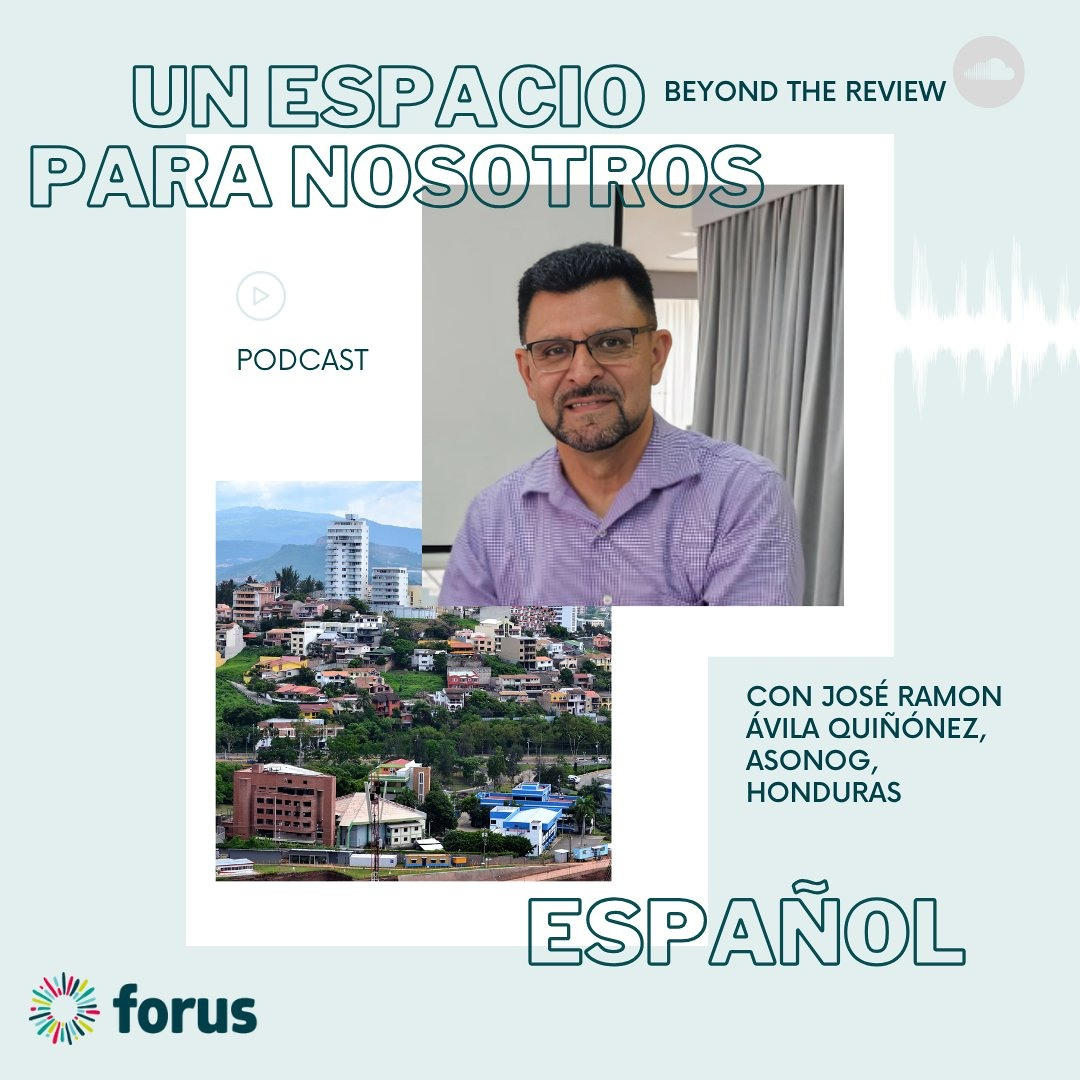
ES – Beyond the Review: Defender el territorio para avanzar hacia el desarrollo sostenible en Honduras Bienvenidas y bienvenidos a Un Espacio Para Nosotros, el podcast de Forus que reúne a plataformas nacionales de la sociedad civil, activistas, personas defensoras, pensadoras y agentes de cambio comprometidos con la justicia en todo el mundo. Este episodio forma parte de nuestra serie Beyond the Review, grabada al margen del Foro Político de Alto Nivel de las Naciones Unidas (HLPF), que se celebra en Nueva York del 7 al 15 de julio de 2026. Aunque Honduras no presenta un Examen Nacional Voluntario este año, el país enfrenta desafíos urgentes relacionados con la protección del medio ambiente, la defensa de los territorios, el respeto de los derechos humanos y el fortalecimiento del espacio cívico. En este episodio exploramos el papel de la sociedad civil hondureña en la promoción del desarrollo sostenible, la participación ciudadana y la defensa de las comunidades más afectadas por las desigualdades y la crisis climática. Nuestro invitado es José Ramón Ávila Quiñónez, director ejecutivo de la Asociación de Organismos No Gubernamentales de Honduras (ASONOG). Con una amplia trayectoria en el fortalecimiento de la sociedad civil y la defensa de los derechos humanos, comparte su visión sobre los principales desafíos que enfrenta Honduras para avanzar hacia los Objetivos de Desarrollo Sostenible, la importancia de proteger a quienes defienden los territorios y el medio ambiente, el trabajo de las organizaciones comunitarias y la necesidad de garantizar un espacio cívico seguro, fortalecer la participación ciudadana y llevar la Agenda 2030 a las comunidades que históricamente han quedado atrás. Este episodio fue realizado con el apoyo de la Unión Europea y de la Agencia Francesa de Desarrollo (AFD). Su contenido es responsabilidad exclusiva de Forus y de las personas invitadas, y no refleja necesariamente las opiniones de la Unión Europea ni de la Agencia Francesa de Desarrollo (AFD).
2026-07-16
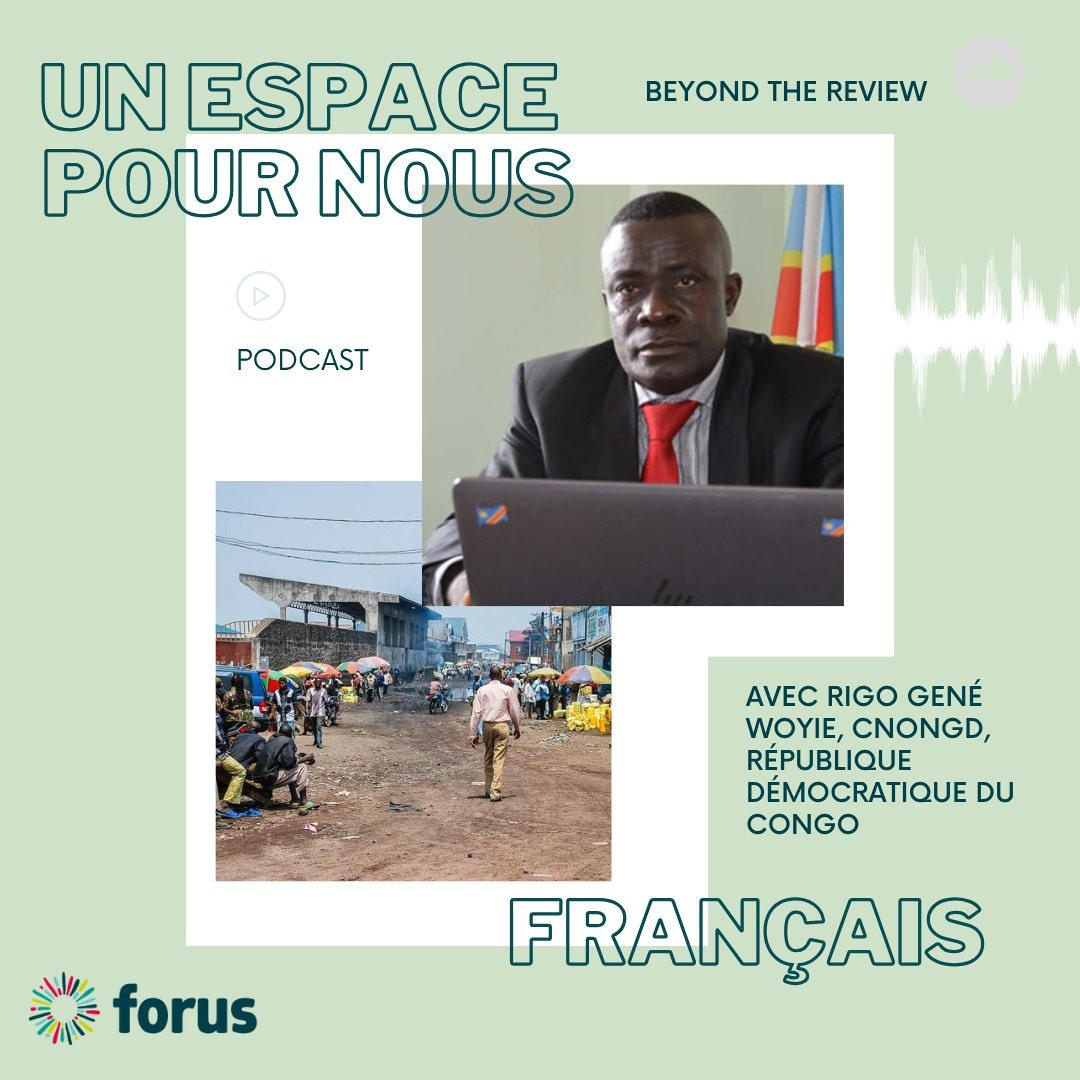
FR - Beyond the Review: bâtir les ODD au cœur des défis de la République démocratique du Congo Bienvenue dans Un Espace Pour Nous, le podcast de Forus qui rassemble des plateformes nationales de la société civile, des militant·e·s, des penseur·euse·s et des acteurs et actrices du changement engagés pour la justice dans le monde. Cet épisode fait partie de notre série Beyond the Review, enregistrée en marge du Forum politique de haut niveau des Nations Unies (HLPF), qui se tient à New York du 7 au 15 juillet 2026. Cette année, la République démocratique du Congo présente son troisième Examen national volontaire (ENV), une étape importante pour faire le point sur les progrès accomplis et les défis qui subsistent dans la mise en œuvre de l'Agenda 2030. Au-delà du rapport officiel, cet épisode explore le rôle essentiel de la société civile dans le processus de revue, ainsi que les défis liés à la paix, à la gouvernance démocratique, à la participation citoyenne, à la transparence et à la localisation des Objectifs de développement durable dans un contexte marqué par des conflits persistants et une crise humanitaire. Notre invité est Rigo Gené Woyie, secrétaire général du Conseil national des ONG de développement (CNONGD). Fort de son engagement dans le renforcement de la société civile congolaise, il partage son analyse du parcours de la République démocratique du Congo vers les Objectifs de développement durable, du rôle des organisations de la société civile dans l'élaboration du rapport alternatif de l'Examen national volontaire, des conséquences du conflit à l'est du pays sur la mise en œuvre des ODD, ainsi que de l'importance de renforcer la paix, la bonne gouvernance, la participation citoyenne, la transparence dans la gestion des ressources naturelles et la protection des défenseur·e·s des droits humains afin que les engagements internationaux se traduisent par des changements concrets pour les communautés. Cet épisode a été réalisé avec le soutien de l'Union européenne et de l'Agence française de développement (AFD). Son contenu relève de la seule responsabilité de Forus et des personnes invitées et ne reflète pas nécessairement les positions de l'Union européenne ou de l'Agence française de développement (AFD).

2026-07-16
FR - Beyond the Review: les enseignements du Sénégal sur la mise en œuvre des ODD Bienvenue dans Un Espace Pour Nous, le podcast de Forus qui rassemble des plateformes nationales de la société civile, des militant·e·s, des penseur·euse·s et des acteurs et actrices du changement engagés pour la justice dans le monde. Cet épisode fait partie de notre série Beyond the Review, enregistrée en marge du Forum politique de haut niveau des Nations Unies (HLPF), qui se tient à New York du 7 au 15 juillet 2026. Cette année, le Sénégal présente son troisième Examen national volontaire (ENV), une étape importante pour faire le point sur les progrès accomplis et les défis qui subsistent dans la mise en œuvre de l'Agenda 2030. Au-delà du rapport officiel, cet épisode explore le rôle essentiel de la société civile dans le processus de revue, les avancées démocratiques du pays, ainsi que les enjeux liés à la participation citoyenne, à la gouvernance ouverte, aux données inclusives et à la localisation des Objectifs de développement durable. Notre invité est Malick Ndome, Conseiller politique senior et membre du Conseil d'administration du CONGAD (Conseil des Organisations Non Gouvernementales d'Appui au Développement). Fort d'une longue expérience dans les politiques publiques, le développement et le renforcement de la société civile, il partage son analyse du parcours du Sénégal vers les Objectifs de développement durable, de l'implication des organisations de la société civile dans l'élaboration de l'Examen national volontaire, des défis posés par le contexte régional du Sahel, ainsi que de l'importance de renforcer la transparence, la protection des défenseur·e·s des droits humains, l'accès à l'information et une gouvernance plus inclusive afin que les engagements internationaux se traduisent par des changements concrets pour les communautés. Cet épisode a été réalisé avec le soutien de l'Union européenne et de l'Agence française de développement (AFD). Son contenu relève de la seule responsabilité de Forus et des personnes invitées et ne reflète pas nécessairement les positions de l'Union européenne ou de l'Agence française de développement (AFD).
2026-07-13
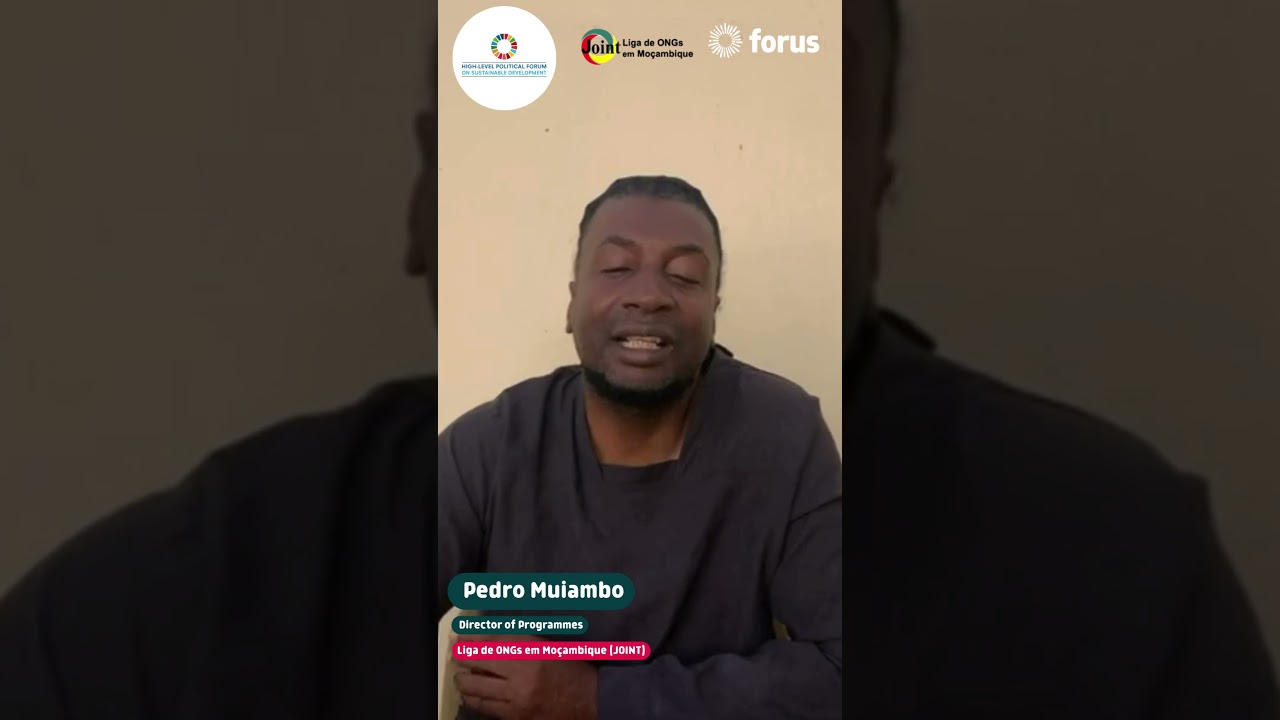
#HLPF2026 - Pedro Muiambo on Mozambique’s SDG Progress Following Mozambique’s Voluntary National Review #VNR at the 2026 United Nations High-Level Political Forum #HLPF, Pedro Muiambo, a prominent civil society advocate and Program Director at Forus members JOINT - Liga das ONGs em Moçambique, shares reflections on the country’s progress towards achieving the #SDGs and the challenges that remain. In this CSO statement after the official VNR which was played at the UN, Pedro highlights the realities faced by communities and reflects on persistent barriers to achieving the SDGs in #Mozambique, including inequalities, limited resources, governance and civic space challenges, and the need to ensure that development efforts reach the people and communities most affected. 📌 This contribution is part of the Forus network's engagement around the #HLPF, showcasing national civil society platforms' perspectives from across the world. #Agenda2030 #CivilSociety #Forus #SustainableDevelopment #GlobalGoals #LeaveNoOneBehind #CivilSocietyVoices #DevelopmentCooperation #UNHLPF
2026-07-13
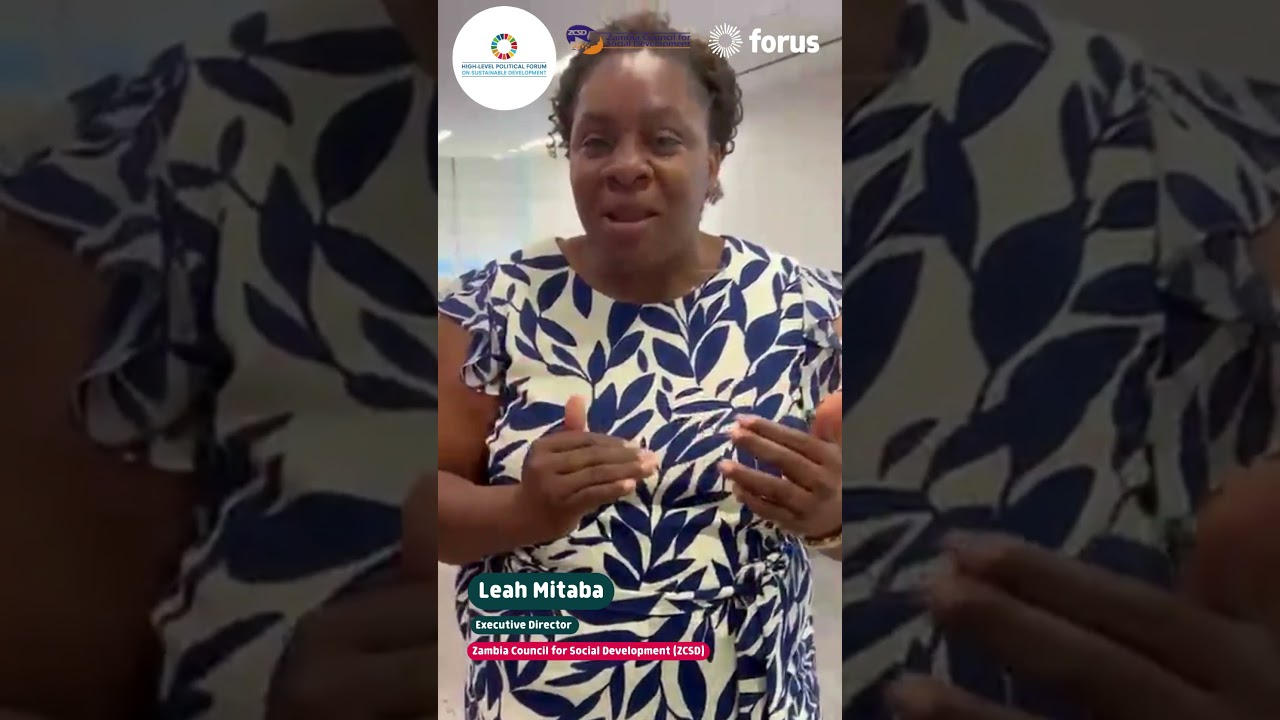
#HLPF2026 - Leah Mitaba on South-South and Triangular Cooperation At the 2026 United Nations High-Level Political Forum (HLPF), Leah Mitaba Executive Director at Zambia Council for Social Development (ZCSD) reflects on the growing importance of South-South and Triangular Cooperation in advancing sustainable development and strengthening civil society action. Drawing on the findings of Forus' newly launched report on South-South and Triangular Cooperation, Leah discusses how peer learning, solidarity, and knowledge exchange between civil society actors are helping to build more inclusive and locally driven development solutions. She also highlights the importance of women’s leadership in shaping development agendas sharing her experience participating in the Forus Leadership Development Programme, and explains why strong civil society networks are essential for amplifying community voices and influencing decision-making at local, national, and global levels. 📖 Discover how cooperation beyond traditional development models can help create more equitable, participatory, and sustainable pathways to achieving the Sustainable Development Goals. #HLPF2026 #Forus #SouthSouthCooperation #TriangularCooperation #CivilSociety #LeadershipDevelopment #WomenLeadership #SustainableDevelopment #SDGs #GlobalCooperation #LeaveNoOneBehind #Agenda2030 #CivilSocietyNetworks #HLPF #DevelopmentCooperation Learn more about Forus and our work on global cooperation and civil society strengthening: https://www.forus-international.org/en/extra/hub/resources-publications Explore our Leadership Development Programme: https://www.forus-international.org/en/leadership-development-program
2026-07-13
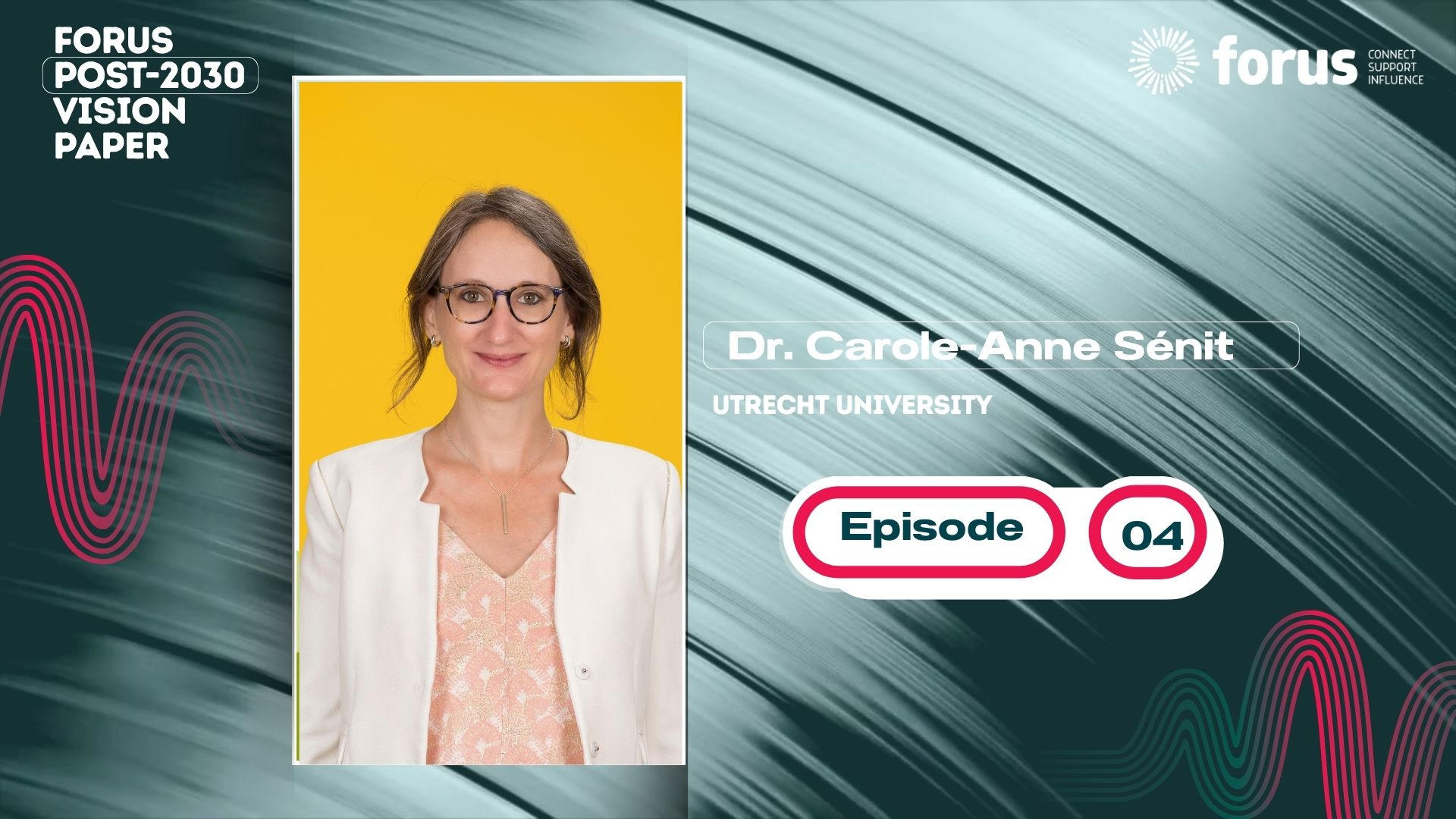
Post-2030 - Dr. Carole-Anne Sénit on shaping global development agendas In this episode we speak with Dr. Carole-Anne Sénit (Utrecht University) about who really shapes global development agendas and whether civil society participation is truly democratic or just symbolic. Dr. Carole-Anne Sénit unpacks power, representation and the role of the Global South in shaping the post-2030 framework, questioning what meaningful participation and accountability should look like in an era of shrinking civic space. A must-listen for anyone engaged in the future of development, democracy and global governance. Discover the Forus Post-2030 vision paper here: https://www.forus-international.org/en/campaigns?modal_page=campaign&modal_detail_id=forus-post-2030-vision This episode was developed with the support of the European Union and the Agence Française de Développement (AFD). Its contents are the sole responsibility of Forus and the guests featured in this episode and do not necessarily reflect the views of the European Union or the Agence Française de Développement (AFD).