Strengthening governance, resource generation, and digital skills for enhanced NGO impact
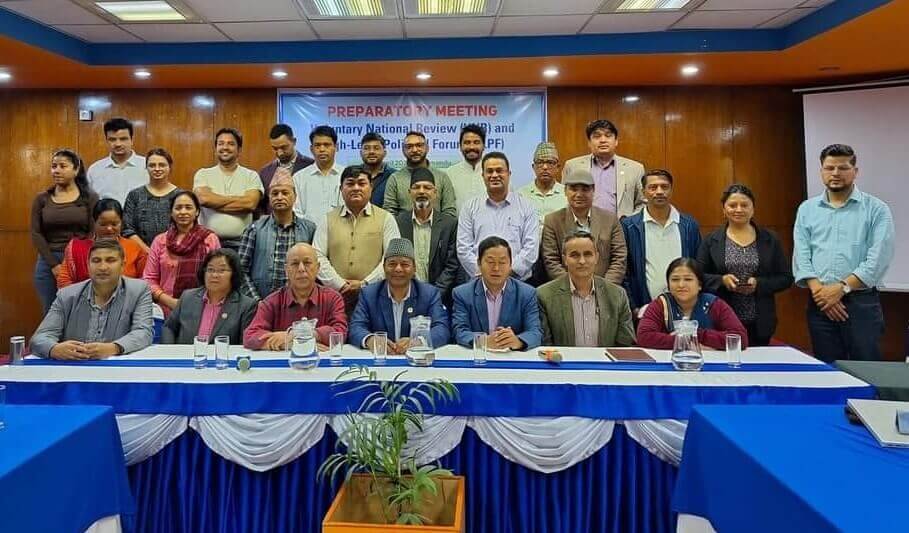
The NGO Federation of Nepal (NFN) used Cycle 6 to strengthen its institutional resilience by redesigning its governance framework, improving member engagement, and laying the foundations for digital transformation. Rather than treating policy development as a technical exercise, NFN adopted a highly participatory process involving more than 250 stakeholders across federal, provincial, and district levels. The project resulted in new strategic and governance frameworks while also fostering a stronger culture of ownership, transparency, and collective leadership.
Project Description
NFN designed its project in response to growing pressures on civil society in Nepal, including shrinking civic space, increasing accountability requirements, declining international funding, and the need to modernise organisational systems. The underlying assumption was that effective external advocacy depends on strong internal governance, clear institutional direction, and meaningful engagement with members.
The project therefore focused on three complementary objectives: developing key governance and management frameworks, strengthening the capacities of central, provincial, and district representatives, and initiating the digitisation of NFN’s membership and knowledge management systems.
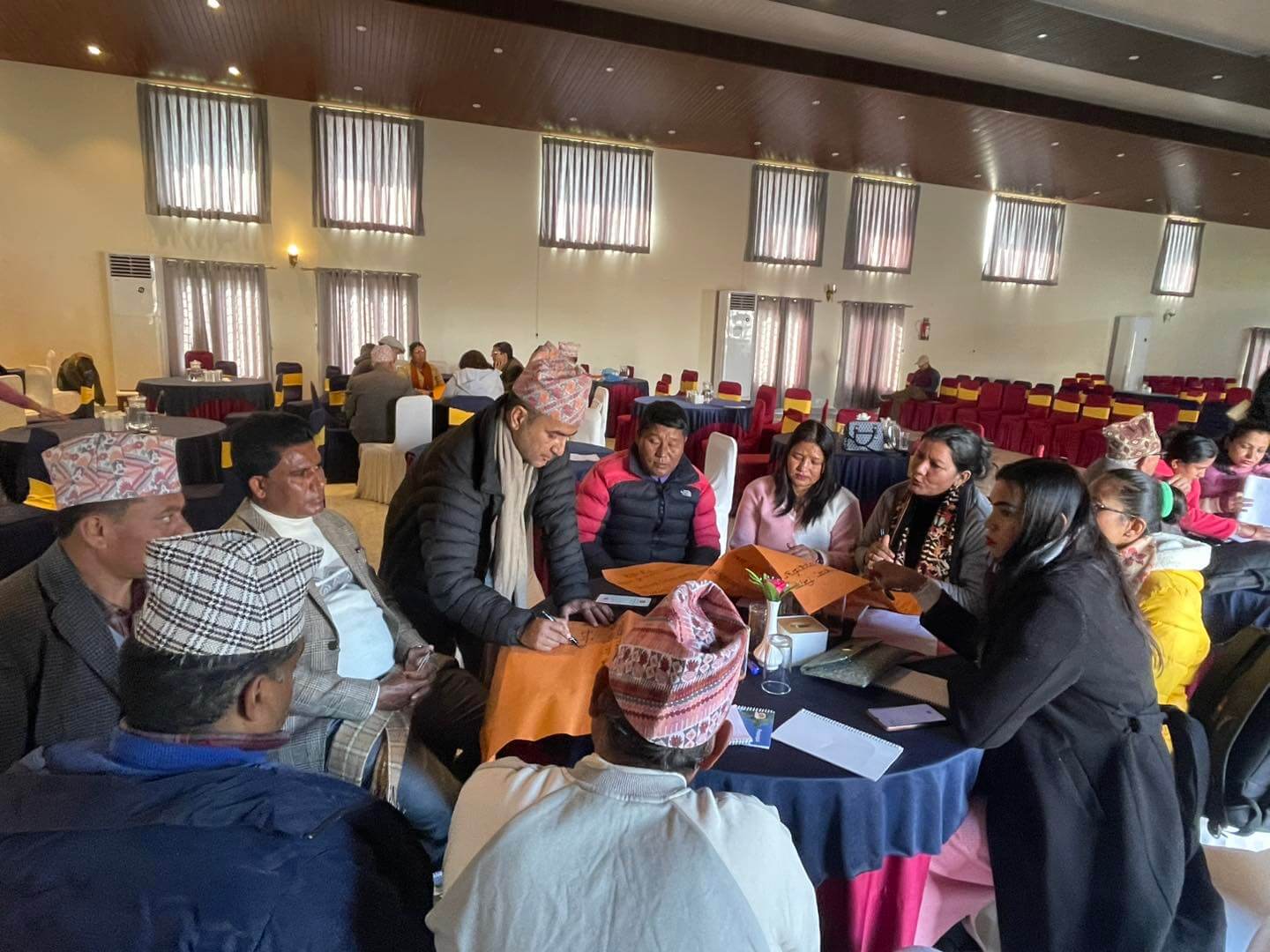
A defining feature of the project was its participatory methodology. More than 250 stakeholders—including board members, staff, provincial and district committees, member organisations, government representatives, development partners, and civil society leaders—contributed through surveys, workshops, interviews, and consultations. The process produced six major institutional documents:
-
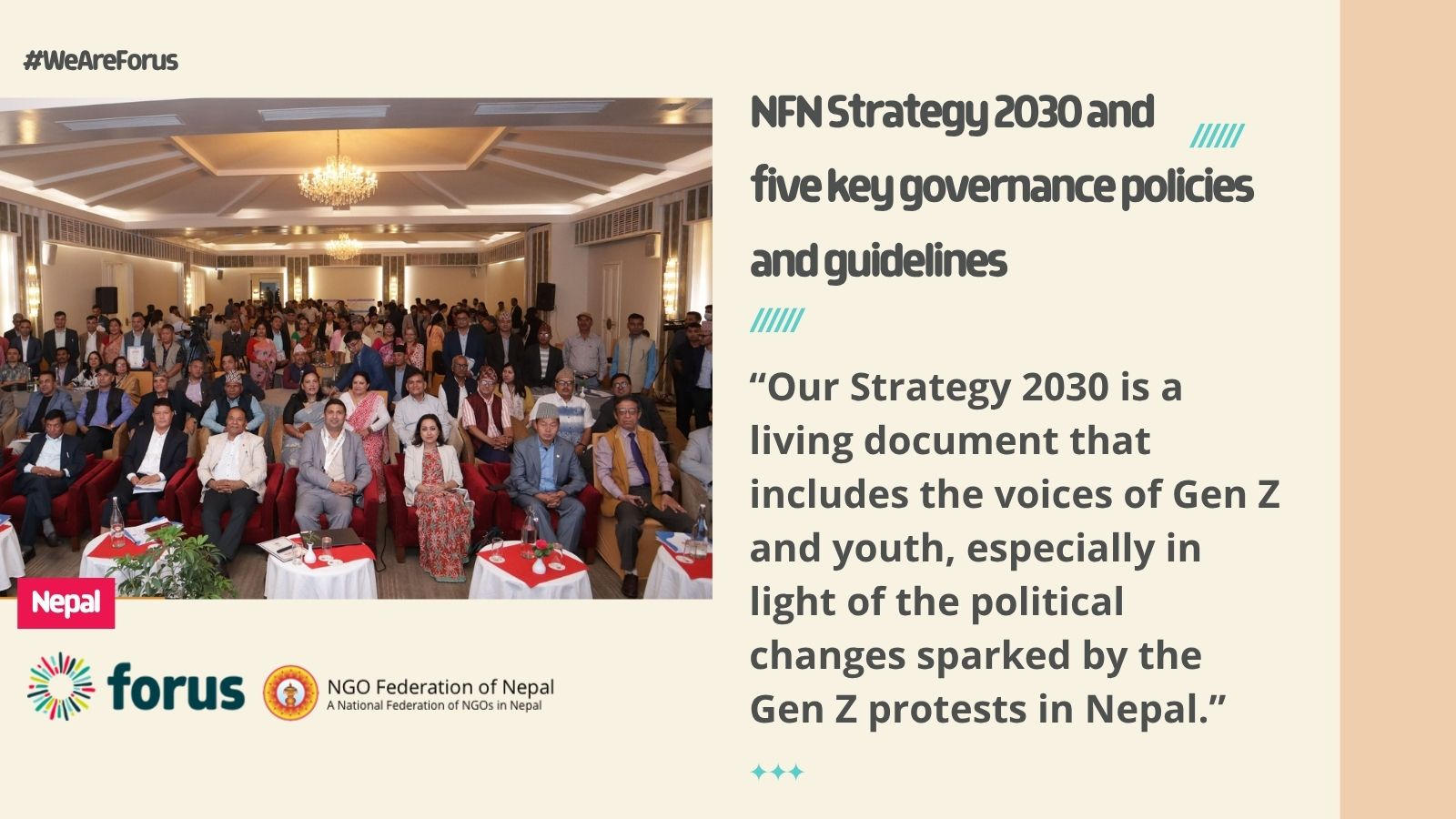
NFN Strategy 2030
-
Members and Stakeholders Engagement Plan
-
CSO Code of Conduct
-
MEAL Framework
-
Fundraising Strategy
-
Digitalisation and Knowledge Management Guidelines
Beyond producing these documents, the consultation process itself became an organisational learning exercise. Participants reported feeling "valued and heard for the first time" during policy formulation, while board members developed a deeper understanding of members' priorities across Nepal.
The project also initiated NFN’s digital transformation by strengthening website management, organising institutional knowledge into central repositories, planning a comprehensive member database, and investing in digital infrastructure to improve communication and organisational memory.
Key Results
-
Developed NFN Strategy 2030 and five major governance and management frameworks through a participatory process.
-
Engaged more than 250 stakeholders across national, provincial, and district levels in shaping the organisation’s future direction.
-
Strengthened internal governance by promoting more decentralised and transparent decision-making processes.
-
Established the foundations for a digitised membership and knowledge management system.
-
Improved organisational ownership by positioning policy formulation as a collective learning and capacity-strengthening process rather than an external consultancy exercise.
-
Created governance tools with potential for replication by member organisations across Nepal.

Learning
NFN’s experience demonstrates that organisational strengthening is as much about how strategies are developed as about the final documents themselves. The participatory consultation process generated stronger ownership, improved trust between leadership and members, and surfaced critical issues around decentralisation, communication, fundraising, and digital transformation. It also revealed that institutional reform requires dedicated coordination, realistic timelines, and continued follow-up to translate policies into everyday practice.
The project further showed that digital transformation should not be understood simply as investing in technology. Sustainable change requires combining digital tools with governance reforms, knowledge management systems, and continuous capacity development for staff and members. Finally, involving board members directly in consultation and dissemination activities strengthened leadership ownership and positioned them as facilitators of organisational change rather than only decision-makers.

/ Related content