2026-07-16
Annastazia Rugaba: "Transformation Must Be Measured Not Only by What Government Reports, But by What Citizens Experience"
A civil society perspective on why meaningful participation, accountability and inclusive governance are essential to turning sustainable development commitments into real change for communities.
In conversation with Nayra, Forus' A Space For Us.
— Can you introduce yourself and tell us about TANGO and the work you do?
It's very personal to me. I've spent many years working across citizen voice, public policy, strategic communication, governance, institutional reform and systems change, and when I was appointed Chairperson of the Board I remember thinking: this is my passion. TANGO is the Tanzania Association of NGOs — a long-standing national civil society umbrella platform, older than me, bringing together organizations working on development, governance, human rights, environment, social accountability and community empowerment — and our job is to connect the realities of communities with national, regional and global development processes; even here at the HLPF, the 2030 Agenda is our heart.
— Tanzania is presenting its third VNR. What does that mean from a civil society perspective, and what has shifted, and what hasn't?
This VNR arrives at a real turning point: we're closing out the SDG period while beginning implementation of Vision 2050, carrying hard lessons from Vision 2025's shortcomings and from our own shortcomings as civil society, which we've been honest about. A lot has genuinely shifted — sustainable development language is far more present in national planning, and there's real recognition of civil society and of young people in a country where over 77% of the population is under 35 — but most citizens still don't know what the VNR means for their daily lives, so it's on civil society and journalists to translate it into what people actually care about: water, roads, jobs, schools, clinics, safety. Our core message is that the VNR must not end in New York; it has to feed into local budgets, services and accountability, or it's just a beautiful report without real change on the ground.
— TANGO has been a consistent voice on civic space in Tanzania. What is the state of that space right now?
It's active but under real pressure: civil society keeps generating evidence and engaging government every day, but heavy approvals, reporting obligations and research-clearance processes make participation slow, costly and uncertain — sometimes a project's timeline runs out before we even get clearance to implement it — and trust took a hit after tensions around last year's elections. For us civic space isn't a side issue, it's an implementation issue: you can't deliver the SDGs or Vision 2050 if citizens can't speak, organize or hold institutions accountable, and while regulation is necessary in this era of misinformation and deepfakes, it needs to be predictable, proportionate and enabling rather than something that creates fear or silence.
— Who is still being left behind in Tanzania, and why?
"Leave no one behind" sounded like a slogan until I entered the real world of work — young people are the largest group still treated as beneficiaries rather than co-creators, alongside rural women, persons with disabilities, smallholder farmers, fishing communities and the urban poor, left behind not always because policies ignore them but because systems, poverty, geography, weak participation channels and digital inequality don't reach them properly. Consultations often arrive too late — I've traveled overnight, under real stress, to challenge bills rushed through under a "certificate of urgency" the day before they pass — and real inclusion has to mean designing policies and budgets around people's actual lives, not just inviting them to a meeting for a group photo.
— How well are the SDGs actually embedded in Vision 2050 at the community level?
At the policy level the alignment is very strong — I was part of the highly consultative process that shaped Vision 2050 and personally drafted the president's opening remarks in the Swahili version — but at the community level it's still uneven, because people don't wake up talking about SDG targets, they wake up asking whether there's water, whether roads are passable, whether clinics have medicine. The real challenge now is translation: turning these frameworks into Kiswahili, into district plans and everyday accountability, so communities don't just get informed but actually see themselves in it, influence it, and hold every actor accountable for delivering it.
— How does TANGO make sure the most marginalized voices actually shape what Tanzania brings to the HLPF?
Being in the room doesn't mean every voice has been heard — through TANGO we gather input via member networks, community organizations, written submissions and channels like WhatsApp to reach women, youth, persons with disabilities and grassroots groups, but honestly these processes need to be far more structured, resourced and predictable than they currently are. That's why we're pushing for a formal civil society evidence window — a recognized mechanism, inspired partly by what Malaysia has done with its delivery systems, through which community evidence and independent analysis can feed directly into the VNR and Vision 2050 implementation, especially with the help of technology and AI.
— What does genuine transformation look like, away from the policy language?
For me it's development visible in an ordinary person's life: a young person with real skills and opportunities, not just a certificate; a woman in a village who can access land, finance, health care and protection from violence, at a time when women still have to pay to give birth in this country, which pains me deeply; a person with a disability who can actually enter a school or clinic because accessibility was designed in from the start, not added as an afterthought; a farmer who can get his harvest to market without post-harvest losses, even though someone in New York could buy Tanzanian maize online today. It's when a citizen can ask a question without fear and leaders respond with accountability instead of defensiveness — transformation is about dignity, voice and trust, and if communities can't feel the change, it isn't complete.
— What are TANGO's key messages at this HLPF, and how confident are you they'll land?
Five messages: trust must be rebuilt; youth must be designed with, not for; digital inclusion must go beyond connectivity so young people become creators and not just consumers; civic space is an implementation issue, not a side one; and the VNR must connect directly to Vision 2050 rather than remain a report for New York. Am I confident it will land? I'm hopeful and optimistic, but realistic — it depends on whether governments and global institutions listen beyond formal statements and take citizen evidence seriously.
— Any final words for our listeners?
Transformation must be measured not only by what government reports, but by what citizens experience — inclusion doesn't happen automatically, it has to be designed, protected, financed and monitored by the people themselves. Vision 2050 is a golden national opportunity for Tanzania, but it only becomes powerful when citizens can understand it, shape it and hold institutions accountable for it, so I'd invite everyone listening to keep asking: who's in the room, who's missing, and whose life is actually changing. That's where real transformation begins.
Series: Beyond the Review
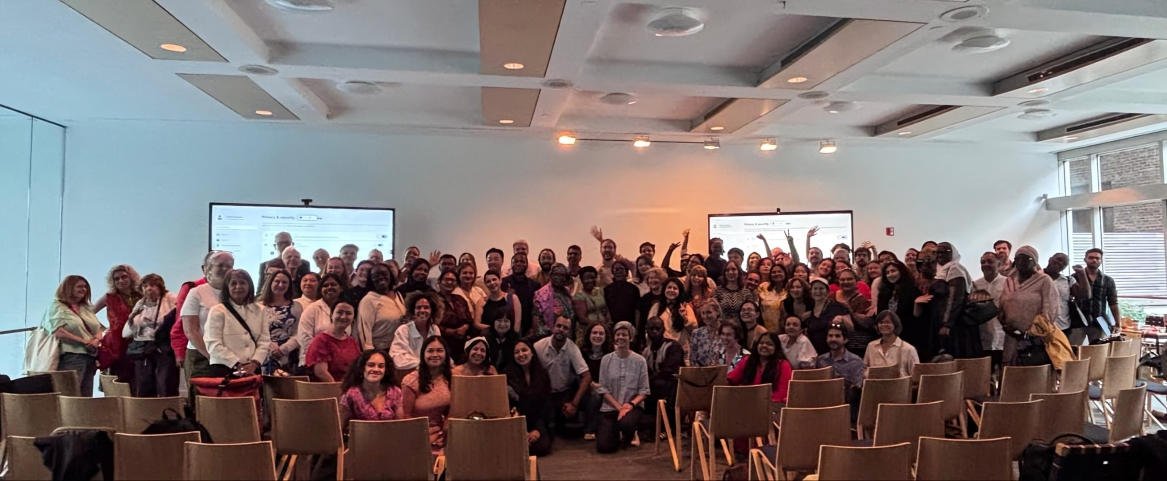
Today's episode is part of our series "Beyond the Review", recorded on the sidelines of the UN High-level Political Forum taking place in New York from July 7–15, 2026.