2021-08-13
CCOAIB member organisations for building a better world
News
By Benoit NDIRIKIYE, Information and Documentation Officer of CCOAIB, member of Forus in Rwanda
Rwandan civil society organisations, for the most part created in the aftermath of the genocide perpetrated against the Tutsis and the war in 1994, have for a long time operated with great ease. It used to be enough just to come up with a project and donors – who numbered in the hundreds across the country – and funding could be obtained without much trouble (UN and charitable organisations).
But over time, given the global economic situation and various changes, access to funding has become more difficult. In recent times, when only projects that take into account specific requirements are considered, mainly those that contribute to the challenges of globalisation and prioritise the vision of global solidarity, very few organisations have survived. This situation highlighted a shared challenge of a lack of technical, human and financial capacities to adapt to globalisation. As a result, a few years before the COVID-19 pandemic, which worsened the situation as if to add insult to injury, some of them had already started to close their doors.
The Conseil de Concertation des Organisations d’Appui aux Initiatives de Base (CCOAIB), is a collective made up of 43 member organisations that operate throughout Rwanda in various fields of development, working mainly in: agriculture/livestock, beekeeping, agri-food processing, crafts, women’s entrepreneurship, rural water supply, water and sanitation, guidance for young people, orphans and cooperatives, micro-finance, support for self-promotion in rural areas, lobbying and advocacy on public policies, etc.
In line with its mission, the CCOAIB is concerned with capacity building for its member organisations so that they can be sufficiently useful to the community. In order to achieve this, a needs assessment conducted annually enables it to plan training topics designed to enhance the knowledge of these organisations in their various fields of operation. This allows them to effectively assist their beneficiaries with achieving the objectives they set for themselves when developing their strategic plans.
The support of Forus, which came at the right time, was greatly appreciated because it met the CCOAIB’s expectations, which considers that the strength of an organisation lies not only in its level of planning and its capacity to carry out monitoring and evaluation, but above all in its skill in fundraising as well as its strength in lobbying and advocacy.
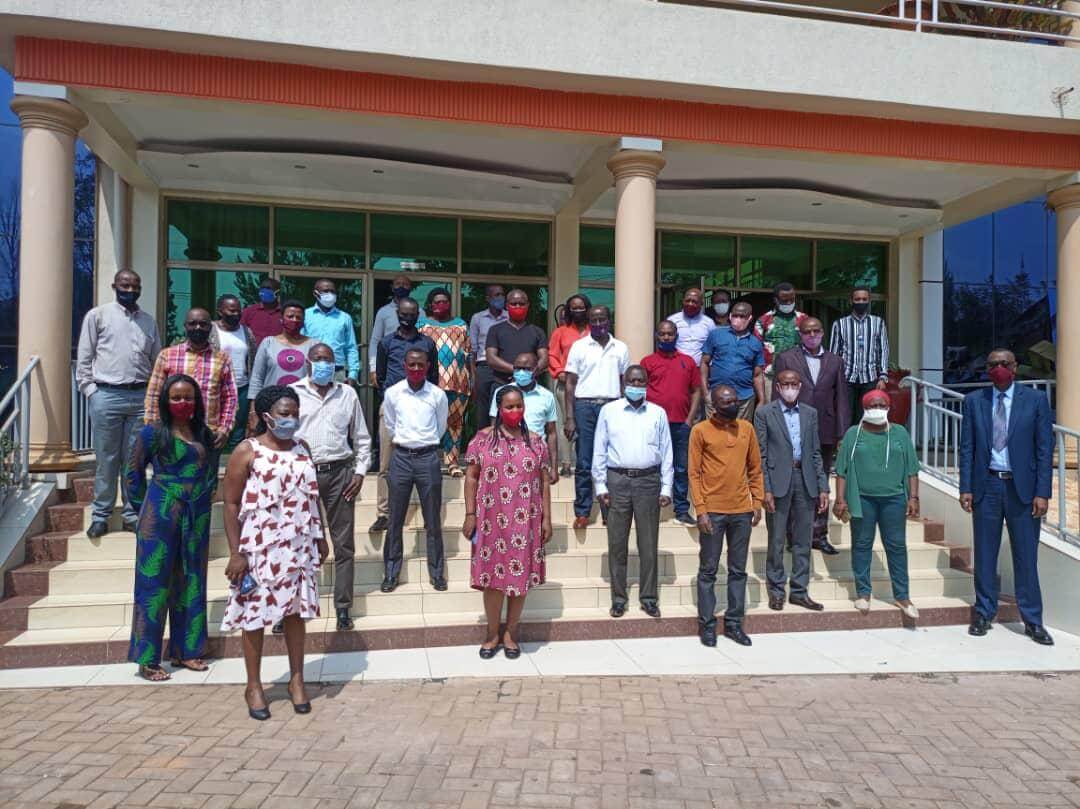
This partnership has then made it possible to organise two training workshops which were attended by the heads of the organisations at the highest level, including programme managers as well as executive secretaries of the organisations or the coordinators as the case may be.
It should be noted in passing that the organisation of these training workshops had been delayed due to lockdown measures put in place as cases of Covid-19 continued to increase, the first case in Rwanda having been confirmed on March 14, 2020.
Two themes were discussed, including (i) strategic planning, monitoring and evaluation of development projects as well as (ii) lobbying and advocacy on sustainable development goals.
All the aspects discussed in these two training workshops met the expectations of the participants, as some of them who answered our questions testified.
Regarding the theme dealing with the notions of lobbying and advocacy, Mr. Viateur Rucyahana, Coordinator of the Rwanda Scouts Association was delighted to have realized that “to have a cause be understood and to have decision-makers understand it so that they change their position, it is not only necessary to use analyses based on the facts, but above all, you need to have the support of the other actors who share your ideal”.
In terms of the objectives of sustainable development, the fact that the Adviser at the Centre for Sustainable Development Goals for Africa, Ms. Oliva Dushime as well as two other members of Rwandan civil society made presentations that caught the attention of all the participants is tangible proof that they will now take them into account in their interventions.
Without any doubt, learning of the work of the Centre for Sustainable Development Goals for Africa in Kigali and the amortisation of a partnership will allow member organisations of the CCOAIB platform to have a package of information on measuring the achievement of the sustainable development goals, about what has been achieved by other actors both at the regional level and at the international level and formulate coordinated and synergistic action strategies.
The fruit of an active partnership, the two training workshops were very rich in the exchange of experiences. The participants decided to operate by forming consortia through which they will act, prioritising goals that relate to their areas of intervention.