©FALE Kiribati
2023-11-28
CONTEXTUALIZING ‘GOOD GOVERNANCE’ THROUGH AN I-KIRIBATI PERSPECTIVE
By Tereeao Teingiia-Ratite, KANGO
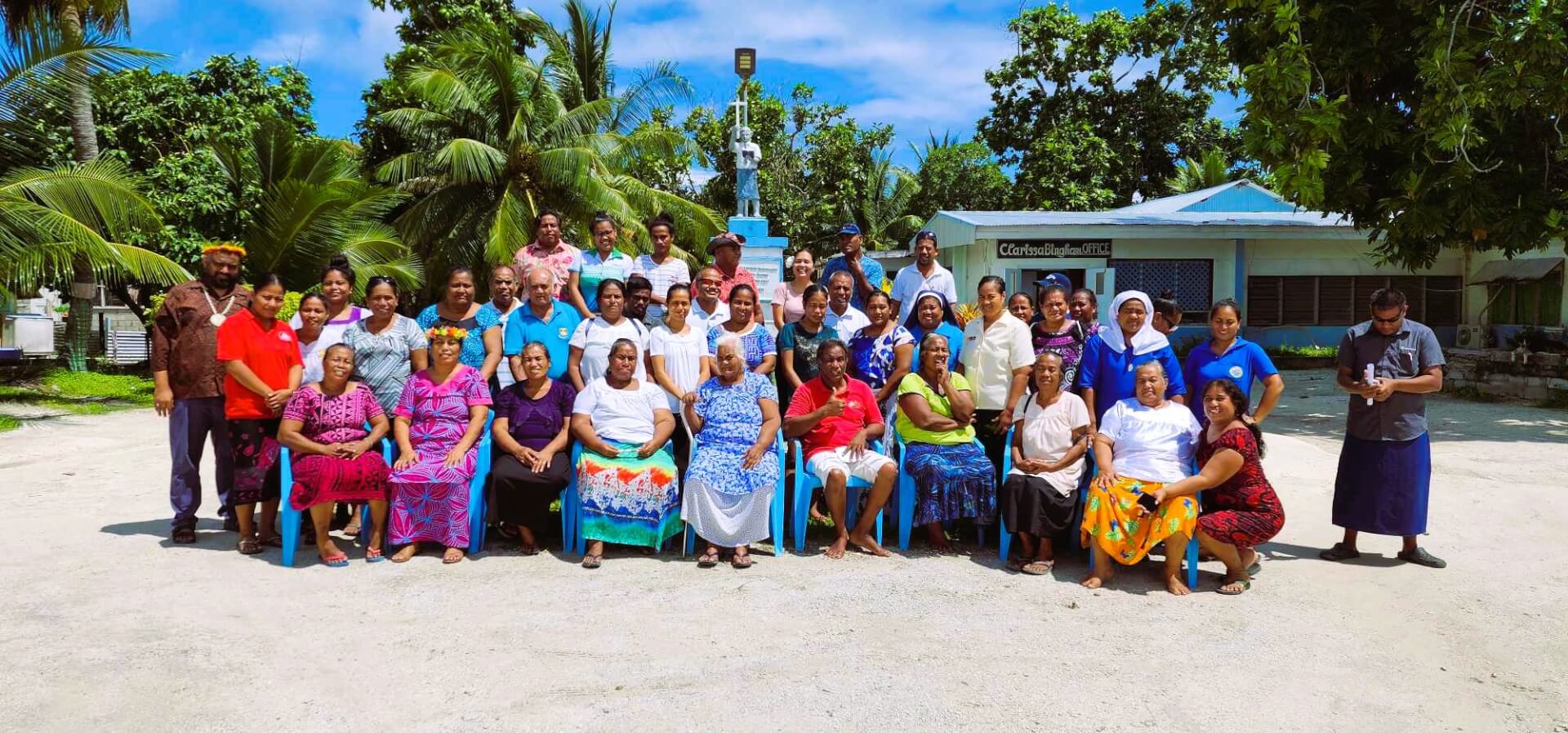
In 2022, the Kiribati Association of Non-Government Organizations (KANGO) run nine different workshops based on carrying out capacity strengthening activities for its members. Activities first defined the relevance of Sustainable Development Goals (SDGs) and the Kiribati Vision in 20 years’ time (KV20), validating the findings and mapping in terms of civil society’s contribution to the achievement of the SDGs and KV 20.
The Kiribati Association of Non-Government Organizations (KANGO) is an independent body in Kiribati that has more than 50 Member Organizations (MOs) which include Community-Based Organizations, Faith-Based Organizations, Disability Groups, Youth Groups, Women Groups, International Non-Governmental Organizations and Other Interest Groups such as Fishermen, Local Weavers and more.
The nine workshops were all part of the Kiribati Voices for Dignity and Resilience (KV4DR) project which was initially funded by the Commonwealth Foundation in 2019 but then continued through Forus support in 2022 until September 2023, in partnership with the Agence française de développement (AFD). The workshops provided valuable insights around the SDGs and KV 20 and developed a wide range of comprehensive sustainable development targets and practices for the environment, society, and economy in Kiribati.
Sustainable practices help strengthen community bonds, advance the quality of life and offer hope for a better future. Environmentally, sustainable practices help protect natural resources, mitigate and adapt to Climate Change and promote biodiversity, which is significant and of great value in the Kiribati context.
“I did not realize that what we were doing at the Centre - weaving, sewing, making local handicrafts - were part of the SDGs too. Our activities, however, align well with the SDGs, for instance as we try to eliminate poverty when we sell our products or we became more educated when we learn and share something new such as our rights against violence, our capacity to take care of our home budget, our right to healthy living and more,” says Nei Biibin Aata, Irekenrao Women Representative, who participated in the workshops.
In workshop activities, KANGO appreciated the Institutional, Assessment & Mapping toolkit (IAM) self-assessment tool which was deliberated as an accompaniment to the Pacific Regional CSO Accountability Framework (PRCSOAF) in support of the good governance standards of KANGO and its member organisations.
“Safeguarding isn’t something new, we don’t have a policy and might not know the 6 core principles, but it is embedded in our cultural practices. Culturally our children are always safeguarded from exploitation and abuse,” says Amon, KANGO Board Director.
Despite the differences between the developed and least developed countries (LDC) as Kiribati, SDGs were proven to be an effective means of visualizing the individuals’ (people) key role in society. Good governance was one target that KANGO members claimed to commit to living up to for collective health, peace and prosperity.
KANGO’s journey has been enriched by its partners and networks across the nation, region, and the world, including Forus, through continuous assistance and support from the regional coalition PIANGO.
The gaps identified in the nine workshops are part of our natural human traits; we all need training to cope with the changes around us and in the world. The workshop activities were found informative and provided advancement to all. Participants were led to better insights of culture, good leadership, good governance, networking and partnership, advocacy, accountability, and transparency which resonated in KANGO’s initiatives such as the Code of Minimum Standards (CMS), and the Kiribati State Actors, National Engagement Process (KSNEP).
Participants were supported with sharing and listening spaces through presentations, group discussions and storytelling. Participants' feedback centered around the significant societal roles and responsibilities they've been raised with. However, they hadn't previously considered how these roles apply in practical, real-life situations.
One of the community-based representatives during the workshop stated, “The workshop was an eye-opener to me because I often thought of taking advantage of everything for me and my family; and never thought of others who could be my support and helpers in the future. Being fair and just among people is best,” says Tekinano Karereiti.
Bosco Taniera, Te Toa Matoa (Disability Group) added, “Good governance is the best medicine to all organizations. It improves the performance of my organization, helps it to become more stable and productive, and unlocks new opportunities. It can also improve reputation and foster trust.”
Moreover, after the Annual General Meeting in February 2023, there was a change of leadership in KANGO with a new President and Board of Executive Directors. They made commitments to revisit the 2015 KANGO Strategic Plan. They have laid a good example of walking the talk of good governance and have revisited and completed the Strategic Plan with compliments.
In terms of our future projects, KANGO has recently agreed to establish the FALE Kiribati as an alternative humanitarian structure that fosters effectiveness, efficiency, and collaboration. FALE Kiribati will serve as a locally led humanitarian coordination platform, bringing together Civil Society Organizations, Government Entities, Private Sectors, UN Agencies and all humanitarian actors. This is part of our approach to good governance where KANGO could help to reduce risks and enable faster and safer growth in communities and around the nation. This initiative is part of FALE Pacific, a joint programme by PIANGO and the START Network, which stands as a testament to Pacific nations' unity in enhancing humanitarian coordination. Its purpose is to establish locally-led humanitarian coordination structures that foster effectiveness, efficiency, and collaboration. FALE Pacific places communities at the forefront of disaster response, promoting inclusivity and accountability to envision a resilient Pacific region.