

2026-06-01
Data-Based Narrative: How Civil Society Is Reshaping the Case for ODA and Global Cooperation
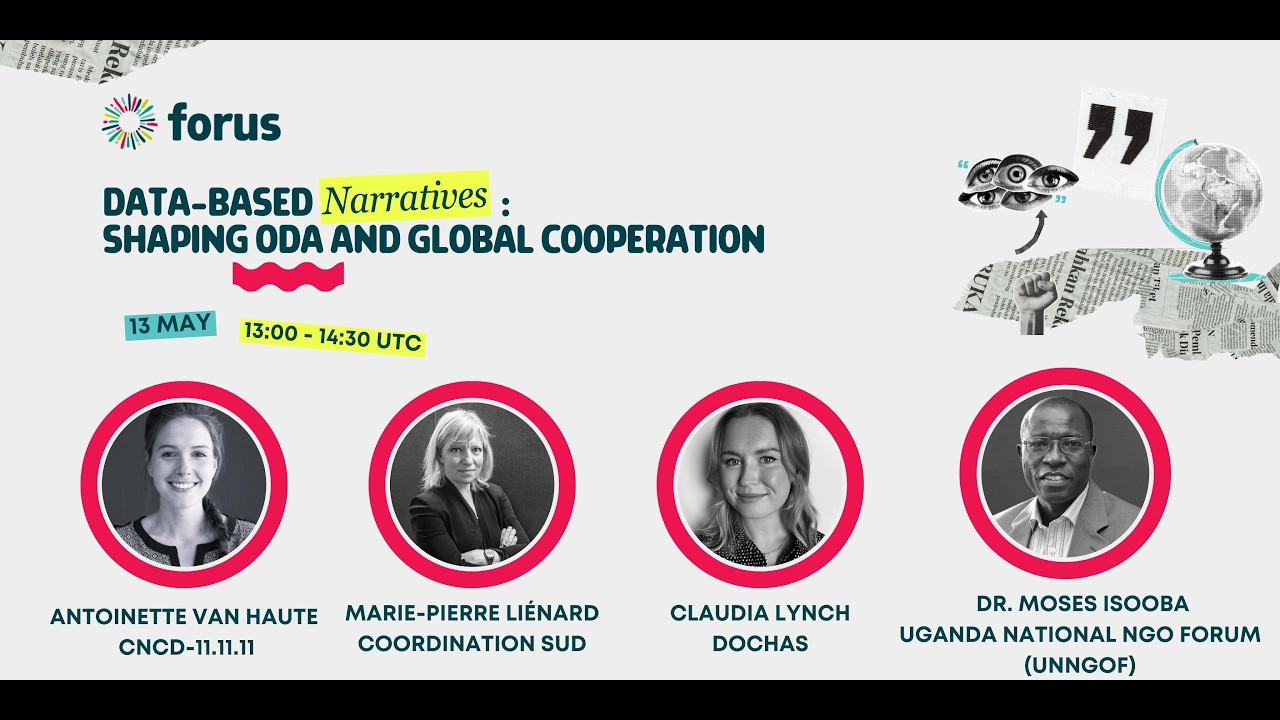
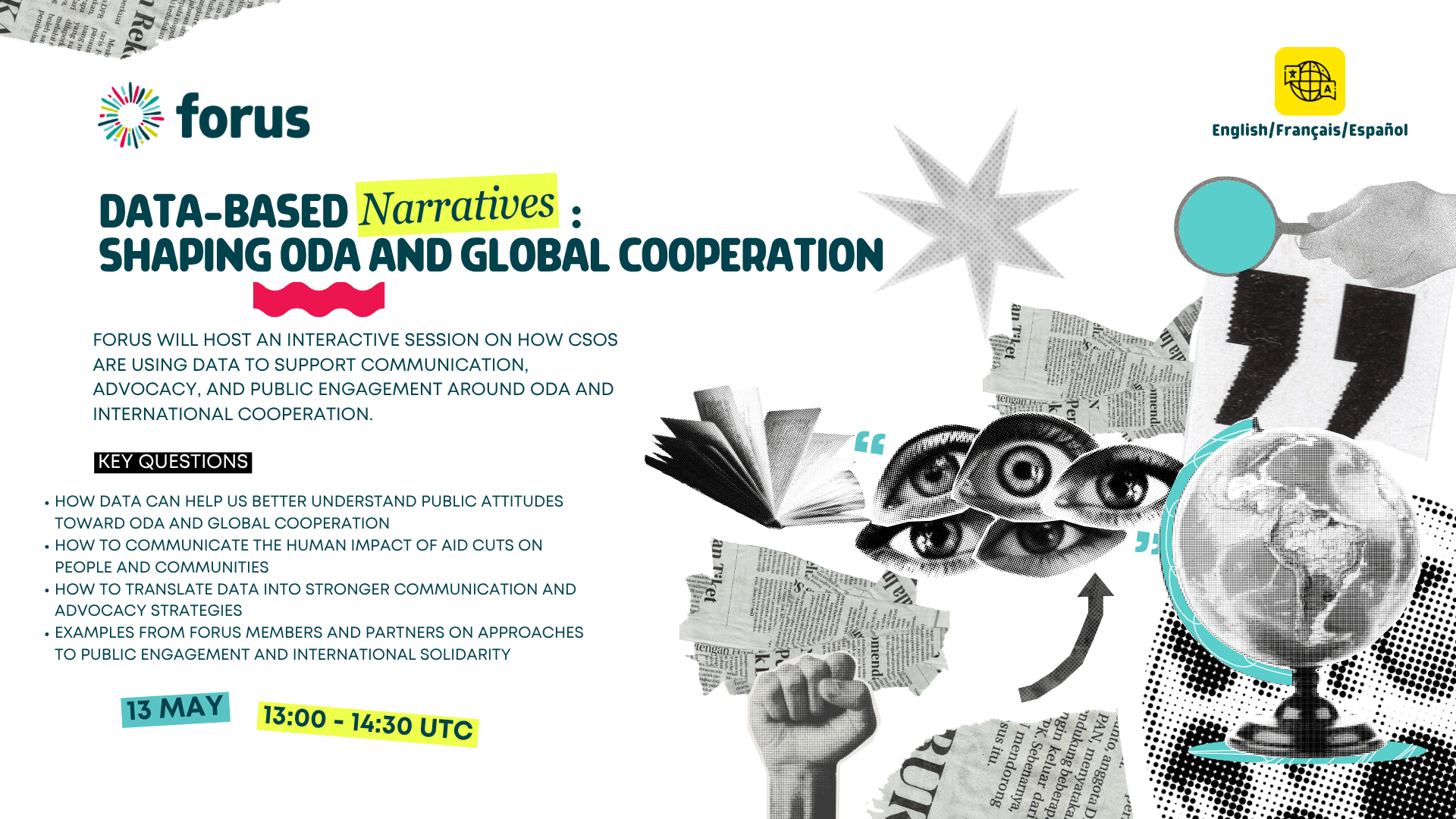
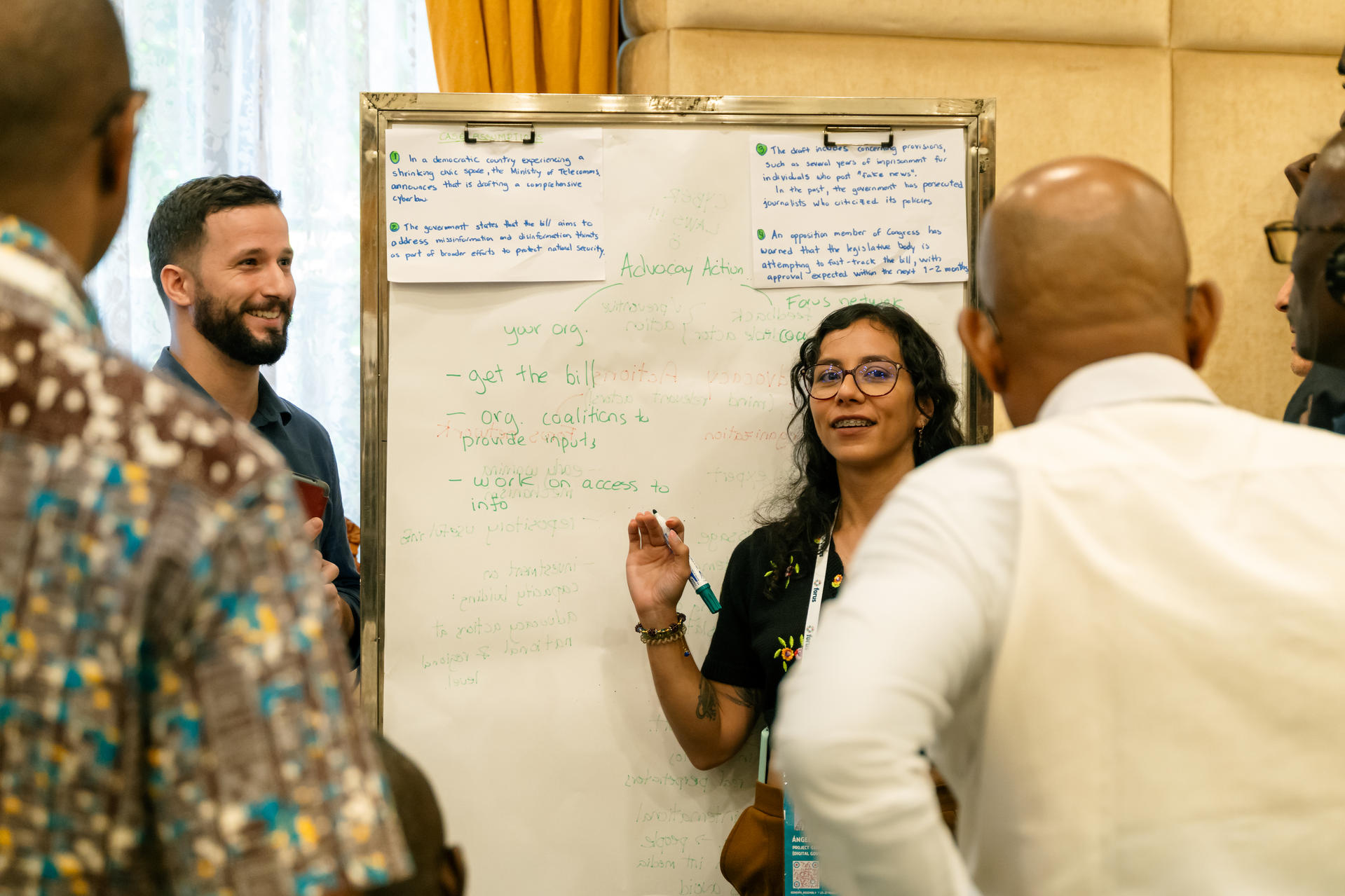
Forus hosted the interactive session: Data-Based Narrative: Shaping ODA and Global Cooperation, creating a dynamic space to explore how CSOs are leveraging data to strengthen communication, advocacy, and public engagement.
The latest unprecedented 23.1% cut in global Official Development Assistance (ODA) is already affecting some of the world’s most vulnerable communities. At the same time, public support for aid and international cooperation is being challenged by misinformation, polarisation, and simplified narratives that weaken trust in global solidarity.
Key topics in the webinar included:
- How data can help us better understand public attitudes toward ODA and global cooperation
- How to communicate the human impact of aid cuts on people and communities
- How to translate data into stronger communication and advocacy strategies
- Examples from Forus members and partners on approaches to public engagement and international solidarity
The gathering reflected a shift in how civil society is approaching advocacy and communications: data is no longer the preserve of researchers, but an increasingly central tool for organisations seeking to shape policy, build public support, and hold governments to their development commitments.
The session was jointly inaugurated by Bibbi Abruzzini, Communications and Campaigns Coordinator, and Jennifer Franco Rodríguez, Member Engagement and Network Management Officer, both at Forus, who framed ODA and global cooperation as topics that resonate well beyond the network itself.
From Data to Narrative: Three approaches, one argument
Though each speaker approached the challenge from a distinct national and organisational context, their contributions converged on a single insight: data alone does not drive change — narrative does. What transforms data into change is the narrative framework through which it is communicated.
Claudia Lynch, Worldview Project Manager at Dóchas, the Irish Association for Development and Humanitarian Organisations, demonstrated that even in a context of relatively high public support, a knowledge gap can undermine the long-term sustainability of that support.
Worldview is a nationally representative public engagement research project developed as a resource for Dóchas members and stakeholders to deepen their understanding of and engagement with the Irish public on issues of overseas development aid, global poverty, equality and justice. Worldview’s annual research identifies:
- Current beliefs and attitudes of the Irish public in relation to overseas development aid
- The communication content, style and channels that are likely to enhance support for overseas development aid
- The drivers of support for international development co-operation
- The levers to change public attitudes and behaviours
- Clearly distinguishable audience segments, with distilled insights for targeting and engaging
As Lynch put it: “by understanding different audience perspectives, organisations can use more targeted, data-driven narratives and tailor their messaging more effectively”, turning research into a practical tool for every team.
Segment audiences, understand their values, and speak to them in ways that feel personal and human rather than institutional.
Marie-Pierre Liénard, Communication Lead at Coordination SUD, the French platform of international solidarity NGOs, showed how data-driven response looks in practice. Faced with a decisive shift in French public opinion, Coordination SUD did not retreat to familiar messaging.
Instead, it used the data to identify which audiences could still be reached and which arguments genuinely resonated with them. Reflecting on the boldness this shift required, Liénard noted:
“The campaign we are currently working on is very different from what we usually do. It is really about taking a step to the side, stepping out of our comfort zone, and trying to reach and influence this segment of the population, bringing them closer to the issue of international solidarity.”
The campaign’s goal, as Liénard described it, was to bring international solidarity back into public debate, making visible a majority opinion that already exists but has grown increasingly silent.
Antoinette Van Hauten, Research Officer in Development Finance, Advocacy, Research and Programmes at CNCD-11.11.11, the Belgian platform of development and humanitarian NGOs, provided the theoretical backbone connecting both approaches. If Lynch revealed who to speak to and Liénard showed what to say, Van Hauten explained why certain messages work and others do not.
Rooted in cognitive linguistics and neuroscience — drawing on the foundational work of George Lakoff, particularly his landmark book Don’t Think of an Elephant — her intervention offered a framework for understanding how framing shapes public perception.
Describing the evolving political context, Van Hauten observed:
“In the past, ODA was ignored. Now ODA has become a symbol and a target.”
This shift, she argued, demands a proactive and strategic response from civil society.
“So instead of just replying to critiques in our opponent's frame and with our opponent's words, let's say it like that — we always have to propose our powerful alternative narrative. So always impose a positive and mobilising frame instead of just replying to critiques that we can receive from our opponents.”
Looking ahead, Van Hauten also pointed to the importance of collective and consistent messaging:
“The plan is formalising a coalition of our own members and ally organisations to make sure we repeat the same messages, always based on the same nurturing value.”
What about those least sympathetic to international solidarity — the disengaged, the unconvinced?
The argument made was that ignoring them entirely is itself a risk; left unaddressed, this segment can harden into an uncontrollable force in public opinion.
The answer, speakers suggested, is not rebuttal but proactive truth-telling — affirmative narratives strong enough to bypass misinformation and shift misconceptions over time.
Cooperation is normal
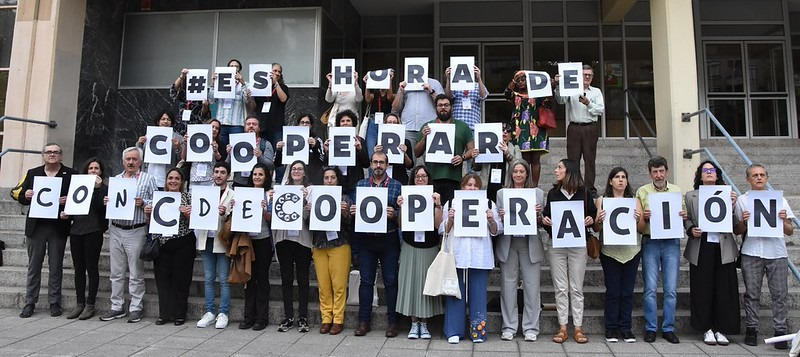
La Coordinadora de Organizaciones para el Desarrollo and the Red de Coordinadoras Autonómicas de ONGD warn that “we are living through strange, very strange times. Times in which we have to remind ourselves that solidarity, mutual support, and cooperation are what should be considered normal.” They also stress that “criminalising solidarity is strange.”
Through their new initiative Es lo normal, they defend public development cooperation policies and insist that the universality of human rights is non-negotiable, and that support for those most in need cannot depend on nationality, place of birth, or administrative status. Humanity should not admit exceptions: cooperation is normal.
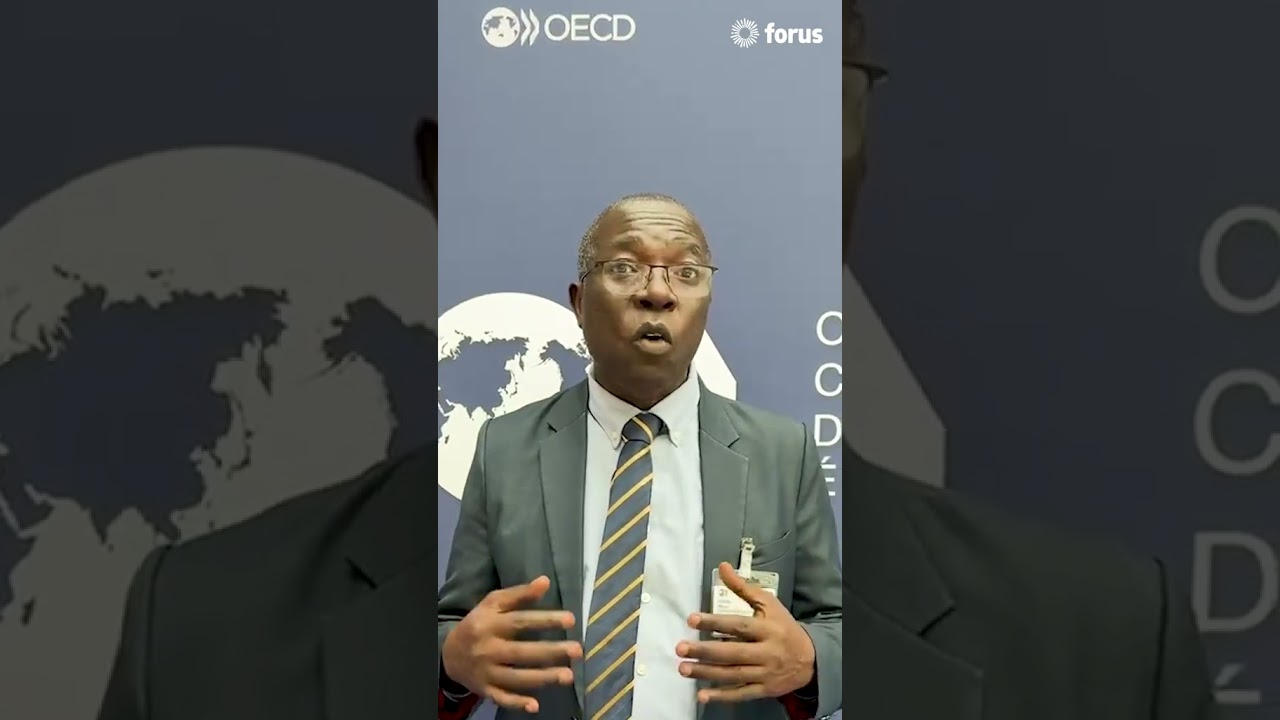
This call strongly echoes global discussions on locally led development and more equitable partnerships. In this context, Dr. Moses Isooba, Forus co-chair and Executive Director of the Uganda National NGO Forum (UNNGOF), shared the OECD Call to Action on Locally Led Development about shifting power, funding, and decision-making to local actors, making partnerships equitable, accountable, and real.