© NGO Forum on ABD
©Richard Nyoni

2026-09-21
Food sovereignty in the Sahel increasingly depends on digital sovereignty
For communities across the Sahel, the debate over food sovereignty is increasingly extending beyond what farmers grow and how they produce it. It is also becoming a question of who controls the technologies, data and information shaping agricultural systems.
Countries in the Sahel were recently included in a socio-economic assessment of the Alliance for a Green Revolution in Africa (AGRA), a programme that has sought over the past two decades to increase agricultural productivity through improved seeds, fertilisers and market-oriented approaches. The assessment has renewed debate over the results of this model, particularly its impact on food security in countries including Mali, Burkina Faso, Niger and northern Nigeria. Rather than presenting a direct causal link between AGRA and levels of undernourishment, the evidence points to a contested debate over which agricultural models are best able to strengthen food security and resilience.
Senegal provides a useful contrasting case in this debate, particularly because of its continued emphasis on local production and traditional agricultural knowledge. The inclusive approach has added value, notably through the tradition of diissoo, which offers a way to understand how resilience is built today between farmers, investors and the state. It is also important to consider the nuances between traditional agricultural knowledge, international narratives about African agriculture and the evolution of digital governance.
Research has increasingly been carried out at the intersection of these issues, notably around fonio, an ancient and drought-resistant cereal that has attracted growing attention for its nutritional and climate-resilient qualities.
For Moustapha Sall, manager of a family-run bakery that he has expanded through the use of local cereals, research, production and community training in northern Senegal offer practical ways of strengthening local food systems. Wheat imports, meanwhile, have long been part of international debates around food security, geopolitical instability and climate change, including in reporting by the BBC.
Today, the Platform of Civil Society Organisations for Strengthening Nutrition and Food Security in Senegal (OSC SUN Senegal) is mobilising civil society around local leadership and the fight against malnutrition. At the same time, a new form of inequality is emerging in the digital sphere.
In July 2026, discussions on artificial intelligence in the UEMOA region highlighted the challenges of inclusion, infrastructure, local languages and data sovereignty. The discussions brought together experts who stressed that AI could support sectors such as agriculture, while warning that digital transformation must reflect local realities and avoid becoming a tool accessible only to a connected and predominantly French-speaking elite.
The challenge is already visible in emerging agricultural platforms. Take Ndugumi, an online platform connecting farmers and consumers. A technical authentication problem can cut users off from distribution channels, illustrating a broader vulnerability: as digital platforms become part of the food chain, reliable access to technology can become an essential part of access to markets.
The example also sits within a growing Agri-Tech ecosystem in Senegal, where young entrepreneurs are developing digital tools for agriculture, livestock and access to finance. These initiatives demonstrate the potential of technology to strengthen productivity and market access but they also raise questions about who can access these tools and on whose terms.
The digital divide is not only about connectivity or infrastructure. It is also linguistic. As Mame Gore Faye, a community social worker from a rural background, emphasises, “many tools are designed in French or English, whilst users need content accessible in national languages. The urgent need is not simply for digitalisation, but for digital empowerment aimed at putting technology at the service of people, and not the other way round.”
The question is also reflected in the design of digital agricultural services. Agritech Senegal is one example of a digital agricultural ecosystem operating in this rapidly changing environment. For rural communities, however, meaningful digital inclusion requires more than simply putting a service online: it requires interfaces, information and support that respond to the languages and realities of users.
When it comes to data collection, these barriers are not isolated cases. According to Mamadou Mignane Diouf, coordinator of the Senegalese Social Forum and a member of CONGAD, “digital technology today is to us what the pen was for previous generations. All our languages – whether Wolof, Serer, Fulfulde or Bambara – are languages of science capable of assimilating these algorithms. The challenge lies in the political ambition of our governments and the involvement of civil society in encouraging young local engineers to design software tailored to our markets and farming techniques. Without this linguistic and contextual openness, digital governance remains limited.”
The question therefore goes beyond individual applications. As AI and digital platforms increasingly depend on data, questions about who collects, stores and controls that data become questions of economic and political power. The July 2026 UEMOA discussions explicitly highlighted the importance of local data, open data, infrastructure, local-language datasets and regulatory frameworks capable of protecting citizens while enabling locally adapted innovation.
For farmers and communities seeking greater control over their food systems, sovereignty may therefore increasingly depend not only on what they grow and how they produce it, but also on who controls the technologies and information shaping those choices.
Food sovereignty and digital sovereignty are becoming increasingly interconnected. Without meaningful access to technology, local languages, appropriate infrastructure and civic participation, digitalisation risks reproducing existing inequalities rather than helping communities overcome them.
The challenge for governments and civil society across the Sahel is to ensure that the digital transformation of agriculture remains inclusive, locally grounded and accountable, so that technology strengthens the agency of farmers and communities rather than becoming another system over which they have little control.
Disclaimer: This article is written as part of the Forus journalism fellowship programme. Learn more here

2026-09-17
News
AidWatch 2026: As ODA declines, who gets to shape the future of global cooperation and how? The launch of CONCORD’s AidWatch 2026 report in Brussels raised a question: as European ODA shrinks and international cooperation priorities shift, how can development objectives remain at the centre of international cooperation, and who gets to shape its future?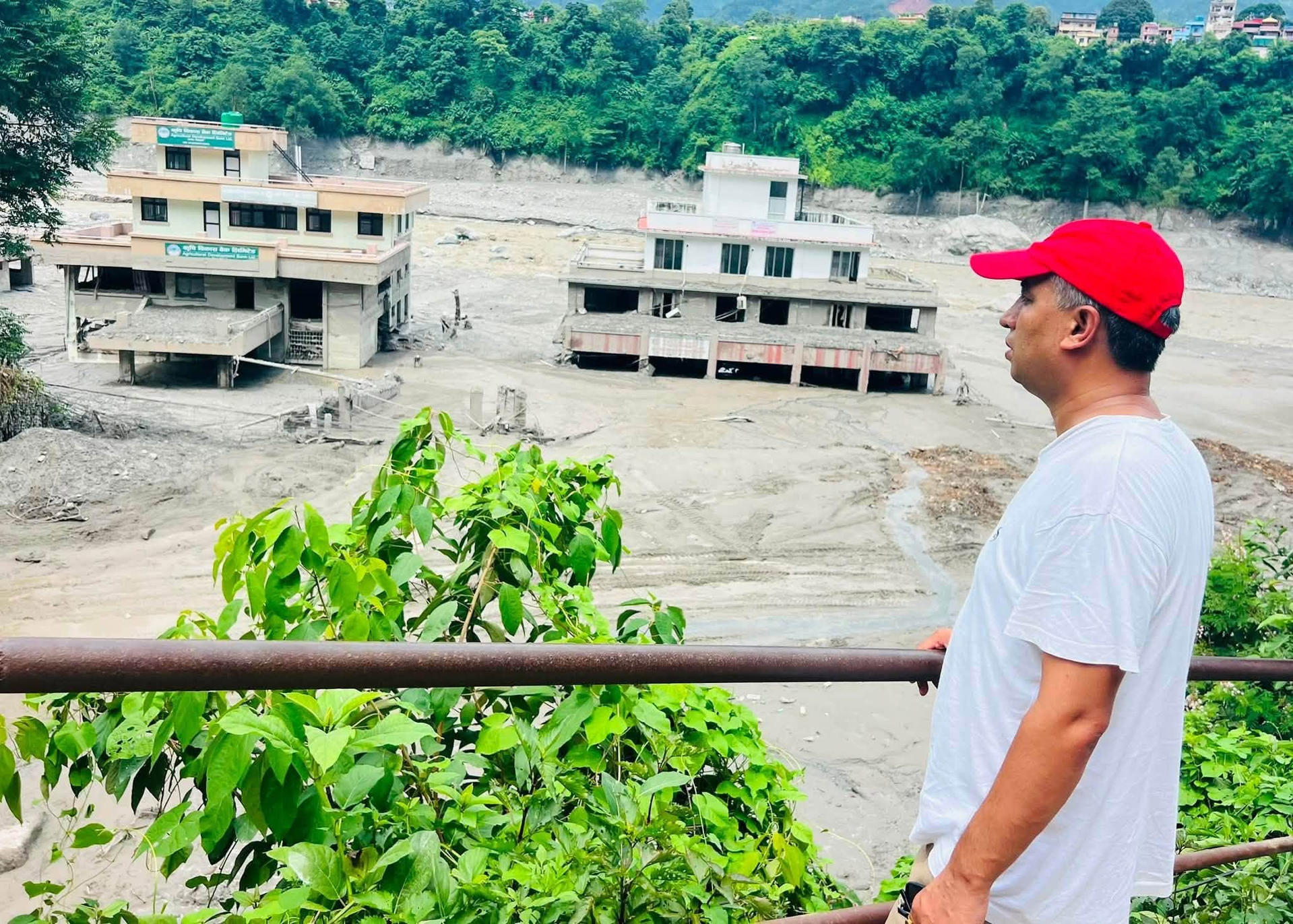
2026-09-16
News
Joint Letter - Global Climate Emergency in Nepal On 26 August 2026, a glacial-rock collapse in the Himalayan region triggered catastrophic flash floods along Nepal’s Bhotekoshi and Trishuli rivers, killing over 1,350 people in Nepal alone, with nearly 5,000 more reported missing, and causing additional deaths and displacement across the border. These converging climate disasters are a stark reminder that the climate emergency is no longer a distant threat; it is causing immense loss of lives, displacement, destruction of livelihoods and ecosystems, with risks to peace, sustainable development and human rights, particularly for vulnerable communities.