© Forus
(c)PIANGO
2026-03-04
From Reporting to Reality: A Pacific Call for Justice and Locally Led Development
By Akmal Ali, PIANGO
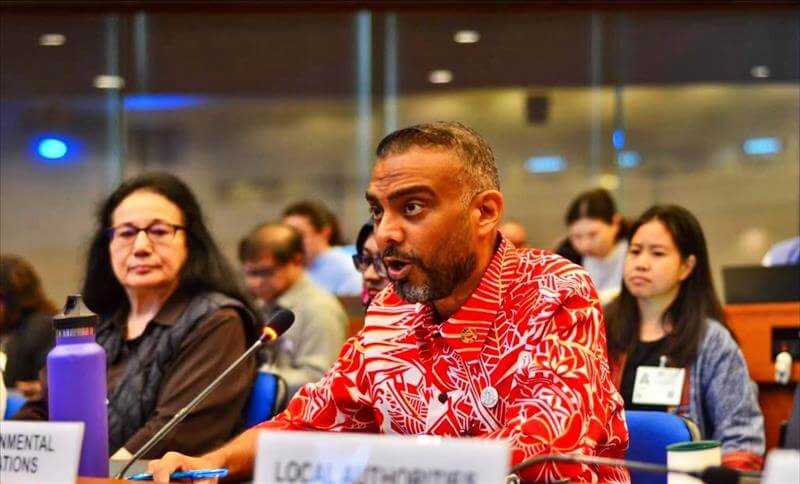
At the 13th Asia Pacific Forum on Sustainable Development in Bangkok, I had the honour of delivering an intervention on behalf of the Asia Pacific Regional CSO Engagement Mechanism (APRCEM) and the Pacific Islands Association of NGOs (PIANGO). It was an opportunity to bring a Pacific voice into discussions on Voluntary National Reviews (VNRs) and the future of the 2030 Agenda.
What we shared was not theory. Not policy language. Not abstract development thinking.
It was lived reality.
For us in the Pacific, a Voluntary National Review is not simply a reporting mechanism. It is a test — of whether development reaches people, whether communities feel change in their daily lives, and whether policies translate into dignity, resilience, and opportunity.
In 2026, Kiribati, the Marshall Islands, and Tonga presented their VNRs. These small island nations continue to navigate rising seas, geographic isolation, fragile economies, and limited fiscal space. Some also carry the long shadow of nuclear testing legacies that continue to shape environmental and health realities.
These realities remind us that development cannot be measured through national averages alone. It must be measured through human experience, community resilience, and above all, the ability of people to live with dignity and security.
Across our region, we see a worrying trend. Civic space is tightening. Consultations too often remain symbolic. Participation is invited, but influence is limited. A credible Voluntary National Review must tell the full story — not only achievements and progress, but also structural barriers, inequalities, and policy gaps. Development cannot be credible if it hides difficult truths.
This is why community-generated and citizen-led data matter deeply. When policies are written without lived experience, they fail. When communities shape evidence, priorities become real, responses become grounded, and transformation becomes possible. Data must not only count people; it must reflect their realities.
Financing remains one of the deepest structural challenges facing our region. Too often, resources circulate at higher levels while communities and local civil society — who form the frontline systems — remain under-supported. From a Pacific perspective, financing must reach the ground directly and equitably. It must be predictable. And it must strengthen local ownership and trust.
Public money is people’s money. It must be managed transparently and accountably, in ways that reduce inequality and improve lives. Climate finance, especially for small island developing states, must be anticipatory and locally delivered. For our communities, resilience is not built after disaster strikes. It is built before the crisis arrives.
Localisation in the Pacific is not a slogan. It is not a development trend. It is how we survive and how we govern.
It means partnerships grounded in respect and mutual accountability. Leadership by local actors who understand their communities. Coordination and complementarity that strengthen systems rather than fragment them.
It means real participation, not token engagement. Policy influence shaped by lived priorities. Capacity strengthening that empowers institutions. And equitable financing that enables sustainable, locally owned action.
When localisation is reduced to rhetoric, systems remain extractive and disconnected from reality. When localisation is practiced with integrity, development becomes transformative.
Climate justice remains urgent and deeply personal for the Pacific. Rising seas threaten homes and identities. Storms grow stronger. Natural disasters arrive more frequently. Social and health pressures are emerging across communities navigating multiple crises at once.
Adaptation, resilience, social protection, and health systems must be adequately financed. More importantly, community knowledge must guide action.
Yet the Pacific is not defined by vulnerability. It is defined by resilience, solidarity and responsibility.
Our communities are not waiting for solutions. They are already building them. Across islands and coastlines, people are protecting ecosystems, strengthening community systems, and leading locally grounded responses to climate and development challenges.
What is needed now is political will.
The political will to recognise local leadership. To resource community systems. To ensure financing reaches those closest to the challenges. To move from consultation to co-creation. And to place justice, dignity, and people at the centre of development.
The Pacific is often described as small. But our voice is not small. Our experience is not small. Our lessons are not small.
We bring to the global conversation a lived understanding of resilience, community governance, and locally led development that many larger systems are only beginning to rediscover.
The future of sustainable development will not be decided only in global declarations or national reports. It will be decided by whether development reaches communities. Whether partnerships are built on trust. Whether financing serves people rather than systems. Whether accountability mechanisms reflect lived realities.
Voluntary National Reviews were intended as tools for learning, accountability, and transformation. They must not become exercises in presentation. They must remain instruments of honesty and course correction.
From the Pacific, our message is simple and clear.
Development must serve people.
Justice must guide action.
And localisation must move from rhetoric to reality.
The Pacific stands ready — not only to speak, but to lead.