(c)Silvermoon
2026-06-03
Increased life expectancy as a driving force for reconstruction in Venezuela
The traditional narrative often associates ageing with retirement, staying at home and withdrawing from the world of work. However, in a Venezuela that is rebuilding itself from the ground up through its communities, a new generation of driving forces is emerging, whose most valuable asset is their accumulated knowledge.
In the face of migration, which has drastically reshaped the country’s demographics in recent years, so-called "new longevity" has ceased to be a statistic of vulnerability and has instead become a sign of resilience that sustains families and drives trade unions, services and public spaces.
With the participation and encouragement of organised civil society, some older adults are investing their experience to promote well-being, technological sovereignty, environmental restoration and economic dynamism.
For Mauricio Parilli, spokesperson for the Venezuelan Network for New Longevity, this paradigm shift is an urgent necessity. The network views this stage not as a space of isolation: “We do not see longevity as a matter of ageism where we sideline older adults; we conceive of it as the capacity to remain relevant over time, without barriers”.
For the spokesperson, this relevance translates into “intergenerationality”, a cross-pollination of values where older adults mentor the young and “this exchange of values enhances collective knowledge”.
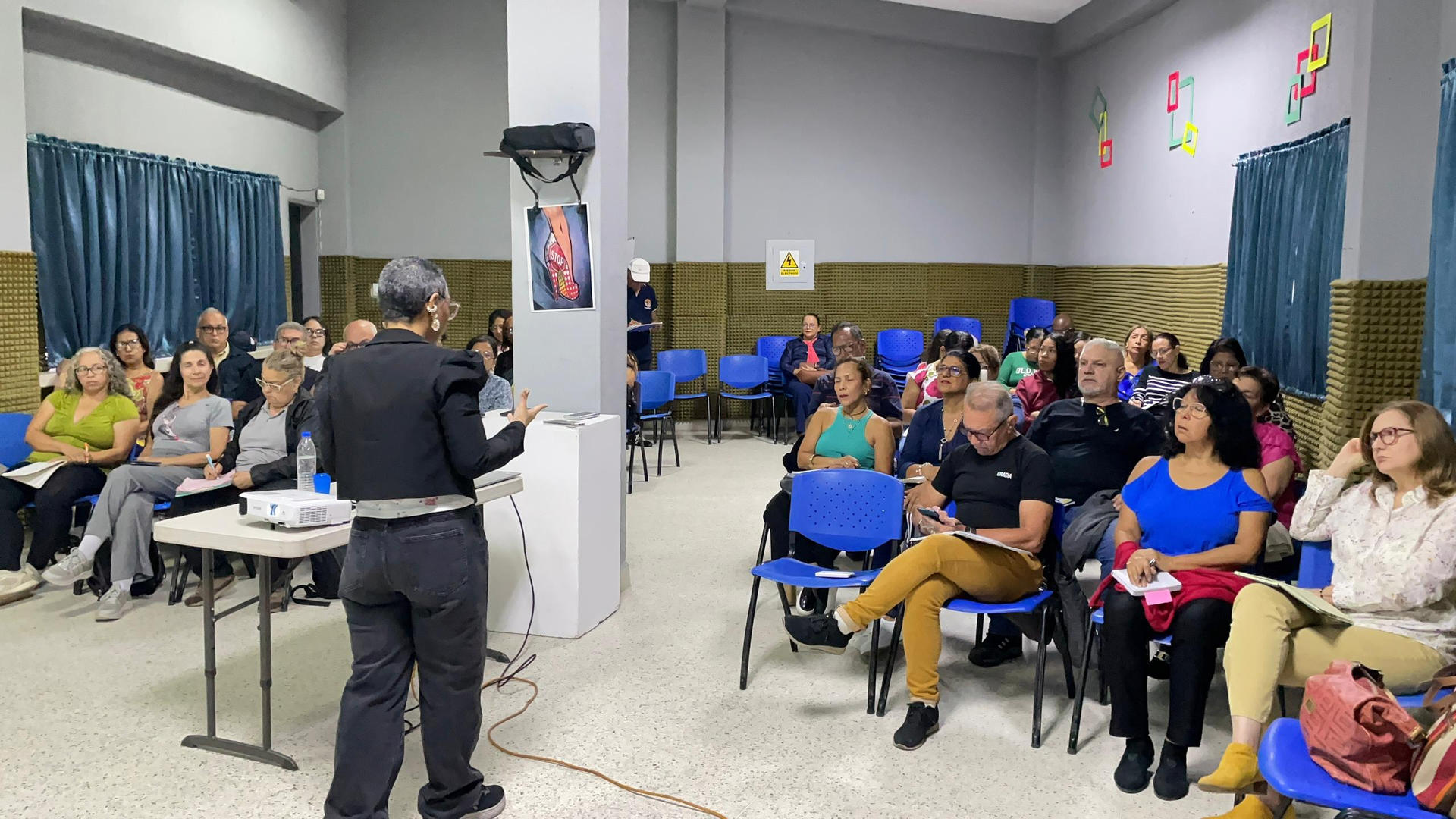
In this scenario, knowledge is capital and technology is the indispensable vehicle for reinvesting it. It is for this reason that Soleir Valecillos, General Manager of the Silvermoon organisation, explains that digital exclusion is a loss of talent, and that is why they support “updating technological knowledge so that people remain relevant within services and the market” and can achieve productive empowerment after the age of 50.
Carmen Bueno Gil, aged 68, experienced this digital barrier first-hand. With two professions under her belt but now retired and caring for her 101-year-old mother, she faced the technological challenge amidst the void left by the family exodus.
“The situation in the country has left us alone in some respects; children, nephews, and siblings have left, so we have to turn to other people to help us with technology. We didn’t grow up in the digital age and this technology is overwhelming; we had to learn,” says Bueno Gil.
For her, taking part in the organisation’s digital literacy programmes transformed isolation into autonomy.
“When we started with Silvermoon, we realised there were many things we didn’t know, such as how to manage security on Instagram, WhatsApp and email. By learning this, we gained the confidence to manage things on our own, such as making a mobile payment, visiting a website or holding meetings on Google Meet – things we couldn’t do by ourselves before. In this country, there is a need for support for older adults, courses that provide guidance and education. Our minds are like hard drives that have been filled with a wealth of experience; now I have more tools to dare to do things,” she emphasises.
Citizens committed to protecting spaces
The impact of this new longevity is not only intellectual or technological, but also humanitarian, as they believe that the neglect of environmental areas can be combated with the experience gained over the years.
One example can be found in the municipality of San Diego in Carabobo state, with the Paseo Orégano Environmental Group, chaired by Mrs Trina Luque Mirabal. This project, driven by local residents and retired university professionals, transformed a local avenue—a space that was previously unsafe and neglected—into an urban forest.
After requesting official information and learning that the adjacent land was earmarked for the community’s urban development and for educational purposes, the group began working every Saturday and to date has planted more than 1,800 fruit, forest and ornamental trees.
As Luque Mirabal highlights, the ecological and social impact has completely transformed the dynamics of the area.
“This has brought benefits for visitors; it is an area for cultural and educational activities, guided school visits, and a stop on the town’s tourist routes. The soil has been restored, and a nursery has been established for a grass called vetiver to stabilise slopes and facilitate water phytoremediation.”
The space now hosts communal meals, yoga sessions and sporting activities to raise funds for the project’s sustainability, with the backing of the San Diego mayor’s office and the Municipal Council.
Civil responses and structural challenges
This community reinvention, however, takes place against a deeply adverse backdrop where material deprivation challenges the daily dignity of older people in Venezuela.
According to the latest 2025 report on living conditions presented by the non-governmental organisation Convite, through its research coordinator, Yaniret Fernández, an alarming reality is revealed: whilst an older person requires between $450 and $500 a month just to cover their food, the average income from pensions and government allowances was a mere $51, and in 2026 this was increased to $70.
This structural gap forces 62% of older adults to rely on financial support from their families in order to survive. Furthermore, the study highlights that 82% of those surveyed state that it is extremely expensive to live or support themselves financially, demonstrating a state of chronic economic precariousness.
The geographical distance imposed by the exodus adds a profound sense of deprivation to the economic crisis: emotional isolation. It is at this complex intersection that Club Tobías was born, an initiative created by Zandra Pedraza and José Rafael Quintana.
The project emerged from weekly meetings of a small group that decided to publish their activities on a music website, immediately attracting the interest of the Venezuelan diaspora seeking alternatives for the wellbeing and support of parents who had remained in the country.
Club Tobias went from occupying a couple of tables in public spaces in 2022 to establishing a network of 10 venues and a digital community of over 90,000 users, sustained largely by that transnational support.
Its founders explain the philosophy behind the gatherings: “We dance, sing, chat, celebrate life and stimulate our minds; we teach people that if you don’t move, you’ll get stiff; we teach them that joy brings much more joy, and also that at Club Tobias we discover talents.”
Within this same associative ecosystem, support networks such as Alianza Plateada, the organisation Convite, Trabajo y Persona itself, and support models such as Hijo Suplente coexist, all aimed at helping older adults maintain their independence and mental health regardless of their circumstances.
However, the consolidation of this entire civil movement as a national asset comes up against structural challenges that limit the realisation of its potential, the foremost of which is the lack of official and up-to-date statistics.
Mauricio Parilli warns that in Venezuela “we lack a great deal of research. We need data to sit down with official stakeholders and develop policies for change”, as without macro and institutional figures, this immense wealth of experience remains invisible to the design of state public policies.
Likewise, the Venezuelan Network for New Longevity advocates for the urgent need for modern legal frameworks to protect the assets of older people, proposing tools for financial independence such as reverse mortgages within the current regulatory framework.
Finally, the marked centralisation of specialist healthcare in major cities remains a severe obstacle to autonomy in the interior of the country, as for a mind to remain productive, the body must be cared for.
Despite this situation, the experience accumulated by the social fabric shows that ageing in today’s Venezuela is not a problem to be solved, but an opportunity for the country, as Parilli concludes:
“The aim is for us to stop seeing older adults as a problem and to see them as an opportunity to expand services and ensure quality of life”.
Disclaimer: This article is written as part of the Forus journalism fellowship programme. Learn more here