© Forus
2025-11-19
Kasumi Ranasinghe - Mannar Voices: Data Colonialism, Conflict, and Community Sovereignty
This article was written by Kasumi Ranasinghe Arachchige as part of the Civil Society Alliances for Digital Empowerment (CADE) Youth Voices for Digital Rights programme in partnership with Forus.
This report was produced in joint forces with the Happy Voice Hub, a multidisciplinary youth collective based in Mannar.
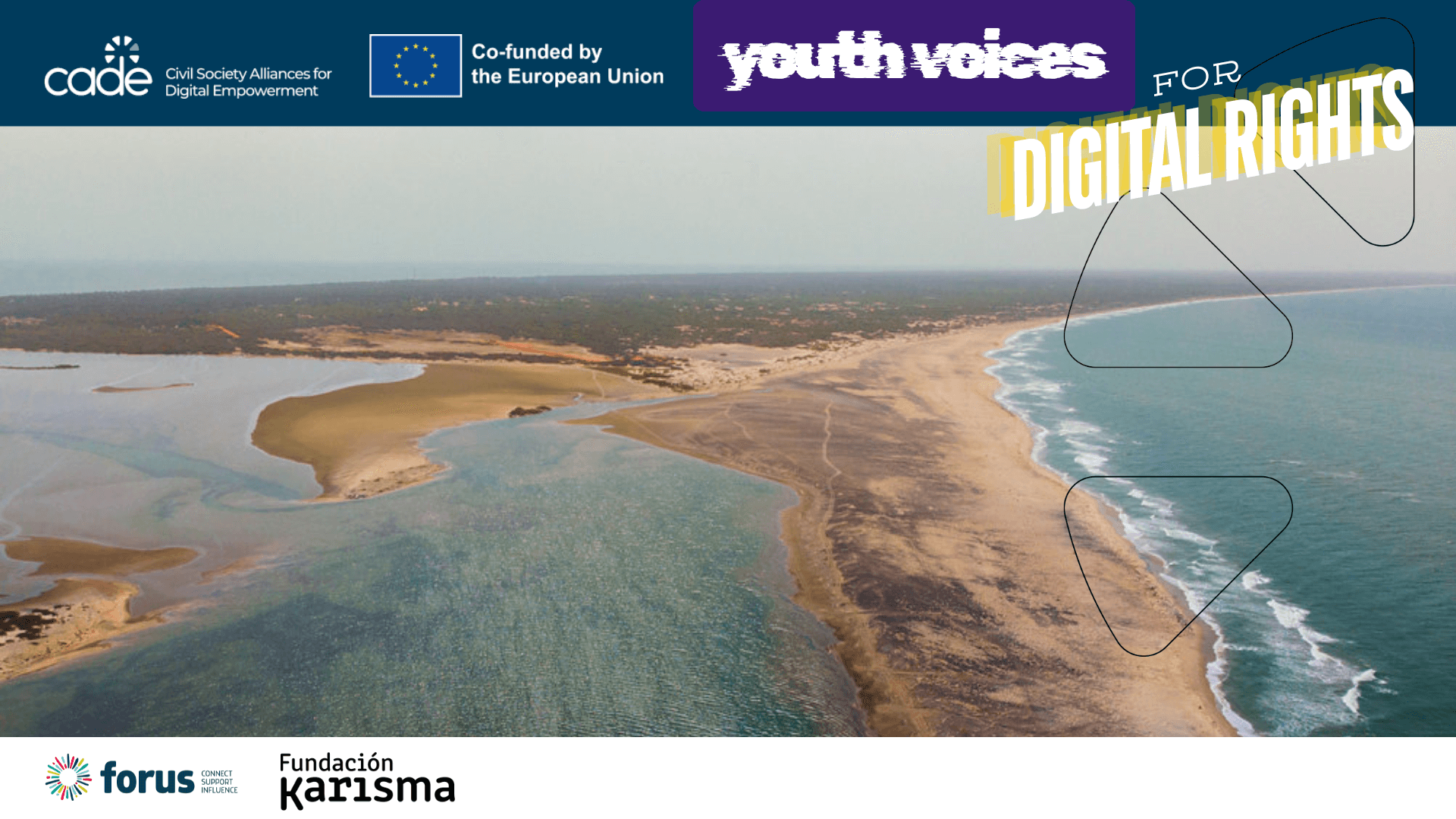
Mannar Island is located in the North Western Province of Sri Lanka and has a population of approximately 66,087, comprising over 17,835 families residing in roughly 12,840 housing units. The local economy is heavily dependent on the fishing industry, with a large portion of the islanders also engaging in agriculture. Known as the second-largest fishing area in the Northern Province, Mannar Island achieves an impressive annual average fish harvest of about 17,500 metric tons (People’s Alliance for the Right to Land, 2025). In addition to these livelihoods, Mannar Island is characterised by numerous important natural ecosystems. These include diverse habitats such as mangrove forests, salt marshes, thorny scrub forests, coastal plant communities, and sand dunes. These terrestrial ecosystems, along with related shallow marine areas like seagrass beds, mudflats, coral reefs, sandbanks, and reef ecosystems, have all been declared protected areas under the Fauna and Flora Protection Ordinance.
Defining Data Colonialism on the Ground in Mannar
For the youth of Mannar, data colonialism is not an abstract concept; it is the physical experience of being observed, extracted from, and overruled. It manifests in various forms of masking the intent and of the data collector, which gets represented in two key ways: first, through unilateral, secretive studies where outsiders arrive to study the land, environmental conditions, and geography (e.g., for wind farm sites or ilmenite mining) without community consent or collaboration. As one activist noted, while land maps and environmental data were collected for windmill projects, no community member was consulted, nor did they receive any benefit from such processes. The data then gets used to justify projects, not to inform the community.
Secondly, data colonialism is seen in the transactional exploitation of vulnerable people. Corporate microloan and investment companies show up disguised as researchers and even university students to identify, help with, and mitigate community-based problems, and collect highly sensitive personal data. This information includes family and working history, everyday habits and daily routines, including TV Shows and Channels, often targeting women and youths, without transparency regarding the ultimate use or security of this personal information. They also target fisher communities and Palmerah communities, often promising benefits for sharing information, but disappearing soon after.
In the context of environment or political aspects, although data gets collected, the implementation may be slow, as one activist noted. These include officials across various fields conducting assessments without revealing the purpose. Political figures use generational tricks (i.e, exploiting generations repeatedly), with no accountability. Corporations often don’t need to collect data locally because they can get it directly from the government, but primarily, microloans and investment sectors acquire personal data aggressively, resulting in the exacerbation of already existing multi-layered issues for these communities.
The Digital Divide and Weaponisation of Information
The digital landscape in Mannar presents a paradox: while technology has connected the community, it has also created new vulnerabilities. Activists face content suppression, with posts about protests often taken down. More broadly, digital literacy is inaccessible—a significant portion of the population uses social media mainly for entertainment and struggles to receive support to navigate algorithms to suit their needs or to distinguish between official news and fake news. Furthermore, not knowing about information tracking leaves communities susceptible to manipulation and misinformation.
This vulnerability is compounded by digital poverty, driven by the high cost of data and unreliable, disrupted internet access, which isolates youth from essential opportunities like education, workshops, and campaigns. This isolation forces young people to migrate to other districts or countries for job security, where they face discrimination, especially due to certain barriers (language, biases in the workplace, etc.), and are often forced into jobs requiring strenuous labour or indirect external harm.
When 'Scientific' Data Overrules Generational Knowledge
The conflict between corporate or government data and community knowledge is stark. Companies proposing large-scale development, such as wind farms, sand mining, and the proposed ADB-funded expansion of the Pesalai harbour, consistently present "scientific data" claiming "no environmental damage" or promising "clean energy."This official data is used to justify profits and bypasses the lived realities of locals and their impact on social, economic, and environmental aspects.
This devaluation of knowledge contributes to an unawareness of ecological protection and defends harmful practices like bottom trawling, often rationalised as "traditional work." The crisis deepens when comparing the capacity of local trawlers ( 25kg~ 70 kg) to that of foreign trawlers (up to 1 metric tonne), highlighting the scale of resource destruction. This instability forces local fishermen into a day-to-day survival mode with little to no opportunity for savings or diversification, demonstrating how external data and existing economic models actively devalue and erase intergenerational knowledge and expertise.
The Vision for Community Sovereignty and Action
The Mannar youth activists’ dream for Community Data Sovereignty is a future built on three foundational rules:
-
Consent and Transparency: Any outsider collecting data must first gain consent from the community and provide a clear, official identity ("no wearing a mask").
-
Reciprocal Sharing and Clarity: The data collected must be shared back with the community in a format (and languages) the community can easily understand, allowing them to verify its truthfulness and challenge government or corporate misinformation.
-
Local Benefit and Non-Harm: The purpose of the data must benefit the local people and must never intend to cause harm or exploitation.
Currently, “outsiders” often come to collect information and then disappear. When external individuals arrive, even community members may trust them simply because they offer an idea, unaware that these people—sometimes posing as university students or corporate surveyors—are gathering information under a "mask" of benign intent. There must be a requirement for an official identity or proof of who they are and what they represent.
Finally, there must be established mechanisms to provide privacy and security for the data providers.
The most potent metaphor for their struggle was "a fishing net discarded by outsiders." As visualised, foreign entities throw a used net into their sea, taking away all the fish and their environment (data and resources), and leaving the sea empty for future generations.
The single most important message they wanted people to understand is: "Just like passwords, we need to protect our data, and we need to make sure data collection is safe. Don't decide our future without us—true progress must come with respecting community knowledge, consent, and rights."
Kasumi Ranasinghe Arachchige is an integrative researcher and advocate with eight years of experience dedicated to mental, communal and planetary well-being. With a Master's in Clinical Psychology, she specialises in health and climate resilience, applying an ecopsychology/intersectional lens to bridge with environmental, social and digital engagements. As the Co-Director of The Biodiversity Project, she has extensive experience in using digital advocacy to combat disinformation, elevate community voices, and foster a rights-based digital future. Her work is driven by a commitment towards a more just and fair future by creating positive change through interdisciplinary approaches and collaborative partnerships.

Disclaimer: This article was co-funded by the European Union. Its contents are the sole responsibility of Forus and do not necessarily reflect the views of the European Union.
2025-09-29
News
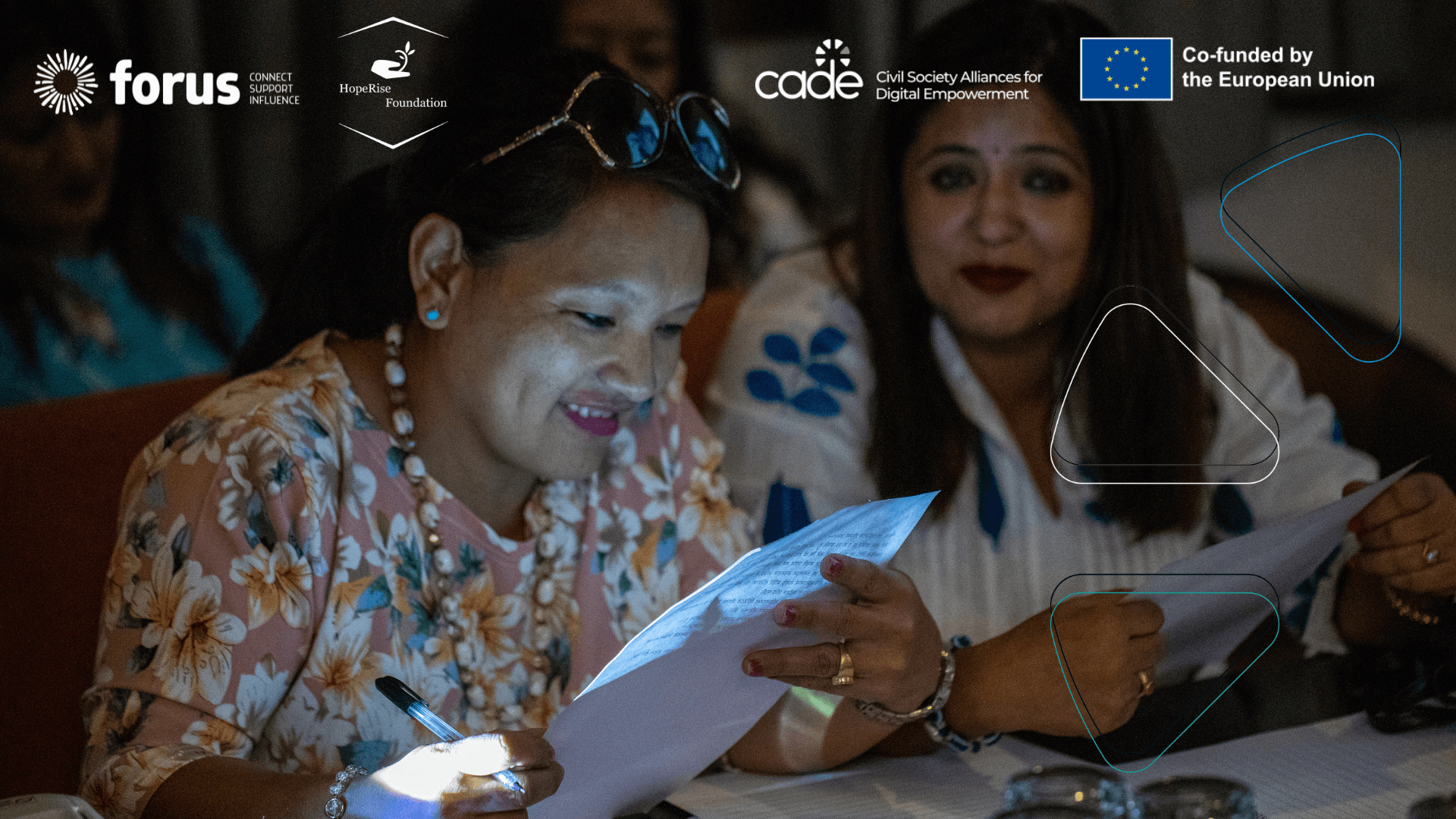
Raising Her Voice: how Nepali women are using storytelling, digital media and AI to change the narrative Over 40 young women from Dalit and Janajati communities came together for Raising Her Voice, a HopeRise Foundation Nepal initiative with Forus support as part of CADE, that turned their personal stories into creative, and digitally shareable narratives. HopeRise Foundation Nepal is one of the winners of the CADE AI artivism call as is a community mobiliser for the #Let's Talk Digital campaign.
2024-10-01
News
Combating Violence and Digital Threats in Central Africa: The Role of Regional Initiatives The proliferation of online bullying and violence is a fundamental challenge to maintaining stable and prosperous African societies. Whether improving infrastructure, raising awareness or participating in internet governance forums to shape policy and practice, Repongac actively contributes to these forums by advocating for policies that enhance digital security and protect against cyber threats. It shares the challenges and opportunities ahead as a regional coalition in Central Africa.