2023-03-07
Lina Al Hathloul: “Saudi voices are not heard enough”
Lina Al Hathloul is a Saudi activist known for her advocacy to free her sister, Loujain Al Hathloul and to bring to light the situation of women and human rights activists in Saudi Arabia. For the March With Us campaign, we spoke with Lina about gender justice in Saudi Arabia and about her new illustrated book Loujain Dreams Of Sunflowers.
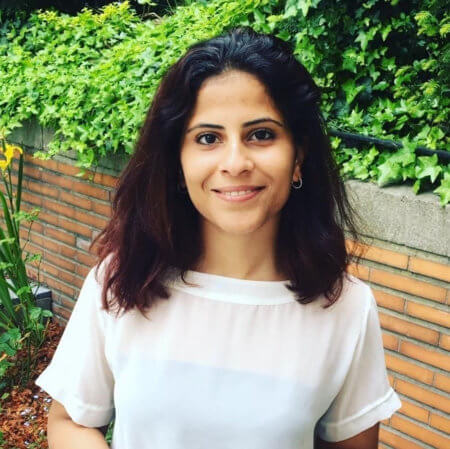
Lina Al Hathloul
Since her older sister was detained in May 2018, alongside more than a dozen other women human rights defenders, Lina Al Hathloul, 27 years old, has become a tireless advocate against the widespread mistreatment and torture of prisoners such as her sister at the hands of the Saudi government.
Lina can you tell us a little bit more about yourself?
I first started my activism when my sister Loujain was arrested back in 2018. Loujain was the real activist on the ground in Saudi Arabia. She was one of the women leading the women to drive campaign, she was also fighting to dismantle the male guardianship system, which is a system in Saudi Arabia, that considers women as minors until the end of their lives. Loujain was also in the process of opening a shelter for women who were victims of domestic abuse. For her activism, she got arrested and she got brutally tortured. For months, she was forcibly disappeared, she went into two hunger strikes only to be able to have family contact. She was sentenced as a terrorist to a bit over five years. She has now been released, but she is on a travel ban, meaning that she cannot leave Saudi Arabia. My whole family cannot leave Saudi Arabia. So I am now in Brussels, away from my family. I started fighting for the release of my sister. When she was released, I really couldn't go back, or unsee what I had seen, knowing that other people are still behind bars. And so I now work officially in a Saudi NGO called ALQST. I monitor the situation in Saudi and I'm the head of advocacy.
Can you tell us what the priorities in terms of human rights are in Saudi Arabia?
It's a very difficult question, because the context in Saudi Arabia is as hard as ever given that they're basically two Saudi Arabias: one is that which the world sees, and one is underground. It's very difficult to fight for people when the image that the world has of Saudi Arabia has changed. Since Crown Prince, Mohammed bin Salman - MBS, as we know him in the West, has taken the position of power, Saudi Arabia has really turned into a police state by excellence. In this context, you cannot truly talk about what rights or freedoms are violated because everything is a violation of your rights.
What we try to do now is to read, to document all these violations, although it's very difficult, because even core documents are very hard to get now. What we noticed recently is that there have been unprecedented harsh sentences on people, not famous activists, but just people who express their opinion. There has been a total wipe out of civil society in Saudi Arabia and everyone is muzzled. You won't find one person criticizing the government, you won't find one person who is not applauding the government. One case, for example, that we really are focusing on, is Salma al-Shehab, who was arrested. She is a student of Leeds University in the UK, doing her PhD. She went back to Saudi Arabia for vacations but once she arrived in Saudi, she got arrested, based on her tweets, and retweets. The tweets were ones where she was standing in solidarity with Saudi activists, including my sister, Loujain, and retweeting tweets of myself and other activists where we talk about prisoners of conscience. For that, she got sentenced to 34 years in prison. Given that Saudi Arabia is doing so much PR on trying to cover up what is going on and trying to improve its image, we try to point to the reality and make sure that the false image is broken. We bring attention on the violations and the reality on the ground.
The context in Saudi Arabia is as hard as ever given that they're basically two Saudi Arabias.
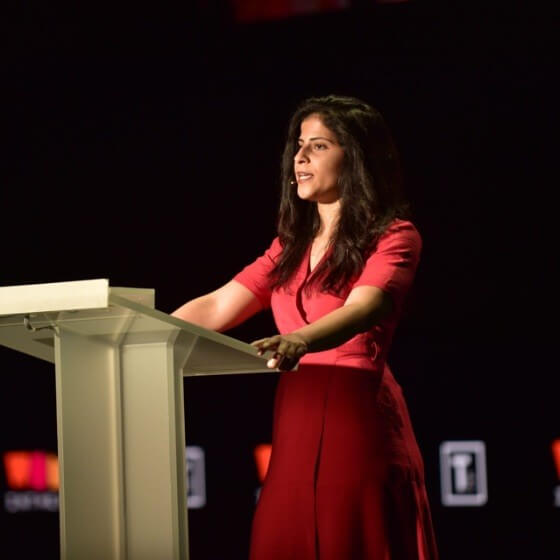
You grew up in Saudi Arabia, can you tell us how it was ?
When I was in Saudi Arabia, I was not in a Saudi school. So I did not live the reality of Saudi women. I cannot put myself in the shoes of someone who lived the harsher life of a Saudi woman. But again, I think it also says a lot about the Saudi context. If you come from a good family, you can live like a queen. We could travel, we could study, we could work because our father was okay with it. If you come from a family that will allow you to enjoy these freedoms, you will, if not, then, you are at the mercy of a male guardian. You know, just when I arrived in Saudi, even swimming pools, hair salons, all of that was forbidden. It was difficult.
And going back to the power of narratives, you have recently released a book called Loujain Dreams Of Sunflowers. Can you tell us more about it ?
When my sister was in prison, she was defamed by one of the richest, most powerful governments in the world. The government had so much money to tarnish her image, to say that she's a traitor, a terrorist, and so on.We had to counter this narrative. When I was in Geneva, to speak at the Human Rights Council about my sister's case, I was with a mother who had invited me and she had also founded the free Saudi activists coalition, I had dinner at her place and her daughter who was five years old, kept asking us why Jane was in prison. It was so difficult for me to explain to a child what was really going on. So her mom and I thought we should maybe try and explain the story to kids and to make them realize that you actually have real heroes. That's when we started the process of writing this book, to inspire little kids. And second, for me as a sister, I wanted to immortalize her name and make sure that the coming generations think of her as the hero she is. The story is a very magical story of a girl who lives in a world that is not so colorful, it's almost black and white, and where only men are allowed to wear their wings and fly to a colorful world where there is a field of sunflowers.
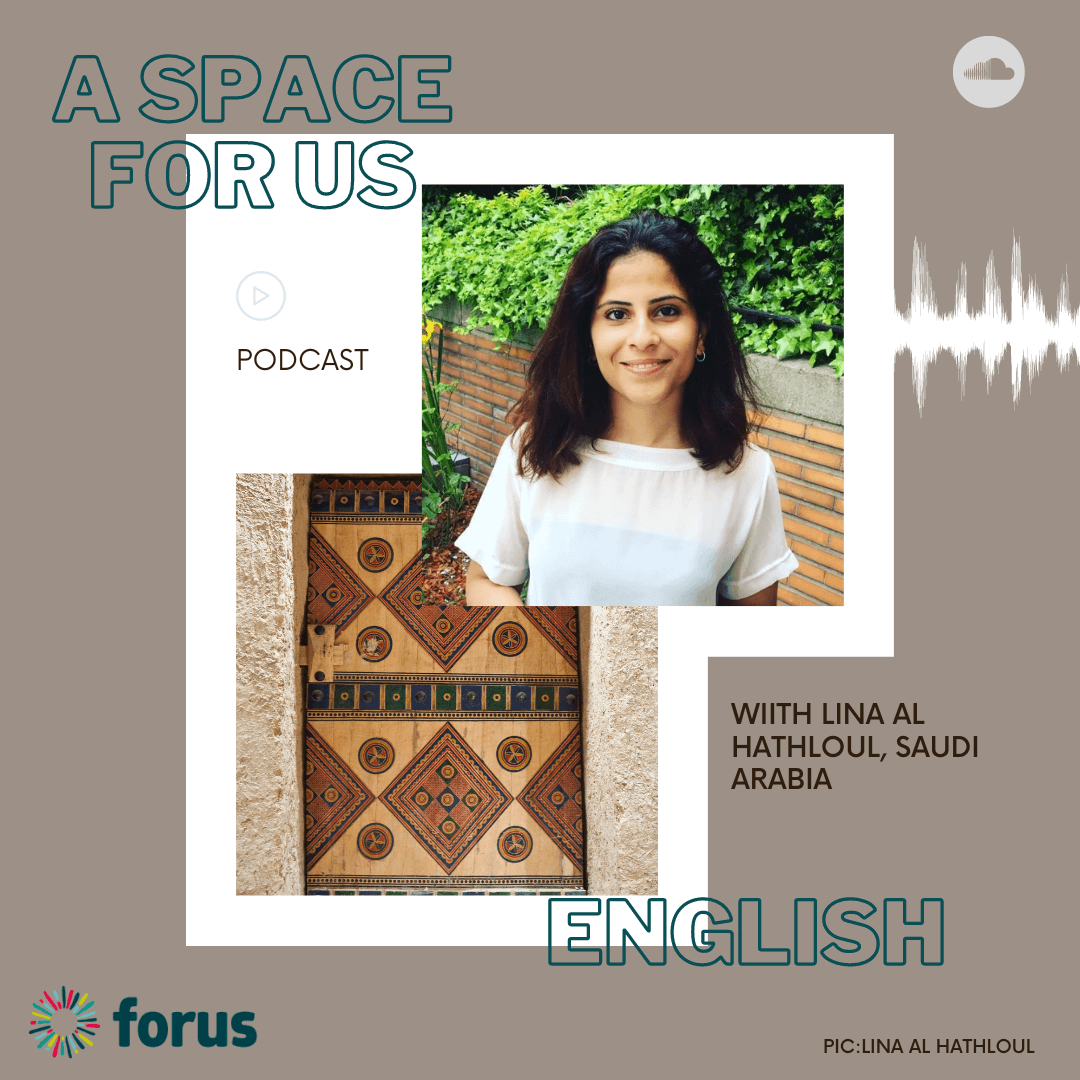
EN - Lina Al Hathloul on human rights in Saudi Arabia
Activists and civil society organizations are increasingly targetted and labeled as troublemakers and terrorists. How can we develop alternative narratives ?
The counterterrorism law in Saudi Arabia is very vague, and anything can be considered as terrorism. We have to work on the law first, and have the real terrorism acts defined clearly. The cybercrime law as well needs to be changed, as anything done on the internet can be considered as a crime now. I think Saudi voices are not heard enough. So I think it is important for NGOs to be supportive and to stand in solidarity and raise the voices of Saudi civil society, and it is exactly what you are doing here with me.