
Sat 30 Sep 2023
Opinion - Influencing the Architects of Finance: How civil society can impact Public Development Banks
Public development banks are considered key players in financing and catalysing projects that promote sustainable development, economic growth, and social progress. But are the public funds financing such projects aligned to communities' development goals? And who gets to influence this process?
The Finance in Common Summit (FICS) reunites over 400 public development banks under one roof, yet many representatives from civil society organizations have questions about whether it is beneficial for them to participate in the event. They ask, why should we even attend?
Clearly, civil society has experienced frustration in taking part of past FICS, triggering serious doubts about the value of their participation in this process. Let's delve into some critical insights gained from the most recent FICS event, which took place earlier this month in Cartagena, Colombia. These insights may shed light on the potential benefits for civil society participants and highlight our main priorities and requests.
So, what happened this year?
The 2023 Cartagena Summit marked the fourth annual gathering of the FICS, attracting approximately 1,400 in-person attendees, including representatives from 50 civil society organizations worldwide. It is important to note that in previous FICS events, civil society often found themselves on the sidelines, feeling like mere observers rather than active participants. However, this year was different. Civil society, including community leaders and indigenous groups, played a more prominent and engaged role in shaping the FICS programme. This shift was the result of persistent efforts to secure a meaningful seat at the table.
Overall, 24 civil society representatives spoke at 14 FICS events, and took leadership in 2 important sessions, Plenary 5: Public Development Banks (PDBs) Collaboration with Civil Society and Inclusion of Human Rights, co-hosted by the Human Rights Working Group and Public Development Banks, and a side event entitled “Strengthening CSO-PDB Relations”, co-hosted by Forus and the FICS Secretariat. During the FICS, civil society and community activists showed their strength and solidarity by engaging directly with Public Development Banks, speaking truth to power on issues concerning human rights, civic space, development finance, and climate change, sustainable development, and biodiversity.
In the weeks ahead of the FICS, civil society prepared the 2023 Civil Society Declaration on FICS, signed by around 100 civil society organisations and networks working at community, national, regional, and global levels located in about 50 countries. The declaration calls on PDBs to move from words of good intent to concrete actions that center communities, with people - not profit - at their heart.
A key objective of the 2023 FICS was to bring together Public Development Banks from across the globe “to showcase their crucial role to make finance more inclusive and more sustainable”. However, discussions weighed heavily on increasing the volumes of finance, from millions to trillions rather than on improving how financing is used and for whose benefit. The FICS coalition manages 23 trillion USD in assets and about 2.5 trillion USD in annual investments, more than 10% of total investment flows.
The greater focus on quantity rather than quality remains a continued concern by civil society- given how public financing of projects has not demonstrated delivery of the development outcomes needed to reduce poverty, inequality, and community vulnerability to climate shocks.
This message echoed this week at the SDG Summit and UN General Assembly in New York: governments must intensify their efforts as progress on the Agenda 2030 is slowing down. A key element of this challenge involves reshaping the financial framework and who gets a seat at the table.
A glaring observation at FICS was the domination of male representation and speakers in the various sessions on topics such as sustainable finance and infrastructure, financial inclusion, and the just energy transition. Public Development Banks will not be able to address issues of inequality without better representation of women in their management and decision-making structures, including representation at major events such as the FICS.
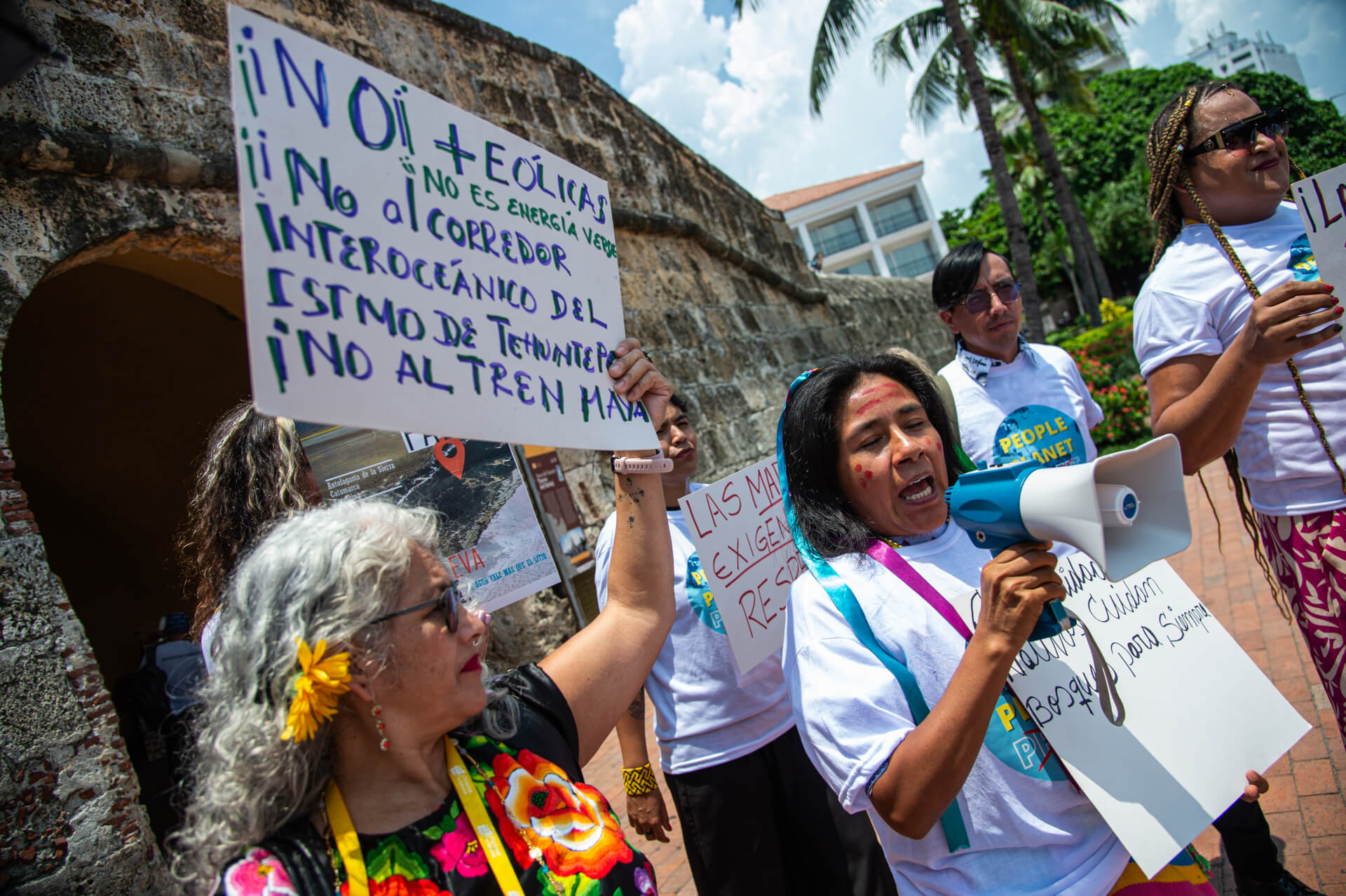
Another important concern raised by civil society at the FICS was on how affected communities continue to face increasing threats when speaking out, criticizing, and opposing projects funded by Public Development Banks. Civil society, including community representatives urged all to make efforts to guarantee safe spaces for inclusive and meaningful participation and to strengthen accountability and effective environmental and social safeguards at the FICS. Civil society leaders and activists made their clear demands both inside during formal sessions and outside the Cartagena Convention Center - an action coordinated by the Coalition for Human Rights in Development - with placards concerning human rights, accountability and equitable access to social services, calling for development for the people, by the people.
Many of the discussions by Public Development Banks at the FICS underscored the importance of mobilising private sector finance through various innovative financial solutions such as through the reallocation of IMF (International Monetary Fund) special drawing rights (SDRs), blended finance, green bonds, and climate debt swaps. However, many civil society organisations raised questions on these so called “innovative solutions.” EURODAD for example explains that a ‘finance roadmap and Global Green Bond Initiative are just some of the measures that will serve to aggravate the lack of democratic oversight of funds, increase the debt problems in the global south, and deepen the prioritisation of private interests over public wellbeing’.
Another view is that while Public Development Banks emphasised the need to support debt clauses especially at times of climate crises for developing countries, more needs to be done to provide greater concessional finance and grants for low and middle-income countries, especially those most vulnerable to climate shocks. An African- based Public Development Bank made a call for increasing concessional loans during a FICS session on “PDB’s Response to the Summit for a New Global Financial Pact.” Voices amongst Public Development Banks on this topic were far too few and more needs to be done in to deliver concrete solutions especially for highly indebted low- and middle-income countries.
Despite civil society concerns, the Cartagena Summit showed how the FICS can still be a constructive platform for civil society and Public Development Banks to engage one another to address today’s most pressing challenges. One such issues is on the need for a new model to deliver inclusive, sustainable development, which encompasses both the SDGs and climate agenda. For many, the question still remains on the how.
While the 2023 FICS was an important space to initiate dialogue, much deeper and more regular platforms for engagement are needed, including at local, national, and regional levels – and with communities affected by projects funded by Public Development Banks.
Despite civil society calls for engagement with governments and Public Development Banks at country level, such platforms rarely exist and there is still a high degree of opaqueness on information about loans and operations carried out by Public Development Banks.
Any new thinking on a reformed global financial architecture will require Public Development Banks to demonstrate greater levels of transparency, accountability, and engagement with civil society. The time to start is now, and the FICS can be an important vehicle to support this action.
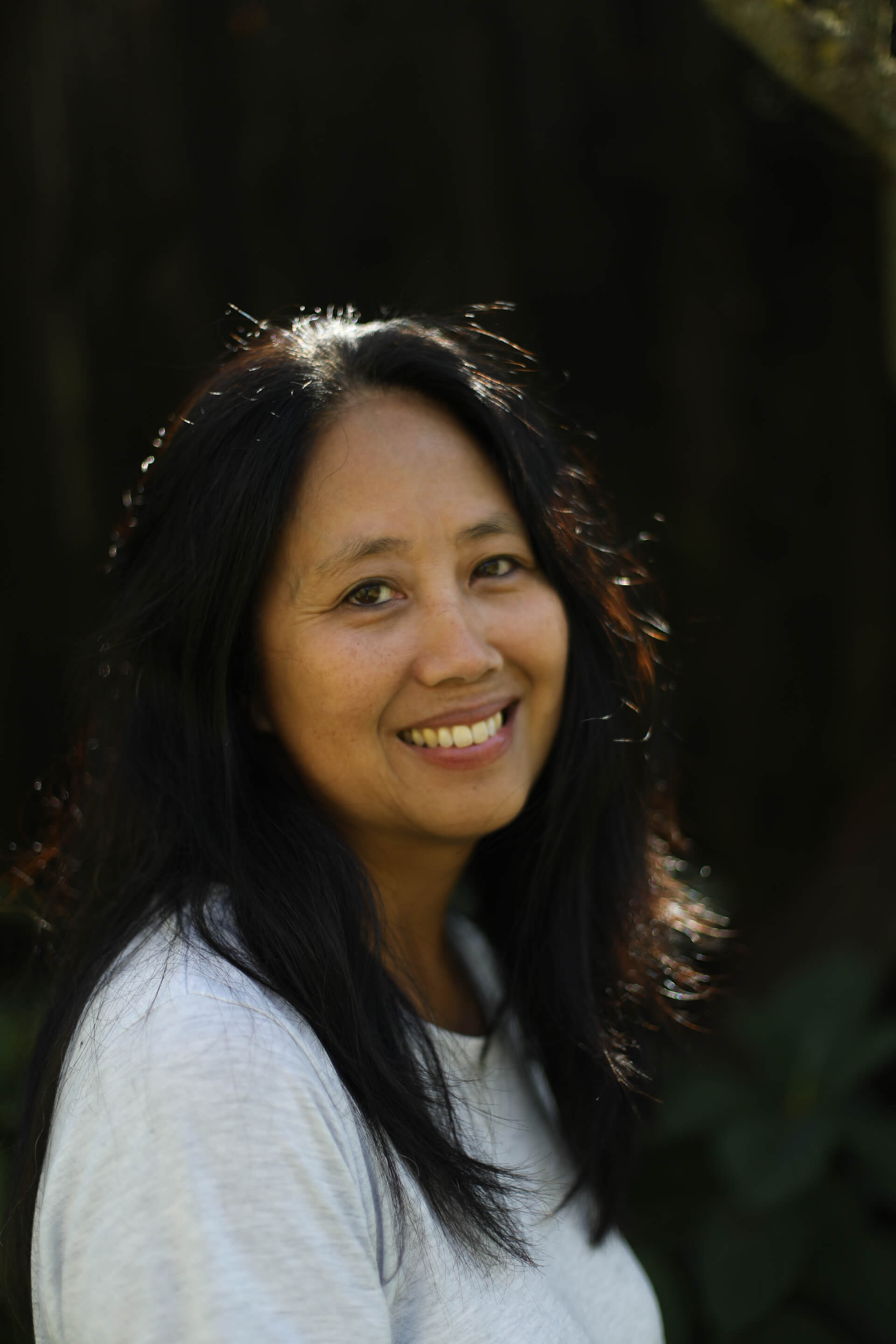
About the author: Marianne Buenaventura Goldman is Forus Project Coordinator for Finance for Development and Civil Society Focal Point of the Finance in Common Summit (FICS). She has over twenty years of experience working on sustainable development in Africa / Global South. Prior to joining Forus, Marianne worked with Oxfam South Africa as the Global Impact Manager and with Oxfam International as the BRICSAMIT Strategy Manager, providing support to Oxfam Southern Affiliate offices and partners to engage in international fora such as the UN, BRICS, G20 and in International Financial Institution platforms. Marianne is passionate about linking local to global campaigns and believes in the role of communities to be an integral force for change, with emphasis on women and youth through evidence-based influencing (research and media), movement building and collective action. Marianne has also worked with CIVICUS as Membership Manager (Johannesburg) and with the International Rescue Committee in the East and Central Africa region.