



Mon 30 Sep 2024
Redefining and Enhancing the Quality of Official Development Assistance –ODA- for Sustainable Development
Official Development Assistance (ODA or aid) continues to be a crucial source of financial support for many countries, as it helps fund the budgets that provide essential public services, particularly in least developed and low-income countries. Despite this, ODA must extend beyond traditional benchmarks and become more authentic in addressing the real needs of communities, particularly in the Global South. The focus should shift towards bold ideas, innovative solutions, and new ways of thinking that reflect the perspectives and needs of recipient countries, ensuring these are not only heard but effectively implemented.
Specifically, there is an urgent need for ODA to evolve beyond traditional financial benchmarks, such as the long-standing 0.7% Gross National Income target for donor countries.
“While this target remains an important measure of commitment, it is no longer enough,” says Oyebisi Oluseyi of the Nigerian Network of NGOs (NNNGO).
The key issue is not only the amount of aid provided but how effectively and inclusively it is delivered. Global crises like climate change, conflict, and economic instability are intensifying, making it more urgent to transform ODA into a tool for long-lasting, locally led change in recipient communities. With the Global South bearing the brunt of many of these challenges, ODA's relevance and approach need to be reassessed.
“At the heart of this conversation is a question we must all ask ourselves: How can we ensure that ODA is not just a top-down tool, but a mechanism for genuine partnership, inclusion, and sustainable impact?” asks Oyebisi.
How can ODA be redefined, how can we shift the power dynamics towards recipient countries and communities, and how can we ensure that ODA is used in ways that truly address local needs and priorities? Some of the most critical issues affecting ODA’s effectiveness are the risks of inflated aid, the push toward privatization, and the urgent need to focus on local actors in decision-making processes.
There needs to be redefinition of ODA, shifting decision-making power toward recipient countries and communities. This is tied to the need for improving the quality and coherence of ODA, particularly in light of emerging concerns such as inflated aid, privatization, and the diversion of funds from development priorities to other areas like climate finance or refugee support. Promoting localisation, advocating for greater involvement of local actors in ODA-related decision-making and implementation processes is key for the way forward, according to Zia ur Rehman of the Pakistan Development Alliance (PDA) and coordinator of the Asia Development Alliance (ADA).
According to Luca de Fraia from ActionAid Italia, when discussing ODA, “three key aspects come to mind: the type of loan, the level of commitment, and the rules”. He points out that the most complex issue is determining who sets the rules regarding what qualifies as ODA. De Fraia explains that while there is a standard definition of ODA, many donor countries interpret these guidelines in ways that often overlook the priorities and needs of the recipient nations.
“There is a need to change the rules about decision-making,” says de Fraia. “We need to move towards a more inclusive process”.
Sarah Strack, Director of the global civil society network Forus echoes this sentiment: "How can we bring about behavior change? The redefinition of ODA is crucial to shifting power toward recipient countries and communities. We need practical strategies to enhance the quality, transparency, and coherence of ODA as well as a reinforced commitment to localisation. We need to trigger the political will to go to the core of what ODA is meant to be and what we want to achieve in terms of sustainable development”.
She adds, “this is pivotal moment with the Fourth International Financing for Development Conference taking place next year in Spain, where we need to set the founding steps for a new and revitalised architecture that is more equal and impactful for those most in need.”
Similarly, Vitalis Meja, co-facilitator of the workstream on international development cooperation for the Civil Society Financing for Development Mechanism, calls for a redefinition of ODA that places the needs of recipient communities at the center. Meja highlights that for ODA to be genuinely effective, the power dynamics must shift, allowing recipient countries to have a greater say in how funds are allocated and used.
“The issue of changing behaviors, changing attitudes and narratives is very political,” says Meja. "It's about changing the narrative and encouraging citizens- especially in the Global North - to push and pressure their governments to ensure that the collectively defined norms on global platforms are respected and upheld," says Meja, adding that the so-called Global North is largely responsible for failing to meet internationally agreed-upon targets, often offering various excuses for their shortcomings.
"Even if we introduce a new narrative, if it isn't embedded in the public psyche, whether in the Global North or the South, nothing will change."
Meja highlights the importance of empowering countries in the Global South to take ownership of their development agendas. He explains, "Countries in the South want country leadership and ownership, where they set the agenda, priorities, and resource allocation, while development partners or donors align and harmonise their support to those plans. This is critical for them. As civil society representatives, we are advocating for more democratic ownership. This means that citizens are actively involved in designing, planning, budgeting, and implementing these priorities. To change the narrative, much more work is needed to engage citizens in these discussions, as sustainable political pressure can only come from them."
Ali Kamal, Chief SDGs at Pakistan’s Ministry of Planning Development and Special Initiatives, shares his insights from a Global South perspective, underlining the importance of pushing for localisation. ODA is most impactful when it reflects the needs of local communities. Supporting local actors in ODA decision-making ensures that development efforts are better aligned with ground realities, making aid more effective and sustainable.
“We need context-specific solutions and accountability to local populations,” Ali Kamal shares.
In terms of enhancing the quality and coherence of ODA, Corentin Martiniault from Coordination SUD, the national civil society platform in France, emphasizes that ODA must address basic social needs and human rights, stressing that the social dimension of aid should not be sidelined by broader development goals. He underscores one of ODA's key pillars—its social dimension, aimed at improving the well-being and daily lives of people. However, he notes, "This dimension is lagging behind. The increase in ODA is not being reflected in its social impact."
He argues that more ODA needs to be redirected toward basic needs like education, healthcare, and to vulnerable countries where access to these essentials is deteriorating, which are central to Agenda 2030 and the SDGs.
"If we look at the data, only 9.5% of ODA goes toward basic needs. When we claim that basic needs are a low priority, it raises serious questions,"says Martiniault while calling for a more holistic approach that prioritizes the welfare of communities that have been historically marginalised.
Martiniault also highlights that the social aspect of ODA extends to supporting new forms of collaboration and partnerships, especially with civil society organisations -vital in advancing development, addressing issues such as human rights and gender equality, and serving as a bridge to communities.
Similarly, Alex Farley from Bond, the national civil society platform in the UK, raises concerns about inflated aid, explaining how funds intended for development are often redirected to other pressing issues like climate or refugee support, which, while important, can detract from core development objectives. She urged for reforms to refocus ODA on its original purpose of supporting development.
“There is a real lack of political will among donors at the moment to the 0.7% GNI commitment and governments are increasingly finding ways to reach the target without actually putting up more money, contributing to this sense of inflated ODA budget,” explains Alex, underscoring the need for clearer guidelines on how ODA is allocated, using the UK as an example.
"At Bond, we and our members are urging the UK government to stop counting the costs of supporting refugees and asylum seekers domestically as part of ODA. Instead, we want these costs to be covered by other sources, allowing ODA funds to flow to the countries abroad where they are most needed. On a deeper level, the issue of inflated ODA highlights the importance of establishing clear rules on what qualifies as ODA and ensuring accurate reporting. ODA is being used as a geopolitical tool with national interests in focus, when it should be a mechanism for redistributive justice."
Providing a perspective from the Pacific Islands, Emeline Siale from the civil society regional coalition PIANGO, underscores the need for local actors to play a leading role in ODA decision-making, not merely as participants but as leaders. She stresses that local organisations and communities should be empowered to shape the use of ODA to reflect their specific priorities.
Siale emphasizes the need for a healing approach when addressing inequalities, particularly in the Pacific. "We need a healing process when we deal with people. The inequality in the Pacific is so vast that our interventions must focus on healing. This involves engaging communities in decision-making and involving citizens in creating programs that promote better lives and standards. Community participation itself is a healing process, and it's become a central topic in many civil society discussions. We need to ensure that people are always involved in decision-making. The spaces for civil society engagement must allow us to develop our own positions because this is a negotiated space,” Siale explains.
“There are times when donors come and ask us what we want - what the Pacific wants - and we don’t have an answer because there hasn't been space for civil society to come together, discuss, find consensus, and agree on a unified position."
Hideki Wakabayashi from the Japan NGO Center for International Cooperation (JANIC) and the civil society think tank THINK Lobby, explores the intersection between ODA, development financing, and peace and security, with a particular emphasis on East Asia. He highlights that while development aid can play a vital role in promoting stability and peace, it must be effectively managed to avoid fueling conflict.
"We have to understand the realities of international politics and security, acknowledging that countries have the right to defend themselves, but we must find a balanced approach between defense budgets and increasing our ODA budget. International cooperation is essential for addressing threats like extreme poverty and protecting basic freedoms to stabilize the region through multilateral relations. Sustainable development cannot exist without peace, and peace cannot thrive without sustainable development. To strengthen development finance, we need to gain public support and present a realistic case for regional stability," says Hideki.
Matthew Simonds from Eurodad discusses the growing trend of ODA Private Sector Instruments, warning that such practice can undermine the transparency and accountability of aid efforts. He calls for governance reforms that would allow recipient countries to have a stronger voice in decision-making.
“It's true that the narrative about private sector and development cooperation has really picked up in the last decade or so, but it's been part of the general approach for quite a bit longer especially within the donor community and their institutions,” says Simonds adding that the liberalisation, free market and private sector oriented approach has always been at the heart of the donor agenda. “More recently however there has been a more obvious shift of using ODA to support private sector activities.”
According to Simonds, the trend reached “fever pitch” when the World Bank introduced the Buzz phrase "turning billions into trillions," suggesting that trillions in development financing are necessary to achieve the SDGs, while currently, only billions are available, pointing to the urgent need to leverage public funds and ODA to attract private investment to fill the financing gap.
“A majority in civil society have always been skeptical of this effort to engage the private sector and private finance, not least because the motivations of the private sector are by and large at odds with the role and purpose that we envision for development cooperation,” he adds.
With tension between maintaining ODA's core development mission and adapting to competing global priorities there is the need for reforms that ensure ODA remains focused on sustainable development while addressing the challenges posed by new global crises.
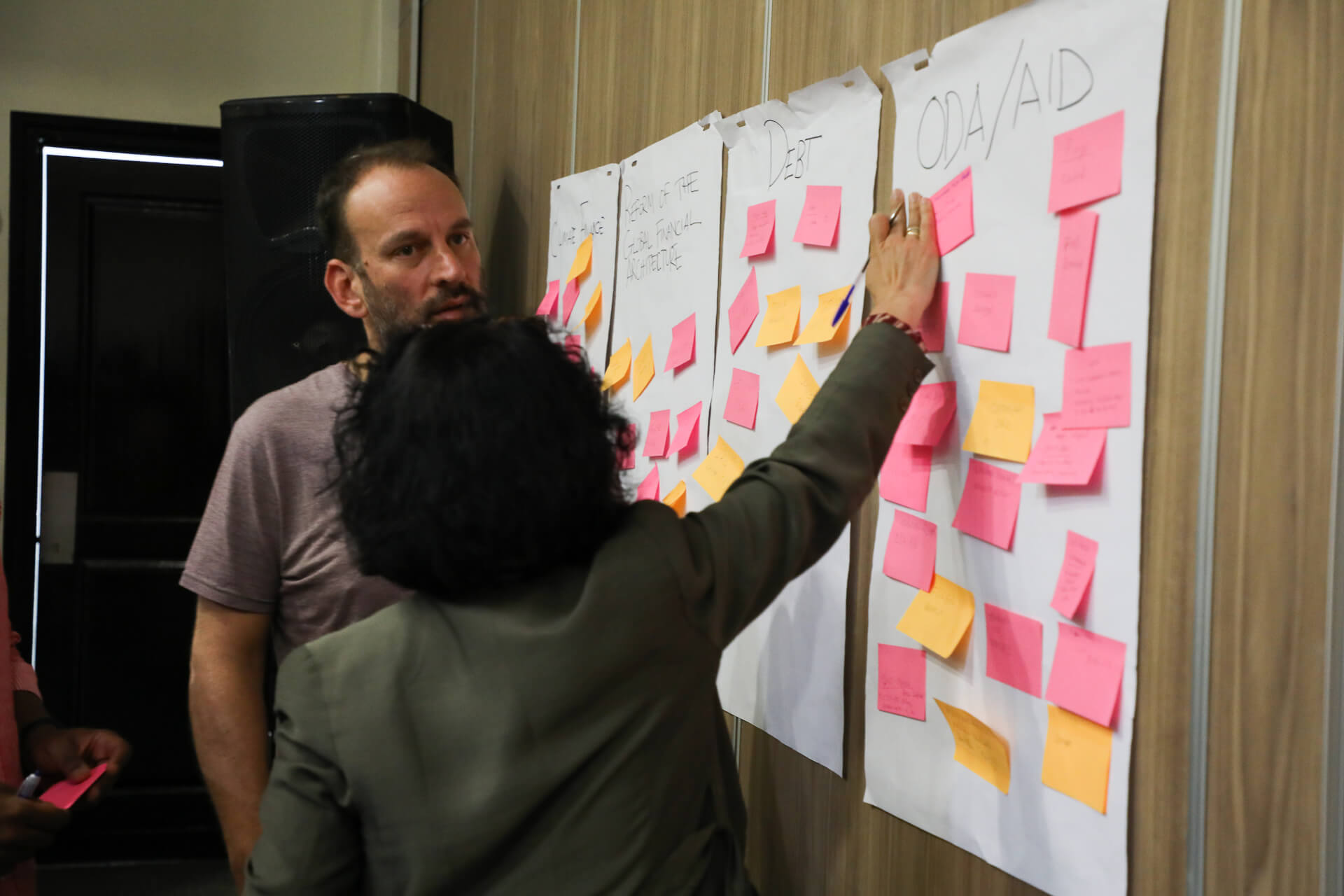
This article written by Bibbi Abruzzini and Clarisse Sih with support from the Forus advocacy team, is based on a global gathering of development experts, civil society leaders, government officials, and representatives from international organisations who convened for a side event at the Summit of the Future titled "Redefining and Enhancing the Quality of Official Development Assistance (ODA) for Sustainable Development." The event aimed to address pressing global challenges by rethinking the definition, quality, and impact of ODA, with particular focus on the Global South/global majority.
Organisers: Forus with the participation of the Pakistani government and key civil society organisations and Forus members, including ADA, Concord, Plataforma ONGD, NNNGO, Bond, Lithuania NGO Platform, Cooperation Canada, PIANGO, JANIC, La Coordinadora, KCOC, UNNGOF, Coordination Sud, VANI, Vitalis Meja, Co-facilitator of the workstream on international development cooperation for the FfD Mechanism and Eurodad.