© NGO Forum on ABD
© Sebastian Barros/Forus




2025-05-08
Rewriting the Narrative: Strategic stories for change
Strategic storytelling is no longer a luxury—it is a necessity. That was the unifying theme of an online communications workshop organised by Forus, with engagement from across the network and presentations from La Coordinadora and Red Encuentro.
Titled “Strategic Storytelling: Narratives for Action”, the session brought together participants from across the globe, creating a multilingual, multi-generational space for exchange. The aim was to reflect on how civil society can communicate with greater clarity, strategy, and impact.
“We need to shift from reacting to public discourse to shaping it,” said Bibbi Abruzzini, Forus Communications Coordinator. “That means putting real people at the heart of our stories,” she added.
Telling Our Stories with Impact
Yolanda Polo Tejedor from La Coordinadora, Forus member in Spain, presented an innovative human rights communication platform developed over three years, with contributions from more than 130 professionals.
“We realised our language wasn’t always aligned with our values,” she said. “So we created a toolkit to help communicators—and entire organisations—rethink how they speak about people, power and rights.”
The platform centres feminist, decolonial, child protection and peace perspectives, and is already being used to train thousands of journalism and communications students.
Lucas Santero from Red Encuentro, Forus member in Argentina, discussed an emotionally resonant campaign titled Los Imprescindibles (The Indispensables), which uses AI-generated, toy-like characters to tell the real-life stories of grassroots workers who are often overlooked.
“We wanted to play with a popular visual style,” said Lucas, the campaign lead, “but make it meaningful. These characters represent cooks, coaches, educators—the people who hold our communities together.”
Facing Restrictions with Creative Resistance
Participants also shared how storytelling has served as a vital tool in restrictive contexts. Issouf Kabore, Communications Officer at SPONG in Burkina Faso, recalled how civil society came under threat in challenging socio-political times.
“NGO activities were suddenly banned,” he said. “We mobilised quickly to meet with the Prime Minister and clarify who we were. Then we launched a digital campaign to show the public our value.”
The initiative featured success stories across education, health, and environmental sectors. While resources were limited, visibility increased significantly—helping to safeguard civic space at a critical moment.
In Brazzaville, Justin Mambuki from CCOD described how his team used photographs and testimonies to mobilise 1,000 citizens in a campaign to replace a failing waste management company.
“We used doctors and live witnesses to give credibility,” he said. “Citizen participation turned the story into action.”
Breakout Wisdom: Simple, Visual, Strategic
Participants were divided into breakout groups to explore how to harness the power of positive narratives for greater impact. Several common themes emerged:
-
Simplicity matters: “We need to drop the jargon,” said Naztia Haryanti from INFID, Indonesia. “Our members need to understand and use our messages.”
-
Humanise everything: “We are always quoting data, but what about the farmer’s voice?” asked Norma J. Martinez from Global Focus, Denmark.
-
Use multiple formats: Flora Baron from Association Batik International described campaigns using comics to engage youth on rural women’s empowerment. “Drawings can go where words can’t,” she said.
The Unidosc network in Mexico shared a 1990s campaign on cancer that broke away from conventional illness and death narratives, focusing instead on life, self-care, and listening to one’s body. With minimal resources, they used silhouettes and nude bodies—something never seen on television at the time—to generate massive media impact. Co-created with social service youth, the campaign remains a powerful reminder of how bold yet human visual storytelling can go a long way.
Red Encuentro in Argentina also spoke about their Mayo Me Viene Bien campaign, which addressed menstrual health. The aim was to bring menstrual poverty into the public conversation—a deep issue affecting the rights of many women and adolescent girls. They shared a shocking statistic: 30% of school-aged girls in Argentina stop attending school due to a lack of menstrual hygiene products. The campaign sought to raise awareness and spotlight this often-silenced reality.
La Coordinadora also discussed a partnership with Casa África in the Canary Islands and an online radio programme covering topics such as climate change, feminism, the defence of democracy, and public space.
“We Are Leaving No One Behind, Are You?”
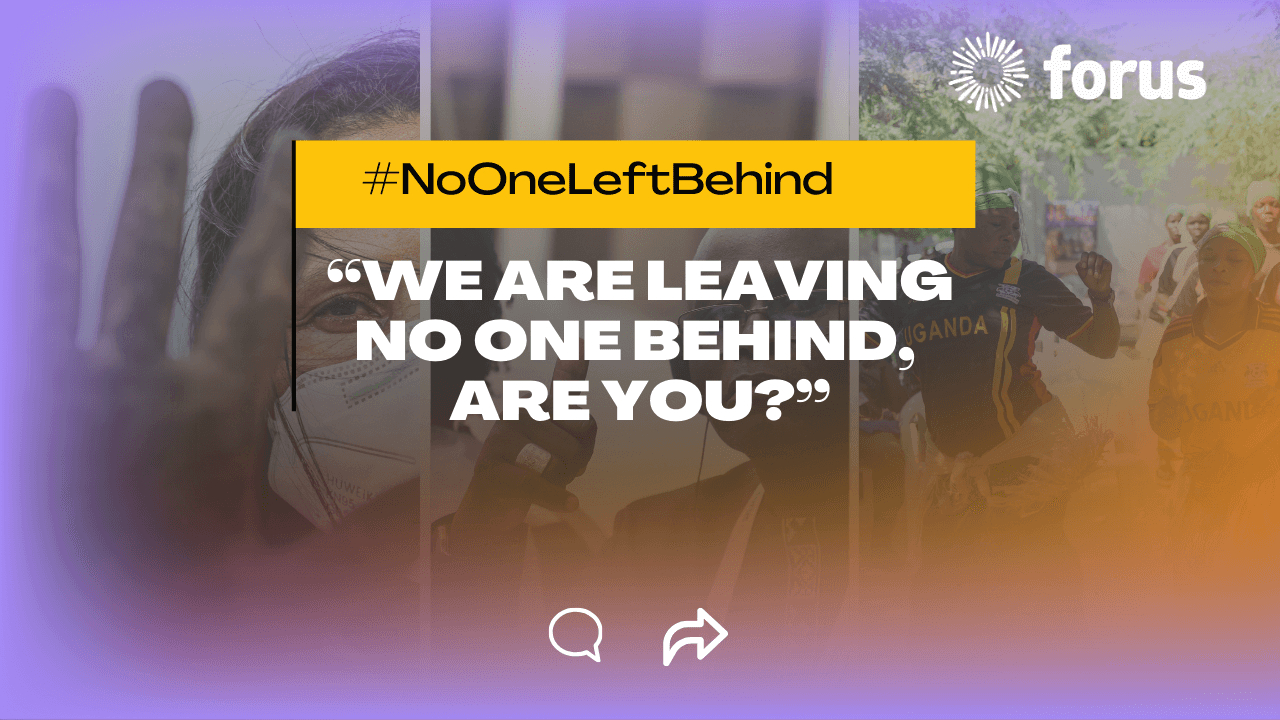
Vitória Dacal from Forus presented the new multilingual and participatory We Are Leaving No One Behind, Are You? campaign, which celebrates the work of CSOs worldwide while challenging governments and other stakeholders to reflect on their actions and commitments.
By joining the “We Are Leaving No One Behind, Are You?” campaign, you can help amplify the remarkable work of civil society and inspire others to act. Together, we can show that the SDGs are more than goals—they are a shared promise to build a better future for all.
Whether you are a policymaker, a civil society leader, or an engaged citizen, your voice and actions matter. Let’s ensure no one is left behind.
A Toolkit
The workshop concluded with the co-creation of a Strategic Storytelling Toolkit, collecting methods, examples, and insights from the session. From practical campaign tips to ethical narrative frameworks, the toolkit is designed to support communication officers, programme staff, and activists alike. It is currently under development with members of the Forus Communications Working Group.