© Forus
©Forus
Thu 22 Jan 2026
Stepping up for Multilateralism: Forus calls on Member States to step up for the UN
Across the world, civil society organisations are facing shrinking enabling environments, reduced access to decision-making, and growing risks for those who defend human rights, democracy, peace, gender equality and climate justice. At this critical moment, a strong and functioning multilateral system — anchored by the United Nations — is not optional; it is essential.
In a world marked by escalating conflicts, deepening geopolitical tensions, shrinking civic space, and widening inequalities, Forus reaffirms its unwavering support for multilateralism and for the United Nations as a cornerstone of peace, democracy, human rights, and sustainable development.
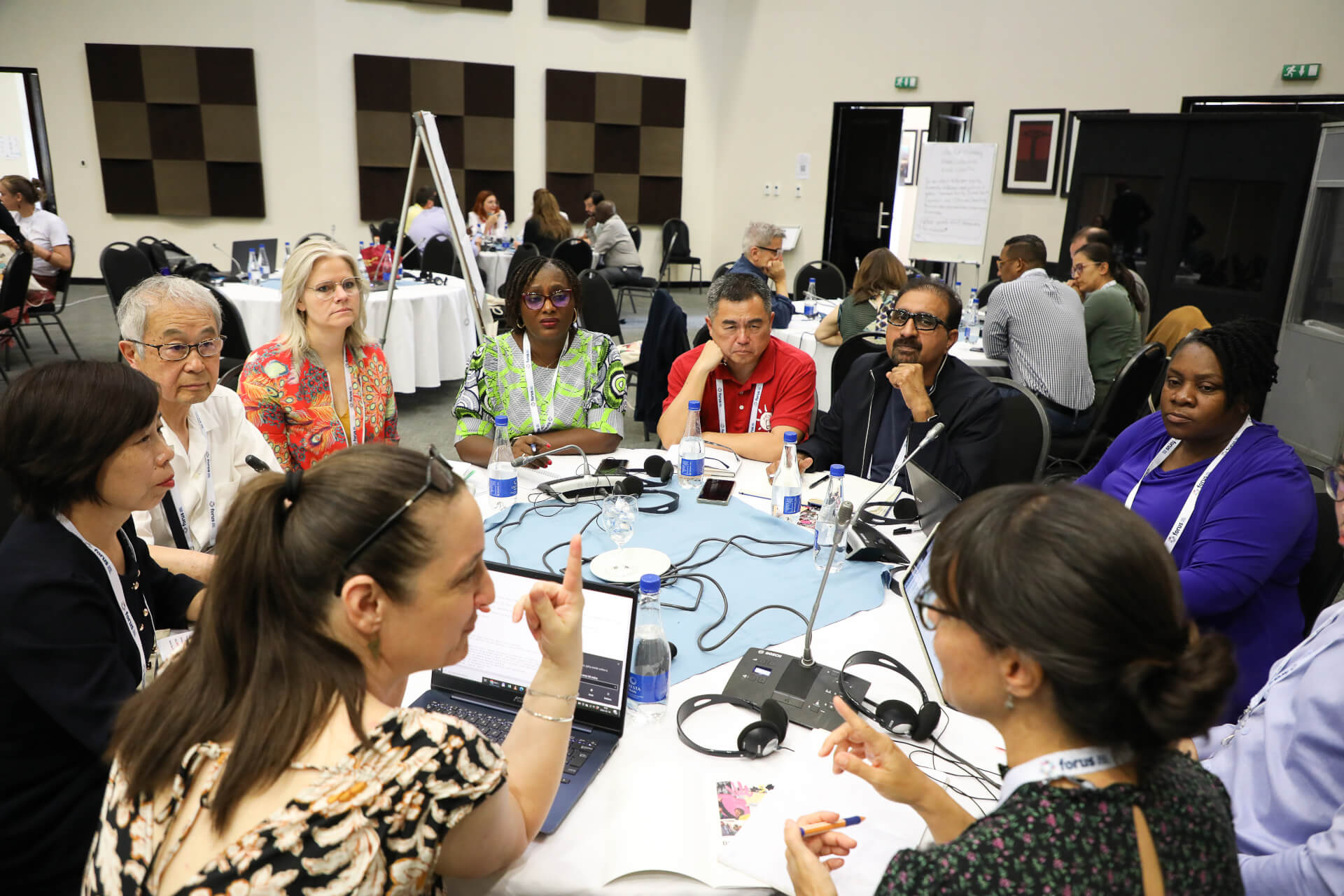
Forus is a global network of National NGO Platforms and Regional NGO Coalitions, bringing together 73 National Platforms and 7 Regional Coalitions and representing more than 24,000 civil society organisations worldwide. Our members engage daily with communities facing the harshest consequences of conflict, injustice, exclusion, and institutional failure — and they also bring forward solutions rooted in solidarity, rights, and local leadership. Forus sees daily how access to UN spaces and mechanisms — and the ability of civil society to engage safely in them — can make a real difference for civic actors facing pressure, reprisals, or shrinking space.
A critical moment for multilateralism
We are living through a period in which multilateral cooperation is being tested — politically, financially, and institutionally. In recent weeks, we have seen renewed public attacks on the legitimacy of international institutions, alongside concrete decisions by some States to withdraw from significant numbers of international organisations, including UN bodies.
This is not a technical debate. It is about whether the international community will continue to invest in a rules-based system that protects people — especially those most exposed to violence, discrimination, and poverty — or whether we will slide further into a world where power outweighs principle.
Why this matters for communities — and for civil society
Forus members know that when cooperation breaks down, communities pay the price — and civic actors are often among the first to be targeted. When international norms are weakened, we see more space for repression, fewer avenues for accountability, and less protection for those defending rights and democratic freedoms on the ground.
As the President of the UN General Assembly reminded Member States this week, the United Nations is “worth fighting for.” And at Forus, we agree. We are convinced that the world needs the United Nations now more than ever and share the President of the UN General Assembly’s call for States to step up, stand up, and recommit — not just in speeches, but in practice.
For many civil society organisations — particularly those in contexts where civic space is closing — the UN system is not an abstract institution: it is a vital arena for legitimacy, visibility, protection, participation, and access to decision-making; a platform where local voices can reach global decision-makers; and a framework that anchors universal human rights, democratic values and international law.
Our call to Member States: step up to defend global cooperation, multilateralism and the UN
At this make-or-break moment for multilateralism, Forus calls on all UN Member States, and on the broader international community, to take immediate and concrete steps to safeguard the UN system and ensure it can deliver on its mandate:
1) Reaffirm commitment to the UN Charter and international law — consistently and without double standards. The principles of the Charter exist to prevent escalation, protect civilians, and uphold the equal dignity of all people. They are not optional. Member States must uphold them in practice, including through peaceful settlement of disputes and full respect for human rights and humanitarian law.
2) Meet financial obligations to ensure the UN can function — because a UN without resources cannot protect, convene, or reform. No reform can succeed if the institution is financially paralysed. Member States must meet their obligations in full and on time, and support predictable, sustainable financing for the UN system so that reform efforts are meaningful and the UN can deliver on its mandates.
3) Protect and expand meaningful civil society participation — and prevent reprisals. Member States must ensure that civil society — including local organisations and the national and regional platforms that structure civic participation — can engage safely in UN and multilateral processes, including through organised civil society structures, without intimidation, surveillance, harassment, or legal retaliation.
4) Make multilateralism work for people: localise, include, and be accountable. A credible multilateral system must move decisions and resources closer to communities, listen to those most affected, and strengthen transparency and accountability. The measure of multilateralism is not procedural output — it is whether it delivers protection, equity, and dignity in people’s lives.
5) Safeguard human rights, democracy, and gender equality as non-negotiables — not bargaining chips. In a time of pushback against rights and inclusion, Member States must defend the universality of human rights and the centrality of gender equality, including by ensuring multilateral spaces remain accessible and responsive to women and girls and those most marginalised.
6) Choose UN leadership that can meet this moment. As the selection process for the next UN Secretary-General advances, Member States must support a transparent, inclusive process — and strongly consider qualified women candidates — sending a clear signal that the UN serves all of humanity.
Our commitment
This is a defining moment. Defending multilateralism means defending peace, democracy, dignity, and the ability of people — especially those most excluded — to shape decisions that affect their lives.
Forus will continue to work with its members and partners across regions to defend civic space, strengthen inclusive governance, and advance cooperation that delivers for people where they live. We stand ready to work with Member States and partners across regions to promote, support and strengthen a multilateral system that is accountable, rights-based, and grounded in solidarity — for people, for the planet, and for the future.
In solidarity,
Forus