Mon 18 Oct 2021
“Transparency, Inclusiveness and Sustainability”: 3 things Public Development Banks must not forget about at this year’s Finance in Common Summit.

Rome, 18 October 2021 – A coalition of civil society organisations, is calling for public development banks to invest in projects that promote healthy ecosystems, support local livelihoods and protect human and environmental rights and their defenders.
Over 500 public development banks will convene on the occasion of the second edition of the Finance in Common Summit on October 19-20 in Italy, ahead of the Italian Presidency of the G20 and the COP26 conference on climate change.
Ahead of the summit, a coalition of civil society organisations is demanding from public development banks that they transform the way they work for it to be based on human rights, community-led development as well as climate and social justice principles.
With the development finance community gathering to discuss the mobilization of financial resources for the achievement of the 2030 Agenda, and to give the world a chance to fight climate change and preserve biodiversity, civil society organisations ask for decisively more ambitious action, and for more transparent and inclusive consultative processes at all stages of decision-making linked to the planning, execution and evaluation of development projects.
As the climate crisis deepens, fires rampage in forests across the globe, floods leave thousands homeless and droughts destroy the livelihoods of millions of farmers, in many places the situation for frontline communities is getting from bad to worse. Inequalities are soaring. The number of vulnerable people is dramatically growing, not only because of the Covid crisis’ effects.
Oftentimes local actors don’t have much of a say in development projects, and when they speak up and try asserting their rights, they often do so at great risk. Last year was the deadliest for human rights and environmental defenders around the globe, a report from Global Witness unveiled.
Meaningful approaches need to be developed to address the closing of civic space, risks and challenges for communities that are defending the interests of the environment and local livelihoods. Public development banks can become allies by protecting and promoting the involvement of civil society organisations, rights defenders and communities at the forefront of social and environmental justice. Zero tolerance policies against threats and reprisals by public development banks, their clients and partners should be a basic requirement.
This year’s discussion at the Finance in Common summit will also have a particular focus on agriculture and agribusiness. Despite the conference’s prominent aim to “leveraging Public Development Banks to achieve Inclusive and Green Food systems’ transformation”, civil society groups fear that these words might ring hollow if business considerations are put first. Public development banks have the responsibility to serve the best interests of both people and the planet, and must not bow to corporate interests.
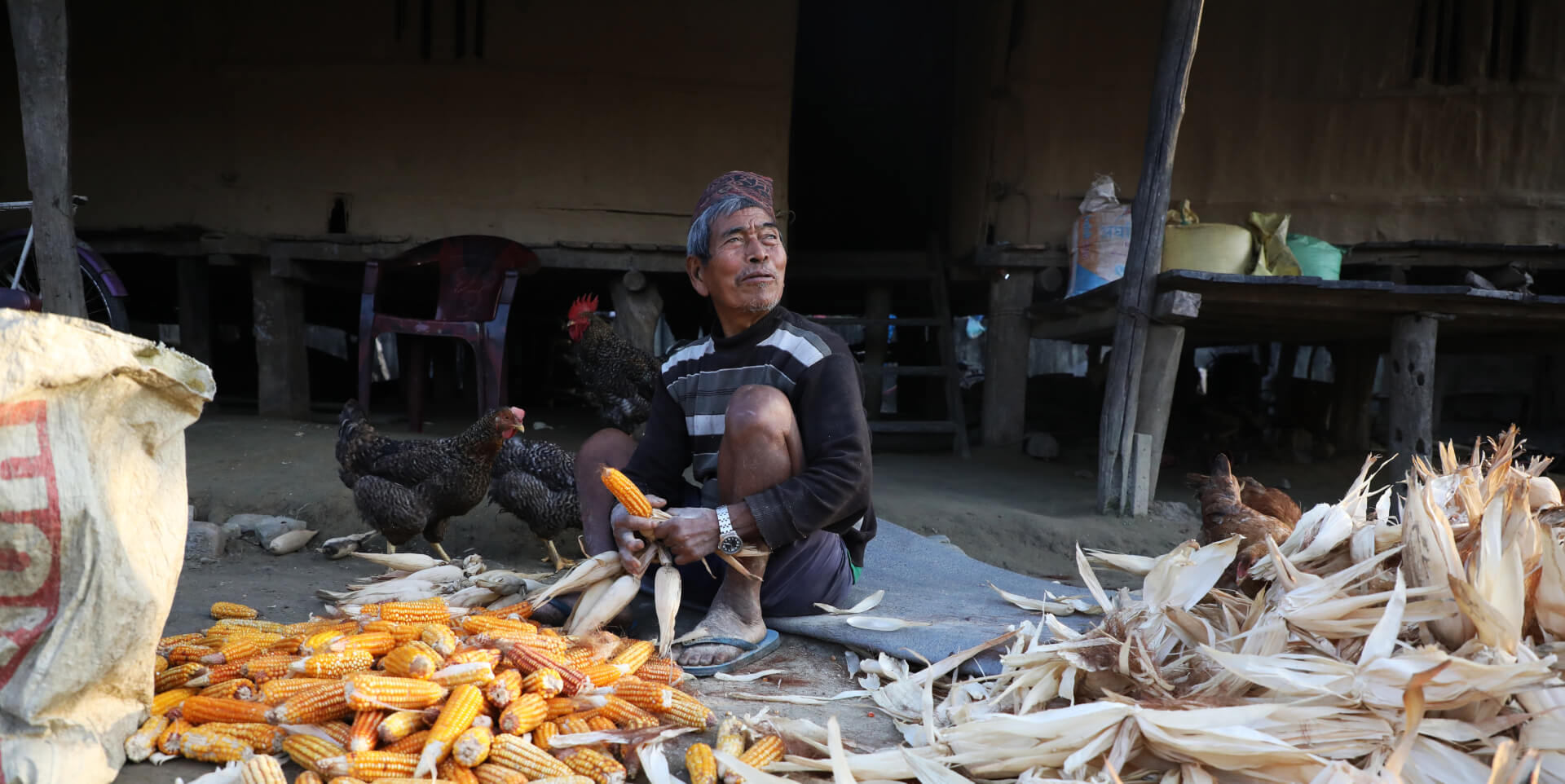
Public development banks should not fund development projects that negatively affect the lives and livelihoods of farmers, fisherfolks, pastoralists and other communities. Instead, they should support solutions put forward by small-scale food producers, indigenous communities and civil society, that are based on human rights, community-led development and climate justice principles.
The financing decisions made by public development banks can either accelerate or slow down biodiversity loss and environmental degradation. Therefore, public development banks should strengthen exclusionary lists in prohibiting harmful direct and indirect financing located in, or which would negatively impact, critical or sensitive ecosystems.
With the G20 and COP26 just around the corner, the Finance in Common summit can be an opportunity to commit to the responsible use of resources and to create new synergies, not only among financial actors, but also with those who should be the ultimate witnesses of whether these resources are invested in the most impactful way - representatives of civil society and communities on the ground.
Public development banks should also develop coordinated approaches to ensure that the activities they support do not exacerbate debt burden or contribute to cutbacks in public expenditure that will negatively impact human rights, the ability for governments to respond to climate change, or access to essential services for the most vulnerable.
In today’s interdependent world with multiple crises hitting across the globe, public development banks could play a crucial role, but they will have to make bold decisions and demonstrate strong leadership to do so. The Finance in Common coalition can be a space where an ambitious path is set collectively by the banks. This will require significantly strengthened and continuous dialogue with a wide range of civil society representatives from all levels - local, national and international - as the world we build for tomorrow will rely on our ability to include people in the process today.
Quotes:
Aurore Mathieu, International Policy Coordinator, Climate Action Network France:
“Public development banks have a key role to play to tackle climate change. The Finance in Common PDB coalition needs to walk the talk and immediately align all of its activities with the objectives of the Paris agreement, as promised in November 2020. PDBs are still financing fossil fuel, despite committing to apply explicit policies to exit from coal financing in the perspective of COP26. We are running out of time.”
Peter Stevenson, Chief Policy Advisor at Compassion in World Farming:
“I urge Public Development Banks to stop funding industrial livestock production as this will put several of the Sustainable Development Goals out of reach. It undermines the livelihoods of small-scale farmers and, through its need for huge amounts of soy and cereals to feed the animals, drives climate change, biodiversity loss, deforestation and soil degradation. Banks should instead fund regenerative, nature-based agriculture which can increase yields in the Global South, while providing better nutrition and improving rural livelihoods.”
Iara Pietricovsky, Forus' Chair:
“We believe that civil society can join forces with public development banks to accelerate change by creating inclusive and transparent spaces. We need to find solutions for our current and future challenges, the only way to do this is by sharing knowledge and ideas and ultimately by recalibrating the balance of power. We hope to discuss with development banks how we can support ambitious steps to financing development in better and more innovative ways, while respecting people and the environment, and promoting human and environmental rights and their defenders.”
Mark Fodor, Coordinator of the Defenders in Development Campaign at the Coalition for Human Rights in Development:
“To achieve real solutions to the global food crisis and climate change, public development banks need to get out of their echo chambers. They should start listening to those who are directly impacted by their projects, understand their needs and learn from them. Sustainable solutions already exist: Indigenous Peoples, small-scale farmers, fisherfolks, herders, women and local communities are the experts who should drive the development agenda. Yet, once again, summit organisers have failed to engage with them.”
Olivier Bruyeron, chairperson of Coordination SUD, the French national Platform of 175 development and humanitarian NGOs:
“The global crisis linked to the Covid pandemic reminds us of the interrelations between the climate change and social justice agendas. Once again, during this crisis, the poorest and most vulnerable groups of people have been the most impacted socially and economically. Global crises in a global world are multiplying. Their effects reflect a global economy that disregards universal access to education, health, housing, decent jobs, environmental sustainability. They reflect the functioning of our society that continuously produces more inequalities. Public Development Banks can address these issues significantly with the SDGs agenda, but only if they put civil society at the heart of their policies. And to do so, Public Development Banks have to build a permanent dialogue with civic actors, communities and CSOs. We invite PDBs to resolutely commit to such a dialogue, and to implement it without any delay.”
Eleonore Morel, CEO of FIDH (International Federation for Human Rights):
“We strongly encourage banks to create a space for civil society, human rights defenders and affected communities to meaningfully participate in and provide input to their strategies, policies and projects so as their knowledge of the potential human rights impact of public development finance may be included in their operations. FIDH strongly encourages institutionalised dialogue between civil society and public banks and reiterates its call in that sense”
Roberto Ridolfi, President of Link 2007:
“PDBs should be extremely vigilant and accept public transparent scrutiny on the multiple impacts of debt burden on poor countries. Moreover, starting from a shared commitment towards SDGs, PDBs should increase dialogue and coordination with grant aid institutions, banks and private sector, improving coherence of approaches on targets improving ownership and innovation on debt conversion. “
For press inquiries:
Bibbi Abruzzini, Forus Media and Communications coordinator, [email protected], +32471219641