© Forus

2025-12-01
Turning Commitments into Action: The Road from Doha and the Second World Summit for Social Development 2025
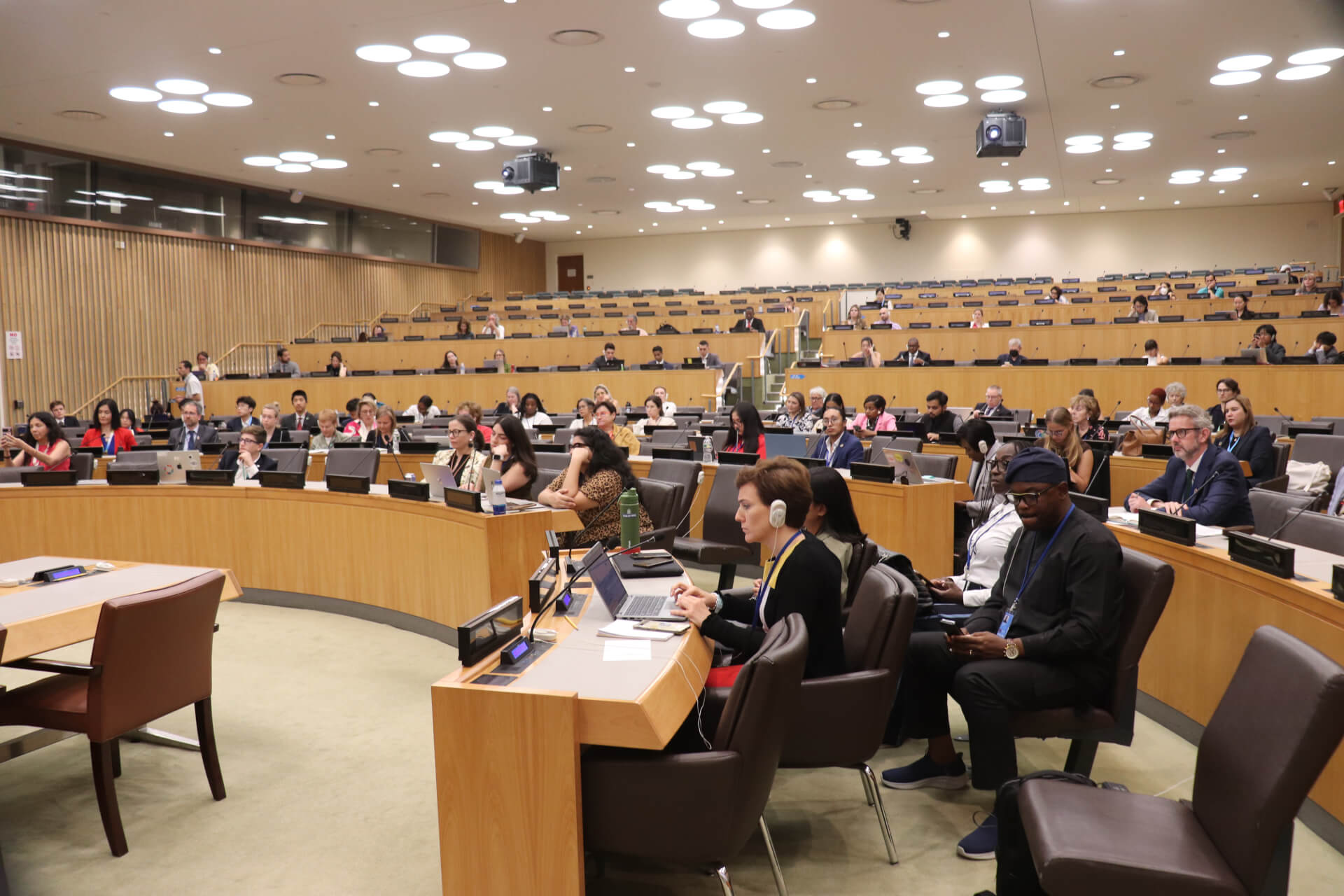
The Second World Summit for Social Development 2025 (WSSD2), held in Doha from 4–6 November, marked thirty years since Copenhagen and took place in a moment of deep structural change. Civil society arrived with clear expectations: meaningful participation, genuine influence, and a collective push “to move from slogans to systems”. In the lead-up to the Summit, many civil society organisations outlined five practical, action-oriented steps: building inclusive national platforms, expanding social protection, linking promises to financing, addressing the digital divide, and embedding accountability. Their proposals were widely circulated, but were these priorities heard? Were they defended? And crucially, were they taken into account as we move forward?
This article reflects on these questions through the experience of Forus members who attended WSSD2, examining expectations ahead of Doha, the outcomes of the Summit, and what comes next in the follow-up to these five propositions.
Did Doha Bring Answers?
Ahead of Doha, priorities, risks, and anticipated challenges were exchanged, with a shared aim: ensuring civil society would not simply be present, but recognised as experts and solution providers throughout the process.
Following their return from Doha, Forus members assessed whether the Summit offered the clarity, commitments, and opportunities for transformation that civil society had called for.
National Platforms: More Participation, but Power Remains Uncertain
Civil society’s first demand was the creation, by 2026, of national platforms for social development in every country: spaces bringing together governments, civil society, young people, persons with disabilities, trade unions, and local communities to co-create and monitor social development strategies.
In Doha, inclusion was widely discussed. Civil society had a seat, but did it truly have a voice—or any influence? Were governments and UN agencies genuinely engaging CSOs beyond formal remarks? Very few concrete commitments emerged on establishing permanent co-creation mechanisms at the national level.
“Several delegates emphasised that Member States remain the primary decision-makers; however, civil society’s ability to play its complementary accountability role remains constrained. They called for the ‘UNMuting’ of civil society so it can provide fuller contributions—such as independent assessments or shadow-type inputs—within the process.
One welcome feature was that civil society led side events were held in the same space as official side events. In principle, it was easy to walk from room to room and move from Minister to NGO voice. But how far was this really bringing ignored voices into the room, and how far was this NGOs acting as sheepdogs, and herding a set of voices that did not sound very different to the government consensus?
“A lot of civil society reps I spoke to over the last day and a half felt they were compelled to be very polite in that space,” said Essi Lindstedt, a global rights advisor at Fingo. “This year, a lot of organisations had less resources and that led to less coordination. A lot of big NGOs didn’t get involved and left it to smaller organisations to call for equalities and transparency without their political and organisational backing. We can criticise the governments, but we also need some self-reflection in civil society on the opportunities we lost this year. Poverty continues to be a policy choice that governments are making, but we were polite about it.”
Social Protection: Recognised, Yet Still Politicised and Fragmented
Forus and many civil society coalitions strongly advocated for reinforcing social protection as a universal and lifelong right. The Doha Declaration reaffirmed universal social protection standards and, for the first time, explicitly referenced the rights of older persons—an important step forward. There were welcome references and discussions of the Care Economy from Guterres opening remarks onwards, which put the care economy on parity with the digital and green economies as sectors offering new possibilities for decent work. Further sessions unpacked the unpaid and paid dimensions of care and support and the necessity of ensuring that those who provide care (mostly women) are recognised in social protection systems.
However, in practice, social protection systems across many countries remain inadequate, underfunded, and inequitable. They are shaped by domestic and global political dynamics which can result in inequalities such as those faced by women (who are more likely to be in informal work, and therefore outside social protection systems) and huge global disparities in social protection coverage with people in the poorest countries left without safety nets. Delegates observed that pensions, healthcare, social security, and education programmes are often weakened by fiscal constraints or international financial pressures, but there was no political momentum to create new pressure for investments in social protection. While governments emphasised inclusion and lifecycle protection, many CSOs argued that these remain largely rhetorical, with persons with disabilities and other groups that have been historically marginalised still facing major practical barriers.
The 4 billion people who are not covered by any form of social protection will not now be covered because the Summit happened,” Forus members shared. The change is going to happen through more transparent national processes, but also through the global community taking social protection seriously as a necessary investment for regional and global security. Until these things happen, poverty will continue to be a policy choice that many governments continue to make.
Financing: The Missing Bridge Still Missing
Long before WSSD2, civil society emphasised that commitments would continue to ring hollow unless matched with financing, echoing messages from the Fourth Financing for Development Conference held in Seville. The Doha Declaration acknowledged the challenges posed by debt and the need for fiscal reform, yet it stopped short of providing concrete, implementable solutions.
This gap was widely perceived as the Summit’s most significant unresolved issue. Without predictable and adequate financing, civil society and the communities they serve, remains in a vulnerable position, especially as many countries face rising debt, shrinking domestic resources, and cuts to social spending. If commitments are to materialize, the international financial architecture must evolve to support social development.
While donor governments praised the virtues of domestic resource mobilization as the appropriate source of financing for social development (mostly based on the expectation that low and middle income countries can collect more tax), many African countries called for a UN Framework Convention on Sovereign Debt, and highlighted the challenge of delivering on social development against the current backdrop of debt.
As shared by Essi Lindstedt, of Fingo: “Doha was a good result in a fragmented and resource squeezed year but we need to get our energy back and re-focus. It’s good that the US didn’t prevent the declaration from passing and it’s good that almost everyone else showed up to express support. But now we need to move from pledges to possibility. The job isn’t done. Extreme poverty is still assaulting the wellbeing and dignity of people in low income countries, and inequalities and discrimination harm people and act as brakes on opportunity.”
Policy makers urgently need to sit down and figure out what money pays for what investment in social development: “They need to take a more realistic view of the possibilities of private finance and philanthropy, and they need to ask themselves whether they can afford the instability of a world that is not investing in pathways out of poverty. There was no new money on the table at Doha, not from official donors, not from financial mechanisms to create more fiscal space, and not from philanthropy. If they think they solved financing for social development and climate change this year, please can they let us know how.”
But just as importantly, while they are getting real about the numbers, we as civil society need to raise our own level of ambition and show them our vision. “This has to go beyond polite briefings about our wins from local solutions and small scale efficiencies, like digital public services. The boldest groups in civil society are reframing what is possible, what a good life looks like. Indigenous peoples have made us all think differently about who actually safeguards biodiversity. Women led organisations have worked with governments from Chile to Kenya to Jordan to create respect for care work and force a new discussion about what is valued in economies. We need to take inspiration from examples like these and show people that we can and will build a world that trades poverty for possibility and discrimination for community. That is when we are going to really ignite a new vision for social development that can take us to 2030 and the setting of new global goals,” shares Essi.
The Digital Divide: From Recognition to Real Inclusion?
Civil society expected Doha to affirm digital access as a social right, going beyond a purely technological framing. The Declaration recognised the need to reduce the digital divide, particularly for women, young people, persons with disabilities, and rural communities.
While the recognition of the digital transition was broadly welcomed, delegates noted the lack of concrete commitments related to public digital infrastructure, data accessibility, and governance. Many stressed that such detail appropriately belongs in the Global Digital Compact. As highlighted by the Secretary-General and Minister Baerbock, the GDC will be critical in ensuring emerging digital economies do not mirror or entrench current digital divides. Without investment, the digital divide risks becoming further entrenched.
Accountability: Still an Unfinished Pillar
Civil society’s initial recommendations included strong accountability mechanisms: public annual reviews, formalised civil society monitoring, and a checkpoint at the 2026 UN Commission for Social Development.
Although the Doha Declaration mentions follow-up, it does not establish any binding accountability system. Governments are not obliged to make specific commitments, publish progress reports, or involve civil society in monitoring. While the Declaration was adopted by consensus, numerous reservations remain.
This makes civil society’s role as watchdog and advocate even more essential, not merely to participate, but to monitor, verify, and ensure that commitments are not forgotten after the Summit.
Turning slogans into systems will depend on the work that follows, at national level, at the 2026 Commission for Social Development, and in the continued mobilisation of civil society across the world.
This article was written with inputs from Forus members, with support from Essi Lindstedt, Bibbi Abruzzini and Clarisse Sih.