

2023-03-13
UNITAS: on "diverse feminist movements" in Bolivia
As part of the #MarchWithUs campaign, we interviewed UNITAS, Forus member in Bolivia, about the gender twist in their mobilisations and projects. From important women figures in the history of Bolivia, to their recently published book on women human rights defenders UNITAS puts gender at the heart of its actions.
UNITAS
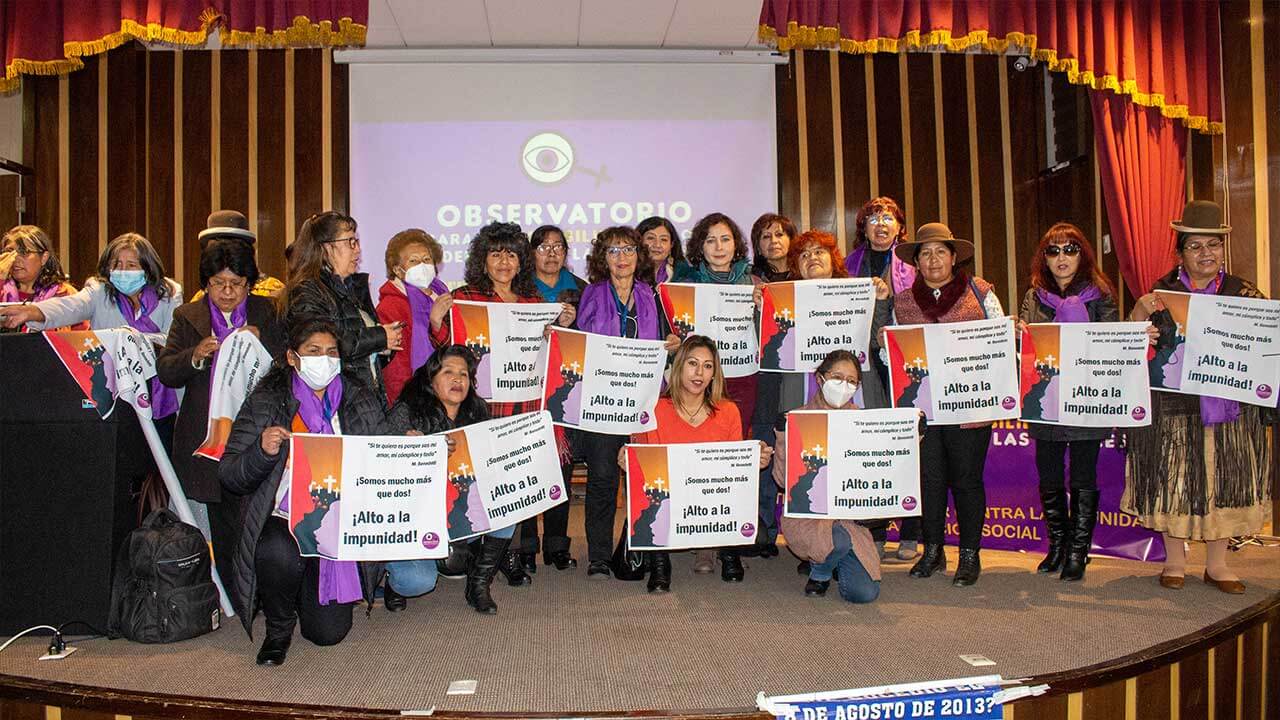
The mission of UNITAS is to contribute to the generation of alternative proposals for development and social change towards a democratic, supportive, equitable and just society, together with the social movements and popular organisations that are the final recipients of its action. This mission is achieved through the coordinated work of its associated institutions, which UNITAS strengthens, articulates, relates and represents.
From Domitila Barrios de Chungara, activist for workers' rights and organiser of the Comité de Amas de Casa Mineras del Siglo XX, to collectives such as Mujeres Creando, women play an important role in Bolivia's social and political sphere. Can you tell us about the broader historical, ideological and geopolitical context of feminist and women-led political activism in Bolivia?
Bolivian women from different fronts, indigenous peoples, workers, academics and other spaces of struggle have marked milestones in the history of Bolivia. These women were the forerunners of what we now call "diverse feminist movements", some of them without calling themselves feminist, they fought from the subordinate and invisible situation of women, from a position of opposition to a hegemonic androcentric model, a system of patriarchal and capitalist domination, excluding diversity and different women, such as indigenous women, peasants, women with disabilities, girls, elderly women, all of them in vulnerable situations.
Bartolina Sisa (1750 or 1753- 1782+): together with Julián Apaza, played a leading role as leader of the indigenous insurgency of 1781, confronting the Spanish soldiers.
Juana Azurduy de Padilla (1780-1862+): A fighter in the War of Independence against the Spanish monarchy, she took command of the wars that made up the Republic of La Laguna, for which her memory is honoured in Argentina and Bolivia. She was involved in the cause of independence and took up arms against the royalists in a society that denied women access to political life.
Adela Zamudio Rivero (1854- 1928+): She is considered the forerunner of feminism in the country. As a poet and writer, her verses reflect the precarious situation that women lived in, with respect to the rights enjoyed by men: without the right to equal education, without the right to participate in political life and without the right to vote, among others. Her influence was such that Bolivia celebrates Bolivian Women's Day on 11 October, in honour of the birth of Adela Zamudio.
Lidia Gueiler Tejada (1921- 2011+:) She was president of Bolivia from 1979 to 1980, becoming the first woman president of the country and the second woman in Latin American history to assume the presidency of a country.
Domitila Barrios de Chungara (1932-2012): As a pioneer of the women leaders of the mining movements due to her initiative to lead protests and strikes together with other miners' wives. Since 1963, she participated in the militant Housewives' Committee of Siglo XX, an organisation that brings together the wives of mine workers in that tin-producing centre; an organisation of women miners that stood up to all the dictatorships and authoritarian governments during the 1960s, 1970s and 1980s.
The heteronormative model is predominant and does not recognise diversity, which is why feminist movements in Bolivia include collectives such as Mujeres Creando that demand the rights of diversity, question the violation of the human rights of diverse and different women, and defend women who are victims of violence.
In 2013, the government introduced Law 348, which, among other things, made femicide a crime punishable by 30 years in prison, the maximum penalty in Bolivia. The law was welcomed as progressive legislation at the time, however, the problem is implementation. In 2021 there were at least 108 femicides in Bolivia, one of the highest rates in South America. Many of the perpetrators are never caught, are not punished or go free soon after. How does UNITAS work to combat violence against women in Bolivia?
UNITAS, through its associates and the Equity for Development Programme, addresses the problem of violence against girls and women with different actions ranging from counselling, dissemination of Law 348 and the care routes for victims of violence, communication actions for the prevention of violence against girls and women, direct attention to cases of victims of violence, shelters set up in some of the network's associates, and support for enforceability actions such as the installation of a Women's Tribunal against Impunity in emblematic cases of feminicide, direct attention to cases of victims of violence, shelters set up in the homes of some of the network's members, and support for enforcement actions such as the setting up of a Women's Tribunal against Impunity in emblematic cases of feminicide together with the Observatory for the Enforcement of Women's Human Rights, We are part of the coalition in the elaboration of Shadow Reports to the CEDAW, research on the implementation of gender policies and a specific one on the implementation of Law 348, its limitations and challenges and the situation of violence against women, a National Campaign Without Violence is Better, Prevention of Violence together with the Gender Unit of the Bolivian National Police (management 2020-2021 Pandemic COVID).
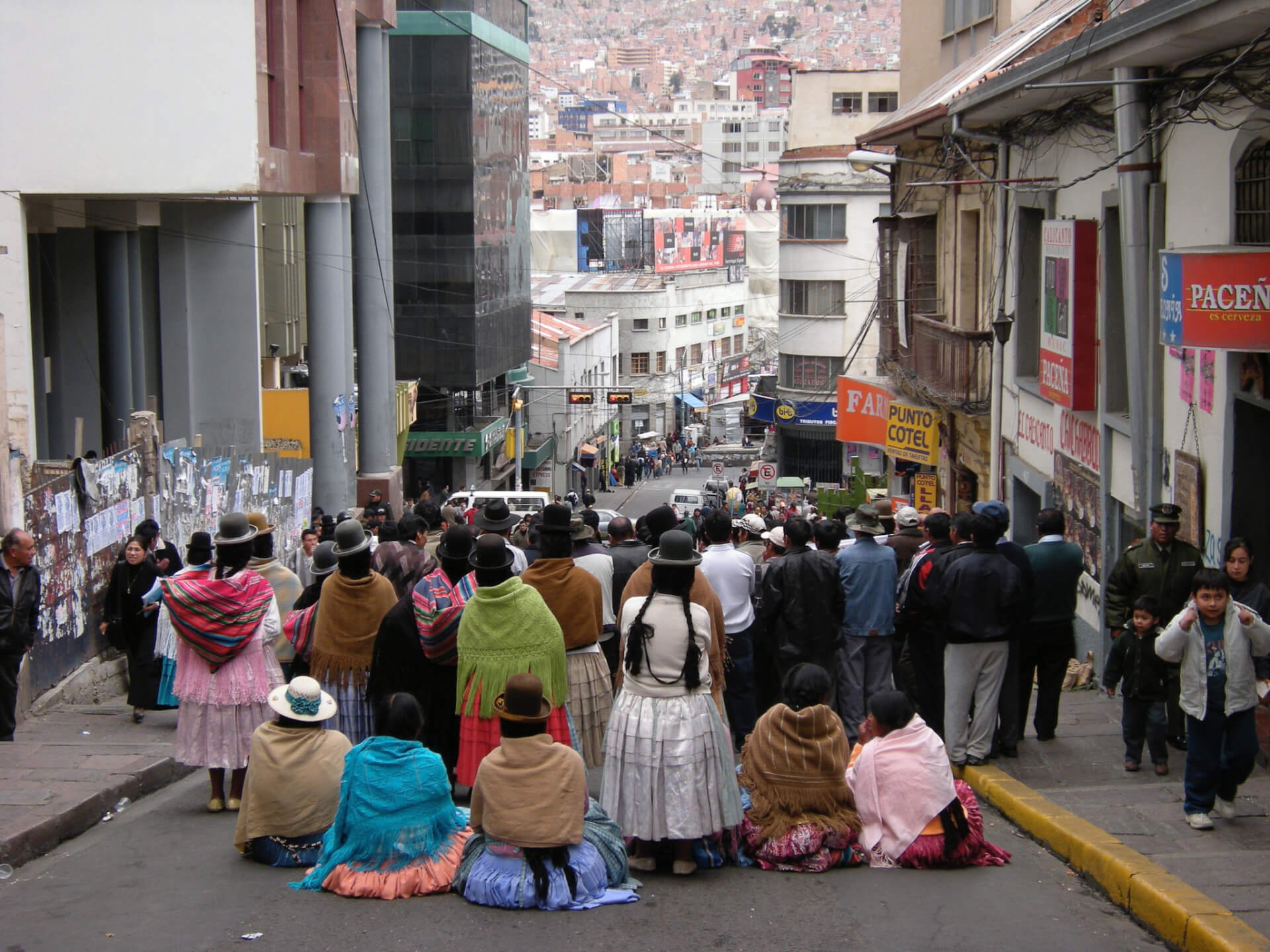
The most frequent aggressions [against women rights defenders] are insults and threats to their physical integrity, expressed verbally or via digital networks, many of them anonymous.
How and why is gender an element of UNITAS' work?
For UNITAS and its partner institutions, the gender approach implies working on the revision and transformation of those patterns that have favoured and sustained unequal relations between women and men, linked to the current structural model.
We contribute to gender equity and equal opportunities between genders, strengthening the political role of social organisations, promoting participation with class and gender awareness that helps to visualise the contradictions of the system of domination at social, economic and political levels; addressing subordination and discrimination not as an isolated problem of women, but linked to structural causes of poverty and inequality that affect women and men, in order to collectively build a society that respects differences and guarantees equity and the exercise of rights.
UNITAS has recently created a book about women defenders in Bolivia, can you tell us about their stories and the process of writing this book? What are the challenges facing women activists in Bolivia today?
The report Women activists and fighters, human rights defenders is the product of an initiative of the Equity for Development Programme of the UNITAS Network, with the support of CECI-Bolivia. The objective of this initiative is to promote an enabling policy environment that favours and guarantees the work of women human rights defenders in Bolivia, as well as to strengthen their strategic capacities through the systematisation of experiences and recommendations for the construction of capacity building tools.
The report is based on the synthesis of a series of interviews conducted with twenty-nine women human rights defenders in Bolivia between July 2019 and November 2020. These women belong to various fields of action and are of diverse social, ethnic and age identities, as well as of different sexual orientations.
This information has been organised into four groups: a first group is made up of women who have been protagonists in the struggle for the defence of land and territory in their communities against mining, oil and hydroelectric companies; a second group are women journalists who are activists in the struggle for freedom of expression; the third group are lesbian and trans women, defenders of their rights and part of the LGBTI movement, and the fourth group are women human rights activists and independent feminists who, through their work in NGOs and as part of feminist collectives, campaign for the legalisation of abortion and the right to a life free of violence.
The interviews were structured as follows: they first addressed issues related to the profile of women human rights defenders, their field of action, their background and their perceptions of the political context; they then sought to identify the main barriers and risks they have faced in their work, their protection strategies and needs; they also addressed some aspects of their social and family life, their perceptions of their environment and possible disputes around gender identities. Finally, the women defenders were consulted on how the state guarantees their rights and freedom of action and how civil society could provide an environment that ensures greater protection and trust.
Before presenting the summary of the interviews, the report begins with a summary of the international legal framework for human rights defenders. We also present notes on the intersectional feminist approach that has guided the construction of this work, and include an introduction to the Latin American and Bolivian context of women human rights defenders and women's movements. The final chapter includes conclusions and a summary of recommendations for the state, civil society organisations and women defenders, aimed at strengthening their protection and capacity for action. The report concludes with a series of annexes that present in more detail the international standards, as well as the main recommendations of international institutions on the situation of women human rights defenders.
Challenges
To vindicate the figure of women human rights defenders (to ensure the protection of the life, security and freedom of those who dare to confront the established powers in order to claim rights, assert identities and denounce abuses, aggressions and violations of individual and collective rights).
In the case of Bolivia, the constitutional framework is insufficient to guarantee the protection of human rights defenders, considering that specific groups such as indigenous human rights defenders have been violated, despite having broad protection under this framework. In this sense, a law for the protection of human rights defenders would also be insufficient, and it is necessary to propose the participatory construction of a specific public policy with an intersectional perspective that determines the actions of institutions, authorities and public officials. This public policy should have sufficient mechanisms and resources to make its implementation viable.
Ensure greater dissemination in the country of the United Nations Declaration on Human Rights Defenders, as well as the reports of the Special Rapporteurs on the situation of human rights defenders in the world and in the Americas.
To make visible the different situations of women human rights defenders, the various dangers to which their actions have exposed them, in most cases extending to their families. The most frequent aggressions are insults and threats to their physical integrity, expressed verbally or via digital networks, many of them anonymous.
It should be noted that the crisis of the judicial system and its functionality to the interests of political power are structural problems. Despite the legislative reforms that have been promoted since the 1990s and the guiding principles of the Political Constitution of the Plurinational State approved in 2009. In this context, several women human rights defenders stated that their best strategy for protection has been to make public their complaints about attacks, to ask for the support of their peers through social networks and to amplify their work promoting human rights.
In terms of digital security, they need more advanced knowledge of account management techniques to reduce their vulnerability to attacks on social networks. They would also require easy and free access to legal aid services for legal claims, and/or to manage amparo and protection measures.
Some women defenders and activists from collectives pointed out the difficulty of not having the necessary financial support for essential expenses in the performance of their actions, such as transport costs for dealing with governmental and judicial bodies, and the purchase of digital equipment that would offer greater guarantees of security. The demands put forward by women human rights defenders express a demand for more effective support from human rights bodies and cooperation agencies. Responses to these needs should include the possibility for institutions with funding capacity to promote the strengthening of women human rights defenders' organisations, with access to sufficient resources.
The situation of human rights defenders in Bolivia in the current context is adverse in several respects. National human rights organisations and activist collectives should strengthen alliances around an agenda with short and medium-term objectives to promote an enabling environment for human rights defenders' organisations in Bolivia.
An enabling environment for human rights organisations and institutions in Bolivia must be promoted, and ambiguous legal norms and discretionary attitudes in state bodies must not be allowed to jeopardise the functioning of NGOs.
The Ombudsman's Office should direct its actions towards greater independence from the public authorities and the Public Prosecutor's Office and the Plurinational Public Defence Service should open the door to the creation of specialised units for the protection of human rights defenders.