© Forus
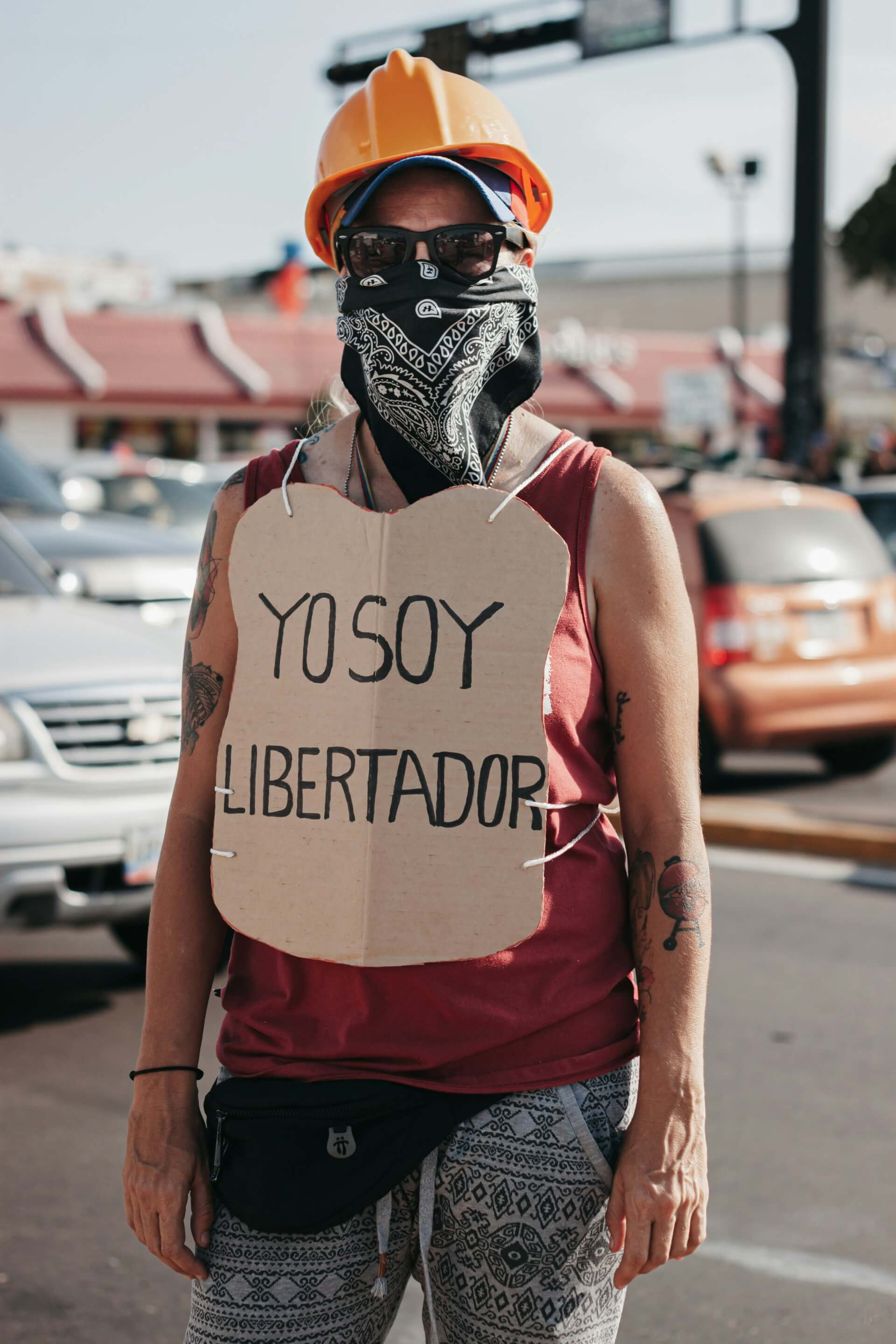
©Jim Romero

Thu 22 Jan 2026
Upholding International Law, Protecting Civilians and Civic Space, Preventing Escalation following the 3 January 2026 military action in Venezuela
Forus, a global network of 73 National NGO Platforms and 7 Regional NGO Coalitions, rejects the United States’ military action conducted in Venezuela on 3 January 2026 and denounces the dangerous precedent it sets for international and regional peace and security.
As Venezuelan civil society organisations have emphasised, this crisis must be understood through the lived reality of people facing a prolonged social, political and humanitarian emergency. A major military power’s use of force in these circumstances is deeply disproportionate and risks causing civilian harm, structural damage, and long-term collective trauma. Normalising unilateral force outside multilateral frameworks undermines the rules-based international order and exposes civilian populations to decisions driven by power rather than universal legal standards.
At a time of escalating conflicts and deepening geopolitical tensions worldwide, it is essential to reaffirm the foundations of the rules-based international order. The UN Charter, the principles of sovereignty, territorial integrity and political independence, and the prohibition of the threat or use of force are not optional. They exist to protect people and prevent escalation. Any action that undermines these principles could normalise “might makes right” in international affairs — with consequences that can rapidly spill over across Latin America and the Caribbean, and beyond. Peace in the region must be built through dialogue, cooperation and respect for international law — not through threats, coercion, or the use of force.
International law must prevail over “might makes right”
Forus reiterates the imperative of full respect for international law, including the Charter of the United Nations, which enshrines the prohibition of the threat or use of force against the territorial integrity or political independence of any State. The maintenance of international peace and security depends on the continued commitment of all States to uphold these principles — consistently, without double standards.
The 3 January operation raises serious concerns about whether it complies with the UN Charter’s rules on the use of force., and reflects a disproportionate use of military power in a context where civilians are already highly vulnerable, and is a violation of the UN Charter. If the stated objective is to address corruption or transnational criminal networks, international law provides pathways that do not require military force and do not cost civilian lives.
In these uncertain times, it is more critical than ever to recall the universally recognised fundamental rights and freedoms set out in the Universal Declaration of Human Rights (UDHR) over 70 years ago. Article 3 affirms that “Everyone has the right to life, liberty and security of person.” Article 5 states that “No one shall be subjected to torture or to cruel, inhuman or degrading treatment or punishment.” Everyone — and first and foremost those in positions of power — has a responsibility to ensure that the rights enshrined in the UDHR, and the obligations set out in international humanitarian law and international human rights law, are upheld and protected.
International law provides pathways to address serious concerns — including human rights violations, transnational crime, and disputes involving resources — through multilateral mechanisms, independent investigations, and competent judicial mechanisms. These tools must be used. Unilateral military action must never become a substitute for law, diplomacy, or accountability.
Multilateral paralysis must not be an excuse for unilateral force
Venezuelan civil society has raised alarms for years about escalating risks and grave violations, including calls for preventive and protective action through multilateral channels. The absence of sustained, effective international responses has contributed to a dangerous vacuum, leaving people trapped between internal repression and the lack of credible multilateral protection — and creating space for coercive responses with high human costs. This moment must be a turning point for coherent, preventive, people-centred multilateral engagement, not a precedent for unilateral escalation.
We are also concerned that framing accountability primarily through charges related to narcotrafficking and terrorism risks displacing the longstanding, well-documented record of systematic human rights violations and alleged crimes committed against the Venezuelan population. Any credible accountability pathway must address State responsibility and violations under international human rights law, including truth, justice, accountability and reparation for victims, through competent and independent mechanisms.
De-escalation and protection of civilians must be the immediate priority
De-escalation and the protection of civilians must be the immediate priority. All actors must refrain from steps that could intensify violence, widen instability, or deepen suffering. International humanitarian law and international human rights law must be fully respected at all times — including civilian protection, safeguards for all persons deprived of liberty, due process guarantees, and humane treatment.
Venezuela is already facing significant humanitarian and protection challenges, alongside a major displacement crisis that has placed heavy pressure on host communities across the region.
According to UN sources, nearly 7.9 million Venezuelans are refugees and migrants globally, and almost 8 million people inside the country require humanitarian assistance. National civil society monitoring also highlights severe deprivation, including widespread food insecurity and deep barriers to accessing essential services.
Any escalation risks compounding these realities — in Venezuela and across Latin America and the Caribbean. This situation also demands attention to psychological, social and collective impacts on communities — shaped not only by the events of 3 January, but also by rapidly shifting and contradictory political and media narratives that deepen uncertainty, emotional exhaustion, and confusion about guarantees, rights and pathways forward.
A sustainable way forward must be peaceful and people-centred
Forus reaffirms a core principle: the future of Venezuela must be shaped by Venezuelans themselves, through peaceful means consistent with international law and human rights principles, with credible multilateral support. Any approach that suggests external “administration” or the determination of a country’s future through control of strategic resources is incompatible with the right to self-determination and risks further destabilisation.
Any people-centred pathway must also recognise the depth of societal exhaustion. Expressions of hope or “relief” among parts of the population should not be read as support for war, but as a reflection of desperation in the face of prolonged crisis and shrinking options. At the same time, the lack of inclusive political alternatives and the erosion of trusted representative structures have fuelled fragmentation and polarisation. In this landscape, organised civil society remains one of the few actors sustaining humanitarian action, documenting abuses, and preserving social cohesion — and its protection is indispensable for any credible de-escalation, accountability and sustainable peace process.
We call on the United Nations Secretary-General, relevant UN mechanisms, and regional and international actors to use their good offices to support de-escalation, dialogue and negotiated solutions, and to help prevent a wider regional crisis.
Prevent backlash against civic space and civic actors
In moments of heightened insecurity, civic actors are often among the first to face reprisals. We are deeply concerned about increased risks of retaliation and repression against civil society organisations, journalists, and human rights defenders, including under emergency or exceptional measures. Such measures must not be used as a pretext to persecute dissent or further restrict freedoms of association, peaceful assembly and expression.
Across the region, civil society is also confronting rising polarisation and pressure — including the risk that crises are used to justify new restrictions on civic space, scapegoating, or intimidation. Protecting civic freedoms is essential to any peaceful pathway forward and to the resilience of societies under strain.
Civic actors, local NGOs, as well as the national and regional NGO platforms that they organise in, are essential to humanitarian response, social cohesion, documentation of abuses, and any credible transition process. Their protection must be treated as a core condition for stability — not as an afterthought. We acknowledge their dedication to improving the lives of their communities despite all the challenges they face.
Accountability and justice — without eroding international law
Forus recognises the longstanding demands for truth, justice, accountability and reparation in contexts marked by serious human rights violations. These goals are indispensable — but they cannot be pursued by normalising unlawful uses of force that erode international law, endanger civilians, and set precedents that others may replicate elsewhere. The power of the law must prevail.
Calls to action
In line with these principles, Forus calls on:
- The Government of the United States of America: to cease any unilateral use or threat of force; to comply fully with the UN Charter; and to pursue any concerns through diplomatic, multilateral and lawful mechanisms.
- All States, including members of the UN Security Council: to uphold the UN Charter and international humanitarian and human rights law; prioritise civilian protection and due process; act with restraint; and support urgent diplomatic efforts to prevent escalation and protect civilians.
- External actors with influence over the situation: to refrain from unilateral actions that undermine international law and increase risks to civilian life and regional stability.
- Venezuelan authorities and all domestic actors: to guarantee the protection of civic actors and fundamental freedoms; prevent reprisals against journalists, CSOs and human rights defenders; ensure humane treatment and due process for all detained; and enable independent humanitarian action.
- The United Nations, regional bodies, and Member States: to act with urgency — using good offices, mediation support and multilateral mechanisms — to support de-escalation, prevent wider regional destabilisation, and uphold the UN Charter consistently; prioritise civilian protection and human rights monitoring; and help maintain humanitarian space and access, while reaffirming Latin America and the Caribbean as a zone of peace, including by strengthening preventive diplomacy, independent human rights monitoring, and credible multilateral protection mechanisms that reduce the perceived space for unilateral force.
- Donors and international partners: to provide flexible, rapid support to civil society and protection mechanisms such as legal support, digital security, emergency assistance, documentation capacities, and humanitarian response, including community-based protection and psychosocial support, and support to local actors working to counter fear, polarisation and misinformation that endanger communities and civic space; strengthen safeguards for civic space across the region; and increase support to affected communities, including host communities supporting displaced Venezuelans.
Forus stands in solidarity with civil society and communities affected by this crisis in Venezuela and across the region. We will continue to call on all actors to respect international law, uphold human rights principles, and take all possible measures to achieve peace and prevent further escalation.
In solidarity,
Forus